Wayground logo

Free Printable Worksheets

Font size

S
M
L
XL
Worksheets

Naming Acids and Bases Makeup Test

Total questions: 75

Worksheet time: 6hrs 15mins

Name
Class
Date
1.
hydrochloric acid
a)
HCl
b)
HClO
c)
H3ClO3
d)
HClO3
2.
bromic acid
a)
HBr
b)
HBrO2
c)
HBrO3
d)
H3BrO3
3.
sulfuric acid
a)
HSO3
b)
H2SO3
c)
H2SO4
d)
H3SO4
4.
Barium hydroxide
a)
BaOH
b)
Ba2OH
c)
Ba(OH)2
5.
HF
a)
hydrofluoric acid
b)
Hypofluoric acid
c)
hydrogen fluorine acid
6.
Hydroiodic acid
a)
H2I2
b)
H1I1
c)
HI
7.
 H3PO4
a)
hydrophosphoric acid
b)
phosphorous acid
c)
phosphoric acid
d)
phosphoric hydroxide
8.
hydrochloric acid
a)
HCl
b)
HClO
c)
H3ClO3
d)
HClO3
9.
Select the name for the following acid: H2S
a)
Hydrosulfuric acid
b)
Sulfuric acid
c)
Sulfurous
10.

When the polyatomic ion in an acid ends in -ate, the root name of the polyatomic ion is followed by the ending -_____.

a)

ide

b)

ic

c)

ous

d)

ite

11.
sulfuric acid
a)
HSO3
b)
H2SO3
c)
H2SO4
d)
H3SO4
12.
Potassium hydroxide
a)
KOH
b)
K2OH
c)
k(OH)2
13.
NaOH
a)
sodium oxide
b)
sodium hydrogen
c)
sodium hydroxide
14.
Mg(OH)2
a)
magnesium hydroxide acid
b)
hydromagnesium acid
c)
magnesium oxygen hydride
d)
magnesium hydroxide
15.
Barium hydroxide
a)
BaOH
b)
Ba2OH
c)
Ba(OH)2
16.
H3PO4
a)
hydrophsophorus acid
b)
phosphoric acid
c)
hydrogen phosphorous
d)
phosphori hydroxide
17.
Nitrous Acid
a)
HNO2
b)
H2NO2
c)
HNO3
18.
Select the name for the following acid: H2S
a)
Hydrosulfuric acid
b)
Sulfuric acid
c)
Sulfurous
19.
Is the following compound an acid or a base? 
Ca(OH)2
a)
Acid
b)
Base
20.
nitrous acid
a)
H2NO3
b)
HNO3
c)
HNO2
d)
H2NO2
21.

The cation in an acid is always

a)

a metal

b)

hydrogen

c)

hydroxide

d)

negatively charged

22.

When naming a binary acid, the ending of the acid's base name will be

a)

-ous

b)

-ic

c)

-ate

d)

-ite

23.

When the polyatomic ion in an acid ends in -ite, the root name of the polyatomic ion is followed the ending -_____.

a)

ide

b)

ic

c)

ous

d)

ite

24.

What kind of compound produces an hydroxide ion when dissolved in water?

a)

ionic compound

b)

covalent compound

c)

acid

d)

base

25.

What kind of compound produces a hydrogen ion when dissolved in water?

a)

ionic compound

b)

covalent compound

c)

acid

d)

base

26.
Which has a pH below 7?
a)
Acid
b)
Base
27.

Acids have pH value

a)

Less than 7

b)

7

c)

More than 7

28.

Acids has ____________ taste.

a)

bitter

b)

sour

c)

no

29.

Acids change blue litmus paper from

a)

blue to red

b)

red to blue

30.
Tastes bitter.
a)
Acids
b)
Bases
c)
Salts
d)
All
31.
Feels slippery.
a)
Acids
b)
Bases
c)
All
32.
All solutions that fall between 0 and 6.9 are
a)
Acids
b)
Bases
c)
Neutral
d)
Phytoplankton
33.
Which is most acidic?
a)
milk
b)
Lemon Juice
c)
bleach
34.
What is the range of pH values in a basic solution?
a)
0-6
b)
8-14
c)
7
d)
0-14
35.
The pH of a concentrated acid
a)
0
b)
7
c)
14
d)
6
36.
The pH of a dilute base
a)
7
b)
14
c)
8
d)
6
37.
BASE + ACID ----> SALT +?
a)
water
b)
oxygen
c)
hydrogen ion
d)
hydroxide ion
38.

Reacts with metals

a)

acid

b)

base

c)

both acid and base

39.

Produces a salt and water in a neutralization reaction

a)

acid

b)

base

c)

both an acid and a base

40.

Has a pH more than 7

a)

acid

b)

base

c)

both an acid and a base

41.

Tastes bitter

a)

acid

b)

base

c)

both an acid and a base

42.

tastes sour

a)

acid

b)

base

c)

both an acid and a base

43.

Ends with "OH-"

a)

acid

b)

base

c)

both an acid and a base

44.

Compound starts with an "H"

a)

acid

b)

base

c)

both an acid and a base

45.

orange juice

a)

acid

b)

base

c)

both an acid and a base

46.

Soap

a)

acid

b)

base

c)

an acid and a base

47.

Feels slippery

a)

acid

b)

base

c)

an acid and a base

48.
bromic acid
a)
HBr
b)
HBrO2
c)
HBrO3
d)
H3BrO3
49.
HF
a)
hydrofluoric acid
b)
Hypofluoric acid
c)
hydrogen fluorine acid
50.
Hydroiodic acid
a)
H2I2
b)
H1I1
c)
HI
51.
sulfuric acid
a)
HSO3
b)
H2SO3
c)
H2SO4
d)
H3SO4
52.
Potassium hydroxide
a)
KOH
b)
K2OH
c)
k(OH)2
53.
Mg(OH)2
a)
magnesium hydroxide acid
b)
hydromagnesium acid
c)
magnesium oxygen hydride
d)
magnesium hydroxide
54.
Is the following compound an acid or a base? 
Ca(OH)2
a)
Acid
b)
Base
55.

Which group is referred to as Alkali Metals?

a)

3

b)

1

c)

7

d)

17

56.

What is the name of the family that is highlighted?

a)

Alkali Metal Family

b)

Halogen Family

c)

Noble Gas Family

d)

Transition Metal Family

57.
List the two most reactive families on the periodic table.
a)
Alkali metals & Transition Metals
b)
Noble gases & Oxygen Family
c)
Halogens & Alkali metals
d)
Halogens & Noble gases
58.
Electronegativity is...
a)
how good an atom is at attracting electrons
b)
the ability of an atom to lose electrons
c)
the energy required to remove an electron from a specific atom
d)
how easy it is to make friends. 
59.
Ionization energy is...
a)
the energy required to add an electron to a specific atom
b)
how much energy it takes to remove an electron from an atom
c)
the energy required to shield the outer electrons from the nucleus
d)
a measure of the ability of an atom to attract electrons
60.
Elements in the same ________ are more chemically similar.
a)
group
b)
period
c)
club
d)
table
61.
The majority of elements on the periodic table are
a)
man made.
b)
nonmetals.
c)
metals.
d)
gases.
62.
Name group 2A on the periodic table.
a)
alkali metals
b)
alkaline earth metals
c)
noble gases
d)
transition metals
63.
Name groups 3B - 12B on the periodic table.
a)
noble gases
b)
halogens
c)
metalloids
d)
transition metals
64.
Name group 7A on the periodic table.
a)
transition metals
b)
metalloids
c)
halogens
d)
alkali metals
65.
The atoms along the staircase are called 
a)
metals
b)
nonmetals
c)
metalloids
d)
noble gases
66.
Where are the nonmetals located on the periodic table?
a)
top left corner
b)
bottom left corner
c)
top right corner
d)
bottom left corner
67.

What are the vertical columns on the periodic called?

a)

groups

b)

periods

c)

nonmetals

d)

metals

e)

metalloids

68.

A subatomic particle that has a negative charge

a)

nobles gases

b)

protons

c)

electrons

d)

neutrons

69.

A subatomic particle that has a positive charge and that is found in the nucleus of an atom

a)

Proton

b)

elecrtron

c)

groups

d)

neutrons

70.

neutron

a)

A subatomic particle that has a positive charge and that is found in the nucleus of an atom

b)

not able to conduct heat or electricity, little to no metallic luster

c)

A subatomic particle that has a negative charge

d)

A small particle in the nucleus of the atom, with no electrical charge

71.
The Modern Periodic Table of Elements is arranged by
a)
atomic mass
b)
atomic number
c)
valence electrons
d)
number of isotopes
72.

What does the atomic mass tell you?

a)

Basically, the number of electrons and protons added together

b)

The number of neutrons

c)

Basically, the number of protons and neutrons added together

d)

The number of protons.

73.
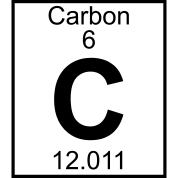
What does the 6 represent?
a)
atomic mass
b)
atomic number
c)
element name
d)
chemical symbol 
74.
What does 12.011 represent?
a)
atomic mass
b)
atomic number
c)
element name
d)
chemical symbol 
75.

Name of group 17

a)

Noble gases

b)

Alkali metals

c)

Halogens

d)

Alkaline earth metals