
 Worksheets
Science 8 Review (Chemistry) - DepEd
Total questions: 70
Worksheet time: 1hrs 10mins


This state of matter has a firm, unchanging physical structure.
Solid
Liquid
Gas
Plasma
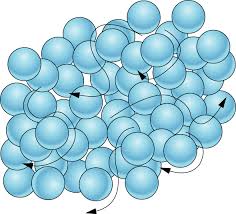
Which is not true about the liquid state of matter?
The liquid state has a definite volume and a definite shape.
The liquid state takes on the shape of its container.
The liquid state has a definite volume and an indefinite shape.
The particles in a liquid can easily move past each other.
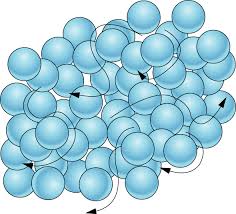
Which of the following statements is true regarding the particle structure of liquids? Particles of a liquid are:
very close together, so the liquid cannot easily change its shape.
fast-moving, so they fill the volume of their container.
relatively close together, so they cannot be easily compressed.
very far apart, so they have plenty of room to move around.

Freezing
Melting
Condensation
Sad day for Ms. P


What state of matter is pictured?
Solid
Liquid
Gas
Plasma
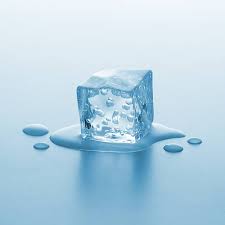
Change from Liquid to Solid is called ...
fusion
Freezing
sublimation
evaporation
Which phase change absorbs energy to take place?
freezing
condensation
evaporation
all of the above

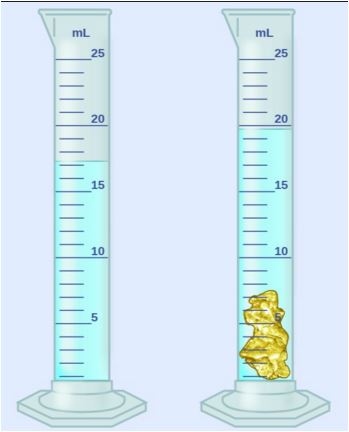

An object is is placed into 45 mL of water. The water rises to 48 mL. What is the volume of the object?
3 mL
93mL
8 mL
83 mL
Calculate the density in the following question: A star has a mass of 15 g and a volume of 25 mL.
0.7 g/mL
0.6 g/mL
0.5 g/mL
0.4 g/mL
A neutron has what charge?
Positive
Negative
It has no charge (it is neutral)
A proton has what charge?
Positive
Negative
It has no charge (it is neutral)
An electron has what charge?
Positive
Negative
It has no charge (it is neutral)

What subatomic particle is coloured red in this image?
proton
neutron
electron

What subatomic particles are coloured red in this image?
protons
neutrons
electrons

What subatomic particles are coloured green in this image?
protons
neutrons
electrons


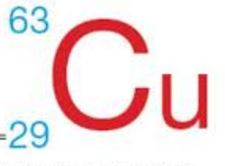


Which element is this?
Nickel
Neon
Sodium
Nitrogen

Name this element.
Argon
Chlorine
Aluminum
Boron

Name this element.
Neon
Magnesium
Sodium
Manganese

What is the atomic number of this atom?
2
4
6
8

What is this element?
Beryllium (atomic #4)
Boron (atomic #5)
Carbon (atomic #6)
Nitrogen (atomic #7)

How many valence electrons?
2
3
4
5

Whose model suggested that negative particles were mixed in with positively charged material - like seeds in a watermelon?
J.J. Thomson
Ernest Rutherford
Niels Bohr
Albert Einstein
Who discovered that the atom had an small, dense, positively charged center?
Ernest Rutherford
J.J Thomson
Robert Millikan
John Dalton
Place the following atomic models in order, from earliest to latest:
A) Rutherford B) Thomson C) Dalton
B, C, A
C, A, B
A, C, B
C, B, A
Who named the positive center of the atom the "nucleus?"
Democritus
Dalton
Thomson
Rutherford
Which scientists believed an atom was indivisible? (Choose all correct responses.)
Democritus
Dalton
Thomson
Rutherford
Which scientist first suggested that atoms could join?
Democritus
Dalton
Thomson
Rutherford

In the atomic model nicknamed the "plum pudding" model, what do the plums represent?
the nucleus
the atom
the electrons
the positive material
Who proposed that electrons move around the nucleus in circular orbits?
Dalton
Thomson
Rutherford
Bohr
A green powder is heated & a gas is given off while it turns to a black solid. This describes
Physical Change
Chemical Change
Change in State
Change in Temperature
A Chemical Change is also known as what?
Physical Change
Physical Property
Chemical Reaction
Chemical Property
The difference between a Physical change and a Chemical change is…
Physical change is only a change to the outside appearance.
Chemical change is when matter is changed into something new.
Atoms are rearranged in chemical changes & not in physical.
All are correct.

Identify what type of change happening in the picture below...
Chemical Change
Physical Change
Endothermic Reaction
Exothermic Reaction

Identify what type of change happening in the picture below...
Chemical Change
Physical Change
Endothermic Reaction
Exothermic Reaction

Identify what type of change happening in the picture below...
Chemical Reaction
Physical Change
Change in State
Change in appearance only

The Period is -
the row -->
the column |
The Group is -
the row -->
the column |

With the exception of Hydrogen, everything on the left <-- side of the zig-zag (river) line is a -
metal
nonmetal
metalloid
With the exception of Hydrogen, everything on the right --> side of the zig-zag (river) line is a -
metal
nonmetal
metalloid
The zig-zag (river) line represents the -
metals
nonmetals
metalloids
In the periodic table, the elements are classifies acording to...
The atomic number
The mass number
The electronic number
The number of neutrons
Which of these is a noble gas?
Chlorine (Cl)
Hydrogen (H)
Neon (Ne)
Fluorine (F)
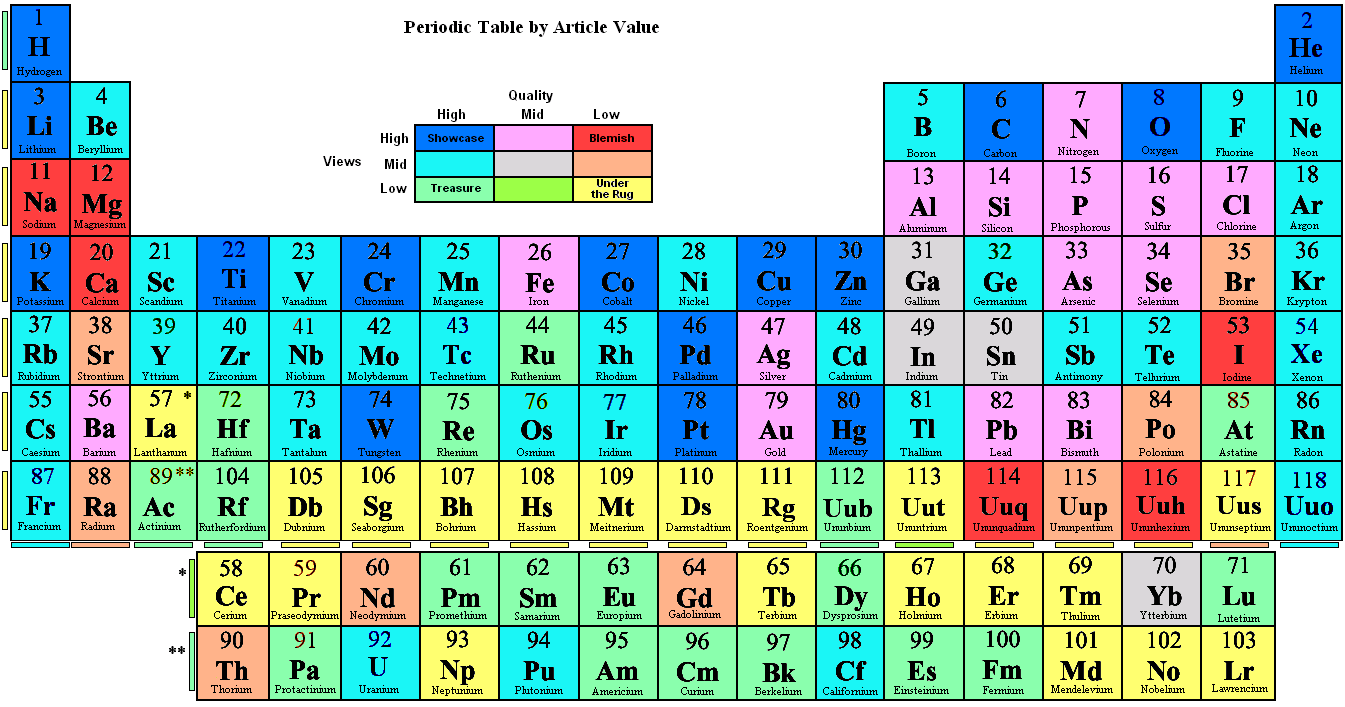
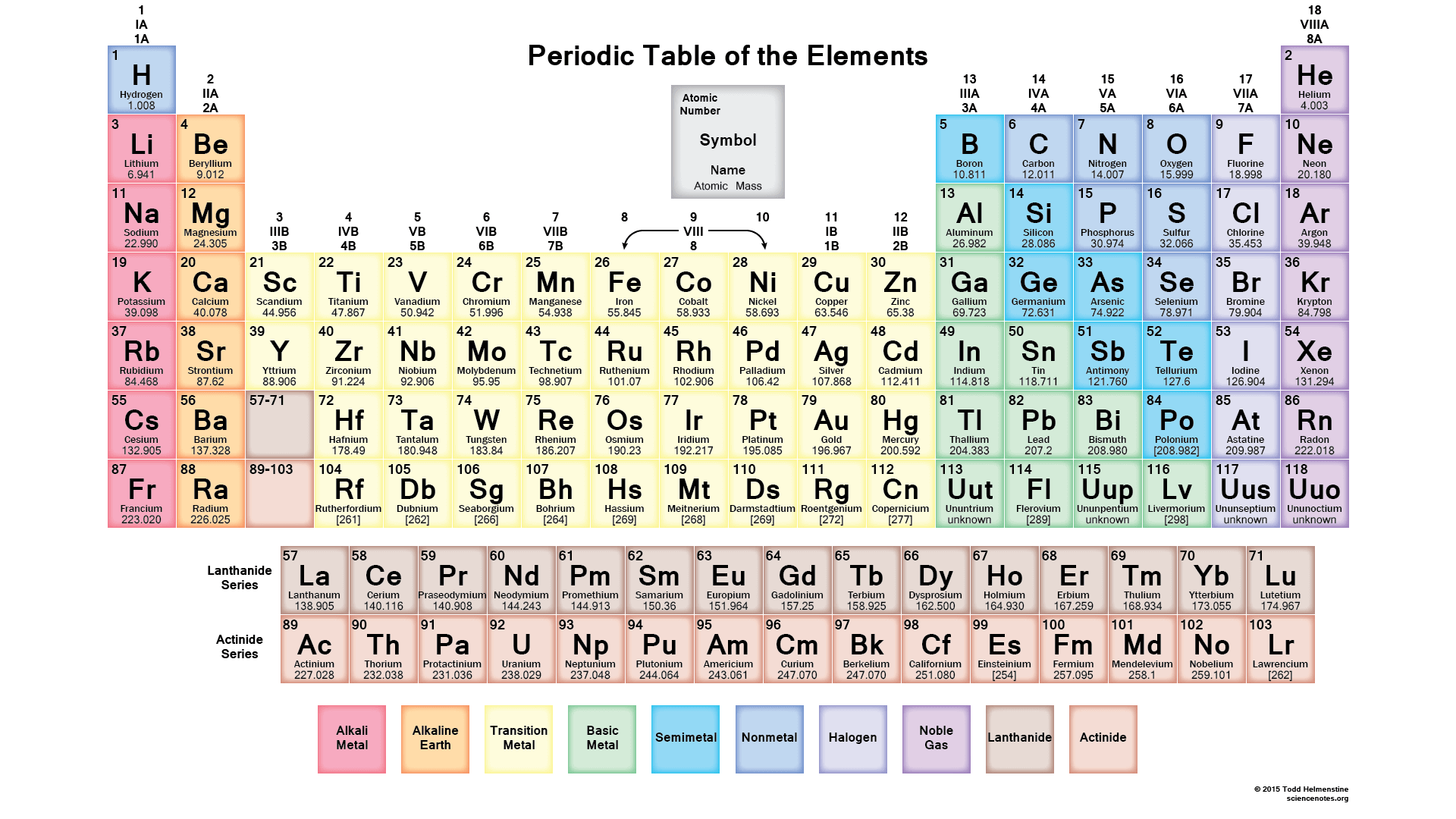
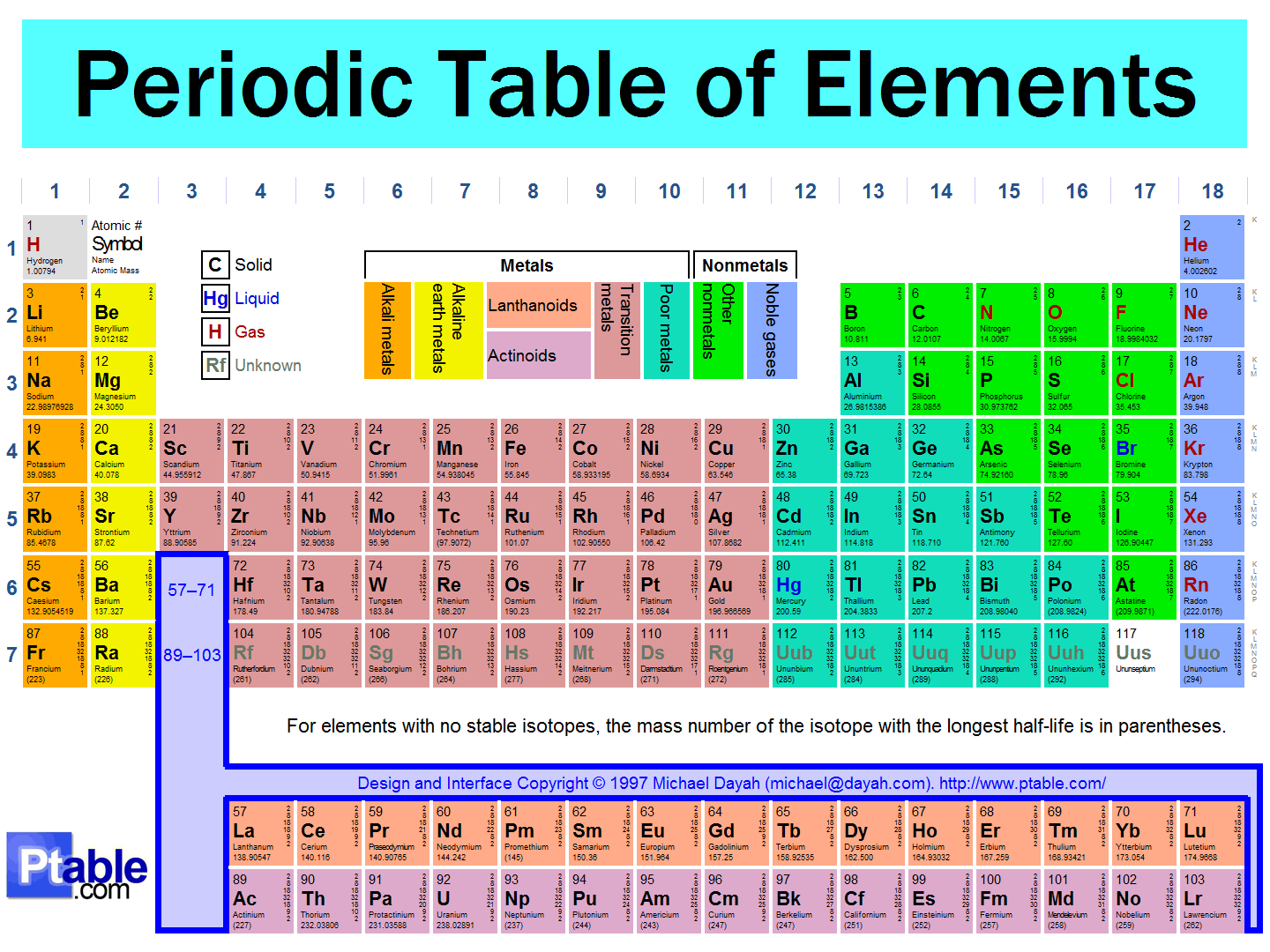
The horizontal (side to side) rows in the Periodic Table are called
groups
families
periods
atomic numbers

