
 Worksheets
Introduction to Chemical Bonds
Total questions: 66
Worksheet time: 33mins
Name
Class
Date
1.
The octet rule describes the tendency for reactions to result in each atom having 8 electrons in its outer shell (except the first shell).
a)
True
b)
False
2.
What type of bond forms between Oxygen & Carbon?
a)
Chemical
b)
Physical
c)
Ionic
d)
Covalent
e)
Metallic
3.
Which option best defines oxidation number?
a)
The charge an atom would get if it gained / lost electrons to reach a full valence shell.
b)
The number of valence electrons an element has.
c)
The number of oxygen atoms required to begin a reaction.
d)
The charge of an ion after covalent bonding.
4.
Nitrogen has 3 valence electrons and an oxidation number of -3.
a)
TRUE
b)
FALSE
5.
Anions are negative and are usually nonmetals.
a)
True
b)
False
6.
Fluorine has 7 valence electrons and an oxidation number of -1.
a)
TRUE
b)
FALSE
7.
Xenon has 8 valence electrons and an oxidation number of 8.
a)
TRUE
b)
FALSE
8.
Carbon has 4 valence electrons and an oxidation number of 4.
a)
TRUE
b)
FALSE
9.
What type of bond forms between Lithium and Sulfur?
a)
Chemical
b)
Physical
c)
Ionic
d)
Covalent
e)
Metallic
10.
Cations are positive and are usually nonmetals.
a)
True
b)
False
11.
What types of elements perform ionic bonds?
a)
Metals & Metals
b)
Metals & Nonmetals
c)
Nonmetals & Nonmetals
12.
What types of elements perform covalent bonds?
a)
Metals & Metals
b)
Metals & Nonmetals
c)
Nonmetals & Nonmetals
13.
Metal atoms tend to donate electrons in chemical reactions, forming cations.
a)
True
b)
False
14.
Aluminum and Fluorine react to form an ionic bond. What is the correct chemical formula for when they react? (think about oxidation numbers and how many valence e are needed for each atom)
a)
Al₃F₃
b)
AlF₃
c)
Al₂F₃
d)
AlF
15.
Magnesium has 2 valence electrons and an oxidation number of +2.
a)
TRUE
b)
FALSE
16.
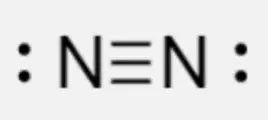
Nitrogen accounts for almost 80% of the atmosphere. The chemical structure for nitrogen gas (N2) is show below. What type of bond exists between Nitrogen atoms?
a)
Single Covalent Bond
b)
Triple Ionic Bond
c)
Triple Covalent Bond
d)
Single Ionic Bond
17.
Nonmetals can gain or share electrons in chemical reactions.
a)
True
b)
False
18.
An element with an oxidation number of +1 will donate one electron to satisfy the octet rule.
a)
True
b)
False
19.
An element with an oxidation number of -2 will donate two electrons to satisfy the octet rule.
a)
True
b)
False
20.
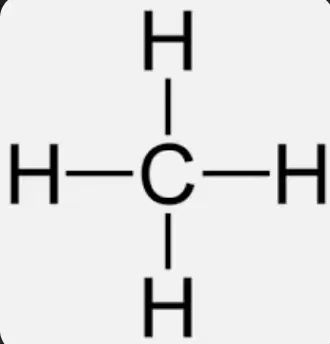
The chemical structure for methane (CH4) is show below. What type of bond exists between carbon and hydrogen?
a)
Single Covalent Bond
b)
Double Covalent Bond
c)
Triple Ionic bond
d)
Single Ionic Bond
21.
Which is the correct name for the following compound:
Li2S
a)
dilithium sulfide
b)
lithium sulfate
c)
lithium monosulfide
d)
lithium sulfide
e)
sufferin' succotash
22.
Which is the correct name for the following compound:
SO2
a)
sulfur dioxide
b)
sulfur oxide
c)
sulfur loves oxygen
d)
sulfur monoxide
23.
Metals and nonmetals commonly form covalent bonds.
a)
TRUE
b)
FALSE
24.
Which is the correct name for the following compound:
NaCl
a)
Sodium chloride
b)
table salt
c)
Sodium chlorine
d)
Raindrop soup
25.

Which option best describes the bonding shown in the compound below?
a)
Triple covalent bond between Nitrogen and Fluorine
b)
Triple ionic bond between Nitrogen and Fluorine
c)
Single covalent bond between Nitrogen and Fluorine
d)
Single ionic bond between Nitrogen and Fluorine
26.
What is the correct name for the following compound: CS₂
a)
Carbon sulfide
b)
Carbon sulfuridium
c)
Carbon disulfide
d)
Sulfide carbon
27.
What is the oxidation number of oxygen?
a)
+1
b)
+2
c)
-1
d)
-2
28.
During ionic bonding, nonmetals accept electrons to become anions.
a)
True
b)
False
29.
A neutral atom of Nitrogen has 7 protons and 7 electrons.
a)
TRUE
b)
FALSE
30.
What is the oxidation number of oxygen?
a)
+1
b)
+2
c)
-1
d)
-2
31.
What is the oxidation number of Chlorine?
a)
+1
b)
+2
c)
-1
d)
-2
32.
What is the oxidation number of Magnesium?
a)
+1
b)
+2
c)
-1
d)
-2
33.
Which is the correct name for the following compound:
CCl4
a)
Carbonate chloride
b)
Carbon dichloride
c)
Carbon tetrachloride
d)
Carbon tetrachlorine
34.
What is the oxidation number of Hydrogen?
a)
+1
b)
+2
c)
-1
d)
-2
35.
Which of the following is NOT a property of ionic compounds?
a)
Form crystals
b)
Insulators
c)
Low melting point
d)
Hard and brittle
36.
T or F: Ionic substances have the exact same properties as metals
a)
True
b)
False
37.
Noble gases are unreactive because their valency is 0.
a)
TRUE
b)
FALSE
38.
Calcium and chlorine react to form an ionic bond. What is the correct chemical formula when they react? (think about oxidation numbers and how many valence e are needed for each atom)
a)
CaCl₂
b)
Ca₂Cl
c)
CaCl
d)
Ca₂Cl₂
39.
How many energy levels does Helium have?
a)
1
b)
2
c)
3
d)
4
e)
5
40.
Aluminum and Fluorine react to form an ionic bond. What is the correct chemical formula for when they react? (think about oxidation numbers and how many valence e are needed for each atom)
a)
Al₃F₃
b)
AlF₃
c)
Al₂F₃
d)
AlF
41.
Which of the following describes the octet rule?
a)
To the tendency for atoms to transfer electrons to achieve a full outer shell
b)
The tendency for atoms to react to achieve a full outer shell
c)
The tendency for atoms to share electrons to achieve a full outer shell
d)
The tendency for atoms to gain protons to achieve a full outer shell
42.
What is the valency of Oxygen?
a)
8
b)
2
c)
6
d)
Biggly
43.
What is the oxidation number of Chlorine?
a)
+1
b)
+2
c)
-1
d)
-2
44.
Covalent bonds are formed by the sharing of electrons.
a)
TRUE
b)
FALSE
45.
An atom of chlorine has 17 electrons, and all of them are available for chemical reactions
a)
TRUE
b)
FALSE
46.
What is the correct name for the following compound: N₂O₄
a)
Nitrogen oxide
b)
Nitrogen tetraoxide
c)
Dinitrogen tetraoxide
d)
Nitrogen dioxide
47.
The oxidation number tells what charge an element will have when it achieves a full valence shell (either by gaining or losing electrons)
a)
TRUE
b)
FALSE
48.
The oxidation number for Oxygen is:
a)
+1
b)
+2
c)
-2
d)
-1
49.
The oxidation number for Calcium is:
a)
+1
b)
+2
c)
-2
d)
-1
50.
What is the oxidation number of Magnesium?
a)
+1
b)
+2
c)
-1
d)
-2
51.
Ionic bonds are formed by the transfer of electrons between metals and nonmetals, with metals losing electrons and nonmetals taking those electrons.
a)
TRUE
b)
FALSE
52.
Which of the following is NOT a property of ionic compounds?
a)
Form crystals
b)
Insulators
c)
Low melting point
d)
Hard and brittle
53.
T or F: Ionic substances have the same properties as metals
a)
True
b)
False
54.
What type of substances require greek prefixes when naming?
a)
Covalent
b)
Ionic
c)
Metallic
55.
Calcium and chlorine react to form an ionic bond. What is the correct chemical formula when they react? (think about oxidation numbers and how many valence e are needed for each atom)
a)
CaCl₂
b)
Ca₂Cl
c)
CaCl
d)
Ca₂Cl₂
56.
What is the oxidation number of Hydrogen?
a)
+1
b)
+2
c)
-1
d)
-2
57.
How many energy levels does Helium have?
a)
1
b)
2
c)
3
d)
4
e)
5
58.
Which of the following describes the octet rule?
a)
To the tendency for atoms to transfer electrons to achieve a full outer shell
b)
The tendency for atoms to react to achieve a full outer shell
c)
The tendency for atoms to share electrons to achieve a full outer shell
d)
The tendency for atoms to gain protons to achieve a full outer shell
59.
The oxidation number for Carbon is:
a)
+1
b)
+2
c)
+3
d)
4
60.
When reacting, what type of bond will be formed between Sodium and Chlorine?
a)
covalent
b)
ionic bond
61.
What type of bond exists between the carbon and oxygen atoms in a molecule of CO2?
a)
covalent
b)
ionic bond
62.
CdBr₂
a)
Cadmium dibromide
b)
Cadmium bromide
c)
Dicadmium bromide
d)
Bromine cadmide
63.
T or F: You add the suffix -ide to the end the second substance in all ionic and covalent compounds
a)
True
b)
False
64.
What is the oxidation number of Selenium?
a)
+1
b)
+2
c)
-1
d)
-2
65.
Which of the following describes the octet rule?
a)
To the tendency for atoms to transfer electrons to achieve a full outer shell
b)
The tendency for atoms to react to achieve a full outer shell
c)
The tendency for atoms to share electrons to achieve a full outer shell
d)
The tendency for atoms to gain protons to achieve a full outer shell
66.

Who's this?
a)
Sylvester
b)
Tom (of Tom & Jerry fame)
c)
Jerry Garcia
d)
sufferin' succotash, AKA Tiger, AKA "the cat" , AKA "Ooolong Johnson"
100 %

