
 Worksheets
7th Grade Science Review
Total questions: 70
Worksheet time: 1hrs 28mins
Which is an example of a producer-consumer relationship?
A lion hunting a gazelle
A tick feeding on a deer
A plant obtaining light energy from the sun
A cow eating grass
What is the difference between a predator and a parasite?
Predators only feed at night
Predators hunt their prey and parasites live off a host
Both predators and parasites hunt their prey
Parasites only invade hosts at night
What is the importance of decomposers?
Add energy from the sun
Only found in the ocean
Provide nutrients to the soil
Capture animals
Food chains connected to each other are called
Decomposers
Food webs
Meal plans
Environments
(a) are animals that eat a combination of producers and consumers.
Omnivores
Herbivores
Carnivores
Which of the following could be considered an abiotic factor in the ecosystem of a cow?
Grass
Grains
Flies
Sunlight
In an energy pyramid, which organisms have the most energy?
Secondary consumers
Primary consumers
Producers
Tertiary consumers
Which two terms describe organisms that produce their own food?
Heterotrophs
Autotrophs
Producers
Decomposers

Identify the fish
Sebastes serriceps
Sebastes nebulosus
Naucrates ductor
Seriola lalandi

What characteristics are used to identify the American Robin?
Head color, Beak shape, and Beak color
Head color and Beak color
Beak shape and Beak color
Beak color

A table of characteristics of arachnids and insects is shown. Which characteristic could be used to distinguish between arachnids and insects?
Jointed legs
Body segments
Presence of eyes
Presence of antennas
Chameleons are reptiles that have the ability to hide from predators and prey by blending in with their surroundings. They can change the pattern and/or color of their skin. This ability is known as --
natural selection
imitations
mimicry
camouflage

What adaptation and function would be most suitable for a camel?
Adaptation: two rows of long eyelashes Function: protect against blowing sand
Adaptation: thick fur and underwool Function: keep out blowing sand
Adaptation: long and strong legs Function: protect it from burns when kneeling on the hot desert sand
Adaptation: nostrils that can close Function: help it survive long periods without food and water
This is an example of what type of adaptation:
A skunk spraying its predator
a migration adaptation
an adaptation to find food
an adaptation to hide (camouflage)
a defense adaptation
What is the word to describe an animal that travels to find food and water?
For example, birds that fly south for the winter
Camouflage
Migration
Hibernation
Predator

What is a behavioral adaptation of penguins?
Penguins have a layer of fat to keep warm.
Penguins huddle together to stay warm.

Opossums pretend to be dead to fool their predators.
Is this a behavioral adaptation or a physical adaptation?
Behavioral adaptation
Physical adaptation
Which is a behavioral adaptation?
long neck
camouflage
nocturnal/hunting at night
body coating

If additional snakes are introduced into this ecosystem, it is most likely that there will be an immediate decrease in the _________.
population of hawks
population of rabbits
population of wildflowers
population of grass
2. Any level above the base of an energy pyramid can only store approximately (a) percent of the energy contained in the lower level.
10
25
50
70
Why do you think a food web can recover, even if the population of one of the heterotrophs (consumers) is reduced?
Other organisms can feed on the food that the heterotroph population would have eaten
It cannot recover.
A decrease in population would not affect a food web.
Which level is at the top?
Primary consumers
Tertiary consumers
Producers
Secondary consumers

The arrows in a food web always
point towards the producer
point towards the consumer
show energy flowing out of the web
point towards a carnivore
The source of all energy in a food web comes from
producers
the sun
decomposers
autotrophs

In the energy pyramid below, which organism has the least amount of energy available?
Producers
Herbivores
Carnivores
Top Predator
Green plants capture and store light energy from the Sun through the process of –
Cell Division
Respiration
Homeostasis
Photosynthesis
Geotropism
The Sun contributes to photosynthesis by providing plants with -
oxygen atoms
chemical energy
gravitational force
radiant energy
carbon atoms
During Photosynthesis, radiant energy (light) from the Sun is transformed into ____________ energy that is stored or used by the plant.
Natural
Chemical
Nuclear
Thermal
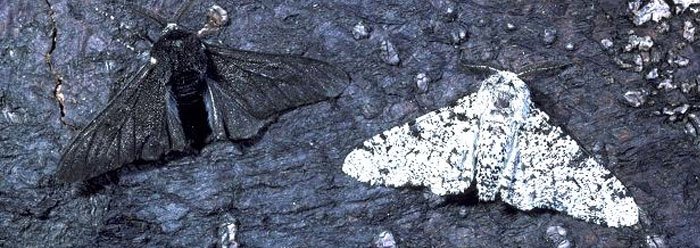
The trees in which these moths lived were white, but have been covered in soot by the coal factories. Which moth will be more successful in this environment?
Dark moth
Light moth
Both will have the same success
None will be successful
What is the correct equation for photosynthesis?
carbon dioxide + oxygen + sunlight = glucose + water
water + oxygen = sunlight + carbon dioxide + soil
glucose + oxygen = sunlight + carbon dioxide + water
water + carbon dioxide + sunlight = glucose + oxygen
What is a physical change?
Color
Oxidation
Burning
Reactions with acid
An example of a decomposer is a(n)
Fungi
Fox
Rabbit
Grass
Some human activities release greenhouse gases, including carbon dioxide, into the atmosphere. Which measure would most likely help reduce the amount of carbon dioxide released?
reuse plastic bags instead of discarding them
water plants with rainwater instead of using tap water
travel in cars instead of riding bicycles
generate energy with wind turbines instead of burning coal
Which of these human activities will help improve air quality?
Planting trees
Burning trash
Installing windmills
Burning fossil fuels
Have the continents on Earth always been separated?
True
False
Select each section of the Earth.
Inner Core
Outer Core
Mantle
Crust
What is the Scientific Method?
the process of observation, measurement, and experimentation, and the formulation, testing, and modification of hypotheses
the process of making a logical assumption before conducting an experiment
The process of considering all options before conducting an experiment
The process in which you perform a laboratory and then reflect on the experiment
Which of these explains why an ecosystem is healthy when it has a variety of species?
A greater number of species allows for fewer food chains.
A greater number of species reduces competition for abiotic resources.
A greater number of species allows for greater diversity in interdependence.
An increase in the number of species contributes to greater adaptability possibilities.
A certain endangered species of parrots lives on an island that can be seriously affected by large floods. Which of these is considered a negative impact on the parrot population due to the floods?
a decrease in the availability of food
a decrease in predator populations
an increase in suitable nesting sites
an increase in places to hide from danger
The increase in human population can lead to the depletion of locally available resources in communities. Compared to other communities, which of these locally available resources is more likely to be depleted in desert communities?
minerals
oxygen
gasoline
water
What is a qualitative characteristic?
Melting point
Mass
Odor
Which of the following is quantitative?
Smell
Mass
Shape
Texture
What is an element?
A substance that cannot be broken down into simpler substances by chemical means.
A substance that can be broken down into simpler substances by physical means.
A substance that is composed of only one type of atom.
A substance that can be broken down into simpler substances by chemical means.
What is a compound?
A compound is a substance formed by the physical combination of two or more elements.
A compound is a substance formed by the chemical combination of two or more elements in random proportions.
A compound is a substance formed by the chemical combination of two or more elements in indefinite proportions.
A compound is a substance formed by the chemical combination of two or more elements in definite proportions.
Define physical change.
A physical change is a change in which the physical properties of the substance remain the same.
A physical change is a change in which the chemical composition of the substance is altered.
A physical change is a change in which the physical properties of the substance are altered, and its chemical composition remains the same.
A physical change is a change in which the physical properties of the substance, such as shape, size, or state of matter, are altered, but its chemical composition remains the same.
What is a chemical change?
A chemical change is a process that results in the formation of new substances with properties opposite to the original substances.
A chemical change is a process that results in the formation of new substances without properties.
A chemical change is a process that results in the formation of new substances with properties different from the original substances.
A chemical change is a process that results in the formation of new substances with the same properties as the original substances.
Provide an example of a chemical change.
Cutting a piece of paper
Mixing salt and water
Burning wood
Melting ice
All matter is made of _________.
energy
atoms
electrons
compounds
What is at the center of each atom?
An electron
A compound
A molecule
A nucleus

What does the nucleus of an atom contain?
Electrons and neutrons
Protons and neutrons
Neutrinos and positrons
DNA and RNA

Atoms are made up of ________________
energy
electrons
subatomic particles
gasses

The subatomic particles that make up an atom.
solid, liquid, gas
electrons, protons, nucleus
energy, protons, nucleus
electrons, protons, neutrons

__________ are negatively charged particles that are in the orbitals around the nucleus.
protons
nucleus
neutrons
electrons

A proton has a ___________ charge.
positive
negative
neutral
massive.
A neutron has _________ charge or is ________.
negative ... neutral
positive .... neutral
no .... negative
no ... neutral

Which is an electron?
A
B
C
True or False
In a chemical reaction, no new atoms are created, and no atoms are destroyed.
TRUE
FALSE
What is the right part of a chemical equation called...
2H2 + O2 --> 2H2O
Reactants
Yields
Products
Chemical Equation
What is the left part of a chemical equation called?
2H2 + O2 --> 2H2O
Reactants
Yields
Products
Chemical Equation
Which is NOT an indication of a chemical change?
Temperature Change
Shape Change
Formation of a precipitate
Production of light
When a new substance forms as a result of a chemical reaction, what type of change has occurred?
Chemical Change
Physical Change
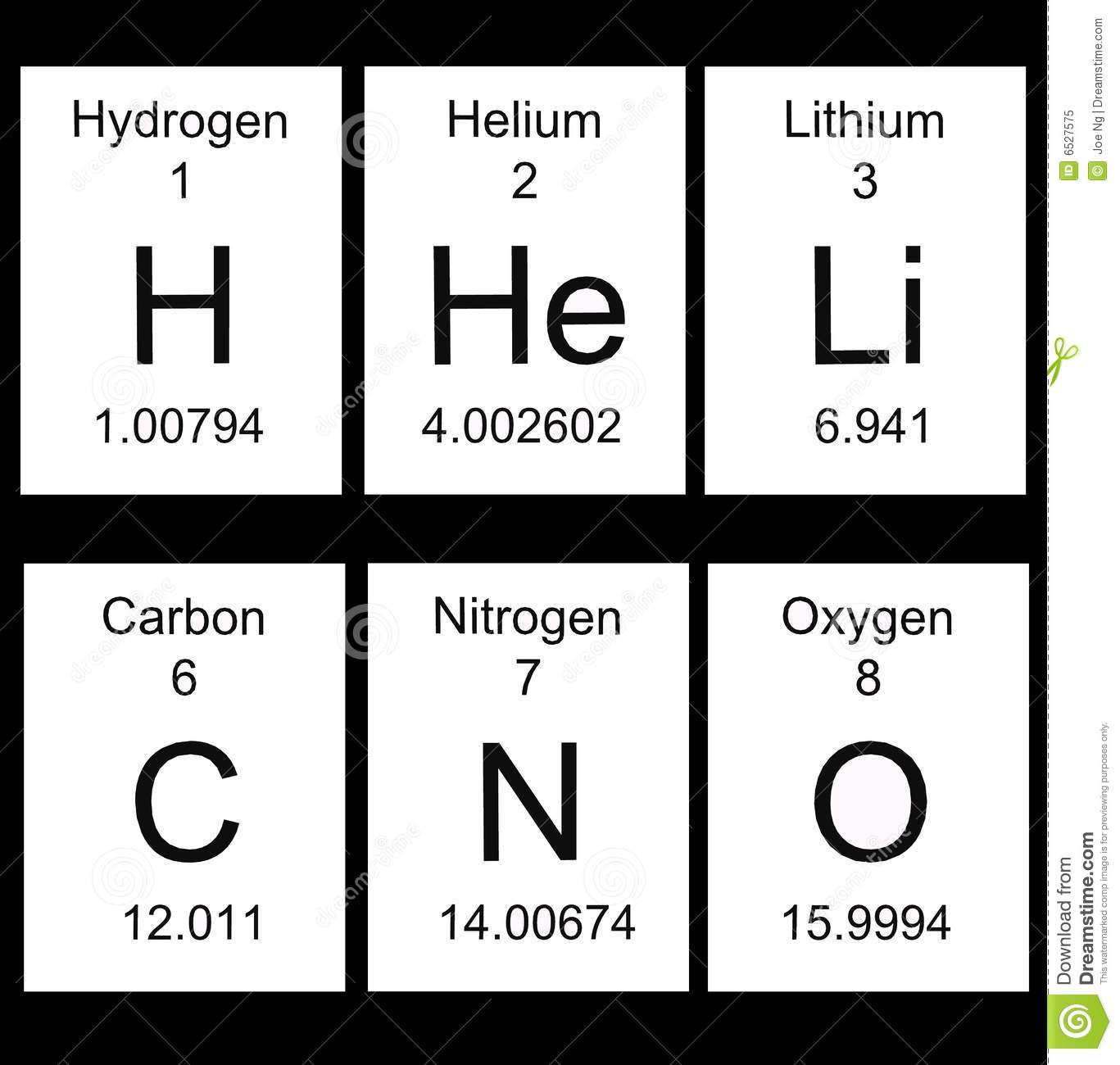
What is the chemical symbol for Lithium?
H
He
Li
N
The chemical symbol for an element is always represented by only 1 letter
True
False
Volcanic eruptions are caused primarily by the movement of
Tectonic plates
Earthquakes
Ocean currents
Solar radiation
Studies of earthquake waves have helped scientists determine the
Structure of Earth’s interior
Causes of earthquakes
Frequency of seismic activity
Locations of fault lines


What are the elements found in a water molecule?
Helium and oxygen
Hydrogen and Oxygen
What is a hypothesis?
A hypothesis is the right answer to an experiment.
A hypothesis is the wrong answer to an experiment.
A hypothesis is a prediction or educated guess of what happens in an experiment.
A hypothesis is a random guess answer

