
 Worksheets
Bonds & Energy Unit Review
Total questions: 170
Worksheet time: 1hrs 25mins

In the image above, this number represents the activation energy:
1
2
3
If you hold a container where a chemical reaction is taking place and it feels warm to you, this reaction is:
endothermic
exothermic
isothermic
what?

In the graph above, is the reaction depicted exothermic or endothermic?
exothermic
endothermic

How much energy is required to break all of the bonds in the first molecule depicted in the reaction above? (you must include the proper sign for credit)
(a)

Use the chart above to determine the amount of energy released by forming the bonds in the final product molecule(s). (Hint: you must include the proper sign in your answer for credit):
N2 + 3 H2 → 2 NH3
(a)
When bonds are (a) , energy is released.
True or false: when bonds are broken the energy is positive because energy goes into the system
True
False

This could be the dot diagram of
Ne
H
C
F


This is a correct dot diagram for nitrogen (N)
true
false

Which correctly uses the patterns in the periodic table to describe what is happening in the model?
Sodium is in period 3 and therefore has 3 energy levels. Chlorine is also in period 3 and has 3 energy levels. Since they have the same number of energy levels, the form a molecule.
Sodium is in group 1 and therefore has 1 valence (outer) electron. Chlorine is in group 17 and therefore has 7 valence electrons. When they combine, they form a molecule that has a full valence shell of 8 electrons.

__________ energy is the energy that it takes to remove an electron from its shell.
Ionization
Electron
Electron
Quantum


Which type of bond does this molecule have?
magnetic bond
ionic
hydrogen bond
double covalent
The tendency of an atom to attract a pair of electrons that will bond is known as __________.
electronegativity
electron configuration
electron sharing
ionization
Why do the atoms in the top rows in the Periodic Table have higher electronegativity than atoms in lower rows?
The electrons of those atoms are farther from the nucleus.
The electrons of those atoms are closer to the nucleus.
The electrons of those atoms are part of the nucleus.
The electrons of those atoms came from Mavin's Maggot spaceship!
A student is trying to build a device to keep food warm. She can use either wood or metal to build the device.
Which material will work best to prevent heat transfer by conduction?
wood because it blocks radiant heat
wood because it is an insulator
metal because it is a good conductor
metal because it blocks air flow
Sam picks up a cold piece of metal. His hand feels much colder.
What happens to the metal?
The temperature of the metal increases and the metal particles speed up.
The temperature of the metal decreases and the metal particles slow down.
The temperature of the metal increases and the metal particles slow down.
The temperature of the metal decreases and the metal particles speed up.
A student was designing a device to keep ice from melting.
Which of the following would work best to minimize heat transfer by radiation?
Make the container air tight to stop airflow.
Put it the sunlight to absorb more radiant heat.
Paint the device white to reflect radiant heat.
Put it on an insulated surface to prevent direct contact.
11. What causes a person's hand to become cold when they pick up a glass of ice water?
The heat energy would transfer from the glass to the person's hand.
The heat energy would transfer from the person's hand to the glass.
The cold would transfer from the glass to the person's hand.
The cold would transfer from the person's hand to the glass.
A student wants to model how energy is conserved. She holds a book above the floor and explains that the book now has potential energy. She then drops the book.
What energy transformation occurs after she drops the book?
It changes from potential to kinetic to elastic.
It changes from potential to kinetic to sound and thermal.
It changes from potential to kinetic to zero energy.
It changes from potential to kinetic and back to potential.
A student is developing a model to help her explain convection. She wishes to draw a picture of how convection works.
Which of the following should she draw to help explain convection?
A pot heating up on top on a stove.
The sun warming the sand at the beach.
Cold air sinking pushing up warmer air.
A person touching a hot piece of metal.

A student wound up a propeller in the toy plane shown. After he wound it up, he let it go.
What energy transformation occurred when he released the propeller?
Gravitational potential energy transformed into kinetic energy.
Elastic potential energy transformed into kinetic energy.
Chemical kinetic energy transformed into spinning kinetic energy.
Elastic kinetic transformed into spinning kinetic energy.

Does all of the electrical energy produced by this battery transform into light energy?
Yes; because of the Law of Conservation of Energy.
No; because the mass of the battery changes.
Yes; because light bulbs are light producing devices.
No; because some of it transforms into heat energy.

A student measured the temperature of a beaker full of water. She then placed the beaker outside in the sun. She measured the temperature change and graphed the results as shown below.
What can you infer about the energy change that occurred?
chemical energy from the sun increased the thermal energy of the water
radiant energy from the sun decreased the thermal energy of the water
thermal energy from the sun decreased the chemical energy in the water bonds
radiant energy from the sun increased the thermal energy of the water
Why do elements bond?
To be friends
To create a new element
To become stable
To get bigger
Which of these is not a real bond in chemistry?
James
Ionic
Covalent
Metallic
Which of the following describes covalent bonds?
Bonds form because of opposite charges
electrons are shared to fill outer electron shells
Electrons are transferred between atoms
Covalent bonds are magical
The octet rules states that most elements want to have _____ valence electrons.
2
4
6
8
Chemical bond is ...
the physical mixing of two different atoms.
the force that holds two atoms together
the energy used up when two atoms combined.
the temperature that changes the phase of matter.
Which of the following atoms is most likely to bond with another atom?


How many valence electrons does Oxygen (O) have?
6
8
15
16
Which statement best describes the relationship between atoms & molecules.
molecules are made of atoms that are chemically bonded together.
atoms are made of molecules that are chemically bonded together.
molecules are made of a mixture of atoms and compounds.
atoms are made of protons, neutrons & electrons.
Which of the following describes covalent bonds?
Bonds form because of opposite charges
electrons are shared to fill outer electron shells
Electrons are transferred between atoms
Covalent bonds are magical

For metals (groups 1-3), its easier to _____ electrons to have a full outer shell.
gain
lose
share
For nonmetals (grousp 5-7), its easier to _____ electrons to have a full outer shell.
gain
lose
share

Which type of bond has an unequal sharing of electrons between two atoms?
nonpolar covalent
polar covalent
ionic
mettalic
Ice has less density as compared to water due to ___________ bonds.
ionic
hydrogen
covalent
metallic
Water molecules tend to make _____________ bonds with each other.
ionic
polar covalent
metallic
hydrogen


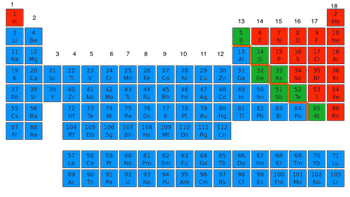
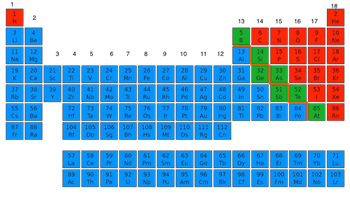

All but Hydrogen and Helium want how many valence electrons?
1
2
8
0
When atoms bond it is called a ___________________ because they make a new substance.
chemical reaction
physical reaction

Cl2
Polar
Nonpolar

CH4
Polar
Nonpolar

H2O
Polar
Nonpolar

NF3
Polar
Nonpolar
Which of the following geometries could be nonpolar?
bent
tetrahedral
trigonal pyrimidal
Which of the following molecules would be a nonpolar molecule?
HBr
H2S
CBr4
PCl3
Nonpolar covalent bond is equal sharing of electron. Polar covelent bond is the _____.
unequal sharing of electrons
different distribution of electrons
presence of hydrogen bonding
presence of polar bonds

The polarity of a molecule is determined by
shape and charge
symmetry/asymmetry of molecule and difference in e-neg value
difference in e-neg value and size
difference in e-neg value and charges

CO2 has two polar bonds but is a NONPOLAR molecule. Why?
it has an asymmetrical shape
The bond polarity, or dipole moment, between the C and O atoms lead to the same partial charge at each pole.
There is a net dipole moment between the C and O atoms in molecule.
There is no bond polarity between the C+ and O- ions.
If an atom has 7 protons and 7 electrons, its electric charge is ---
-7
-14
0
+7
Atoms gain lose, gain, or ______electrons to get a stable outer energy level.
share
split
create
destroy

Which of the following is NOT a covalent bond?
K2S
H2O
I2
CO2

Which of the following is NOT an ionic bond?
NH3
KCl
K3N
NaCl
Why do chemical bonds form?
so the number of protons equals the number of electrons
to fill the outermost electron level
so an atom can become unstable
A proton has a ___ charge.
positive
negative
no charge
it depends
An atom of Neon complies with the Octet Rule because it has ___ electrons in its outer shell.
10
8
2
7
When does chemical bond occur?
when an electron is transferred into another atom
when an atom share its electron with another atom
when the valence electrons of the atom is complete
when the atom has an equal number of protons and electrons

Which is not true of the chemical bond shown on the diagram?
An electron from Na is transferred to Cl.
The bond is ionic since electron is shared by the two atoms.
A metal and a non-metal are involved in the bonding.
Na will become positively charged and Cl will be negatively charged.
All are correct about ionic bonding, except...
It is an electrostatic force of attraction between opposite charges.
It occurs between a metal and a non-metal atoms.
It happens when electrons are shared by the atoms.
It involved the loss and gain of electrons.

Which two statements are correct about the figure shown?
It is a covalent bond.
Hydrogen atoms loss electrons and Carbon gains the atoms.
It happens on metal and on another non-metal.
The valence electrons are shared by both atoms.
Which two are ionic compounds?
NaCl
HCl
CH4
CaO
Which of the following atoms is most likely to bond with another atom?
Which type of atoms usually become positive ions?
Metals
Noble Gases
Nonmetals
Metalloids
The atoms of which group rarely forms bonds.
Group 1
Group 2
Group 7
Group 8
Which of the following atoms do NOT usually form bonds?
Calcium
Neon
Hydrogen
Oxygen
A neutral group of atoms that are joined together by one or more covalent bonds is a
ionic bond
molecule
cation
anion
What attraction holds atoms together in a covalent bond?
The attraction between the shared electrons and protons in each nucleus.
The attraction between the shared protons and electrons in each atom.
The attraction between the shared electrons and neutrons in each nucleus.
The attraction between the shared protons and neutrons in each nucleus.
Which type of atom will always lose valence electrons to become stable?
Metals
Nonmetals
Metalloids
Which type of bond would have an electronegativity difference 1.8 or larger
Ionic
Polar covalent
Nonpolar covalent
Which of the following would not be helpful in identifying the bond type?
The type of elements
The properties of the substance
The difference in atomic mass

Which of these statements is/are correct?
Valence electrons are electrons occupying the innermost shell.
Covalent bond is form due to sharing of a pair of electron by two atoms.
The strength of a covalent bond depends on number of shared electrons
The bond between the two oxygen atoms in a molecule of oxygen is single covalent bond.
Which of these statements is/are correct?
Electronegativity is the atom’s affinity for electrons.
The more electronegative an atom is, the less strongly it attracts shared electrons toward itself
The bond between C and H atom in methane is non polar covalent bond.
The bond between H atom and N atom in ammonia polar covalent bond
Which of these statements is/are correct?
In a water molecule, the hydrogen atom has partially positive charge while the oxygen atom has a partially negative charge.
In an ammonium molecule, the hydrogen has partially positive charge while the N atom has a partially negative charge.
The hydrogen atom of a water molecule is linked by Van der Walls interaction to nitrogen atom of ammonium
Hydrogen bond is a strong bond while Van der Walls interaction is a weak bond.
Van der Waals interaction between molecule exists due to impermanent local partial charges.
Which of these statements is/are correct?
Geometric isomers have the same covalent arrangements but differ in spatial arrangements of the atom
The two Xs in cis isomer are on opposite side.
The two Xs in trans isomer are on the same side.
Enantiomer exists due to differences in the spatial arrangement around an asymmetric carbon.


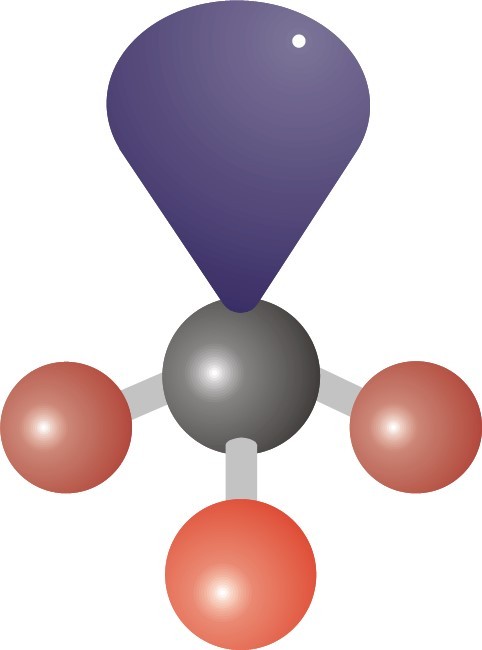
Determine the molecular geometry of the given structure.
Trigonal Pyramidal
Trigonal Bipyramidal
Trigonal Planar
Tetrahedral
The geometry of a molecule with 4 bonded pairs of electrons and 0 lone pairs of electrons, AB4
Tetrahedral
Trigonal Planar
Bent
Trigonal Pyramidal
Linear
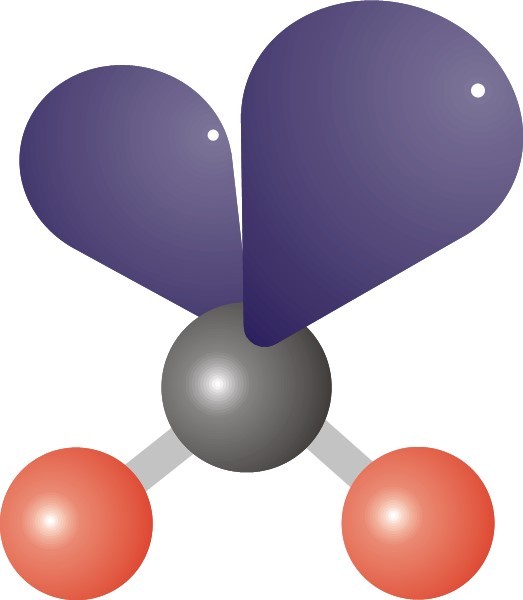
The geometry of a molecule with 2 bonded pairs of electrons and 2 lone pairs of electrons, AB2E2
Tetrahedral
Trigonal Planar
Bent
Trigonal Pyramidal
Linear




True or false: when bonds are broken the energy is positive because energy goes into the system
True
False

