wayground logo

Free Printable Worksheets

NEW

Font size

S
M
L
XL
Worksheets

Mendelian Genetics

Total questions: 48

Worksheet time: 24mins

Name
Class
Date
1.
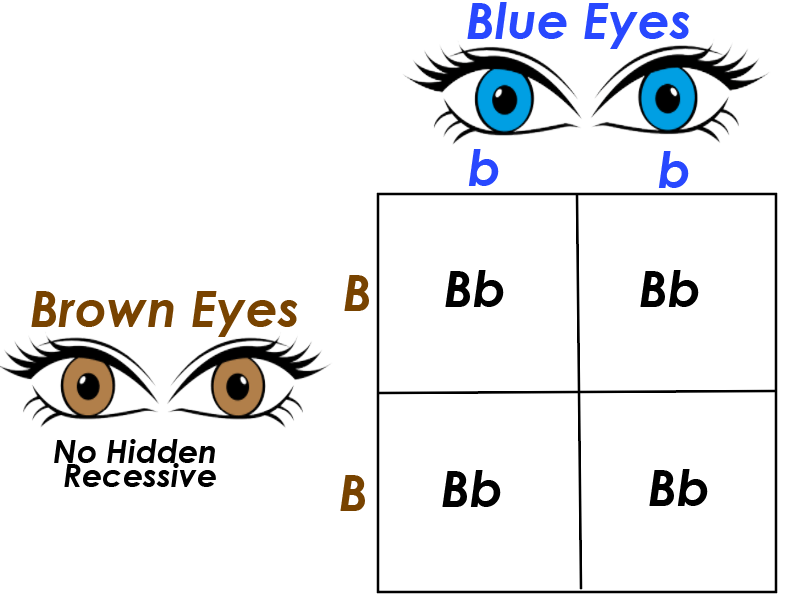
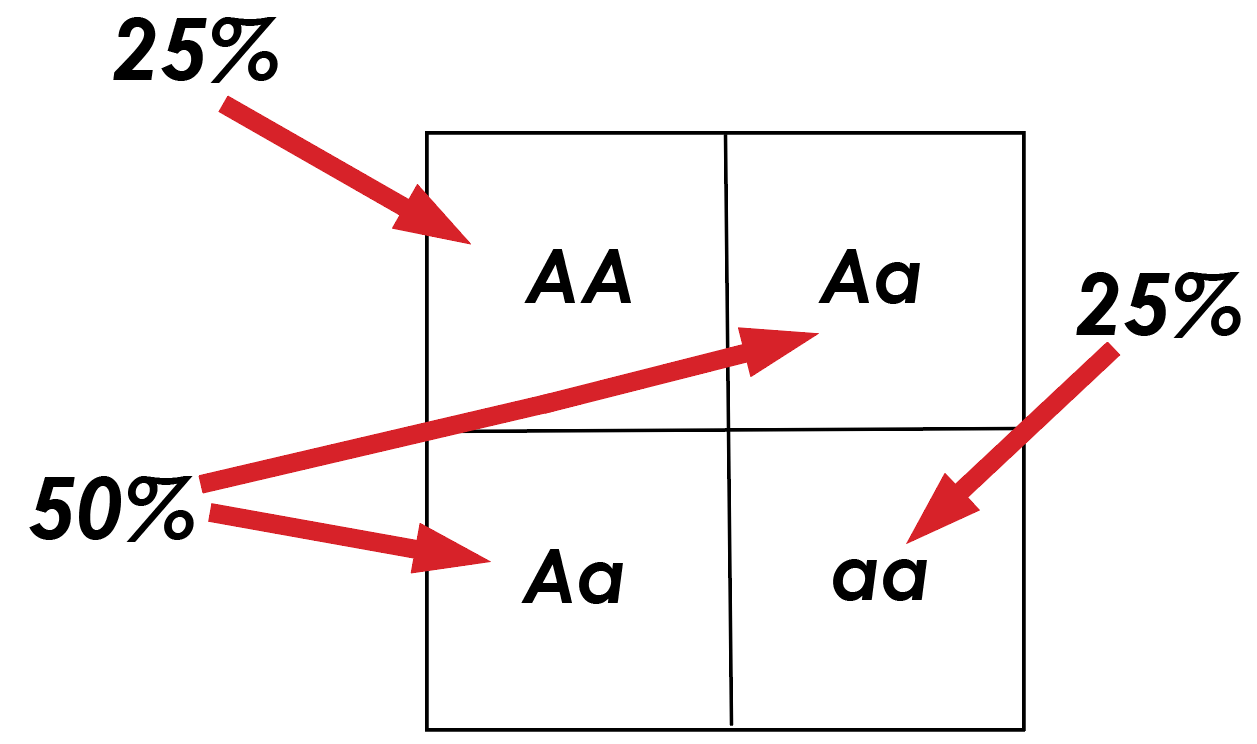
What is the percentage of homozygous recessive offspring?
a)
0%
b)
25%
c)
50%
d)
75%
2.
Green peas are dominant (G) to yellow peas (g). What is the genotype for a hetereozygous dominant offspring?
a)
Gg
b)
gg
c)
GG
3.
Which of the following is a heterozygous dominant genotype? 
a)
GG
b)
gg
c)
GGG
d)
Gg
4.
In Mendel's pea plants, the homozygous recessive phenotype was white flowers.  If Mendel crossed two homozygous recessive pea plants, what color flowers would be seen in the offspring?
a)
white and purple
b)
white 
c)
purple
d)
lavendar
5.
What percentage of the offspring will be purebred dominant?
a)
0%
b)
25%
c)
50%
d)
75%
6.
Dominant alleles are represented by a(n)
a)
phenotype
b)
lower case letter
c)
upper case letter
d)
punnett square 
7.
What type of traits "show up" in a population more often?
a)
dominant
b)
recessive
c)
punnett squares
d)
alleles
8.
True or False:
A heterozygous dominant trait can be written as BB.
a)
True
b)
False
9.
D = dimples        d = no dimples 
What is the genotype for a homozygous recessive offspring?
a)
DD
b)
Dd
c)
dd
10.
What is the percentage of a homozyogus dominant offspring?
a)
75%
b)
50%
c)
25%
d)
0%
11.
Round (R) seeds are dominant to wrinkled (r) seeds.
What is the genotype for a homozygous dominant offspring?
a)
RR
b)
Rr
c)
rr
12.
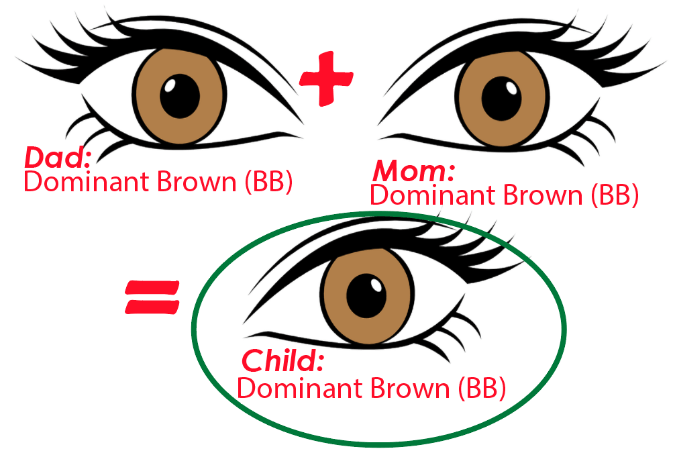
If two purebred species (BB) are crossed, what percentage of their offspring would be BB?
a)
25%
b)
50%
c)
75%
d)
100%
13.
What do you call the physical expression of a gene?
a)
genotype
b)
dominant
c)
phenotype
d)
allele
14.
Short hair (S) is dominant to long hair (s).
What is the genotype for an offspring with long hair?
a)
SS
b)
Ss
c)
ss
15.
What percentage of the offspring will be heterozygous dominant?
a)
100%
b)
75%
c)
50%
d)
25%
16.
What percentage of the possible offspring will be hybrids?
a)
25%
b)
50%
c)
75%
d)
100%
17.

A feature regulated by a set of genes (allele) passed on

from parents to offspring. Also called inherited traits.

a)

Heterozygous

b)

Mendel

c)

Chromosome

d)

Traits

18.

Passing on traits from parents to offspring

a)

Chromosome

b)

Genotype

c)

Heredity

d)

Allele

19.

The study of heredity

a)

Genetics

b)

Genome

c)

Allele

d)

Punnett Square

20.

The instruction of one allele covers up the instruction

of the other allele in a homologous pair. Symbolized by a capital letter.

a)

Recessive Allele

b)

Dominant Allele

c)

Heredity

d)

Trait

21.

The instructions of this allele are covered up by the other allele in a homologous pair. Symbolized by a small letter.

a)

Homozygous

b)

Dominant

c)

Recessive

d)

Genetics

22.

The letter symbols for both homologous alleles.

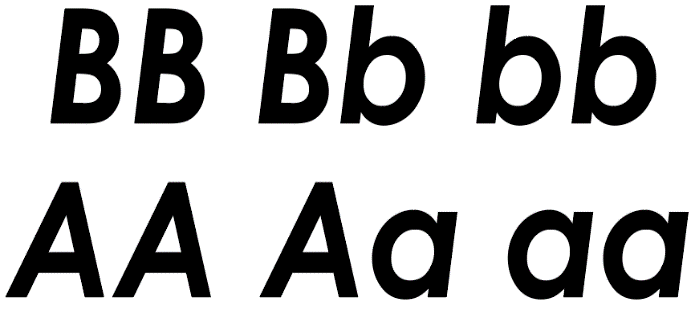
BB Bb bb AA Aa aa

a)

Genotype

b)

Phenotype

c)

Recessive

d)

Dominant

23.

A genotype where only dominant alleles were passed on

from both parents for one trait

BB AA TT LL

a)

Homozygous Recessive

b)

Homozygous Dominant

c)

Dihybrid

d)

Heredity

24.

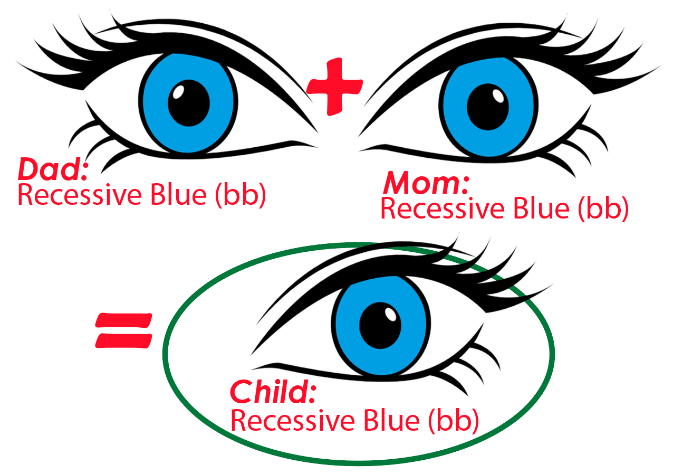
A genotype where only recessive alleles

were passed on from both parents for one trait

bb aa tt ll

a)

Heredity

b)

Homozygous Dominant

c)

Homozygous Recessive

d)

Phenotype

25.

A genotype where one dominant and one recessive allele was passed on from both parents for one trait.

Bb Aa Tt Ll

a)

Allele

b)

Homozygous Dominant

c)

Homozygous Recessive

d)

Heterozygous

26.

The observable traits dictated by the genotype

a)

Phenotype

b)

Genotype

c)

Homozygous Recessive

d)

Homozygous Dominant

27.

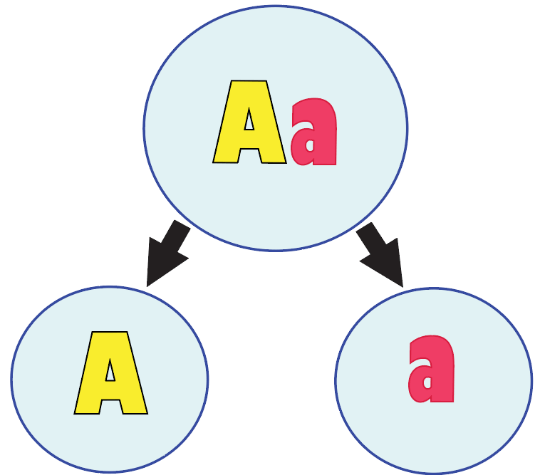
During meiosis and gamete formation, homologous (paired up) alleles split up

a)

Phenotype

b)

Law of Segregation

c)

Genotype

d)

Dihybrid Cross

28.

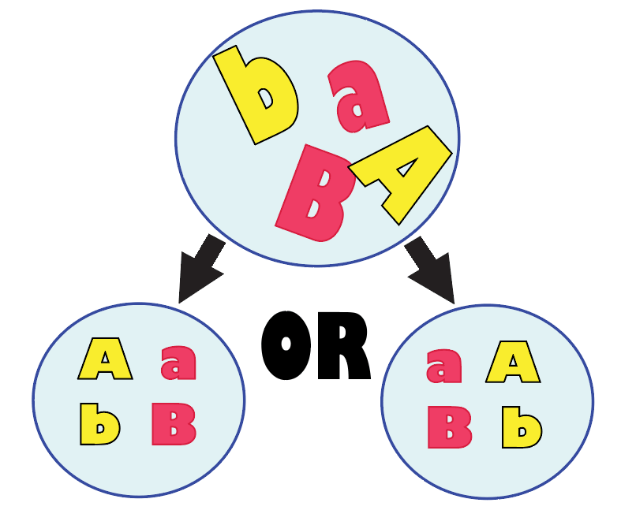
During meiosis, the homologous pairs of chromosomes and the matching alleles are lined up independently.

Offspring are a mix of maternal genes and paternal genes.

This increases genetic variation.

a)

Homozygous Dominant

b)

Law of Segregation

c)

Crossing Over

d)

Independent Assortment

29.

The genetic cross between two parents for one trait:

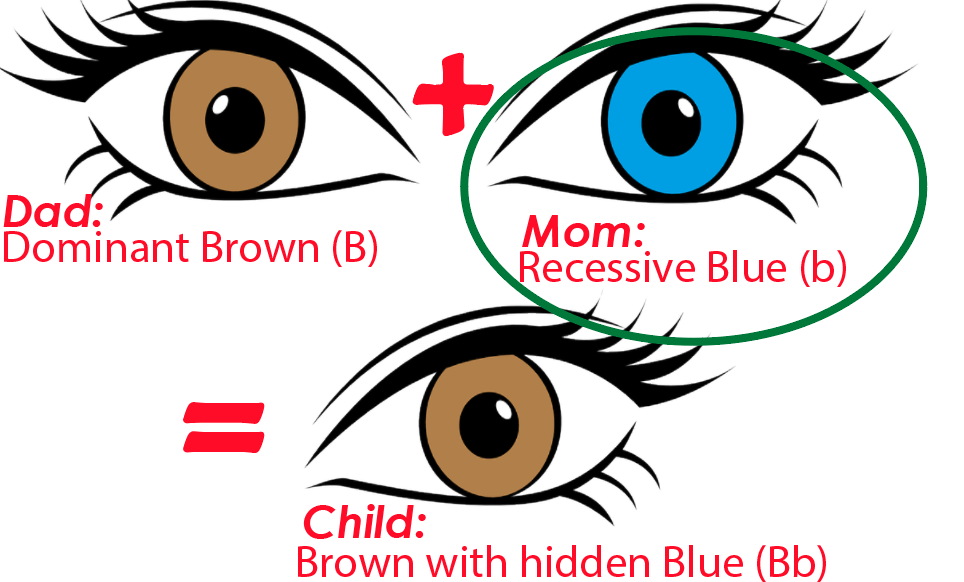
Example BB x bb

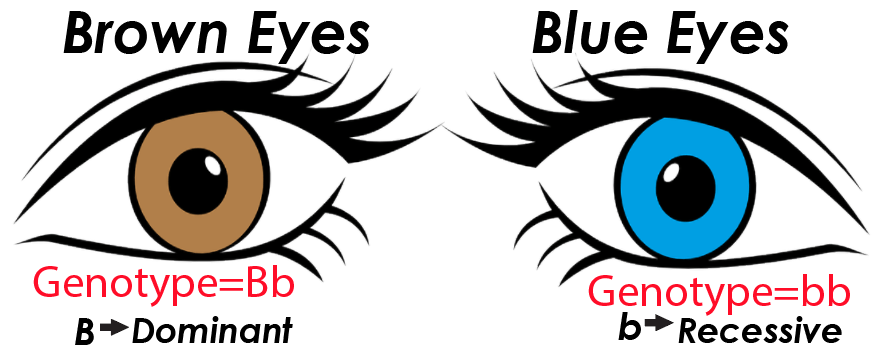
B = dominant for brown

b = recessive for blue

a)

Incomplete Dominance

b)

Dihybrid Cross

c)

Monohybrid Cross

d)

Iron Cross

30.

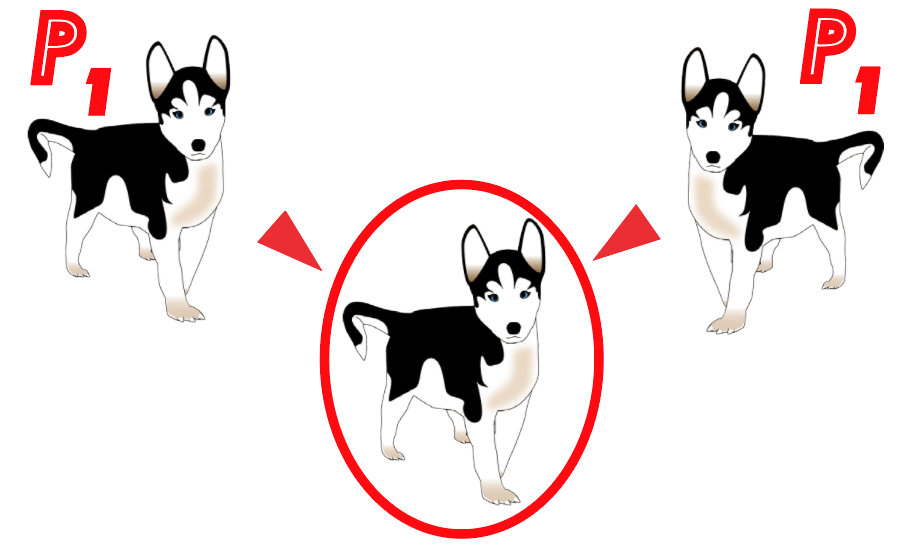
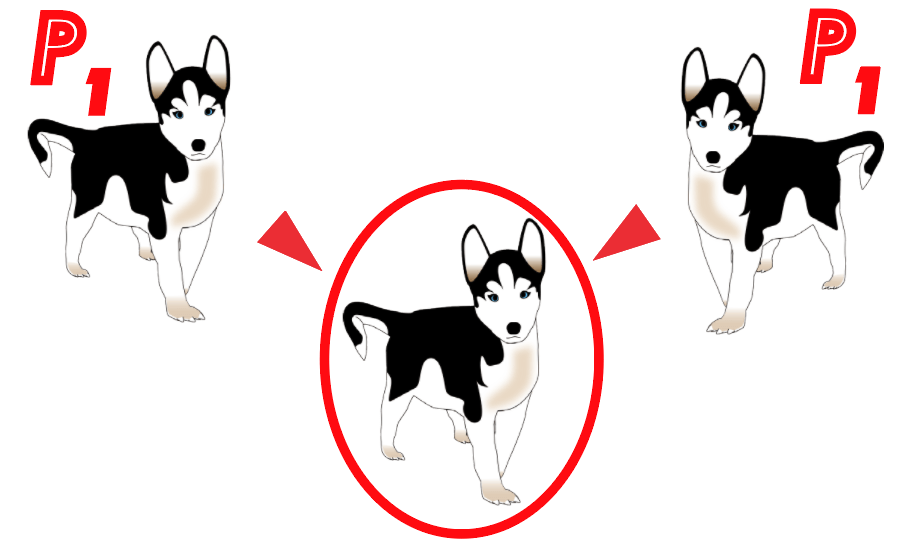
Referring to the original parents.

a)

P1

b)

F1

c)

F2

d)

Homozygous

31.

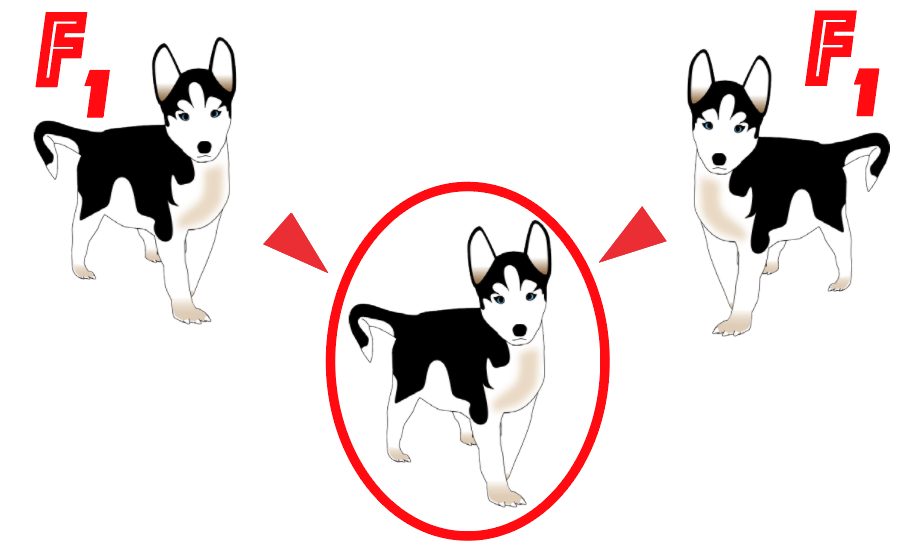
First Filial (child) Generation: the offspring of P1

a)

P1

b)

F2

c)

F1

d)

Heterozygous

32.

Second Filial Generation: the offspring of F1

a)

P1

b)

F1

c)

F2

d)

Homozygous Recessive

33.

The chance that a genotype or phenotype

will actually occur in offspring

a)

Probability

b)

Phenotype

c)

Genotype

d)

Homozygous Recessive

34.

The Italian monk/scientist who first showed

the principles of genetics

a)

Watson and Crick

b)

Linnaeus

c)

Darwin

d)

Mendel

35.
What did Mendel call the two kinds of traits exhibited by the pea plants (one coming from the father, one from the mother)?
a)
Genesis
b)
Elective traits
c)
Alleles
d)
Quadrants
36.
What do we call the result of the genotype (for example, the color of the peas)?
a)
Visible traits
b)
Physiotrait
c)
Genotype 2
d)
Phenotype
37.
If green is dominant over purple, then what is the genotype for this individual?
a)
Purple
b)
Green
c)
GG
d)
gg
38.
Another word for homozygous is...
a)
purebred
b)
hybrid
c)
heterozygous
d)
dominant
39.
Tt is-
a)
homozygous dominant
b)
homozygous recessive
c)
heterozygous
d)
none of these
40.
If a pea plant were homozygous recessive for height, how would its alleles be represented?
a)
TT
b)
Tt
c)
tt
d)
tT
41.
Gregor Mendel's "P" generation consisted of purple flower plants crossed with white flower plants. What were the results of this cross?
a)
All purple flower offspring
b)
All white flower offspring
c)
Some purple flowers and some white flowers
42.
A __________ is a segment of DNA that codes for a particular protein, which leads to a particular trait.
a)
Gene
b)
Allele
c)
Codon
d)
Nucleotide
43.
Which of the following best describes a GENOTYPE?
a)
The allele/genetic makeup of an organism.
b)
The physical expression of a trait.
44.
The letters on the TOP AND SIDE of a punnett square represent ______________.
a)
The combination of alleles in offspring.
b)
The possible alleles given by the parents following meiosis.
c)
The genotype and phenotype of offspring.
d)
The results of genetic mutations in offspring.
45.
Which of the following is an example of a heterozygous genotype?
a)
RR
b)
Rr
c)
rr
46.
Why do we see only tall plants in the second generation?
a)
The gene for tall height is dominant
b)
The gene for short height is dominant
c)
The gene for tall height is recessive
d)
The parents did not have the tall gene
47.
The dominant trait in this punnett square is
a)
yellow pea seeds
b)
green pea seeds
c)
there is no dominant seed
48.
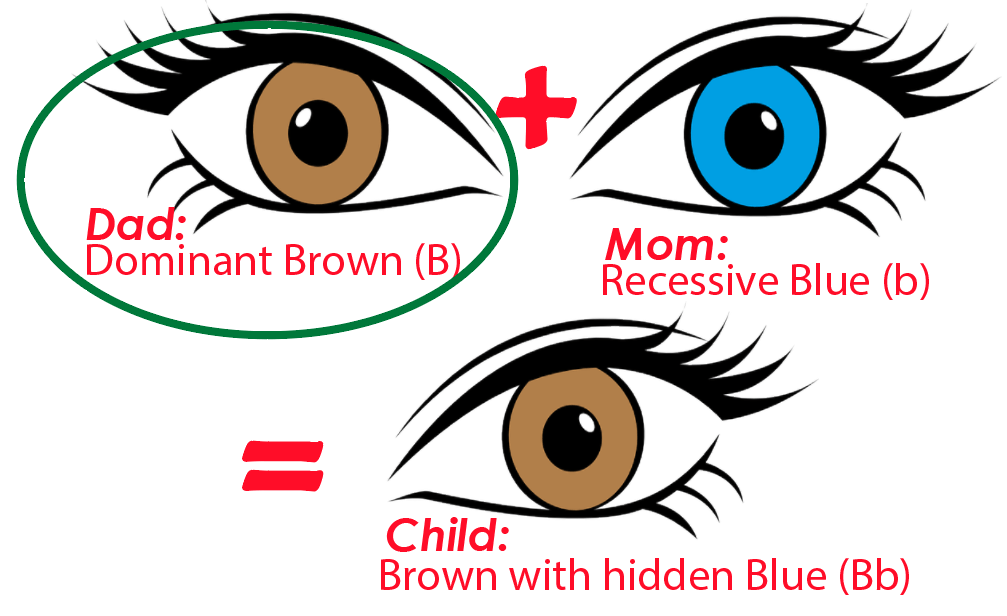
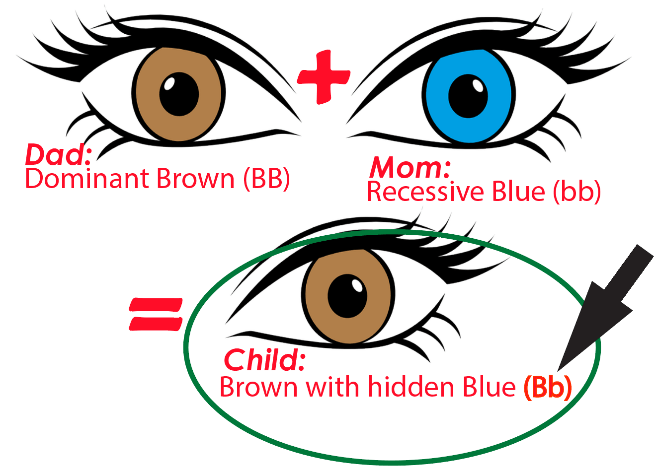
Two brown eyed parents (Bb) have a baby. What is the chance the baby is blue eyed?
a)
0 %
b)
25%
c)
50%
d)
75%