
Font size
 Worksheets
Organic Chem revision for test
Total questions: 49
Worksheet time: 32mins
Crude oil is made up of:
Ethane
Butane
A mixture of different hydrocarbons
Extremely large hydrocarbons which are broken up once extracted
Which process is used to separate the molecules in crude oil?
Filtration
Recrystallisation
Simple distillation
Fractional distillation

Where do long chain hydrocarbons collect?
At the top
In the middle
At the bottom

Where do short chain hydrocarbons collect?
At the top
In the middle
At the bottom
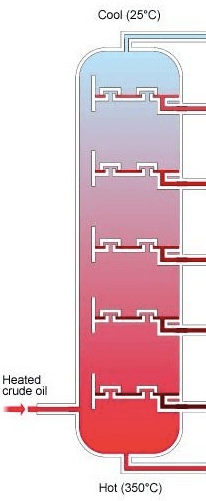
What process happens as the crude oil enters the fractionating column?
Evaporation
Condensation
Combustion
What process happens at each level in the fractionating column?
Evaporation
Condensation
Combustion
Petroleum can be separated by fractional distillation because its constituents ______________.
are immiscible
have different densities
are highly flammable
have different boiling points

What is the name of this compound?
hex-3-ane
hex-3-ene
hex-3-yne
hex-4-ene
What does the term unsaturated mean?
Contains only single covalent bonds between the carbon atoms in the molecule
Contains at least one double covalent bond between the carbon atoms in the molecule

The IUPAC name of this organic molecule is...
eth-1-ene
propene
ethene
ethyne

What is the correct IUPAC name for this molecule?
2,3-dimethylbutane
dimethylbutane
ethylbutane
None of these
How many isomers exist with the molecular formula C3H6?
One
Two
Three
Four
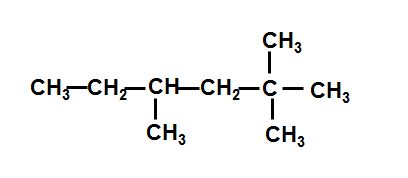
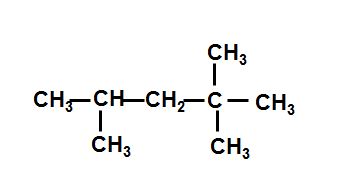
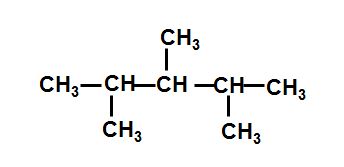
Which is the structures with IUPAC nomenclature
2,2,4-trimethylpentane
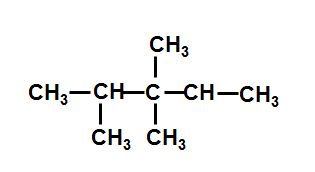
What is an isomer?
compounds with the same formula and structure
compounds with the same formula but a different structure
hydrocarbons with similar chemical properties
hydrocarbons that are used as fuels
How many structural isomers does C5H12 have?
2
3
5
9
What is the name of the reaction used to make polymers?
polymerization
cracking
polygonization
precipitation
Small molecules that make up larger molecules
polymer
monomer
plastic
synthetic
Once formed, it can be heated and reformed over and over again
thermoset
thermoplastic
elastomer
kevlar
Which one of the following is the source of the molecules used to make synthetic plastics?
Natural gas
Crude oil or petroleum
Coal
Mineral ores
What should be done to natural rubber to produce tyres that are harder and more heat resistant?
heat with sulphur
add iron wire
add ammonia solution
add ethanoic acid
Which general formula represents a member of the alkene homologous series?
CnH2n
CnH2n+2
CnH2n-2
CnH2n+1OH
Which two words can be used to describe the types of molecules used to make addition polymers?
Alkane
Alkene
Saturated
Unsaturated
Which general structure is the best example of a section of an addition polymer? Each letter represents a different monomer.
-A-A-A-A-A-A-
-A-B-A-B-A-B-A-B-
-B-C-B-C-B-C-
-A-B-C-A-B-C-A-B-C-
Which diagram shows the correct structure for a repeating unit of polypropene?


Identify the monomer that would be used to make the addition polymer Teflon (polytetrafluoroethene) shown above.


What is the name given to the polymer formed from the unsaturated hydrocarbon monomer shown?
Polythene
Polypropene
Polychloroethene (Polyvinyl chloride)
Nylon

Chloroethene is more commonly called ___
acetic chloride
vinyl acetate
vinyl chloride
phenyl chloride

What is the name of the addition polymer?
poly(bromoethane)
poly(bromoethene)
poly(bromoethanol)

What is the name of the addition polymer?
poly(ethene)
poly(propene)
poly(butene)

What is the name of the addition polymer?
poly(phenylethene)
poly(phenylamine)
poly(benzene)

What is the name of the addition polymer?
poly(ethenenitrile)
poly(etheneamide)
poly(propenenitrile)
Identify the three main categories of synthetic plastics from the list below.
Thermosetting plastic
Thermostat
Thermoplastic
Polymer
Elastomer

Two types of polymer are shown below. Which of the following statements concerning these polymers is correct?
X is thermoplastic whereas Y is thermosetting
X is thermosetting whereas Y is thermoplastic
Both are thermosetting
Both are thermoplastic
Elatomer plastic is known to have rubber like properties. Elastomers can generally be recycled.
True
False

What molecule structure is this?
Elastomer
Thermosetting
Thermoplastic
Bioplastic

Polyethylene can be converted into a thermoset polymer by introducing ___
doping
heat
fluorine
cross-links
Low Density Polyethylene is commonly used for:
food containers (specifically bags), grocery bags, plastic wrap, etc.
shatterproof glass, eyeglass lenses
soft drink bottles, carpet, fiberfill, rope, scouring pads, fabric, Mylar
food containers, medicine containers, automobile batteries, carpet, rope, plastic wrap, lab equipment
High Density Polyethylene is commonly used for:
food containers, bags, lumber, furniture, flower pots, signs, trash cans, toys
food packaging, shampoo containers, construction (ahem PVC pipes ... you see them often), tiles, credit cards
styrofoam, tableware, coffee cups, toys, lighting, signs, insulation
shatterproof glass, eyeglass lenses
Is molecule of HDPE branched or linear?
branched
linear

Is this a branch of HDPE or LDPE:
HDPE
LDPE
Which of these are thermoplastic properties
Reshaping capabilities
High impact resistance
Recyclable
Resistant to high temperatures
Cannot be recycled

Name this compound
propanol
propanoic acid
butanoic acid
butanol
Esters are formed through what type of reaction?
hydrolysis
condensation
hydration
dehydration


What is this compound called?
propyl ethanoate
ethyl ethanoate
ethyl propanoate
methyl ethanoate


