wayground logo

Free Printable Worksheets

Font size

S
M
L
XL
Worksheets

Unit 2: CELLS

Total questions: 95

Worksheet time: 2hrs 16mins

Name
Class
Date
1.
The diagram shows a plant cell. Which labeled structures are found in plant cells but not in animal cells?
a)
P and Q
b)
Q and R
c)
R and S
d)
S and T
2.

Which type of energy transformation is controlled by chloroplasts?

a)

chemical to mechanical

b)

mechanical to electrical

c)

light to chemical

d)

heat to electrical

3.

Which statement correctly describes a function of the organelles in this model?

a)

The mitochondria and chloroplasts are sources of energy for the cell.

b)

The cytoplasm and the cell membrane deliver nutrients around the cell.

c)

The mitochondria and the cell wall sort and package proteins for the cell.

d)

The chloroplasts and cytoplasm send and receive messages around the cell.

4.

Unlike animal cells, plant cells contain a

a)

nucleus to perform photosynthesis.

b)

cellulose-based cytoplasm that makes these cells sturdy

c)

. . cellulose-based cell wall that makes these cells sturdy.

d)

mitochondrion to perform photosynthesis.

5.

Plants gather the suns energy with light absorbing molecules. What are these molecules called?

a)

. pigments

b)

thylakoids

c)

chloroplasts

d)

glucose

6.

What is the significance of cell division?

a)

to make ATP

b)

to prevent replication

c)

to repair and replace other cells

d)

to make glucose

7.

Which of the following best describes why a cell would not be able to reproduce if its nucleus were damaged?

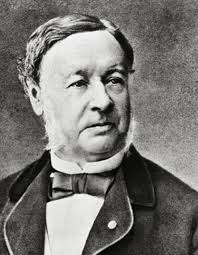
a)

The nucleus is responsible for creating the energy used to perform cell division.

b)

The nucleus is responsible for housing the genetic information needed for cell division.

c)

The nucleus is responsible for letting the materials in that are needed for cell division

d)

The nucleus is responsible for creating the sugars needed to perform cell division.

8.

Which organelle may often be referred to as the "gate keeper" because it controls what goes in and out of the cell?

a)

the cytoplasm

b)

the nucleus

c)

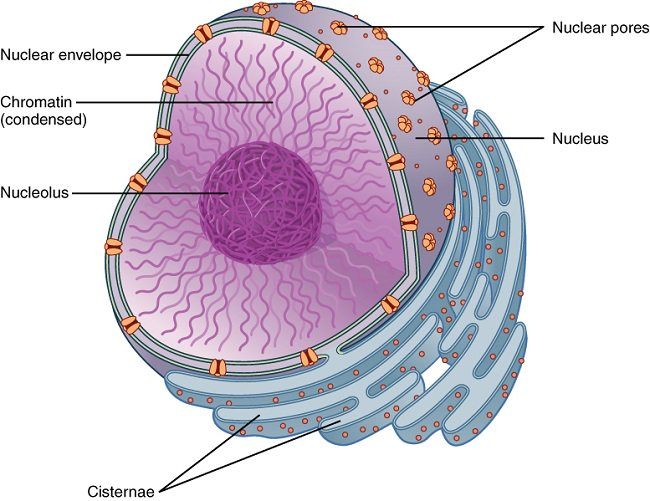
the cell membrane

d)

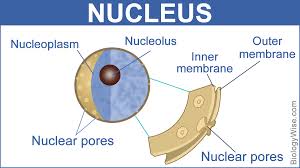
the mitochondrion

9.

Which statement best compares multi-celled organisms to single-celled organisms?

a)

Multi-celled organisms always get energy differently than single-celled organisms.

b)

Single-celled organisms carry out fewer life functions than multi-celled organisms.

c)

Single-celled organisms are always larger than multi-celled organisms, but multi-celled organisms always perform more functions.

d)

Multi-celled organisms have many cells that perform different functions, and single-celled organisms perform all functions within one cell.

10.

Vacuoles are cell structures that are sometimes compared to warehouses. They have the ability to store things such as water and nutrients, and in some cases provide rigidity for the cell. Certain types of cells utilize vacuoles more than others. In what type of cell would you expect to find the largest vacuole?

a)

a cactus cell

b)

a human cell

c)

a worm cell

d)

a mushroom cell

11.

Muscle cells in athletes often have more mitochondria than muscle cells in non-athletes. What can be inferred from this observation?

a)

Muscle cells in athletes have a smaller supply of cell proteins than muscle cells of non-athletes

b)

Muscle cells in athletes reproduce less frequently than muscle cells of non-athletes.

c)

Muscle cells in athletes have nuclei containing more DNA than nuclei in muscle cells of non-athletes.

d)

Muscle cells in athletes have a greater demand for energy than muscle cells of non-athletes.

12.

If a cell were compared to a school, which part of the school would represent the cell's nucleus?

a)

the classroom walls because they give the structure to the school

b)

the cafeteria cooks because they make food for the entire school

c)

the principal because he or she controls all the activity in the school

d)

the fence because it controls what enters and exits the school

13.
What compound is produced in this organelle?
a)
cellulose
b)
glucose
c)
carbon dioxide
d)
chitin
14.
Which type of cell is undifferentiated?
a)
nerve cell
b)
red blood cell
c)
fat cell
d)
stem cell
15.
Where is genetic information stored in this organism?
a)
A
b)
B
c)
C
d)
D
16.
How are eukaryotic and prokaryotic cells similar?
a)
Both have true nuclei.
b)
Both may contain mitochondria.
c)
Both contain ribosomes.
d)
Both contain centrioles.
17.
Which structures would be found in BOTH plant and animal cells?
a)
mitochondria
b)
cell walls
c)
chloroplasts
d)
centrioles
18.
A cell is packaging and shipping proteins to the WRONG destinations.  Which organelles are most likely damaged?
a)
centrioles
b)
Golgi bodies
c)
endoplasmic reticulum
d)
ribosomes
19.
What compound is produced in this organelle?
a)
glucose
b)
oxygen
c)
ATP
d)
cellulose
20.
Location of photosynthesis in a plant cell...
a)
vacuole
b)
cell wall
c)
mitochondrion
d)
chloroplast
21.
A student observes a group of cells and sees a cell wall and large vacuole.  Which of the following cells is the student most likely observing?
a)
smooth muscle cells
b)
bacterial cells
c)
stem cells
d)
plant epidermal cells
22.
Which structure(s) could be found in a plant cell but NOT an animal cell?
a)
mitochondria and chloroplasts
b)
cell wall and chloroplasts
c)
Golgi bodies and chloroplasts
d)
vacuoles and ribsomes
23.
Organelle?
a)
chloroplast
b)
endoplasmic reticulum
c)
mitochondrion
d)
vacuole
24.

Responsible for transport & protein synthesis, contains ribosomes

a)

Golgi Body

b)

Mitochondria

c)

Smooth Endoplasmic Reticulum

d)

Rough Endoplasmic Reticulum

25.

Phospholipid bilayer that controls what enters and leaves the cell

a)

Nucleus

b)

Cell

c)

Plasma Membrane

d)

DNA

26.

Produced in the nucleolus and participates in protein synthesis

a)

Rough ER

b)

Smooth ER

c)

Golgi Body

d)

Ribosomes

27.

Organelle that breaks down and destroys foreign particles or damaged cell parts

a)

Golgi Body

b)

Vesicles

c)

Mitochondria

d)

Lysosomes

28.

Movement of water from High Concentration to Low Concentration

a)

Endocytosis

b)

Osmosis

c)

Diffusion

d)

Phagocytosis

29.

Movement of molecules from High Concentration to Low Concentration

a)

Endocytosis

b)

Osmosis

c)

Diffusion

d)

Phagocytosis

30.

Taking in of a material by a cell - "cell eating"

a)

Exocytosis

b)

Phagocytosis

c)

Pinocytosis

d)

Diffusion

31.

Going out of the cell

a)

Exocytosis

b)

Phagocytosis

c)

Pinocytosis

d)

Diffusion

32.

Going into the cell

a)

Exocytosis

b)

Diffusion

c)

Osmosis

d)

Endocytosis

33.

In a solution, the substance that is present in the smallest amount (being dissolved)

a)

Solvent

b)

Solute

c)

Endocytosis

d)

Osmosis

34.

In a solution, the substance that is present in the largest amount (doing the dissolving)

a)

Solvent

b)

Solute

c)

Endocytosis

d)

Osmosis

35.

Solutions that cause no visible change.

a)

Hypertonic

b)

Hypotonic

c)

Isotonic

36.

A solution that contains more solutes inside the cell causing the cell to shrink

a)

Hypotonic

b)

Hypertonic

c)

Isotonic

37.

A solution that contains more solutes outside the cell causing the cell to swell

a)

Hypotonic

b)

Hypertonic

c)

Isotonic

38.

What kind of cell is this and how do you know?

a)

Animal cell because it has a cell wall and a large vacuole

b)

Animal cell because there is no cell wall or large vacuole

c)

Plant cell because it has a cell wall and a large vacuole

d)

Plant cell because there is no cell wall or large vacuole

39.

Which of the following cells is eukaryotic and why?

a)

Cell A because it is missing the mitochondria

b)

Cell A because it does not have a nucleus

c)

Cell B because the DNA is held in a nucleus

d)

Neither cell is eukaryotic because they both have a cell membrane

40.

Which of the following cells is prokaryotic and why?

a)

Cell A because it is missing the mitochondria

b)

Cell A because it does not have a nucleus

c)

Cell B because the DNA is held in a nucleus

d)

Neither cell is eukaryotic because they both have a cell membrane

41.

This organism is multicellular. Why?

a)

because it is made of many cells that have specialized functions.

b)

because it is made of one cell with many organelles with specialized functions.

c)

because it is so small a microscope is needed to see it.

d)

because it is made of only one large cell that contains many organelles.

42.
A group of organs that work together to perform body functions
a)
tissue
b)
organ
c)
organ system
d)
organism
43.
Movement of particles which requires energy.
a)
homeostasis
b)
passive transport
c)
diffusion
d)
active transport
44.
A group of similar cells that perform a common function.
a)
structure
b)
function
c)
osmosis
d)
tissue
45.
Movement of particles across a membrane WITHOUT the use of energy.
a)
active transport
b)
passive transport
c)
mitosis
d)
homeostasis
46.
Maintenance of a constant, stable internal state, despite changing external environment.
a)
mitosis
b)
osmosis
c)
photosynthesis
d)
homeostasis
47.
Put the levels of cellular organization in order from the smallest to the largest.
a)
organ, organ system, organism, cells
b)
tissues, cells, organs, organ systems, organism
c)
organism, organ system, organ, tissue, cell
d)
cell, tissue, organ, organ system, organism
48.

This type of asexual reproduction has the offspring growing off of the parent.

a)

Budding

b)

Regeneration

c)

Runner

d)

Binary Fission

49.
The amount of particles in a given space.
a)
diffusion
b)
concentration
c)
permeable
d)
active transport
50.
A cell membrane has pores that allow certain materials to pass through. This is a type of cell membrane.
a)
Permeable
b)
In high concentration
c)
At equilibrium
d)
In low concentration
51.
A phospholipid has 2 parts. What are they called? 
a)
Hydrophilic Head, Hydrophobic Tail 
b)
Hydrophobic Head, Hydrophilic Tail 
52.
A ______________ is composed of a phosphate and glycerol head and 2 fatty acid chain tails. 
a)
phospholipid 
b)
Carbohydrate
c)
Cholesterol 
d)
Protein 
53.
"Water Loving"
a)
Hydrophobic
b)
Hydrophilic 
c)
Hydroelectric 
d)
Hydroloric
54.
"Water Fearing" 
a)
Hydrophobic
b)
Hydrophilic 
c)
Hydroelectric 
d)
Hydroloric
55.
___________ have 2 functions in the cell membrane.
1.) They act like gatekeepers, only let certain things in. 
2.) Enzyme receptors embedded in the membrane.
a)
Carbohydrates 
b)
Proteins 
c)
Phospholipids 
d)
Cholesterol
56.
It forms a boundary between the inside of the cell and the outside of the cell. 
a)
Cell Membrane
b)
Lipid Cleric Layer
c)
Membrane Gate
d)
Protein Receptors 
57.
What two molecules are needed for photosynthesis to occur?
a)
oxygen and water
b)
CO2 and water
c)
glucose and water
d)
CO2 and glucose
58.

What kind of cell is this?

a)

animal cell

b)

bell bell

c)

plant cell

d)

vacuole

59.
What is the function of the Stomata?
a)
Gas exchange 
b)
Transpiration
c)
Water regulation
d)
all of these 
60.
Produces proteins
a)
Ribosome
b)
Nucleus
c)
Cytoplasm
d)
Endoplasmic Reticulum
61.
Package and transport proteins from the cell
a)
Golgi Complex (body)
b)
Endoplasmic Reticulum
c)
Ribosome
d)
Mitochondria
62.
The plant cell wall is made up of
a)
chitin
b)
peptidoglycan
c)
cellulose
d)
glycogen
63.
What am I?
a)
vacuole
b)
ribosome
c)
endoplasmic reticulum
d)
golgi apparatus
64.

What are plant cells made of?

a)

Cell wall, cell membrane, cytoplasm, nucleus, and chloroplasts

b)

Stem, leaves, green, petals, flowers

c)

Photosynthesis, membranes, arms, and legs

d)

Jello, bodyguards, fences, and brains

65.
What type of solution is this cell in?
a)
Isotonic
b)
Hypertonic
c)
Hypotonic
d)
diffused
66.
What type of solution is this cell in?
a)
Isotonic
b)
Hypertonic
c)
Hypotonic
d)
diffused
67.
What type of solution allows water to enter the plant cell?
a)
hypotonic solution
b)
hypertonic solution
c)
isotonic solution
d)
active transport
68.

Which Type of solution is the middle cell placed in?

a)

Hypertonic

b)

Hypotonic

c)

Isotonic

d)

Robotonic

69.

What would happen to a cell placed in a hypertonic solution

a)

The cell would shrink

b)

The cell would expand and possibly burst

c)

The cell would remain the same

d)

The cell would dance and do the Nay Nay!

70.
In this picture, how do you classify the solution?
a)
The solution is hypotonic
b)
The solution is hypertonic
c)
The solution is isotonic
d)
The solution is my tonic
71.
In this picture, which way will the water move?
a)
Water will move into the cell
b)
Water will move out of the cell
c)
Water will move in and out of the cell
d)
Water will not move
72.
Why do your fingers Prune when in the water for a long time?
a)
Carbon goes out
b)
Diffusion
c)
Osmosis
d)
Magic
73.
Which cell is in a hypotonic environment?
a)
A
b)
B
c)
C
74.
Which cell is in a hypertonic environment?
a)
A
b)
B
c)
C
75.
Which cell is in an isotonic environment?
a)
A
b)
B
c)
C
76.
Which of the following scientists was the first to observe bacteria?
a)
Anton van Leuwenhoek
b)
Matthais Schleiden
c)
Robert Hooke
d)
Theodor Schwann
77.
Which of the following scientists concluded that all animals are made of cells?
a)
Rudolf Virchow
b)
Matthais Schleiden
c)
Robert Hooke
d)
Theodor Schwann
78.
Which statement reflects one of the major components of the cell theory?
a)
All living things are multi-cellular.
b)
Organs are the basic unit of structure and function for all living things.
c)
All cells come from previously existing cells.
d)
Every organism has a reproductive system to ensure survival of the species.
79.
Robert Hooke, Anton van Leeuwenhoek, Theodor Schwann, Rudolf Virchow, and Matthias Schliden were all responsible for what theory?
a)
The Theory of Gravity
b)
The Theory of Relativity
c)
The Cell Theory
d)
The Theory of Continental Drift
80.
The ___ is the basic unit of sturucture and function of organisms
a)
atom
b)
cell
c)
matter
d)
all other answers are correct
81.
Which invention from the 17th century allowed for the development of modern cell theory?
a)
x-rays
b)
computers
c)
the light microscope
d)
the scanning electron microscope
82.
Who looked at cork and named the cell?
a)
Robert Hooke
b)
Van Leeuwenhoek
c)
Robert Brown
d)
Francesco Redi
83.
Produces water as a by-product
a)
Dehydration synthesis
b)
Hydolysis
84.
Connects monomers to form a polymer
a)
Dehydration synthesis
b)
hydrolysis
85.
Breaks up polymers, forming monomers
a)
dehydration synthesis
b)
hydrolysis
86.
Water is used to break bonds between polymers
a)
dehydration synthesis
b)
Hydrolysis
87.
Joins amino acids to form a protein
a)
Dehydration synthesis
b)
hydrolysis
88.
The process of removing water in order to form a bond between monomers is called....
a)
Dehydration Synthesis
b)
Hydrolysis
89.
The following figure is illustrating
a)
Dehydration Synthesis
b)
Hydrolysis
90.
The following figure is illustrating
a)
Dehydration Synthesis
b)
Hydrolysis
91.

Directs all cell activities through the DNA located there.

a)

Endomembrane System

b)

Nucleus

c)

Ribosomes

d)

Mitochondria

92.
What type of cell has a nucleus? 
a)
eukaryotic
b)
prokaryotic 
93.

Tiny holes in the nuclear membrane that allow different cellular materials to come in and go out of the cell.

a)

nucleus

b)

nucleoplasm

c)

nucleolus

d)

nuclear pores

94.

Helps assemble ribosomes, which are combinations made of protein and RNA (ribonucleic acid ).

a)

nuclear membrane

b)

nuclear pores

c)

nucleoplasm

d)

nucleolus

95.

What is the function of the nucleus?

a)

The nucleus gives the cell energy

b)

The nucleus protects the cell from outside things

c)

The nucleus controls what happens in the cell

d)

The nucleus does not have a job in the cell