wayground logo

Free Printable Worksheets

Font size

S
M
L
XL
Worksheets

Semester 2 Exam Prep A

Total questions: 105

Worksheet time: 1hrs 13mins

Name
Class
Date
1.
What type of rock forms from cementation and compaction close to or on earth's surface?
a)
Sedimentary
b)
Metamorphic
c)
Igneous
2.
What type of rock forms from heat and pressure deep inside earth's surface?
a)
Sedimentary
b)
Metamorphic
c)
Igneous
3.
What type of rock forms from lava that has cooled at or near earth's surface?
a)
Sedimentary
b)
Metamorphic
c)
Igneous
4.
What is the geological process by which rocks are formed, destroyed, or altered?
a)
continental drift
b)
plate tectonics
c)
water cycle
d)
rock cycle
5.
Which of the following is a physical property of minerals?
a)
luster
b)
reactivity
c)
oxidation
d)
flammability
6.
Which statement is true about rocks?
a)
Magma is made of solid rock.
b)
Rocks are made of one or more minerals.
c)
Crystals are made of rocks.
d)
Minerals are made of one or more rocks.
7.
What type of rock is this?
a)
Igneous
b)
Sedimentary
c)
Metamorphic
8.
What type of rock is this?
a)
Igneous
b)
Metamorphic
c)
Sedimentary
9.
What type of rock is this?
a)
Metamorphic
b)
Igneous
c)
Sedimentary
10.

Hardness:

a)

It’s the ability of some minerals to break in geometric shapes

b)

It's the stripe colour of a mineral

c)

It's a measure of a mineral’s resistance to being scratched

d)

None of the answers is correct

11.

a naturally occurring, non-living solid that has a specific chemical make-up and a repeating structure.

a)

rock

b)

mineral

c)

stone

d)

mountain

12.

Scientists use mineral ________________ to identify and classify minerals.

a)

pieces

b)

names

c)

properties

d)

structures

13.

Which one is not a property used to identify minerals?

a)

streak

b)

luster

c)

hardness

d)

size

14.

Gold, silver and copper are examples of minerals that have ______________________ luster.

a)

metallic

b)

nonmetallic

15.

-the name of the scale used to determine a mineral's hardness.

a)

Miller's scale of hardness

b)

The Scale of Hardness

c)

Mohs scale of hardness

d)

Mineral Hardness Scale

16.

Which of the following minerals is one of the hardest minerals?

a)

pearl

b)

diamond

c)

talc

d)

quartz

17.

Which of the following is NOT property of any kind of mineral?

a)

bends light

b)

is magnetic

c)

is fluorescent

d)

can disappear

e)

has electric potential

18.
By definition, a mineral has which of the following characteristic(s)?
a)
definite chemical composition
b)
crystal structure
c)
naturally occuring
d)
all of the above
19.
How do you test the hardness of a mineral? 
a)
Throw it against a wall
b)
Step on it
c)
Scratch Test
d)
Kick it until it breaks
20.
A naturally occurring, inorganic solid with a crystal structure and a definite chemical composition is referring to
a)
density
b)
streak
c)
mineral
d)
non silicate mineral
21.
The solid, geometric form of a mineral produced by a repeating pattern of atoms
a)
crystal
b)
density
c)
element
d)
fracture 
22.
The mineral in the picture has a ____________ luster.
a)
Nonmetallic
b)
Metallic
c)
Pearly
d)
Earthy
23.
A mineral breaks into pieces like are shown in the picture. How would you describe its breakage?
a)
Fracture
b)
Cleavage
c)
Glassy
d)
Waxy
24.
A mineral breaks into pieces like are shown in the picture. How would you describe its breakage?
a)
Fracture
b)
Cleavage
c)
Glassy
d)
Waxy
25.
Refer to the Mohs Hardness Scale. A mineral with a hardness of 7 can scratch -
a)
orthoclase feldspar, but cannot scratch talc
b)
calcite, but cannot scratch apatite.
c)
topaz, but cannot scratch fluorite
d)
gypsum, but cannot scratch corundum
26.

If a mineral is scratched by talc, what must its hardness rating be?

a)

1

b)

3

c)

6

d)

10

27.

Diamond is the hardest mineral.

a)

True

b)

False

28.

What is # 4 on the MOH's scale?

a)

Fluorite

b)

Feldspar

c)

Quartz

d)

Calcite

29.

Feldspar is # 6.

a)

True

b)

False

30.

What is # 8?

a)

Minerals

b)

Apatite

c)

Corundum

d)

Topaz

31.

Which mineral is HARDER than quartz?

a)

Topaz, Corundum, and Diamond

b)

Feldspar. Apatite, and Talc

c)

Talc, Gypsum, Topaz

d)

Diamond, Calcite, Fluorite

32.

Quartz can be scratched by Topaz.

a)

True

b)

False

33.
Using this scale, which mineral can scratch fluorite?
a)
Talc 
b)
Gypsum 
c)
Apatite 
d)
Calcite 
34.
Can a penny scratch fluorite?
a)
Yes 
b)
No 
35.
What can scratch Talc?
a)
Gypsum
b)
Diamond
c)
Quartz
d)
All of them
36.
Using this scale, which mineral can scratch a Drill bit?
a)
Talc 
b)
Topaz
c)
Corundrum
d)
Quartz
37.

10. What is the #10 mineral?

a)

Gold

b)

Feldspar

c)

Diamond

d)

Fluorite

38.

9. Why did quartz scratch the glass easier than feldspar?

a)

Because it is softer.

b)

Because it has a lower scale.

c)

Because it is harder.

d)

None of the above

39.
A mineral is a living object
a)
True
b)
False
40.
All rocks contain at least one mineral.
a)
True
b)
False
41.
What do all rocks have in common?
a)
same size
b)
same color
c)
contain minerals
d)
same shape
42.
Minerals have different properties to help scientists identify them.  Which is NOT a property used to identify minerals?
a)
color
b)
hardness
c)
size
d)
luster
43.

which mineral can't be scratched by a fingernail but can be scratched by a penny.

a)

calcite

b)

corundum

c)

gypsum

d)

talc

44.

Which of the following is not a type of soil?

a)

minerals

b)

clay

c)

topsoil

d)

sand

45.

Weathering is......

a)

rocks, grass, and mud.

b)

the breakdown of rocks into smaller pieces

c)

the breakdown of wind, rain, and friction

d)

the weather outside

46.

The four main ingredients of soil are....

a)

wind, water, ice, and humus

b)

water, air, rocks, and humus

c)

worms, ice, rocks, and air

d)

water, air, rocks, and worms

47.

What soil is best for growing plants?

a)

clay

b)

sand

c)

mud

d)

topsoil

48.

Soil is only dirt.

a)

true

b)

false

49.

Depending on how soil is formed, it's color can be....

a)

yellow

b)

red

c)

black

d)

all of the above

50.

The organic matter in soil is....

a)

humus

b)

bits of rock

c)

minerals

d)

all of the above

51.
Which layer of soil is on the bottom?
a)
topsoil
b)
subsoil
c)
bedrock
d)
bottomsoil
52.
What is humus?
a)
organic material rich in nutrients
b)
subsoil
c)
parent material
d)
trees
53.
Subsoil is made mostly of
a)
parent material
b)
humus
c)
clay and silt
d)
bedrock
54.
Which describes the soil layers in order from the surface?
a)
top soil, bedrock, horizon C, subsoil
b)
top soil, subsoil, horizon C, bedrock
c)
top soil, horizon C, subsoil, bedrock
55.
What process breaks down bedrock to begin soil formation?
a)
leaching
b)
weathering
c)
decomposition
d)
humus
56.

What layer of the soil is represented by letter O?

a)

humus

b)

topsoil

c)

subsoil

d)

bedrock

57.

What layer of the soil is represented by letter A?

a)

humus

b)

topsoil

c)

subsoil

d)

bedrock

58.

What layer of the soil is represented by letter E, B, and C?

a)

humus

b)

topsoil

c)

subsoil

d)

bedrock

59.

What layer of the soil is represented by letter R?

a)

humus

b)

topsoil

c)

subsoil

d)

bedrock

60.
The process that breaks down rocks and other materials on Earth's surface is called
a)
Weathering
b)
Erosion
c)
Deposition
d)
Decomposition
61.

Rain washing soil away from a hillside is an example of

a)

Abrasion

b)

Erosion

c)

Deposition

d)

Weathering

62.

Water is able to move rocks as big as a boulder.

a)

True

b)

False

63.

carries away materials

a)

Erosion

b)

Deposition

c)

Weathering

d)

Rock Cycle

64.

The process of sediment being dropped off in a new place is called

a)

Abrasion

b)

Erosion

c)

Deposition

d)

Weathering

65.
Muddy water being carried away by a fast-moving river
a)
Weathering
b)
Erosion
c)
Deposition 
66.

Small, broken down pieces of rock are called

a)

sedimentary rock

b)

sediment

c)

smaller rocks

d)

crumbs

67.

Small, broken down pieces of rock are called

a)

sedimentary rock

b)

sediment

c)

smaller rocks

d)

crumbs

68.

What does Intelligent Design mean?

a)

smart people make things

b)

God created the Universe

c)

The Big Bang started everything

d)

If you design it, they will come

69.
Gravity attracts all objects towards one another.
a)
False
b)
True
c)
It depends
70.
Any object with mass has gravity.
a)
True
b)
Sometimes
c)
False
d)
Never
71.
As distance between two objects increase the pull of gravity 
a)
Increases
b)
Decreases
c)
Stays the same
72.
The amount of matter in an object is 
a)
pressure
b)
weight
c)
mass
d)
force
73.
Which of the following never changes no matter where in the universe?
a)
weight
b)
force
c)
mass
d)
pounds
74.
Gravity attracts all objects towards one another.
a)
False
b)
True
c)
It depends
75.
Every object in the universe attracts every other object.
a)
True
b)
False
76.

What is Gravity?

a)

A force that makes us float

b)

An invisible force that keeps us on the ground

c)

An invisible force that rocks us

77.

Does gravity help us stay on the ground?

a)

Yes

b)

No

c)

Sometimes

78.

Does Earth have the strongest Gravity?

a)

No

b)

Yes

79.

Is there Gravity in space?

a)

Yes

b)

No

80.
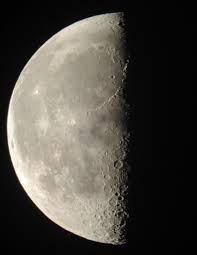
Name the moon phase
a)
First Quarter
b)
Last Quarter
c)
New Moon
d)
Full Moon
81.
What moon phase came right BEFORE this one?
a)
First Quarter
b)
Last Quarter
c)
New Moon
d)
Full Moon
82.
The cycle of the moon lasts about a _.
a)
day
b)
year
c)
week
d)
month
83.
What part of the moon do we see from Earth?
a)
all of it
b)
the same side
c)
none of it
d)
only one quarter
84.
The moon seems to change shape from day to day in a cycle that lasts about a month as it goes through _.
a)
revolutions
b)
phases
c)
rotations
d)
eclipses
85.
Which of the following words describe the phases of the moon?
a)
none, quarter, half, three quarters, full
b)
new, crescent, quarter, gibbous, full
c)
dark, light, half, quarter, blue
d)
first quarter, second quarter, third quarter, fourth quarter
86.

What is the source of the moon's light?

a)

Earth

b)

the sun

c)

the moon

d)

Mars

87.

What is the source of the moon's light?

a)

Earth

b)

the sun

c)

the moon

d)

Mars

88.

The moon phase cycle repeats about every

a)

365 days

b)

20 days

c)

29 days

d)

15 days

89.
Name the moon phase
a)
waning crescent
b)
first quarter
c)
waning gibbous
d)
waxing gibbous
90.
Name the moon phase
a)
First Quarter
b)
Last Quarter
c)
New Moon
d)
Full Moon
91.
Name the moon phase
a)
Waning Crescent
b)
Last Quarter or (third quarter)
c)
New Moon
d)
Full Moon
92.
TRUE or FALSE
We can see the moon during the day. 
a)
True
b)
False
93.

What does NASA stand for?

a)

National Aeronautics and Space Administration

b)

New Aeroplane Science Administration

c)

National Aeronautics and Science Administration

d)

Native American Space Administration

94.

1+1+off topic=

a)

1

b)

2

c)

3

d)

get back to the quiz

95.

The main objective was to land a person on the moon. The program was called ___________.

a)

Gemini

b)

Mercury

c)

Apollo

d)

Redstone

96.

Who said "That’s one small step for man, one giant leap for mankind."

a)

Alan Shepard

b)

Gus Grissom

c)

Neil Armstrong

d)

Yuri Gagarin

97.

Which Apollo mission was the first to send men to walk on the moon?

a)

Apollo 13

b)

Apollo 9

c)

Apollo 7

d)

Apollo 11

98.
The first satellite launched into space by Russia 
a)
Space Suit
b)
Sputnik
c)
ISS
d)
Astronaut
99.

Which of the following men did not walk on the moon in 1969?

a)

Collins

b)

Armstrong

c)

Aldrin

d)

all walked on moon

100.

Which statement best describes stars?

a)

large planets that are composed mostly of gases

b)

celestial bodies made of gas that give off light

c)

faint dots of light that can be seen from Earth's surface

d)

objects that form in the outer parts of the solar system

101.

Felix examined several photos of stars. To compare their temperatures, he looked at the colors of the stars. He organized the photos in order from coolest to hottest. Which of these answers shows the correct order?

a)

red, yellow, white, blue

b)

white, blue, yellow, red

c)

yellow, white, blue, red

d)

blue, yellow, white, red

102.

Which of the following statements best relates a star’s color to its surface temperature?

a)

blue stars have a relatively low temperature

b)

red stars have a relatively high temperature

c)

blue-white stars have a relatively low temperature

d)

yellow stars have a relatively low temperature

103.

About 90 percent of the stars in the universe, including the sun, are main sequence stars. What do all main sequence stars have in common?

a)

All main sequence stars are yellow like our sun.

b)

All main sequence stars are as bright as our sun.

c)

They are all undergoing fusion of helium into carbon within their cores

d)

They are undergoing fusion of hydrogen into helium within their cores

104.

Which of the following correctly ranks astronomical objects by size, starting with the smallest?

a)

earth, sun, solar system, galaxy, universe

b)

sun, solar system, earth, universe, galaxy

c)

universe, galaxy, solar system, earth, sun

d)

solar system, earth, sun, universe, galaxy

105.

White dwarfs stars are

a)

hot and dim

b)

cool and dim

c)

hot and bright

d)

cool and bright