wayground logo

Free Printable Worksheets

Font size

S
M
L
XL
Worksheets

8th Science STAAR Review

Total questions: 117

Worksheet time: 5hrs 52mins

Name
Class
Date
1.

Which statement accurately describes the atom of a specific element?

a)

An indium‚ In‚ atom contains 115 protons inside the nucleus and 49 neutrons outside the nucleus

b)

A scandium‚ Sc‚ atom contains 45 electrons outside the nucleus and 21 neutrons inside the nucleus.

c)

An aluminum‚ Al‚ atom contains 27 electrons and 27 protons inside the nucleus.

d)

A zinc‚ Zn‚ atom contains 30 protons inside the nucleus and 30 electrons outside the nucleus.

2.

Atoms of which two elements have a combined total of 23 protons?

a)

Sodium, Na, and magnesium, Mg

b)

Boron, B, and carbon, C

c)

Copper, Cu, and zinc, Zn

d)

None of these

3.
a)

Particle W

b)

Particle X

c)

Particle Y

d)

Particle Z

4.
a)

4 carbon atoms, 11 hydrogen atoms, and 1 oxygen atom

b)

7 carbon atoms, 14 hydrogen atoms, and 1 oxygen atom

c)

7 carbon atoms, 11 hydrogen atoms, and 8 oxygen atoms

d)

6 carbon atoms, 14 hydrogen atoms, and 3 oxygen atoms

5.

Which statement best describes evidence that a chemical reaction occurs as a cake bakes?

a)

the water in the cake batter evaporates

b)

the cake rises as gas bubbles form in the baking cake

c)

the cake takes the shape of the container in which it is baked

d)

the water in the cake batter is used to keep the cake moist as it bakes

6.

The diagrams show forces acting on a toy car as it moves to the right. Which diagram shows the toy car that will most likely accelerate to the right based on these conditions?

a)
b)
c)
d)
7.

A large rock is motionless on a flat sidewalk. Which statement best explains why the rock remains motionless?

a)

there are no forces acting on the rock

b)

the only force acting on the rock is directed toward the sidewalk

c)

the forces acting on the rock are all balanced

d)

the sidewalk exerts an unbalanced force on the rock

8.
a)
b)
c)
d)
9.

a)

moving at a constant speed

b)

accelerating

c)

moving toward the north

d)

stopped

10.

A student viewed the moon through binoculars one week after a new moon. Which image shows the phase of the moon that the student observed?

a)
b)
c)
d)
11.
a)

Diagram 1

b)

Diagram 2

c)

Diagram 3

d)

Diagram 4

12.

What are the main functions of the human skeletal system?

a)

to support the body, protect the organs, produce blood cells, and store calcium

b)

to regulate the composition of bodily fluids by removing metabolic wastes and retaining a balance of water, salt, and other nutrients

c)

to regulate and maintain bodily functions by producing hormones and releasing them into the bloodstream

d)

to enable the diffusion of oxygen into the bloodstream and the removal of carbon dioxide from the bloodstream

13.
a)
b)
c)
d)
14.

Researchers are studying lichens growing on trees in a forest ecosystem. At the beginning of the study, the researchers identified twelve lichen species in the forest. Later, a forest fire happened in the study area. The researchers returned to the area and found only six lichen species. Which inference is best supported from the researcher's observations?

a)

most lichen species are unaffected by forest fire

b)

the biodiversity in a forest increases after a fire

c)

certain lichen species are better adapted to survive forest fires than others

d)

forest fires will permanently remove certain species from the ecosystem

15.
An organism that needs to eat other organisms to obtain energy is known as a:
a)
Autotroph
b)
Producer
c)
Consumer
d)
Mutualist
16.
Consumer that eats plants
a)
heterotroph
b)
herbivore
c)
producer
d)
community
17.
If a disease were to infect frogs and kill them off what would be the likely impact of this system?
a)
Decrease the amount of flies
b)
Increase the amount of frogs
c)
Decrease the amount of algae
d)
Increase the amount of algae
18.
Biodiversity refers to
a)
extinct species
b)
the variety of species on Earth
c)
nonrenewable resources
d)
the rate of species decline
19.
The _______________________ consists of blood, blood vessels, and the heart. 
a)
respiratory system 
b)
circulatory system 
c)
urinary system 
20.
Where is DNA stored in a cell? 
a)
Lysosomes
b)
Golgi Complex
c)
Ribosomes
d)
Nucleus
21.
Which organelle is only found in a plant cell? 
a)
nucleus
b)
chloroplast
c)
mitochondria
d)
cell membrane
22.
Cells that do not have a true nucleus are called....
a)
eukaryote
b)
prokaryote
c)
unicellular
d)
multicellular
23.
What element is represented in this Bohr Model? 
a)
Carbon
b)
Hydrogen
c)
Aluminum
d)
Lithium
24.
Which is an electron?
a)
A
b)
B
c)
C
25.
What is found in the nucleus of atoms?
a)
Protons and electrons.
b)
Protons, neutrons, and electrons.
c)
Protons and neutrons.
d)
Neutrons and electrons.
26.
How many valence electrons does Sodium (Na) have?
a)
1
b)
2
c)
3
d)
4
27.
Each row in the periodic table is called a 
a)
group
b)
period
c)
cluster
d)
unit
28.
Each column in the periodic table is called a 
a)
period
b)
group
c)
cluster
d)
unit
29.
Which is the correct formula for:
 three hydrogen (H)
one sulfur (S)
four oxygen (O)
a)
H3SO4
b)
HSO4
c)
H4S3O
d)
H2O
30.
How many elements are in C6H12O6?
a)
1
b)
2
c)
3
d)
4
31.
In the equation,          2Mg + O2 ---> 2MgO, which are the reactants?
a)
Mg and O
b)
MgO
c)
Mg and MgO
d)
O and MgO
32.
Jack has a rock. The rock has a mass of 14g and a volume of 2cm3. What is the density of the rock?
a)
7 mL
b)
7 g/cm3
c)
28 g/cm3
d)
1/7 g/cm3
33.
<--------8N  4N-------->
a)
2N
b)
12N
c)
4N
d)
32N
34.
If two forces act on an object in the same direction, the net force is the _____________
a)
the difference between the two forces
b)
the sum of the two forces
c)
Only one of the forces acts on the object
d)
DOOMSDAY!
35.
Total distance divided by total time is
a)
average speed
b)
constant speed
c)
instantaneous speed
d)
acceleration
36.
Which of Newton's laws is illustrated when a magician pulls a tablecloth out from under the dishes without disturbing them?
a)
first
b)
second
c)
third 
d)
fourth
37.
What is Newton's First Law
a)
F=ma
b)
Every action has an equal and opposite reaction
c)
An object at rest stays at rest, an object in motion stays in motion. 
d)
Friction 
38.
 What kind of energy is in gasoline in a car tank (car is not on)?
a)
Potential
b)
Kinetic
39.
What is happening at A?
a)
Stationary
b)
Accelerating
c)
Slower steady speed; moving away from the starting position
d)
Steady speed; returning to start position
40.
What best describes the energy conversion that occurs when you turn on a flashlight?
a)
electrical to thermal to light
b)
chemical to electrical to light
c)
nuclear to electrical to thermal
d)
kinetic to light to thermal
41.
What is happening at D?
a)
Stationary
b)
Accelerating
c)
Fast steady speed; moving away from the starting position
d)
Slower steady speed; moving away from the starting position
42.
The living organisms in an ecosystem such as plants and animals
a)
adaptation
b)
biotic
c)
decomposer
d)
abiotic
43.
The non-living factors in an ecosystem such as rocks, water and temperature.
a)
natural selection
b)
biotic
c)
biodiversity
d)
abiotic
44.
Organisms that make their own food. Also called autotrophs.
a)
Producer
b)
Parasite
c)
Scavenger
d)
Decomposer
45.
Process by which an animal or plant species becomes fitted to its environment to help them survive.
a)
Interdependence
b)
Natural Selection
c)
Adaptation
d)
Competition
46.
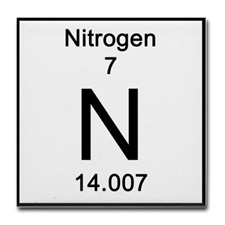
What is the number of protons that the element in this image contain?
a)
14
b)
7
c)
15
d)
18
47.
What is the formula for density?
a)
density = mass x volume
b)
density = mass / volume
c)
density = mass + volume
d)
density = mass - volume
48.
Star A is _________ and __________.
a)
dim and cool
b)
bright and hot
c)
bright and cool
d)
dim and hot
49.
What type of star is hot and dim?
a)
main sequence
b)
supergiants
c)
giants
d)
white dwarfs
50.
What type of geological feature will form at a convergent boundary in the ocean?
a)
mid ocean ridge
b)
volcanic Islands
c)
fault
d)
mountains
51.
What type of geological feature will form at a transform boundary?
a)
fault
b)
rift valley
c)
mountains
d)
mid ocean ridge
52.
What determines an element's identity?
a)
electrons
b)
valence electrons
c)
protons
d)
neutrons
53.
What determines how chemically reactive an element is?
a)
electrons
b)
valence electrons
c)
protons
d)
neutrons
54.
If the same amount of force is applied to a car with a small mass that is applied to a car that is much heavier, what would happen?
a)
the small car will accelerate faster
b)
the small car will accelerate slower
c)
the heavier car will accelerate faster
55.
What is the acceleration of a 50 kg object pushed with a force of 500 newtons? To solve this problem you must do - 
a)
500 ÷ 50
b)
50 ÷ 500
c)
500 x 50
56.
The mass of a car is 1000 kg.  How much force would be required to accelerate the car at a rate of 3 m/s2? 
a)
1000 ÷ 3
b)
3 ÷ 1000
c)
1000 x 3
57.
a)
2
b)
3
c)
5
58.
Organisms that live in or on another organism and benefit at the host's expense.
a)
Parasite
b)
Producer
c)
Scavenger
d)
Decomposer
59.
a)
12
b)
7
c)
8
d)
14
60.
This number is  the top number in the box on the periodic table and ALWAYS equals the number of protons
a)
Neutrons
b)
Atomic Mass Number
c)
Group
d)
Atomic Number
61.
The organelle inside a plant cell that converts sunlight into energy.
a)
Chloroplast
b)
Photosynthesis
c)
Parasite
d)
Cell Wall
62.
The part of a plant cell that is rigid & permeable.
a)
Chloroplast
b)
Turgor Pressure
c)
Cell Wall
d)
Phototropism 
63.
What season is the Northern Hemisphere experiencing at position C?
a)
winter
b)
spring
c)
summer
d)
fall
64.
Which of the following is a predator-prey relationship in this food web?
a)
Jackal-Goat
b)
Rabbit-Green Plant
c)
Mouse-Owl
d)
Jackal-Lion
65.
Which star is the least bright in spectral class M?
a)
Proxima Centauri
b)
the Sun
c)
Betelgeuse
d)
Vega
66.
Balanced forces would describe objects that_____
a)
move at a constant speed
b)
change speed
c)
travel at a slower speed
d)
change direction
67.
For an investigation a student pours a blue solution into a beaker.  The student then places a shiny, silver-colored strip of zinc into the solution.  The strip of zinc had a dark, solid form on it and small solid pieces broke off of it and settled to the bottom of the beaker.  The student inferred that a chemical reaction occurred.  What evidence supports this?
a)
A dark solid formed on the zinc.
b)
The zinc metal remained silver and shiny
c)
The solution turned blue when the zinc was added
d)
None of these
68.
 Which is NOT an example of chemical change?
a)
production of gas.
b)
change in color.
c)
change in size.
d)
transfer of energy.
69.
A mid-ocean ridge occurs at a ________ plate boundary.
a)
transform
b)
convergent
c)
divergent
70.
What kind of energy is in a moving skateboard?
a)
Potential
b)
Kinetic
71.
a body system that controls growth and homeostasis by secreting hormones from glands.
a)
skeletal system
b)
nervous system
c)
endocrine sytem
d)
integumentary system
72.

Burning of firewood is example of ______________________

a)

Chemical change

b)

Physical change

73.
a)

Divergent Boundary

b)

Convergent Boundary

c)

Transform Boundary

74.
a)

Convergent Boundary

b)

Divergent Boundary

c)

Transform Boundary

75.
(8.7A) Earth would not have seasons if it-
a)
no longer tilted on its axis
b)
stopped rotating on its axis
c)
took and additional month of orbit the sun
d)
revolved around the sun in the opposite direction.
76.
(8.10C) Hurricanes and similar storm systems begin over oceans. The map below shows average surface temperatures of the oceans in the summer.
Based on the map, which area probably produced the most violent storm systems?
a)
Area 1
b)
Area 2
c)
Area 3
d)
Area 4
77.
(8.7A) Which of these locations on Earth experiences the least change in the number of daylight hours throughout the year?
a)
Equator
b)
North Pole
c)
Tropic of Cancer
d)
Tropic of Capricorn
78.
What is this moon phase?
a)
This is the waxing crescent phase.
b)
This is the full moon phase.
c)
This is the waxing gibbous phase.
d)
This is the last quarter moon.
79.
When the Northern Hemisphere of Earth is Leaning away from the Sun, What season is the Southern Hemisphere experiencing?
a)
Summer
b)
Winter
c)
Spring
d)
Fall
80.
All stars begin as a __________?
a)
giant
b)
black hole
c)
white dwarf
d)
nebula
81.
What moon phase is this picture?
a)
This is the full moon phase.  
b)
This is the waxing crescent moon phase.
c)
This is the waning gibbous moon phase.
d)
This is the waning crescent moon phase.
82.
Which season is taking place in the NORTHERN Hemisphere in Position 3?
a)
Winter
b)
Spring
c)
Summer
d)
Fall
83.
A[n] ___________ tide occurs when the sun, Earth, and the moon are nearly in a line. 
a)
spring
b)
high
c)
low
d)
neap
84.
What is a difference between spring and neap tides?
a)
Spring tides occur when the earth and sun are IN LINE with the new or full moon. 
b)
Spring tides occur when moon in 3rd or 1st quarter phases
c)
Spring tides are LOWER than neap tides
d)
Spring tides occur in Spring and neap tides can occur in any season
85.
What type of tide would this arrangement of earth-moon-sun create?
a)
full moon tide
b)
new moon tide
c)
neap tide
d)
spring tide
86.

Compared to the rest of the stars, our sun is considered...

a)

Extremely Large and Cold

b)

Small with a medium temperature

c)

Medium size with medium temperature

87.

Which category is our Sun located in?

a)

White Dwarfs

b)

Supergiants

c)

Main Sequence

d)

Giants

88.

Where would our Sun be located in the Milky Way?

a)

A

b)

B

c)

C

89.

A collection of dust and gas where stars can form is called a...

a)

universe

b)

nebula

c)

black hole

d)

supernova

90.
During a demonstration of Newton’s laws of motion, a student used the setup shown in Figure 1. The student flicked the index card with a fingertip, and the coin fell straight down into a plastic cup as shown in Figure 2. Which of these best explains why the coin fell straight down into the cup instead of remaining on the index card?
a)
The coin was at rest until the card was removed, so it tended to remain in the same location. Once the card was gone, the unbalanced force of gravity caused the coin to fall.
b)
Moving the card applied an action force on the coin. Since the card was gone, gravity applied a reaction force on the coin.
c)
The card had less mass than the coin, so a smaller force of gravity acted on the card. The larger force of gravity on the coin made it fall.
d)
The acceleration of the coin falling into the cup was equal and opposite to the acceleration of the card.
91.
The masses of four vehicles and the net forces acting on them as they enter a highway are recorded in the table below. Which vehicle has the greatest acceleration as it enters the highway?
a)
Sedan
b)
Coupe
c)
SUV
d)
Truck
92.
Sometimes tectonic plates do not move easily past one another, and the plates become stuck. Forces build up, and when the plates finally move, tension is released, as shown below. The sudden movement of the plates is caused by -

a)
the mass of the plates
b)
the weight of the plates
c)
unbalance forces
d)
gravitational force
93.
Two cars with different masses travel at the same speed down a hill toward a stop sign. What will happen when both cars apply brakes at the same time to stop?
a)
The car with the smaller mass will require less forces to stop than the car with the larger mass.
b)
The car with the larger mass will amintain its velocity while traveling down the hill.
c)
The car with the smaller mass will take longer to stop than the car with the larger mass.
d)
The car with the larger mass will have less inertia than the car with the smaller mass.
94.
Are forces balanced or unbalanced when a car is moving at a constant speed in a straight line?
a)
Balanced
b)
Unbalanced
95.
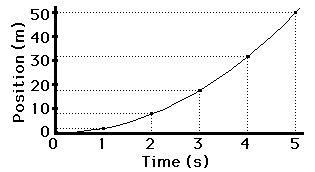
The picture of the position vs. time graph shows an object that is...
a)
accelerating/speeding up
b)
moving at a constant speed 
c)
not moving 
d)
accelerating/slowing down. 
96.
Functions in energy production, known as the energy factory of the cell
a)
mitochondria
b)
chloroplast
c)
vacuole
d)
cytoplasm
97.
The control center that controls all the functions of the cell
a)
cytoplasm
b)
cell wall
c)
cell membrane
d)
nucleus
98.
I store water in both plant and animal cells. What am I?
a)
cytoplasm
b)
ribosomes
c)
vacuole
d)
lysosomes
99.
Which system contains the bladder and the kidneys?
a)
Skeletal system
b)
Digestive system
c)
Respiratory system
d)
Urinary system
100.
Which two systems work together to help us breath and get oxygen to all parts of our body?
a)
Circulatory, Skeletal
b)
Respiratory, Digestive
c)
Circulatory, Respiratory
d)
Circulatory, Urinary
101.
Process by which organisms that are suited to a particular environment are better able to survive and reproduce than other organisms that are not.
a)
Ecological Succession
b)
Biodiversity
c)
Natural Selection
d)
Producer
102.
During the Industrial Revolution, coal-burning factories produced black soot that covered the trees and killed the lichen near cities. In these areas the number of dark peppered moths increased, while the number of light peppered moths decreased. What led to this change?
a)
The soot covered trees camoflaged the dark moths.
b)
The dark moths preyed on the light moths.
c)
Bird populations increased in areas near factories.
d)
The dark moths laid fewer eggs.
103.
A Cross Timbers rancher is concerned about competition between the ranch animals and deer. Based on the graph, which animals compete for the most food with the white-tailed deer?
a)
Cattle that eat grass and feed.
b)
Goats that eat weeds and shrubs.
c)
Turkeys that eat seeds and fruit.
d)
Hogs that eat fruit, seeds, and feed.
104.
These species are very similar, but the Hood mockingbird has a longer beak than the other 3 species. Which of the following best explains this difference?
a)
The Hood mockingbird needs a longer beak for defense against predators.
b)
The Hood mockingbird originated from a different type of bird than the other species.
c)
The Hood mockingbird's longer beak is an adaptation to the available food.
d)
The Hood mockingbird's beak stretched to reach its food, and the longer beak was passed down to its offspring.
105.
Which of these correctly describes a relationship between organisms in the soil food web?
a)
Protozoa get nutrients from small arthropods.
b)
Mammals are predators of birds.
c)
Nematodes prey on arthropods.
d)
Bacteria get nutrients from organic matter.
106.
When people run long distances, their muscles require increased amounts of oxygen. Which system is responsible for carrying this oxygen to the muscles?
a)
Nervous
b)
Respiratory
c)
Digestive
d)
Circulatory
107.
At which temperature range will there be the most competition for space among these fish species?
a)
5o to 10oC
b)
10o to 15oC
c)
15o to 20oC
d)
25o to 30oC
108.
a)
All cells have a cell wall.
b)
All cells arise from pre-existing cells.
c)
All cells are capable of photosynthesis.
d)
All cells can develop into any other type of cell.
109.
Which statement is a part of the cell theory?
a)
all cells come from preexisting cells
b)
bacteria are prokaryotic cells
c)
eukaryotic cells are complex
d)
humans are multicellular
110.
What kind of cell is this?
a)
Animal 
b)
Plant
111.
What kind of cell is this?
a)
Animal
b)
Plant
112.
A plant and an animal are both living things. According to the Cell Theory, what can you conclude about these two very different organisms?
a)
Plants have cells but animals do not.
b)
They are both made of one or more cells. 
c)
They both come from the same kind of cell.
d)
They both come from a non-living organism.
113.
The evolution of dogs from wolves is due to:
a)
Natural Selection
b)
Sexual Selection
c)
Artificial Selection
d)
Vestigial Structures
114.
Evidence shows that the wolf is the ancestor to all of the breeds of dogs shown below. How did this variation arise in a relatively short period of time?
a)
A.  Genetic manipulation
b)
Natural selection
c)
Random chance
d)
Selective breeding
115.
Survival of the Fittest and Evolution were proposed by what scientist?
a)
Charles Darwin
b)
Albert Einstein
c)
Steven Hawking
d)
Isaac Newton
116.
What is the advantage of having different shaped beaks?
a)
To look different from other species.
b)
To be able to eat the food readily available in the environment.
c)
To protect itself against predators.
d)
To protect itself against prey.
117.
What word describes the process of having the advantageous traits that helps an organism survive  and reproduce?
a)
natural selection
b)
adaptation
c)
mutation
d)
genetic engineering