Wayground logo

Free Printable Worksheets

Font size

S
M
L
XL
Worksheets

Human impact on the environment

Total questions: 111

Worksheet time: 2hrs 33mins

Name
Class
Date
1.
About 97% of the water on Earth is ___________________.
a)
fresh water
b)
groundwater
c)
salt water
d)
ice
2.
Wastes produced by agriculture, households, industry, mining, and other human activities can end up in ______________.
a)
groundwater
b)
streams and rivers
c)
oceans
d)
All of these choices
3.
About 97% of the water on Earth is ___________________.
a)
fresh water
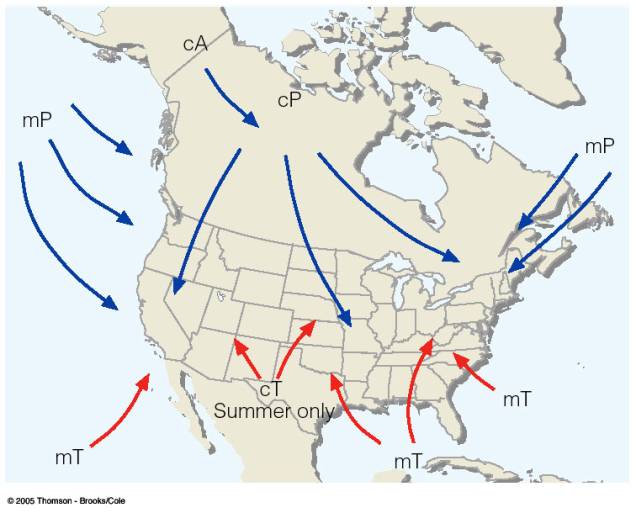
b)
groundwater
c)
salt water
d)
ice
4.
Increase in which gas is primarily responsible for increased global warming?
a)
Carbon dioxide
b)
Water vapor
c)
Methane
d)
Nitric oxides
5.
Which of these is a MAJOR cause of acid rain?
a)
spraying pesticides on crops
b)
burning fossil fuels for energy
c)
dumping sewage in river systems
d)
using uranium to generate electricity
6.
How is acid rain formed?
a)
Carbon monoxide and carbon dioxide mix with water in the ocean.
b)
Carbon dioxide and oxygen mix with water in the air.
c)
Sulfur dioxide and carbon monoxide mix with lake water.
d)
Sulfur dioxide and nitrogen oxide mix with water in the air.
7.
Which of these is an impact of acid rain?
a)
dissolves nutrients in the soil
b)
raises oxygen levels
c)
gives off chemicals
d)
reduces the amount of coal used
8.
Without the Greenhouse Effect the Earth would be
a)
warm 
b)
cold
c)
dead
9.
What is the greenhouse effect?
a)
The warming of a planet due to trapped radiation.
b)
The cooling of Earth due to air pollution.
c)
The heating of a solid, such as a rock.
10.
What absorbs ultraviolet rays in the atmosphere?
a)
troposphere
b)
stratosphere
c)
ozone layer
d)
greenhouse gases
11.

Which of these sets of three items produce CFCs

a)

cars, factories, and cardboard

b)

spray cans, cardboard, insulation

c)

spray cans, refrigerant, cardboard

d)

spray cans, refrigerant, insulation

12.
This layer of the atmosphere contains most of the ozone.
a)
troposphere
b)
thermosphere
c)
mesosphere
d)
stratosphere
13.
This gas makes up 78% of the atmosphere
a)
oxygen
b)
nitrogen
c)
ozone
d)
carbon dioxide
14.
Which of the following is the correct order of the atmosphere layers from Earth to space?
a)
troposphere, stratosphere, mesosphere, thermosphere, exosphere
b)
troposphere, mesosphere, thermosphere, exosphere, stratosphere
c)
thermosphere, stratosphere, mesosphere, troposphere, exosphere
d)
troposphere, stratosphere, mesosphere, exosphere, thermosphere
15.
This is the coldest layer of the atmosphere.
a)
troposphere
b)
thermosphere
c)
mesosphere
d)
stratosphere
16.
This layer is where weather occurs.
a)
troposphere
b)
thermosphere
c)
exosphere
d)
stratosphere
17.
What are the 2 most abundant gases in Earth's atmosphere?
a)
carbon dioxide and oxygen
b)
carbon dioxide and nitrogen
c)
nitrogen and oxygen
d)
nitrogen and hydrogen 
18.
In which layer of the atmosphere does weather occur?
a)
Mesosphere
b)
Thermosphere
c)
Stratosphere
d)
Troposphere
19.
What is O3?
a)
Oxygen
b)
Ozone
c)
Oranges
d)
Opposites
20.
As you go higher in the troposphere, the temperature _______________.
a)
decreases
b)
increases
c)
stays the same
d)
gets very hot
21.
What is the function of the ozone layer?
a)
to allow UV rays to get to Earth
b)
to block UV rays from getting to Earth
c)
To keep oxygen in
d)
to allow meteors to get to Earth
22.
How do CFCs affect ozone production?
a)
UV radiation frees a chlorine atom, which breaks down ozone.
b)
Infrared radiation frees a chlorine atom, which breaks down ozone.
c)
UV radiation frees a fluorine atom, which breaks down ozone.
d)
Infrared radiation frees a chlorine atom, which breaks down ozone.
23.
The ozone layer protects us from
a)
UV rays
b)
CFCs
c)
Increased atmospheric heat
d)
Decreased atmospheric heat
24.
The ozone layer is damaged by
a)
CFCs
b)
Increase in greenhouse gases
c)
Increased global temperatures
d)
Sulfuric and nitric acids
25.
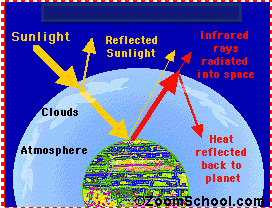
What does this diagram illustrate?
a)
Ozone Layer
b)
The Greenhouse Effect
c)
Ultraviolet Radiation
d)
Layers of the atmosphere
26.
A warmer world is least likely to result in
a)
decreased food production
b)
reductions in biodiversity
c)
a rise in sea level
d)
more moderate weather
27.
In a warmer world, we would expect more
a)
droughts
b)
hurricanes
c)
desert expansions
d)
all of these
28.
The threat of global warming can be addressed by
a)
using energy more efficiently
b)
reducing deforestation
c)
slowing population growth
d)
shifting to renewable resources
29.
The general term for air pollution that reduces visibility, especially in cities. 
a)
atmospheric transport
b)
pollution 
c)
smog
d)
wet scrubber
30.

Produced by burning fossil fuels

a)

Carbon Dioxide

b)

Sulfur Dioxide

c)

Nitrogen Dioxide

d)

Phytochemical Oxidant

31.
Increase in which gas is primarily responsible for increased global warming?
a)
Carbon dioxide
b)
Water vapor
c)
Methane
d)
Nitric oxides
32.

Atmosphere

a)

The blanket of air that surrounds Earth

b)

All the water that covers Earth

c)

All the rocks and minerals that make up Earth

33.

Concentration of nitrogen in the atmosphere

a)

21%

b)

55%

c)

78%

d)

95%

34.

Concentration of oxygen in the atmosphere

a)

15%

b)

21%

c)

78%

d)

95%

35.
Which of these is one cause of deforestation?
a)
Urbanization
b)
Buying a chirstmas tree during the holidays
c)
Overbreeding birds in the wild
d)
Cutting down the tree in your backyard
36.

Deforestation causes an increase in atmospheric carbon dioxide

a)

true

b)

false

37.
Why does cutting down trees increase global warming?
a)
trees soak up carbon dioxide
b)
trees provide shade which counteracts global warming
c)
trees absorbs the sun's energy without radiating back into the atmosphere
d)
trees drain greenhouse gases like methane from soil
38.
How do we name air masses?
a)
Water and temperature
b)
Air pressure
c)
Humidity and temperature
d)
Cold and warm
39.
What types of air masses form over oceans?
a)
Maritime
b)
Continental
c)
Polar
d)
Tropical
40.
What's the humidity and temperature of a continental tropical air mass?
a)
Wet and cold
b)
Dry and warm
c)
Wet and warm
d)
Dry and cold
41.
A dry and hot air mass would be...
a)
Maritime arctic
b)
Maritime tropical
c)
Continental tropical
d)
Continental polar
42.
Which abbreviation of an air mass can be identified as dry and hot?
a)
cP
b)
mP
c)
cT
d)
mT
43.
When a warm air mass and a cold air mass meet, but they push at each other and neither one can move, it is called a/an - 
a)
warm front
b)
cold front
c)
occluded front
d)
stationary front
44.
The boundary between two air masses is called a/an - 
a)
flood
b)
front
c)
climate
d)
storm
45.
A/An ____ is a large body of air that has the same properties as the Earth's surface over which it develops.
a)
front
b)
air mass
c)
cloud
d)
tornado 
46.
An air mass that formed over the ocean near the equator would probably be - 
a)
maritime polar
b)
maritime tropical
c)
continental polar
d)
continental tropical
47.
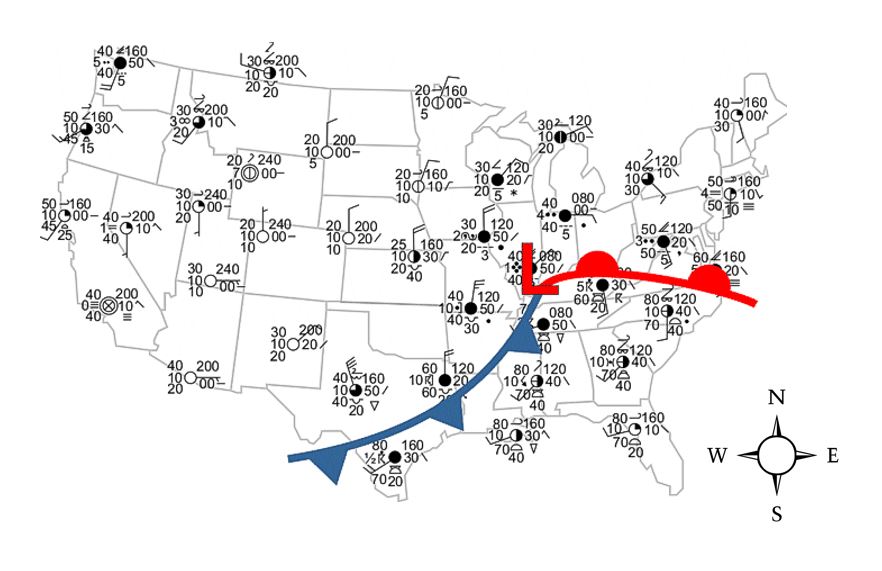
What does symbol # 3 mean?
a)
stationary front
b)
occluded front
c)
warm front
d)
cold front
48.
What does symbol # 1 mean?
a)
stationary front
b)
occluded front
c)
warm front
d)
cold front
49.
What does symbol # 2 mean?
a)
stationary front
b)
occluded front
c)
warm front
d)
cold front
50.
What direction is the cold front moving on the map? 
a)
Southwest
b)
Northwest
c)
Southeast
d)
Northeast
51.
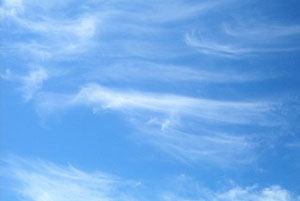
This type of cloud is thin, wispy, and made of ice crystals
a)
cumulus cloud
b)
stratus cloud
c)
cirrus cloud
d)
cumulonimbus cloud
52.

Which type of cloud is white and puffy?

a)

cumulus

b)

cirrus

c)

stratus

d)

cumulonimbus

53.

Clouds form during the process of...

a)

evaporation

b)

condensation

c)

precipitation

d)

runoff

54.
What type of clouds are called "fair weather clouds" and look like floating cotton?
a)
Cumulus
b)
Stratus
c)
Nimbus
d)
Cumulonimbus
55.

What are clouds made out of?

a)

Molecules of pure oxygen

b)

ozone and carbon dioxide

c)

water droplets, dust, and smoke particles

d)

78% nitrogen, 21% oxygen, and 1% other gases

56.

Coriolis Effect

a)

bands of high and low pressure found about every 30 degrees of latitude

b)

the curving of a path of a moving object from an otherwise straight path due to Earths rotation

c)

winds that blow from east to west between 60 and 90 degrees latitude in both hemispheres

d)

narrow belts of strong winds that blow in the upper troposphere

57.
What causes wind?
a)
convection currents
b)
conduction currents
c)
radiation currents
d)
tropical currents
58.
High winds near top of troposphere generally flowing west to east and are able to influence the weather.
a)
Doldrums
b)
Polar easterlies
c)
Jet streams
d)
Prevailing westerlies
59.

What causes differences in air pressure?

a)

even heating of the Earth

b)

Even cooling of the earth

c)

uneven heating of the earth

d)

global warming

60.
Which statement correctly defines wind?
a)
Wind is the movement of air from areas of low pressure to areas of high pressure
b)
Wind is the movement of air to a colder area in the atmosphere.
c)
Wind is the movement of air from areas of high pressure to areas of low pressure.
d)
Wind is the movement of air pushed around and bouncing off Earth's surface.
61.
Why does warm air rise?
a)
Warm air is more dense than cooler air.
b)
Warm air has more pressure than cooler air.
c)
Warm air is less dense than cooler air.
d)
Warm air has a higher dew point than cooler air.
62.

What happens if a population grows past its carrying capacity?

a)

The population keeps growing

b)

The population starts to die off

c)

The entire species will go extinct

d)

The carrying capacity just increases

63.

The largest number of individuals that an environment can support long term is...

a)

carrying capacity

b)

emigration

c)

immigration

d)

population density

64.

_____________ are formed when wave erodes and undercuts rock on the shoreline.

a)

Sea cave

b)

sea stack

c)

headlands

d)

sea cliff

65.

Reduce, reuse, and recycle are the three R’s of

a)

Population control

b)

Pollution

c)

Natural selection

d)

Conservation

66.
What happens when humans cut down forests to build shopping malls?
a)
Plants and animals thrive in the new environment and pollution decreases.
b)
New animals species form and plants produce more oxygen.
c)
The shopping mall reduces the amount of pollution in the area.
d)
Habitat is altered, plants and animals destroyed, and pollution increases.
67.
____________ is the addition of harmful materials to the environment.
a)
pollution
b)
ecotourism
c)
conservation
d)
recycle
68.

The acidity of a local stream would most likely be affected by

a)

a change in the percentage of decomposers living in the stream

b)

a new source of air pollution

c)

a new predator species being introduced to the ecosystem

d)

a decrease in the amount of sunlight that reaches the stream

69.

What is measured by the amount of resources needed to sustain a population's current consumption and absorb its waste?

a)

Carbon dating

b)

Ecological footprint

c)

Deforestation

d)

Niche

70.

Kudzu is an example of what?

a)

Pioneer species

b)

Invasive species

c)

Chloroflurocarbons

d)

All of the above

71.

True or false, Chlorofluorocarbons (CFCs) is a chemical group largely responsible for the depletion of the ozone layer?

a)

True

b)

False

72.

What is this picture likely illustrating?

a)

It is comparing the number of trees in the past to the number of trees now to show the effects of deforestation.

b)

It is showing the hole in the ozone layer.

c)

It is describing how the number of people who drive to work has decreased over time.

d)

None of the above

73.

What is this picture showing?

a)

It is showing how deforestation has affected the ecological footprint.

b)

It is showing the hole in the ozone caused by CFCs.

c)

It is showing the rise in global temperatures.

d)

It is showing the chemical makeup of greenhouse gases.

74.

What is one big concern of global warming?

a)

It is melting the ice caps which raises the ocean water levels. This could result in flooding of coastal cities.

b)

It is freezing the ice caps which lowers sea levels.

c)

It is causing longer winters which result in longer periods of time without sunlight.

d)

It is taking carbon dioxide out of the atmosphere which limits the number of trees that can survive.

75.

What is one way humans are trying to positively impact the ocean?

a)

Fishing

b)

Creating artificial reefs

c)

Harvesting oil and natural gas

d)

Transporting goods in ocean vessels

76.

The largest source of pollution in the ocean comes from __________.

a)

Oil Spills

b)

Acid Rain

c)

Runoff

d)

Wind

77.
a)
removing grass from the steepest slope.
b)
building terraces into the sides of a slope.
c)
heavily watering the vegetation on the slope.
d)
increasing the slope of the land by adding more soil.
78.
a)
crop rotation
b)
crop irrigation
c)
use of fertilizers
d)
use of machinery
79.
a)
Renewable resources are mostly acquired above Earth's surface.  Nonrenewable resources are mostly acquired below Earth's surface.
b)
Nonrenewable resources are mostly acquired above Earth's surface.  Renewable resources are mostly acquired below Earth's surface.
c)
Both renewable resources and nonrenewable resources are mostly acquired below Earth's surface.
d)
Both renewable resources and nonrenewable resources are mostly acquired above Earth's surface. 
80.
Wastes produced by agriculture, households, industry, mining, and other human activities can end up in ______________.
a)
groundwater
b)
streams and rivers
c)
oceans
d)
All of these choices
81.
a)
Renewable resources are mostly acquired above Earth's surface.  Nonrenewable resources are mostly acquired below Earth's surface.
b)
Nonrenewable resources are mostly acquired above Earth's surface.  Renewable resources are mostly acquired below Earth's surface.
c)
Both renewable resources and nonrenewable resources are mostly acquired below Earth's surface.
d)
Both renewable resources and nonrenewable resources are mostly acquired above Earth's surface. 
82.
What is urbanization?
a)
when cities can't get enough water
b)
movement of population from rural areas to cities
c)
cities are often warmer than surrounding areas
d)
when topsoil is eroded away and nothing will grow
83.

What is a negative impact of mining?

a)

Material left after ore is extracted can release toxic chemicals into the groundwater

b)

Mining can improve the air quality where miners work

c)

Quarries attract new species to the area

d)

Mining can decrease soil erosion

84.

Rotating crops

a)

conserves nutrients

b)

increases soil erosion

c)

is a cause for deforestation

d)

is the same thing as cover crops

85.

Peat and wood are obtained through

a)

digging

b)

mining

c)

harvesting

d)

drilling

86.

Natural gas and oil are obtained through

a)

digging

b)

mining

c)

harvesting

d)

drilling

87.

What is a con of oil?

a)

Non-renewable

b)

It is cheap

c)

It is reliable

d)

It encourages economic growth

88.
Deforestation of areas considered to be rich sources of genetic material could limit future agricultural and medical advances due to
a)
the maintenance of dynamic equilibrium 
b)
the loss of biodiversity 
c)
an increase in the ecosystem’s carrying capacity
d)
the depletion of the ozone layer
89.
What are common practices that lead to overgrazing?
a)
grazing cattle instead of sheep and goats
b)
getting into conflicts with neighbors over grazing rights
c)
using sheepdogs instead of human shepherds
d)
too many animals, lack of rotation, grazing at wrong times in plant life cycle
90.
Which is a negative of mining?
a)
Increased chances for erosion
b)
Obtaining valuable resources
c)
Getting rich
d)
Making energy and electricity
91.
What is biodiversity?
a)
the process where topsoil is eroded away so no plants can grow
b)
many different kinds of living things
c)
a coral reef
d)
the study of how to protect rainforests
92.

Which of the following are Non-Renewable energy resources? (Check all that apply.)

a)

coal

b)

wind

c)

solar

d)

nuclear

93.

One advantage of solar and wind power over fossil fuels is that

a)

wind and solar are presently much less expensive than fossil fuels.

b)

wind and solar come from natural processes and fossil fuels do not.

c)

wind and solar are nonrenewable resources and fossil fuel are renewable.

d)

wind and solar are continuously renewable and fossil fuels take millions of years to be formed.

94.

Renewable or Nonrenewable: Coal

a)

Renewable

b)

Nonrenewable

95.

Renewable or Nonrenewable: Natural Gas

a)

nonrenewable

b)

renewable

96.

Renewable or Nonrenewable: Water

a)

Nonrenewable

b)

Renewable

97.

This is electrical energy that comes from the force of energy of moving water. It is the most widely used type of renewable energy.

a)

Coal

b)

Hydroelectric Power

c)

Wind Energy

d)

Geothermal Energy

98.

This is a liquid fuel derived from plant materials.

a)

wind energy

b)

biofuel (from biomass)

c)

geothermal energy

d)

solar energy

99.

This is the energy generated in the Earth's core and produces steam and hot water.

a)

Solar Energy

b)

Hydroelectric Power

c)

Fossil Fuels

d)

Geothermal

100.

Fossil Fuels produce carbon dioxide that pollutes the atmosphere.

a)

Advantage

b)

Disadvantage

101.

Biomass requires a lot of space.

a)

Advantage

b)

Disadvantage

102.
What is storm that contains storm surges and has wind speeds of 74 mph - 200 mph?
a)
thunderstorms
b)
severe thunderstorms
c)
tornadoes
d)
hurricanes
103.
Most of the damage done by a hurricane is the result of _____
a)
water
b)
wind
c)
tornadoes
d)
lightning
104.
What are tornadoes?
a)
a storm with thunder and lighting and typically also heavy rain or hail
b)
a storm that can be the same as thunderstorms, but can be even more dangerous
c)
a mobile, destructive vortex of violently rotating winds having the appearance of a funnel shaped cloud and beneath a large storm system.
d)
a huge storm with strong winds and storm surges
105.
What do hurricanes feed on?
a)
warm tropical water
b)
hot water
c)
cold artic water
d)
rain
106.
What is the scale used to measure hurricanes?
a)
MPH scale
b)
Fujita Scale
c)
Weight Scale
d)
Saffir/Simpson Scale
107.
Which of the following have been linked to climate change?  
a)
droughts
b)
flooding
c)
melting of polar ice caps
d)
all of the above
108.
If the water temperature increases, what will happen to the strength of hurricanes?
a)
Increase
b)
Decrease
c)
Stay the same
109.

What is the correct symbol for maritime polar?

a)

MP

b)

Mp

c)

mP

d)

mp

110.

What causes global convection currents

a)

Forests

b)

greenhouse gases

c)

more land forms

d)

uneven heating of the Earth's surface

111.

What does this symbol represent?

a)

Cold Front

b)

Warm Front

c)

Stationary Front

d)

Occluded Front