
 Worksheets
APES Review Game (for AP Test)
Total questions: 96
Worksheet time: 2hrs 36mins


The rate at which water flows through the soil is called soil percolation or ______.
Groundwater
Permeability
Soil Pores
Porosity


Which of the following is an environmental problem associated with abandoned coal mines?
Air pollution caused by smog from ozone formation
Acid drainage due to leaching of spoil heaps by rainwater
Alkaline solutions that pollute streams
Released nutrients that cause eutrophication into streams
Thermal pollution of streams in the area
Which of the following is the best example of an energy storage element in a solar energy system
The photovoltaic array in a solar electric system
The overhang that blocks sunlight in a passively cooled home.
The insulated windows in a passively heated solar home
The sun-tracking mirrors in a power tower system
The hot water tank in a solar hot water system
The separation of the various components of crude oil in refineries is accomplished primarily by taking advantage of differences in which of the following?
The densities of the components
The boiling points of the components
The solubility of the components
The sulfur content of the components
The viscosities of the components
The majority of atmospheric mercury is produced by
medical waste incinerators
coal-burning power plants
runoff from thermometer factories
municipal waste incinerators municipal waste incinerators
volatilization of lead-based paint
Which of the following is the current recommendation of Congress for the permanent storage of high-level radioactive waste in the United States?
Burial deep underground at sites remote from population centers
Storage in huge pools of water at the nuclear plants where they are produced
Storage in concrete and steel casks, above ground in air-cooled buildings, at nuclear plants where they are produced
Storage deep in the Antarctic ice sheet and burial beneath the ocean floor
Injection deep underground in remote areas between impervious layers of shale and clay

The town of Fremont Center shares its power plant with the towns of West Fremont and East Fremont. Information about the three towns is shown in the table below. The maximum capacity of the existing power plant is 2,000 MW.
The number of years that the power plant will be capable of supplying all of the demand for energy in the three cities is nearest to
0.5 years
5 years
15 years
25 years
70 years
Approximate percentage of electrical energy converted to heat in the average incandescent lightbulb
100%
95%
30%
15%
1%
Which of the following energy sources is not derived directly or indirectly from solar energy?
Geothermal
Photovoltaic
Hydroelectric
Biomass Biomass
Wind
Approximate efficiency of an average coal-fired power plant
100%
95%
30%
15%
1%
Which statement best describes the approximate global distribution of coal supplies?
Brazil and South Africa together contain 33% of proven reserves.
The United States contains 40% of proven reserves.
Australia, Japan, and France together contain 45% of proven reserves
The United States, the former Soviet Union, and China together contain 50% of proven reserves.
Germany, Brazil, and India together contain 75% of proven reserves.

The country with the highest population density is
Australia
Bangladesh
China
United States
India
In demographic transition,the greatest rate of population growth takes place during which phase
The pre-industrial
The pre-transitional
The transitional
The industrial The industrial
The postindustrial
Which of the following is a true statement about the total fertility of a society?
The total fertility of a society is the difference between the crude birth rate and the crude death rate.
The total fertility of a society is the number of children necessary for a couple to replace themselves in the next generation.
The total fertility rate of a society is positively correlated with the average education of women.
The total fertility rate of a society is negatively correlated with the number of women of child-bearing age.
The total fertility of a society decreases as the society progresses through the demographic transition.
If a city of population 10,000 experiences 100 births, 40 deaths, 10 immigrants, and 30 emigrants in the course of a year, what is its net annual percentage growth rate?
0.4%
0.8%
1.0%
4.0%
8.0%
The current global human population is about 7.6 billion and is growing at an annual rate of 1.1 percent. If world population were to grow at the current rate, how many people would be added next year?
8 X 10⁵
8 X 10⁶
8 X 10⁷
8 X 10⁸
8 X 10⁹
A country's pop. grows at a rate of 5 percent per year,the number of years for it to double is
5 years
10 years
15 years
20 years
25 years
Which of the following is a true statement about replacement-level fertility?
It equals the annual number of live births per 1,000 people
It equals the natural increase of a population in one year
It equals the average number of children a woman will give birth to during her child-bearing years.
It is found by subtracting the number of emigrants from the number of immigrants in one year.
It is greater in countries with high infant-mortality rates than in countries with low infant-mortality rates.
At the current rate of growth, Earth’s human population will double in about 50 years. Which of the following is the LEAST viable strategy for ensuring adequate nutrition for a population of this size?
Increasing the number of new crops from the great diversity of plant species
Doubling the area of arable land on a global basis
Developing systems for making the global distribution of food more equitable
Increasing the area of land that is currently dedicated to grain production by reducing the area dedicated to meat production
Assisting developing countries in using highly efficient crop irrigation systems

A country with an age distribution like that shown in the figure above, is most likely a country that
is experiencing rapid growth
is experiencing slow or no population growth
is experiencing a high death rate
has 40% of the population under age 15
is a less-developed country
The phenomenon causing global warming occurs primarily in this region of the atmosphere
Thermosphere
Exosphere
Troposphere
Mesosphere
Stratosphere
The beneficial ozone layer is in this region of the atmosphere.
Thermosphere
Exosphere
Troposphere
Mesosphere
Stratosphere
Most often cited as the causative factor for acid deposition
Sulfur dioxide
Lead
Ozone
Hydrocarbons
Particulates
Considered harmful in the troposphere but beneficial in the stratosphere
Sulfur dioxide
Lead
Ozone
Hydrocarbons
Particulates

Region largely responsible for the weather experienced at the Earth’s surface
A
B
C
D
E
Found in old plumbing pipes and fixtures and some ceramic glazes
Asbestos
Radon
Lead
Carbon Monoxide
Formaldehyde
Composed of fibers known to cause lung disease
Asbestos
Radon
Lead
Carbon Monoxide
Formaldehyde
Emitted from most manufactured building materials and furniture
Asbestos
Radon
Lead
Carbon Monoxide
Formaldehyde
Which of the following is a greenhouse gas that is produced by domestic livestock?
NO2
CH4
O3
CO
SO2
Which of the following is part of a positive feedback mechanism associated with global climate change?
Increased gas mileage in cars
Increased cloudiness caused by more moisture in the atmosphere
Metling of Arctic sea ice
Increased acidity of seawater
Increased growth of CO2-absorbing trees and grasses
Which of the following factors is fundamentally responsible for seasons on Earth?
The varying distance of Earth from the Sun
The tild of Earth's axis of rotation
The latitudinal variation in temperature and precipitation
The tidal pull of the Sun and Moon
The anthropogenic greenhouse effect
The polar regions radiate away more heat energy than they receive from the Sun in the course of a year. However, they are prevented from becoming progressively colder each year primarily by the
absorption of ultraviolet radiation by snow
transport of heat through the atmosphere and oceans
concentration of Earth’s magnetic field lines at the poles
release of latent heat to the atmosphere when the polar ice caps melt
generation of heat by glacial movement
Which of the following actions would reduce global
greenhouse emissions?
Increasing the use of automobiles
Decreasing the number of nuclear power
plants
Replacing coal-burning power plants with
wind farms
Converting tropical forests to rice
paddies
Switching from hydroelectric power
generation to power generation using natural gas as the primary fuel
Stratospheric ozone depletion is most likely to result in which of the following?
Increased growth of food crops due to increasing amounts of ultraviolet radiation
Extended grazing season for cattle
Disruption of photosynthesis in plants
Increased movement of the human population toward equatorial regions
A higher percentage of cloudless days

The annual fluctuation in carbon dioxide concentration can best be explained by the
seasonal use of fossil fuels
regularity of volcanic activity
deforestation in the tropics
El Nino events
seasonal photosynthetic activity of green plants
Global climate change occurs because increasing concentrations of greenhouse gasses in
the troposphere absorb outgoing IR radiation
the stratosphere absorb outgoing IR radiation
the troposphere absorb incoming UV radiation
the stratosphere absorb incoming UV radiation
neither the troposphere nor the stratosphere absorb incoming UV radiation
Of the following cities, which regularly experiences the worst levels of photochemical smog that is enhanced by thermal inversions?
New York City, New York
Los Angeles, California
Portland, Oregon
Atlanta, Georgia
Philadelphia, Pennsylvania
Waste from which of the following is an example of nonpoint source pollution?
Overflow from a sewage treatment plant
Outgassing from a municipal landfill
Dumping at a food-processing plant
Drainage from an abandoned mine
Runoff from agricultural fields
Of the following, which constitutes the greatest percent of domestic use of water in the United States?
Flushing toilets
Drinking
Cooking
Washing dishes
Washing clothes
Of the following, which is the best example of a point source of water pollution?
Factory effluent
Storm water
Acid precipitation
Agricultural runoff
Residential pesticide runoff
Which of the following will result in accelerated eutrophication when introduced into streams, lakes and bays?
Bacteria and viruses
Pesticides
Herbicides
Phosphates
Acid wastes and salts

The graph above shows the effect of sewage on biological oxygen demand (BOD) and dissolved oxygen (DO) in a flowing stream. The smallest fish populations will most probably be found at point
A
B
C
D
E
List the following steps of Water purification in the correct order
Step P: Water is passed through a screen to remove debris.
Step Q: Pathogenic organisms are killed by chlorination, UV, or ozone.
Step R: Suspended particles clump and settle out.
Step S: A flocking agent, such as alum, is added to the water.
P, Q, R, S
S, P, R, Q
P, S, R, Q
R, P, S, Q
S, R, P, Q
Which of the following is true of sewage treatment plants in the United States?
They release wastewater before solids are removed from the sewage.
They use stormwater runoff to assist in the treatment process.
They are not designed to remove pharmaceutical chemicals from wastewater.
They have largely eliminated cultural eutrophication in Chesapeake Bay.
They release wastewater that is not regulated by the Clean Water Act.
Which method introduces microorganisms to break down hazardous organic compounds?
Sanitary landfill
Incineration
Discharge to sewers, streams, and rivers
Chemical treatment
Biological treatment
Which method would be best suited for neutralizing the acidic components of waste?
Sanitary landfill
Incineration
Discharge to sewers, streams, and rivers
Chemical treatment
Biological treatment
Which one requires minimum safety standards for community water supplies.
Safe Drinking Water Act
Clean Water Act
Comprehensive Environmental Response Compensation and Liability Act
Resource Conservation and Recovery Act
Toxic Substances Control Act
Mandates the restoration and maintenance of the chemical, physical, and biological integrity of the nation’s waters
Safe Drinking Water Act
Clean Water Act
Comprehensive Environmental Response Compensation and Liability Act
Resource Conservation and Recovery Act
Toxic Substances Control Act
Evidence of biodiversity is seen in
genetic variation among human populations.
number of species in a region.
number of ecosystems and habitats in a region.
genetic variation among plants and animals in a region.
All of these answers are correct.
Which is NOT a non-renewable resources?
aluminum
oil
timber
copper
coal
Which is an example of a sustainable practice?
I. Replanting a logged forest
II. Developing substitutes for nonrenewable resources
III. Banning the use of all fossil fuels without a planned transition to an alternative
I only
II only
I and III
I and II
I, II, and III
An ecological footprint considers
per capita resource use of a nation.
how much an individual consumes in terms of land area.
average yearly consumption of resources.
resources that an entire nation consumes in and average year.
the ratio of resources consumed in developed nations to less developed nations.
An experiment is designed to determine if wheat grows better when it is planted alone or with clover. The design calls for 3 pans of each treatment. Pans A, B, and C contain only wheat. Pans D, E, and F contain clover and wheat planted in alternating rows. Each pan contains a total of
100 seeds. All treatments contain the same type of soil, are planted in the same size pan, are exposed to the same amount of sunlight, and are maintained at the same temperature throughout the course of the experiment.
The treatments planted with only wheat are the
sample size.
control.
environmental variable.
null hypothesis.
replication.
The study of environmental science differs from study of other natural sciences because it
doesn’t use experiments.
does not require any mathematical calculations.
also includes politics, law, and economics.
does not require an understanding of biology.
uses the scientific process.
Which pair of biogeochemical cycles are most associated with inorganic fertilizer and sewage waste?
Carbon and Nitrogen cycles
Carbon and Sulfur cycles
Phosphorus and Nitrogen cycles
Sulfur and Nitrogen cycles
Sulfur and Water cycles
In which biogeochemical cycles are humans most affecting the natural greenhouse affect?
Carbon, Nitrogen, and Water cycles
Carbon and Phosphorous cycles
Phosphorus and Nitrogen cycles
Sulfur and Nitrogen cycles
Sulfur and Water cycles
Which biogeochemical cycles are directly related to acid deposition?
Carbon and Nitrogen cycles
Carbon and Sulfur cycles
Phosphorus and Nitrogen cycles
Carbon, Sulfur and Nitrogen cycles
Sulfur and Water cycles
A forest has a GPP of 3.8 kilograms C/m^2/year and the rate of cellular respiration is 2.4 kilograms C/m^2/year. What is the NPP?
6.2 kg C/m^2/year
1.4 kg C/m^2/year
1.0 kg C/m^2/year
9.12 kg C/m^2/year
1.58 kg C/m^2/year
According to the law of conservation of matter,
I. matter can be created
II. matter can not be destroyed
III. after a chemical reaction, the original atoms remain
I only
II only
I and II
II and III
Water is a good solvent. This statement explains which of the following phenomena:
I. High concentrations of dissolved ions in seawater
II. Capacity of living organisms to store many types of molecules in solution in their cells
III. Easy transport of toxic substances through the environment
I
II
III
I, II, III
Most energy on Earth comes from
volcanoes
the sun
trees
water
fire
The difference between potential and kinetic energy is that
kinetic energy can not be captured at a dam
potential energy is measured in watts, whereas kinetic energy is measured in joules
potential energy has not yet been released
potential energy is measured in calories, whereas kinetic energy is measured in joules
kinetic energy has not yet been released
Greenhouse gases in the Earth's atmosphere
are in steady state
are decreasing
are increasing
can not be measured
A positive feedback loop
is when feedback into a system increases a rate of response
is when feedback into a system decreases a rate of response
may be seen in some examples of population growth
both a and c
Extinctions of species can be the result of
natural systems changing
introduction of invasive species
systems that are not in steady state
human inputs
All of these are correct
Which of the following is not an abiotic factor?
sunlight
pH
water temperature
bacteria
soil texture
Choose the correct sequence for energy flow within an ecosystem
Herbivores --> producers --> carnivores --> scavengers
Producers --> herbivores--> carnivores --> scavengers
Producers --> carnivores --> herbivores--> carnivores
Scavengers--> carnivores --> herbivores--> producers
The 3 main anthropogenic sources of gaseous air pollutants in the US are
soil erosion, volcanoes, and forest fires
transportation, soil erosion, and energy production
industry, transportation, and energy production
industry, transportation and agriculture
Uranium 238 decays to make this carcinogenic gas found in the bedrock
Asbestos
Radon
Lead
Thalidomide
Endocrine disruptors cause the following impacts to organisms
increased respiratory rate
damage to the cardiovascular system
increased size of individual organisms
birth defects and cancer
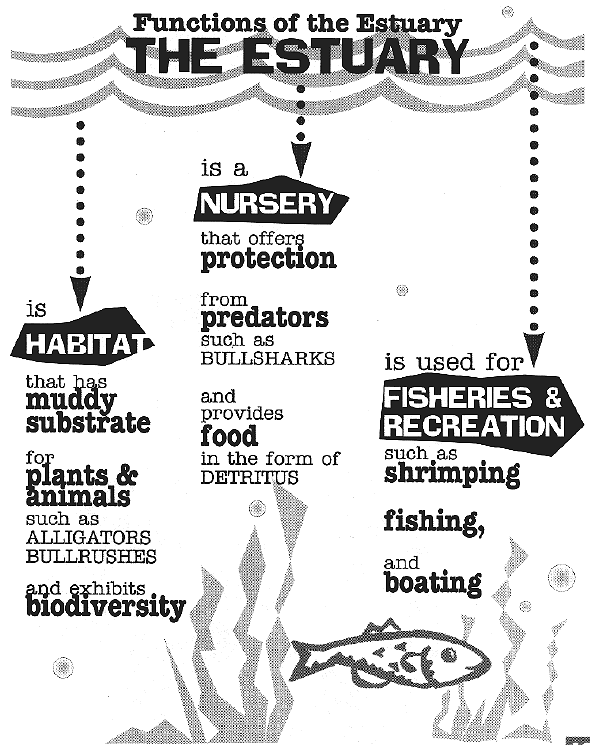
Aquatic ecosystem that serves as a nursery for many species and suffers from pollution from city harbors like the Chesapeake Bay
estuaries
coral reefs
open ocean
wetlands
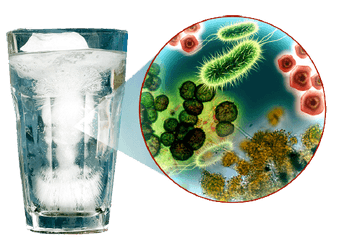
Presence of fecal coliform bacteria suggests that
a factory polluted the river
a nearby treatment plant added chlorine to the waste water
the water is safe for drinking
untreated animal waste contaminated the water
Which water quality test will best determine the disruption of photosynthesis caused by cloudy water conditions from sedimentation?
Temperature
Salinity
Dissolved oxygen
pH
Turbidity
The process of human activities in urban or agricultural areas that load nutrients into surface bodies of water is known as
artificial fertilization
cultural eutrophication
thermal pollution
lake stratification
synthetic primary productivity
Which of the following is a point-source pollutant?
Sediment loading from erosion
Runoff of pesticides from croplands
Animal wastes from feedlots
Fertilizer runoff from urban areas
A sewage treatment plant effluent pipe

