wayground logo

Free Printable Worksheets

NEW

Font size

S
M
L
XL
Worksheets

Cell Division/Complex Organisms Review

Total questions: 50

Worksheet time: 38mins

Name
Class
Date
1.
What organelle is called the "powerhouse" of a cell?

a)
Endoplasmic Reticulum
b)
Nucleus
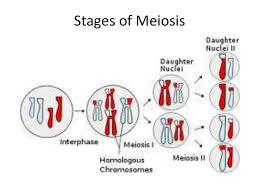
c)
Mitochondria
d)
Nucleolus
2.
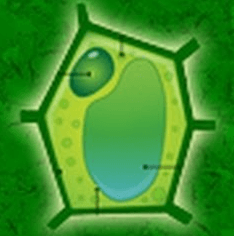
Using this image, what organelle is C?
a)
Cell Wall
b)
Mitochondria
c)
Large Cell Vacuole
d)
Chloroplast
3.
What is the function of the vacuole?
a)
Sac that stores water, nutrients, and waste products
b)
Sac filled with digestive chemicals
c)
Jelly-like substance within the plasma membrane
d)
stack of membranes that packages chemicals
4.
I make proteins for the cell. What am I?
a)
ribosome
b)
mitochondria
c)
chloroplast
d)
lysosome
5.
I am a protein packaging and shipping machine! Who am I?
a)
vacuole
b)
ribosome
c)
endoplasmic reticulum
d)
golgi apparatus
6.
You might think of me as the trash collector, but recycler is maybe more accurate. What am I?
a)
mitochondria
b)
lysosome
c)
vacuole
d)
ribosome
7.
Where are proteins made?
a)
Golgi body
b)
Mitoichondria
c)
Chromosomes
d)
Ribosomes
8.
A rigid layer that lies outside the cell's  membrane is...
a)
Cytoskeleton
b)
Cilia
c)
Cell Wall
d)
Flagella
9.

Which organelle is responsible for the process of photosynthesis?

a)

Ribosome

b)

Chloroplast

c)

Cell membrane

d)

Cell wall

10.

What is the function of the cell membrane?

a)

To control what comes in and out of the cell

b)

To break down food inside the cell

c)

to serve as a barrier

d)

to eat the cells food

11.

Which organelle is found inside the nucleus and produces ribosomes

a)

Nucleolus

b)

Cell Membrane

c)

Lysosome

d)

Golgi Bodies

12.

what is the function of ribosomes

a)

to assemble amino acids to create proteins

b)

to pack proteins

c)

to clean proteins

13.
Which statement reflects one of the major components of the cell theory?
a)
All living things are multi-cellular.
b)
Organs are the basic unit of structure and function for all living things.
c)
All cells come from previously existing cells.
d)
Every organism has a reproductive system to ensure survival of the species.
14.
Cells spend 90% of their time in this stage of the cell cycle. This is the reason you would see most cells in this stage if viewed under a microscope.
a)
Prophase
b)
Metaphase
c)
Anaphase
d)
Interphase
15.
The sister chromatids of each chromosome are separated (come apart) and move to opposite ends of the cell. Name that Stage!
a)
Prophase
b)
Metaphase
c)
Anaphase
d)
Telophase
16.
Identify the stage of the cell cycle while looking at the picture.
a)
Interphase
b)
Telophase
c)
Metaphase
d)
Cytokinesis
17.
Identify the stage of the cell cycle while looking at the picture.
a)
Prophase
b)
Metaphase
c)
Anaphase
d)
Telophase
18.
*Identify the stage of the cell cycle while looking at the picture.
a)
Prophaese
b)
Metaphase
c)
Anaphase
d)
Telophase
19.
Structure (b) is a ____.
a)
chromosome
b)
chromatid
c)
centromere
20.
a)
Anaphase
b)
Cytonkinesis
c)
Interphase
d)
Prophase
21.
Meiosis makes sperm and egg cells. In humans, sperm and egg cells each have _____ chromosomes. Therefore a fertilized human egg cell (sperm and egg cell combined) would create a cell with _____ chromosomes.
a)
23, 46
b)
46, 23
c)
2, 4
d)
50, 100
22.
What kind of cells are made in MEIOSIS?
a)
Haploid Gametes
b)
Diploid Somatic Cells
c)
Skin Cells
d)
Liver Cells
23.
Which of these cells would be produced through meiosis?
a)
skin cells
b)
liver cells
c)
brain cells
d)
sperm cells
24.
Chromosomes exchange genetic material during 
a)
crossing over
b)
replication
c)
synthesis
d)
translation
25.
Unlike mitosis, meiosis in male mammals results in the formation of
a)
one haploid gamete
b)
three diploid gametes
c)
four diploid gametes
d)
four haploid gametes
26.

CROSSING OVER INCREASES

a)

LIFE SPAN

b)

GENETIC VARIATION

c)

THE NUMBER OF OFF-SPRING

d)

ALL ARE TRUE

27.

CROSSING OVER TAKES PLACE DURING

a)

PROPHASE II

b)

PROPHASE I

c)

INTERPHASE

d)

METAPHASE I

28.

MITOSIS

a)

INCREASES GENETIC VARIATION

b)

ALLOWS TRAITS TO BE PASSED ON TO OFFSPRING

c)

PRODUCES 2 IDENTICAL DAUGHTER CELLS

d)

ALL ARE TRUE

29.
Each body cell in an erthworm contains 36 chromosomes.  HOw many chromosomes are in each of its gametes?
a)
54
b)
36
c)
72
d)
18
30.
Which process and type of resulting cells are represented in the diagram?
a)
meiosis, which produces body cells
b)
mitosis, which produces body cells
c)
meiosis, which produces body cells
d)
meiosis, which produces gametes
31.
Oogenesis results in the formation of:
a)
1 ovum; 3 polar bodies
b)
2 ova; 2 polar bodies
c)
1 ovum; 3 secondary oocytes
d)
4 ova
32.

Which of the following phases is the cell labeled “4” above currently in?

a)

interphase

b)

prophase

c)

metaphase

d)

anaphase

e)

telophase

33.

What is the order for Protein Synthesis?

a)

Transcription -> Translation -> Protein

b)

Translation - > Transcription -> Protein

c)

Protein -> Transcription -> Translation

d)

Translation -> Protein -> Transcription

34.
Crossing over is important because....
a)
It prevents mutations from entering the gametes. 
b)
It allows for even distribution of chromosomes in the gametes.
c)
It allows for more genetic diversity of gametes.
d)
It allows for genetic uniformity of gametes. 
35.

Independent Assortment occurs during which phase of Meiosis?

a)

Prophase I

b)

Prophase II

c)

Metaphase I

d)

Metaphase II

36.
The two kinds of cells are Prokaryotes and Eukaryotes. How are they different?
a)
Prokaryotes have a nucleus.
b)
Eukaryotes have a nucleus.
c)
Prokaryotes are plant cells.
d)
There is no difference.
37.
Which part of the cell is often called "the brain of the cell"?
a)
nuclear membrane
b)
endoplasmic reticulum
c)
nucleus
d)
mitochondria
38.

Cell membrane heads are hydrophilic, what does hydrophilic mean?

a)

Afraid of water

b)

Loves water

c)

Drinks too much water

d)

Melts in water

39.

All of these statements are part of cell theory, EXCEPT

a)

All living things are composed of cells

b)

Cells are the basic unit of structure and function

c)

New cells come from existing cells

d)

Cells are really small

40.

What is the difference between the smooth ER and the rough ER?

a)

No vacuoles

b)

No ribosomes

c)

No nucleus

d)

No cell wall

41.

Which organelle controls what goes in and out of the cell?

a)

nucleus

b)

nucleolus

c)

cell membrane

d)

nuclear membrane

42.

This organelle digests dead cell parts and contains enzymes

a)

lysosome

b)

golgi body

c)

smooth ER

d)

Rough ER

43.

the short hair like structures

a)

flagella

b)

cilia

c)

lysosome

d)

ribosome

44.

long whip like structures used for movement

a)

hair

b)

cilia

c)

flagella

d)

cytoskeleton

45.
Site of protein synthesis.
a)
nucleus
b)
mitochondria
c)
vacuole
d)
ribomsome
46.

How many chromosomes are found in a human adult egg cell?

a)

23

b)

46

c)

23 pairs

d)

46 pairs

47.

Which statement correctly lists the stages of mitosis in order?

a)

P, R, Q

b)

Q, R, P

c)

R, P, Q

d)

P, Q, R

48.

After fertilization, the zygote contains 28 chromosomes. What is the haploid number?

a)

28

b)

14

c)

56

d)

46

49.
A chromatid is attached to a spindle fiber by the
a)
nucleolus
b)
deep furrow
c)
centromere
d)
centriole
50.
In mitosis, the two resulting cells are
a)
different from the starting cell and identical to each other.
b)
different from the starting cell and different from each other.
c)
identical to the starting cell and different from each other.
d)
identical to the starting cell and identical to each other.