wayground logo

Free Printable Worksheets

Font size

S
M
L
XL
Worksheets

Physical Science Final Exam Practice Fall 2021

Total questions: 97

Worksheet time: 8hrs 5mins

Name
Class
Date
1.

A pitcher throws a baseball tp home plate, a distance of 60.5 ft. The ball reaches home plate in 0.63s. What is the velocity of the ball?

a)

38 ft/s

b)

38 ft/s toward home plate

c)

96 ft/s

d)

96 ft/s toward home plate

2.

when an object slows down, its acceleration is

a)

positive

b)

centripetal

c)

negative

d)

constant

3.

Weight is best described as

a)

an object's resistance to acceleration

b)

what causes an object to fall

c)

the downward force exerted on an object due to gravity

d)

a force solely dependent on an object's mass

4.

liquid in a solution

a)

solvent

b)

water

c)

solute

d)

solution

5.

mixture in which a solid is dissolved in a liquid

a)

volume

b)

mixture

c)

solution

d)

evaporation

6.
Atoms of which two elements will form an ionic bond?
a)
Mg and Cl
b)
N and O
c)
Fe and Co
d)
Rb and Al
7.
Which compound will most likely be formed when lithium (Li) and nitrogen (N) are chemically combined?
a)
LiN
b)
Li3N
c)
LiN3
d)
Li3N3
8.

Which compound results from covalent bonding?

a)

NH4Cl

b)

K2SO4

c)

NaCl

9.
Why are beta particles able to penetrate objects better than alpha particles are?
a)
because beta particles are larger than alpha particles
b)
because beta particles are smaller than alpha particles
c)
because beta particles are negatively charged, while alpha particles are neutral
d)
because beta particles travel in a straight line, while alpha particles travel in waves
10.
Which equation represents a decomposition chemical reaction?
a)
2S + 3O2 → 2SO3
b)
2NaCl → 2Na + Cl2
c)
2K + 2H2O   → 2KOH + H2
d)
Zn + 2HCl →      ZnCl2 + H2
11.
This unbalanced equation represents a chemical reaction:
HgO → Hg + O2
Which is the correctly balanced chemical equation for this reaction?
a)
HgO → Hg + 2O2
b)
2HgO → Hg + O2
c)
2HgO → Hg + 2O2
d)
2HgO → 2Hg + O2
12.
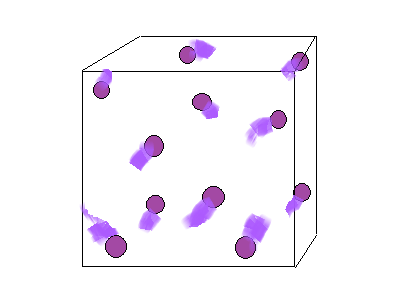
What phase of matter is shown in the diagram?
a)
solid
b)
liquid
c)
gas
d)
physical changes
13.
Which state of matter?
a)
Solid
b)
Liquid
c)
Gas
d)
Texas
14.

True or False: A gas will spread out and fill its container.

a)

True

b)

False

15.

A snow globe is an example of a

a)

solution

b)

colloid

c)

suspension

16.
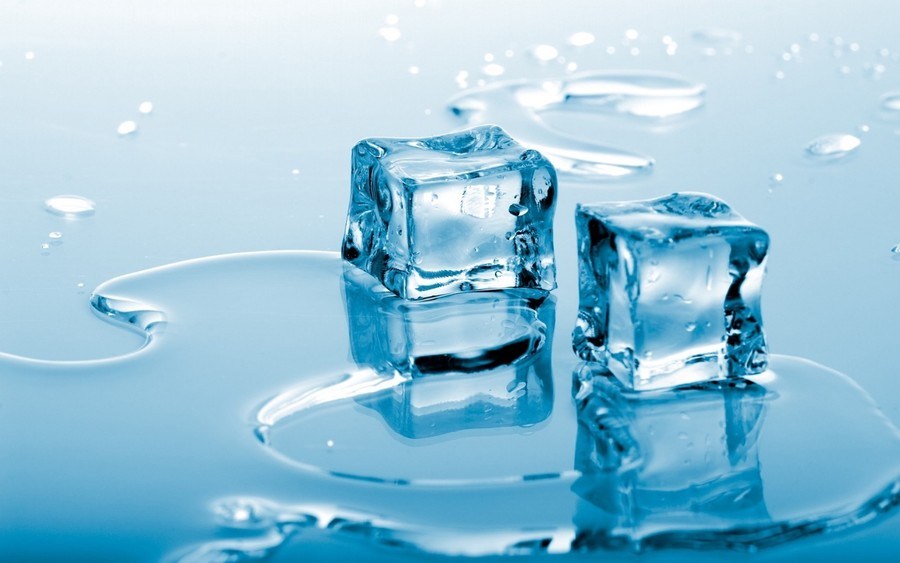
What state of matter does this picture show?
a)
Liquid
b)
Gas
c)
Solid
d)
Matter
17.
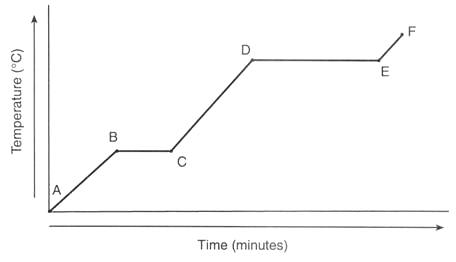
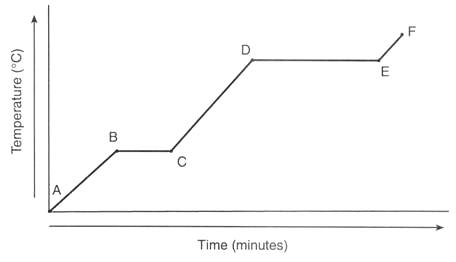
Between which points is the temperature of the substance remaining constant?
a)
A-B only. 
b)
A-B, C-D, E-F
c)
B-C only. 
d)
B-C, D-E
18.

The temperature is constant from B-C and from D-E. What is happening here?

a)

The substance is heating up

b)

The substance is undergoing a phase change

c)

It's cooling down and then heating up again

19.
Describe the substance between letters A and B. 
a)
Solid
b)
Liquid
c)
Melting
d)
Evaporating
20.
Describe the substance between letters D and E. 
a)
Gas
b)
Liquid
c)
Melting
d)
Evaporating
21.
Between which points is the substance changing its state of matter?
a)
A-B only. 
b)
A-B, C-D, E-F
c)
B-C only. 
d)
B-C, D-E
22.
Describe the substance between letters D and E. 
a)
Gas
b)
Liquid
c)
Melting
d)
Evaporating
23.
The parts of a homogeneous mixture are   __________ throughout. 
a)
Same 
b)
Different 
c)
Neutral 
d)
Suspended 
24.
___________ is a combination of substances that can be physically separated. 
a)
Colloid 
b)
Mixture 
c)
Suspension 
d)
Compound 
25.
This type of mixture has particles that settle. 
a)
Suspension
b)
Colloid 
c)
Emulsion
d)
Solution 
26.
A pure substance can be either an element or a ______________. 
a)
single substance
b)
hot mess 
c)
Complex 
d)
compound 
27.
Gold is an example of a(n)
a)
Element 
b)
Compound 
c)
Nugget 
28.
Water is an example of a(n) 
a)
element 
b)
compound 
29.
Are mixtures able to be separated?
a)
Yes
b)
No way, Jose 
30.

The part of a solution that does the dissolving

a)

solute

b)

solvent

c)

solution

d)

solubility

31.

The part of the solution that is being dissolved

a)

solute

b)

solvent

c)

solution

d)

solubility

32.

This is a type of mixture where one substance dissolves into another

a)

Solution

b)

Miscibility

c)

Compound

d)

Solubility

33.

When the solution equilibrium point is reached and no more solute will dissolve, the solution is said to be _________.

a)

unsaturated

b)

saturated

c)

supersaturated

34.

What do you call a solution that contains less than the maximum amount of solute that is capable of being dissolved?

a)

unsaturated solution

b)

saturated solution

c)

supersaturated solution

d)

insoluble solution

35.

Which of the following best describes a supersaturated solution?

a)

a solution that contains the maximum amount of solute that is capable of being dissolved

b)

a solution that contains less than the maximum amount of solute that is capable of being dissolved.

c)

a solution that contains more than the maximum amount of solute that is capable of being dissolved.

d)

none of the above

36.
The scattering of light by colloids is called ____. 
a)
homogeneous
b)
suspension
c)
air pollution
d)
The Tyndall effect
37.
Water freezing into ice is an example of a...
a)
Physical Change
b)
Chemical Change
38.
Any change in the state of matter of a substance is a...
a)
Physical Change
b)
Chemical Change
39.
A change in matter that forms one or more new substances with new chemical properties is a/an...
a)
Physical Change
b)
Chemical Change
40.
Which of the following indicates a PHYSICAL change?
a)
Change in temperature
b)
Change in shape
c)
Formation of a precipitate
d)
Change in color
41.
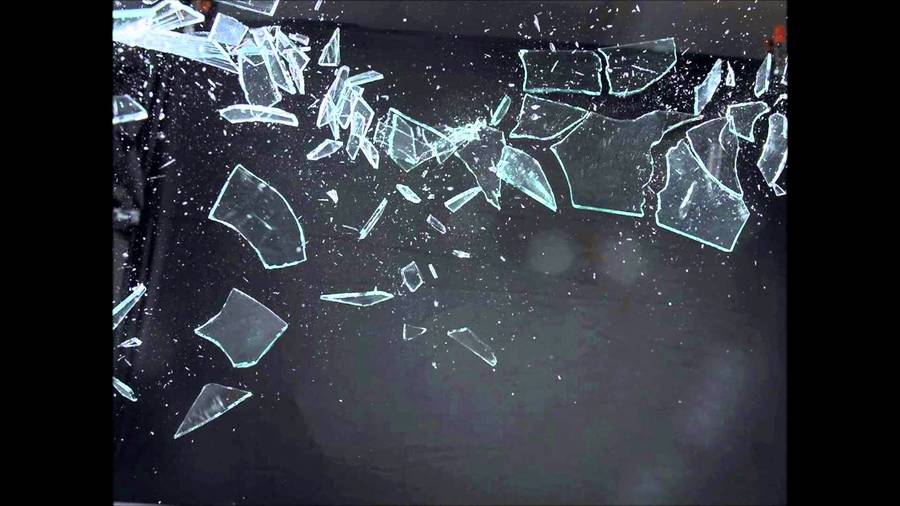
Chemical or Physical?  Glass breaking into tiny shards
a)
Chemical Change
b)
Physical Change
42.
Physical or Chemical Change?  Iron rusts
a)
Physical Change
b)
Chemical Change
43.
Physical or Chemical Change?  Sodium metal burning in water.
a)
Physical Change
b)
Chemical Change
44.
Physical or Chemical Change?  Cutting an orange into wedges.
a)
Physical Change
b)
Chemical Change
45.
a)
physical change
b)
chemical change
46.

The colored part of the periodic table is called:

a)

Metals

b)

Nonmetals

c)

Transition metals

d)

Metalloids

47.

Elements which share properties of metals and nonmetals are called:

a)

Post transition

b)

Alkaline earth metals

c)

Metalloids

d)

Lanthanoids

48.

Most elements are_________________

a)

Nonmetals

b)

Metals

c)

Metalloids

d)

Noble gases

49.

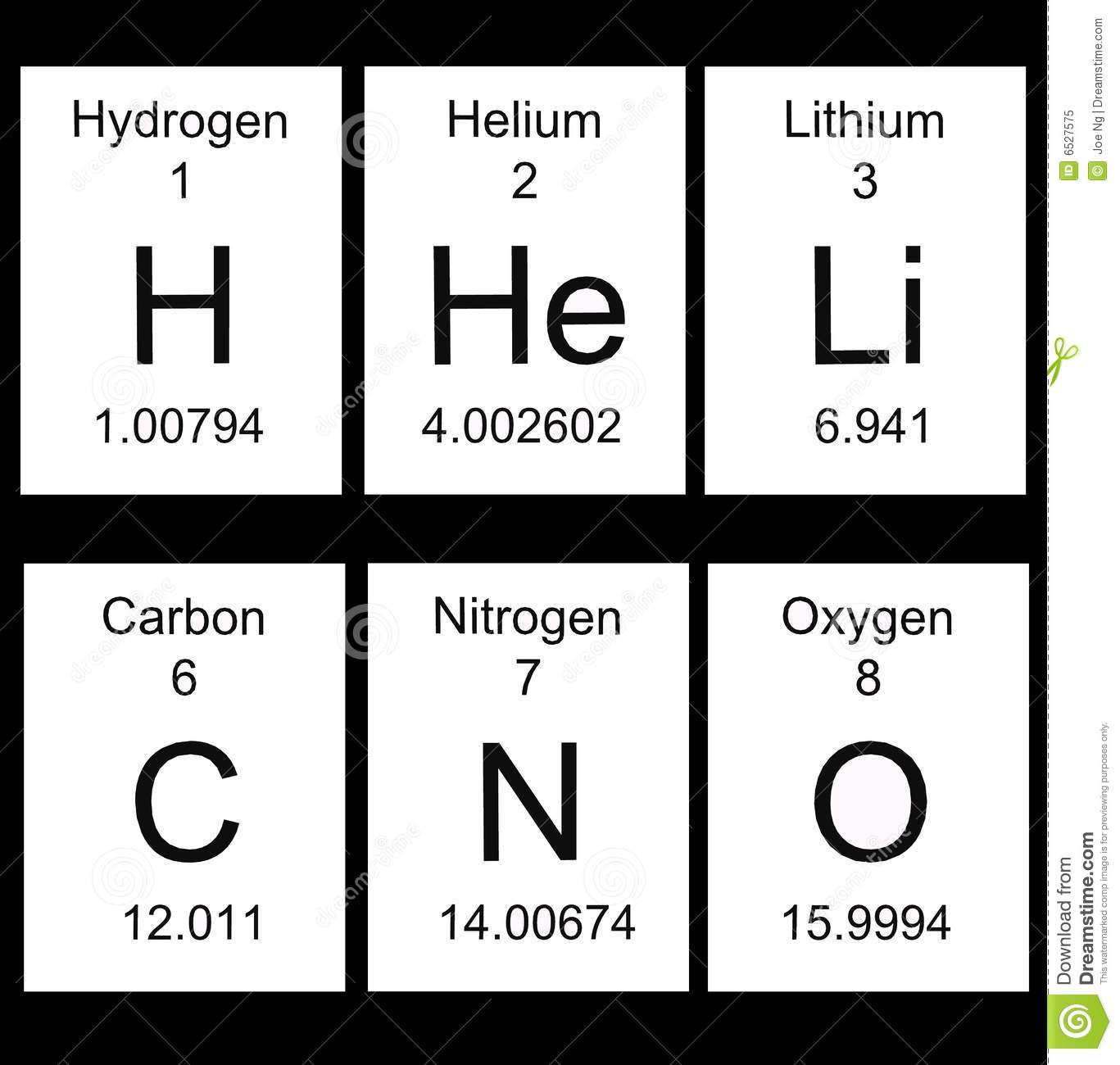
How many protons are in an atom of Nitrogen?

a)

14

b)

7

c)

10

d)

2

50.
What does the 1.00794 stand for?
a)
Hydrogen
b)
atomic number
c)
atomic mass
d)
atomic explosion
51.
What is the chemical symbol for Lithium?
a)
H
b)
He
c)
Li
d)
N
52.

A nucleus of an atom contains what two parts?

a)

Electrons and Protons

b)

Neutrons and Electrons

c)

Protons and Neutrons

53.

How many neutrons does Chlorine (Cl) with an atomic number of 17 and an atomic mass of 35.

a)

17

b)

18

c)

19

54.
Which type of subatomic particles have the LEAST amount of mass?
a)
protons
b)
electrons
c)
neutrons
d)
nucleus
55.
A substance composed of two or more elements chemically bonded together.  Examples are H2O and CO2.
a)
Element
b)
Compound
c)
Electron Cloud
d)
Metalloid
56.
The part of the atom that determines the identity of the atom is the ____________.
a)
proton
b)
nucleus
c)
electron
d)
neutron
57.
Elements which are shiny and conduct electricity and heat are called
a)
metals
b)
nonmetals
c)
metalloids
d)
nonexistent
58.
The yellow atoms are called 
a)
metals
b)
nonmetals
c)
metalloids
d)
noble gases
59.
Elements that are gases, brittle and poor conductors are classified as what kind of elements?
a)
Nonmetals
b)
Metals
c)
Metalloids
d)
Alkali Metals
60.

What is the atomic mass of Neon?

a)

10

b)

20.18

c)

10.18

d)

9.82

61.
How many protons are in Beryllium?
a)
4
b)
9
c)
5
d)
2
62.
How many neutrons are in a Gold atom?
a)
79
b)
196
c)
118
d)
275
63.
In an atom, what is the number of protons equal to?
a)
The number of electrons.
b)
The number of neutrons.
c)
The number of molecules.
d)
The number of nuclei.
64.
Ionic or covalent?
C  O
a)
Ionic
b)
Covalent
65.
Ionic or covalent?
Na  Br
a)
Ionic
b)
Covalent
66.
Ionic or covalent?
K  Br
a)
Ionic
b)
Covalent
67.
Ionic or covalent?
H  O
a)
Ionic
b)
Covalent
68.
Ionic or covalent?
C  H
a)
Ionic
b)
Covalent
69.
What is the name of this compound?  Na2CO3
a)
Disodium carbonate
b)
Sodium carbon oxide
c)
Sodium II carbonate
d)
Sodium carbonate
70.
Name this formula: 
Al2O3
a)
Aluminum Oxide
b)
Aluminum Oxygen
c)
Antimony Oxide
d)
Aluminum (VII) Oxide
71.
Name this compound. 
N2O
a)
Dinitrogen monoxide
b)
Dinitrogen oxide
c)
Nitrogen oxide
d)
Nitrogen dioxide
72.
Name this compound
PH3
a)
triphosphorus trihydride
b)
Phosphorus hydride
c)
Trihydrogen monophosphide
d)
Phosphorus trihydride
73.
Name this compound.
K2S
a)
dipotassium sulfide
b)
potassium sulfide
c)
potassium sulfate
d)
potassium sulfite
74.
Among the following, which combination would be most likely to form an ionic compound? 
a)
N and Br
b)
S and Cl
c)
Na and I
d)
H and O 
75.
Prefixes are used only for _______________ compounds
a)
Ionic
b)
covalent
76.
The following is what type of reaction:
PbCl2 + AgNO3 → Pb(NO3)2 + AgCl
a)
Synthesis
b)
Decomposition
c)
Single Replacement
d)
Double Replacement
77.
Balance this equation:
 2Li + Cl2 -> LiCl
a)
2Li + Cl2 -> 4LiCl2
b)
2Li + Cl2 -> LiCl2
c)
2Li + Cl2 -> 2LiCl
78.
Balance this equation:
MgCl2 --> Mg4+ Cl2
a)
It's already balanced.
b)
4MgCl2 --> Mg4+ 4Cl2
c)
4MgCl2 --> Mg4+ 5Cl2
79.

Acid, Base, or Salt: NaOH

a)

Acid

b)

Base

c)

Salt

80.

Acid, Base, Salt: HCl

a)

Acid

b)

Base

c)

Salt

81.

Acid, Base, Salt: H2SO4

a)

Acid

b)

Base

c)

Salt

82.

Acid, Base, Salt: Ba(OH)2

a)

Acid

b)

Base

c)

Salt

83.

Acid, Base, Salt: Na2SO4

a)

Acid

b)

Base

c)

Salt

84.

Acid, Base, Salt: CaCl2

a)

Acid

b)

Base

c)

Salt

85.

Acid, Base, Salt: NH4Cl

a)

Acid

b)

Base

c)

Salt

86.

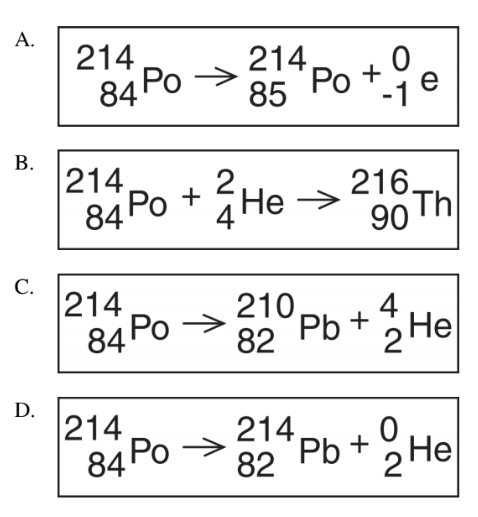
Which equation correctly represents the alpha decay of polonium-214?

a)

A

b)

B

c)

C

d)

D

87.

This is the correct equation for U-238 decay.

a)

true

b)

false

88.

Finish this equation

20983Bi--> _______ + 20581Tl

a)

42He

b)

0-1e

c)

y

89.

finish the equation


18173Ta --> ____ + 18174W

a)

42He

b)

0-1e

c)

y

90.

Complete the nuclear reaction

85209At = ___ + 24He

a)

83205Bi

b)

86209Rn

c)

81207Tl

d)

85208At

91.

Complete the nuclear reaction

2760Co = ___ + -10e

a)

2556Mn

b)

2860Ni

c)

2358V

d)

2759Co

92.
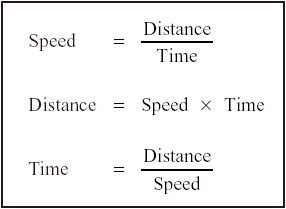
The baseball park is 4200 m from Camden's house.  I took him 30 minutes to get there.  What was Camden's speed?
a)
.007 m/min
b)
12.60 m/min
c)
140 m/min
d)
126 m/min
93.
If a 10 kilogram object accelerates suddenly at 15 m/s^2, how much force was applied to the object?
a)
150 Newtons
b)
15 Newtons
c)
150 kilograms
d)
100 kilograms
94.
Calculate the average speed (in meter/sec) if a cheetah runs 180 meters in 10 seconds.
a)
198 m/sec
b)
170 m/sec
c)
12 m/sec
d)
18 m/sec
95.
A golf ball accelerates off a tee at 15m/s2, changing its velocity from 0m/s to 50 m/s down the fairway. How long did it take the golf ball to accelerate?
a)
750 seconds
b)
35 seconds
c)
0.3 seconds
d)
3.3 seconds
96.
A roller coasters accelerates from an initial velocity of of 6.0 m/s to a final velocity of 70 m/s over 4 seconds.  What's the acceleration?
a)
24 m/s2
b)
18 m/s2
c)
16 m/s2
d)
16 m/s
97.

A squirrel has a weight of 4.9 N. What is his Mass if he is running on the Ground? (acceleration due to gravity on Earth=9.8 m/s^2)

a)

4.9 kg

b)

9.8 N/kg

c)

0.5 kg

d)

5.0 kg