
 Worksheets
Semester 2 final exam review Physics
Total questions: 61
Worksheet time: 53mins
Name
Class
Date
1.
Energy due to motion is ____________ energy.
a)
Potential
b)
Energy
c)
Kinetic
d)
Friction
2.
The faster an object moves, the ________ kinetic energy it has.
a)
more
b)
less
c)
none of the above
d)
all of the above
3.
__________ is stored energy.
a)
Potential
b)
Kinetic
c)
None of the above
d)
All of the above
4.
Gravitational potential energy depends on the ________ and ________ of the object.
a)
Height and mass
b)
Friction and movement
c)
Mass and Movement
d)
Height and Friction
5.
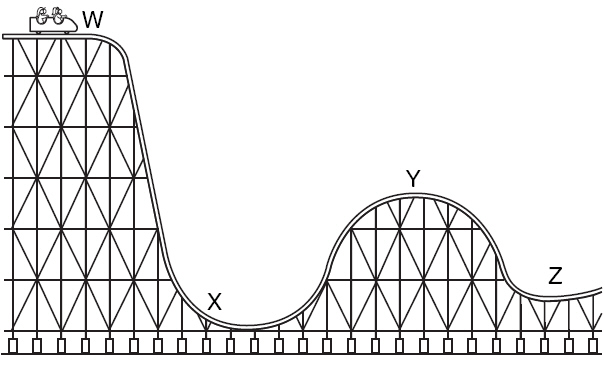
At which point is potential energy greatest?
a)
W
b)
X
c)
Y
d)
Z
6.
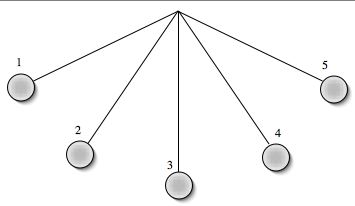
When a pendulum swings, at which point is kinetic energy highest?
a)
1
b)
2
c)
3
d)
4
7.
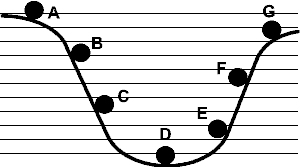
Which point has the most potential energy?
a)
G
b)
f
c)
b
d)
a
8.
A 0.40 kilogram bird is flying at a constant speed of 8.0 m/s. What is the bird's kinetic energy ?
a)
3.2 J
b)
4.2 J
c)
2.0 J
d)
12.8 J
9.
A 2600 kilogram car is moving at a speed of 25 m/s. How much kinetic energy does the car have?
a)
427,500 J
b)
237,500 J
c)
437,500 J
d)
537,500 J
10.
A 60.0 kg person walks from the ground to the roof of a 74.8 m tall building. How much gravitational potential energy does she have at the top of the building?
a)
43982.4 J
b)
63982.3 J
c)
43962.4 J
d)
83942.4 J
11.
Energy due to motion is ____________ energy.
a)
Potential
b)
Energy
c)
Kinetic
d)
Friction
12.
Work divided by time equals...
a)
energy
b)
power
13.
The unit of power is the...
a)
work
b)
watt
14.
Force multiplied by distance equals...
a)
work
b)
power
15.
The more POWER you use to move an object, the more work you do.
a)
True
b)
False
16.
If you lift a box from the floor to a height of 1m and then carry the for for 10m, you do work only when you CARRY the box.
a)
True
b)
False
17.
Power is the RATE at which work is done.
a)
True
b)
False
18.
If 150 Joules of work is needed to move a box 10 meters, what force was used?
a)
1500 N
b)
15 N
c)
1.5 N
d)
150 N
19.
How much work is being done with 200 N of force over 426 meters?
a)
85,200 J
b)
45,620 J
c)
90,480 J
d)
62,329 J
20.
In which of these cases is work being done?
a)
A student sleeps
b)
A student pushes a locked door that does not move
c)
a student carries his chair into another room
d)
A student sits on the carpet
21.
Work is done when a weightlifter holds a barbell still above his head.
a)
True
b)
False
22.
What would 54N be an example of?
a)
work
b)
power
c)
distance
d)
force
23.
Which of the following is a true statement about work?
a)
It measures how quickly an object accelerates
b)
It measures how much effort is applied over a certain distance
c)
It measures the change in an object's rate of speed
d)
It measures how much time it takes to move a massive object
24.
During a physics lab, a plastic strip was rubbed with cotton and became positively charged. The correct explanation for why the plastic strip becomes positively charged is that ...
a)
the plastic strip acquired extra protons from the cotton.
b)
the plastic strip acquired extra protons from the charging process
c)
protons were created as the result of the charging process
d)
the plastic strip lost electrons to the cotton during the charging process
25.
Insulators are different than conductors in that insulators ____.
a)
do not contain electrons or protons
b)
do not contain any charge
c)
have a weaker affinity for electrons
d)
do not allow charge to freely move
26.

Consider the conduction charging shown.
a)
Electrons move from the insulating stand into the sphere.
b)
Protons move from the bar into the sphere.
c)
Electrons move from the charged metal bar into the sphere.
d)
Protons move from the sphere into the negatively charged bar.
27.
A glass rod becomes positively charged when it is rubbed with silk. This net positive charge accumulates because the glass rod
a)
gains electrons
b)
loses electrons
c)
gains protons
d)
loses protons
28.
A balloon is rubbed against a student's hair and then touched to a wall. The balloon sticks to the wall due to
a)
magnetic forces between the particles of the balloon and the particles of the wall
b)
electrostatic forces between the particles of the balloon and the particles of the wall
c)
magnetic forces between the particles of the wall
d)
electrostatic forces between the particles of the balloon
29.
A negatively charged plastic comb is brought close to, but does not touch, a small piece of paper. If the comb and the paper are attracted to each other, the charge on the paper
a)
must be positive
b)
must be negative
c)
may be neutral or negative
d)
may be neutral or positive
30.
Two electrically charged identical-sized metal spheres, A (charge of -4) and B (charge of +8). If the spheres are brought into contact, which sphere will have a net gain of electrons?
a)
both A and B
b)
neither
c)
only A
d)
only B
31.
When a plastic rod is rubbed with wool, the wool acquires a positive charge because
a)
protons are transferred from the wool to the rod
b)
protons are transferred from the rod to the wool
c)
electrons are transferred from the rod to the wool
d)
electrons are transferred from the wool to the rod
32.

Two electrically neutral metal spheres, A and B, on insulating stands are placed in contact with each other. A negatively charged rod is brought near, but does not touch the spheres, as shown in the diagram below. How are the spheres now charged?
a)
A is positive and B is positive.
b)
A is negative and B is positive.
c)
A is positive and B is negative.
d)
A is negative and B is negative.
33.
Three charged metal spheres, X, Y, and Z, are on insulating stands. All three spheres are simultaneously brought into contact with each other and then returned to their original positions.
Which statement best describes the charge of the spheres after this procedure is completed?
Which statement best describes the charge of the spheres after this procedure is completed?
a)
All the spheres will end up with the same charge
b)
All the spheres are neutral
c)
Sphere Y has a greater charge than spheres X or Z
d)
Each sphere retains the same charge that it had originally
34.
Which of the following is a false statement about electrostatic force.
a)
Bringing charges closer together strengthen the force.
b)
The electrostatic constant remains the same.
c)
The values of the two charges is always the same.
d)
Electrostatic force can be attractive or repulsive
35.
Two similar metal spheres, A and B, have charges of +2.0 x 10⁻⁶ coulomb and +1.0 x 10⁻⁶ coulomb, respectively. The magnitude of the electrostatic force on A due to B is 4.0N newtons. What is the magnitude of the electrostatic force on B due to A?
a)
2.0N
b)
4.0N
c)
8.0N
d)
1.0N
36.
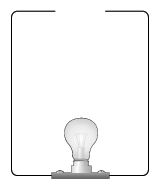
This circuit won't work. What essential part is missing from this circuit?
a)
resistance
b)
source of electric current
c)
conductor
d)
ammeter
37.
The force that pushes the electricity through a circuit is called...
a)
resistance
b)
voltage
c)
current
d)
switch
38.
The flow of electricity through a conductor is called...
a)
resistance
b)
voltage
c)
current
d)
source of electric current
39.
The best conductors for electricity are made of...
a)
wood
b)
plastic
c)
rubber
d)
metal
40.
This measures the speed of the current in a circuit
a)
voltage
b)
ammeter
c)
switch
d)
resistance
41.
What slows down the flow of electricity in a circuit?
a)
resistance
b)
voltage
c)
current
d)
source of electric current
42.

Which circuit (s) are parallel?
a)
A
b)
A and B
c)
B and C
d)
C
43.

Which one will still function if one light bulb goes out?
a)
A-Series
b)
B-Parallel
c)
A-Parallel
d)
B-Seriese
44.
Security alarms are made of _______ circuits because they turn on when the circuit is broken.
a)
Parallel
b)
Series
c)
Fancy
45.
If I add more light bulbs to a series circuit what happens?
a)
The current speeds up and the lights get brighter
b)
The current slows down and the lights dim lower
c)
The current speeds up and the lights dim lower
d)
The current slows down and the lights get brighter
46.
Magnetism is generated by moving
a)
protons.
b)
electrons.
c)
neutrons.
d)
elements.
47.

What do the lines around this magnet represent?
a)
North Pole
b)
South Pole
c)
Magnetic Declination
d)
Magnetic Field
48.
As the distance between two magnets increases (they get farther apart), the force between them:
a)
Increases
b)
Decreases
c)
Stays the Same
49.
If you cut a magnet in half, what happens to the poles?
a)
One half gets the North Pole, the other half gets the South Pole
b)
Both halves get only a North Pole
c)
Both halves get only a South Pole
d)
Both halves get a North pole and a South Pole
50.
What is responsible for the Magnetic Field around Earth?
a)
The Earth's crust
b)
The Earth's molton iron core
c)
The Earth's mantel
d)
The Sun
51.

If the North Pole of a permanent magnet is placed next to a compass as seen in the picture, which direction will the needle move?
a)
Clockwise
b)
Counter-clockwise
c)
It will not move
d)
Need more information
52.
An electromagnet's poles may be reversed by:
a)
decreasing the voltage of the coil
b)
increasing the number of coils
c)
changing the direction of current flow
d)
altering the material used to make the coils
53.

Which direction is the North Pole of this electromagnet?
a)
Right
b)
Left
c)
Up
d)
Down
54.
In un-magnetized materials the domains are __________ aligned.
a)
super
b)
slightly
c)
randomly
d)
always
55.
Electric motors are devices that convert _____ energy into _____ energy.
a)
electrical; mechanical
b)
mechanical; electrical
c)
chemical; potential
d)
mechanical; kinetic
56.

What kind of magnet can be turned on and off?
a)
refridgerator magnet
b)
electromagnet
c)
magnetite
d)
iron
57.

The strongest part of a magnet is...
a)
the bars.
b)
the force field.
c)
the poles.
d)
the middle.
58.
If a glass plate is placed over a magnet and iron filings are sprinkled over the glass, a pattern will be visible. What does this pattern indicate?
a)
The magnetic field
b)
The electrostatic field
c)
The piezoelectric effect
d)
The chemical reaction of the magnet and the filings
59.
What causes magnetism?
a)
the sun
b)
moving neutrons
c)
moving charges
d)
friction
60.

How can a wire become magnetic?
a)
point it north
b)
add a resistor
c)
heat it up
d)
run a current through it
61.

What device takes in mechanical energy and produces electricity?
a)
motor
b)
generator
c)
electromagnet
d)
battery
100 %

