
 Worksheets
Final Exam Review
Total questions: 65
Worksheet time: 45mins
Which of the following spheres includes ice, such as icebergs?
Atmosphere
Hydrosphere
Cryosphere
Biosphere

This rock formed through chemical changes involving heat and/or pressure. What type of rock is this?

This rock formed when magma cooled and hardened. What type of rock is this?
A rock formed from fragments of other rocks compacting and cementing together is called...
Which of the following would not be considered a pure substance?
Elements
Mixtures
Compounds
This kind of matter is made of only one kind of atom.
Which of the following is NOT a compound?
NaOH
Ca
CO
H2O

What kind of substance is Kool-aid (assume there's no ice)?
Which changes MUST happen for elements to become a compound?
elements are heated
a gas becomes a liquid
elements dissolve in water
chemical bonds form between atoms.
Water (H2O), is not found on the periodic table because water is a...
atom
liquid
mixture
compound

The image below is an example of
a homogeneous mixture
a compound
a heterogeneous mixture
an element
What type of energy is "stored" energy?
Sound
Gamma

What kind of energy does a rock at the edge of a cliff have?
Which is the best example of something that has kinetic energy?
A car parked at the top of a steep hill
A tennis ball rolling across the court
A picture hanging on the wall
A piece of coal before it's burned
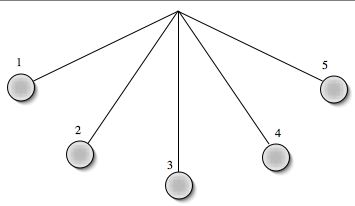
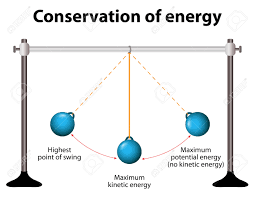
The law of conservation of energy states that energy cannot be ________ or ________, but can be transformed from one form to another.
Lost; saved
Moved; stored
created, destroyed

By definition, a mineral has all of the following characteristics EXCEPT?
definite chemical composition
crystal structure
naturally occuring
organic
The idea that geologic processes occurring today have occurred in the past at relatively the same rate...
catastrophism
uniformitarianism
The idea that all geological processes on Earth have occurred rapidly and violently; usually associated with a younger Earth view
catastrophism
uniformitarianism
A scientist finds footprints in a fossilized stream bed. This is a ________.
carbon film
mineral replacement
cast fossil
trace fossil
The sum of electrons and protons
The sum of protons and neutrons
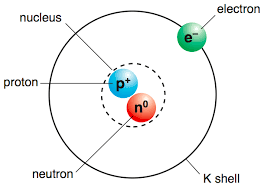
Which subatomic particles contribute the most mass to an atom?
On the periodic table, the number of protons is represented by the
atomic number
number of neutrons
energy levels
group number

Which subatomic particle has a negative charge?
proton
neutron
electron
cybertron

The nucleus of an atom contains which subatomic particles?
protons and electrons
protons and neutrons
electrons and neutrons
protons, electrons, and neutrons

In a neutral atom, which two subatomic particles are equal in number?
protons and neutrons
all subatomic particles are equal in number
neutrons and electrons
protons and electrons
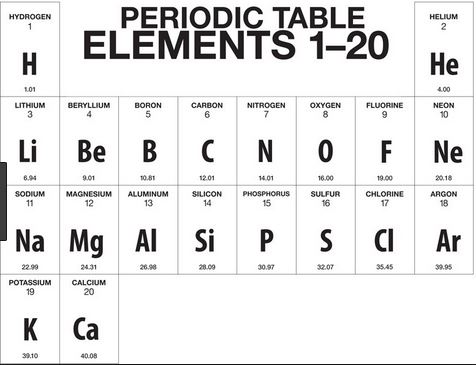
How many valence electrons does Calcium (Ca) have?
1
2
3
4
5
How many valence electrons does Argon (Ar) have?
4
5
6
7
8
Electrons in the outermost energy level
If an atom of a particular element has a different number of neutrons than what is given on the periodic table, we call this a(n)
isotope
ion
orbital
nucleus
What do we call an atom that has lost or gained electrons?
isotope
orbital
ion
nucleus
Occurs when two tectonic plates move toward each other and collide
convergent boundary
subduction
volcanic eruptions
divergent boundary
Occurs when two tectonic plates move away from each other.
Divergent Boundary
Convergent Boundary
Volcanic eruptions
Mountain building
Occurs when two tectonic plates slide past each other
Transform Boundary
Ocean Basin
Divergent Boundary
Spreading ridges
What is the thinnest and outer most layer of the Earth, that we live on?
Outer Core
Crust
Mantle
Inner core
Which layer of the Earth is made of molten rock that flows in convection currents?
Outer Core
Inner Core
Crust
Mantle
Which layer of the Earth is solid iron and nickel?
Mantle
Crust
Inner Core
Outer core

A group of friends gather around a fire to stay warm. What type of energy transfer is this?
conduction
convection
radiation
Which is an example of heat being transferred by conduction?
a furnace heating the air in a school
an ice cube melting in a person’s hand
Air being heated throughout a hot air balloon
the sun heating water in a swimming pool

Near the ceiling of a room the air is warmer. The warm air rises because it is less dense and we call this transfer of energy: ________.
conduction
convection
radiation
Convection is the transfer of energy through electromagnetic waves.
Convection is the transfer of energy through direct contact.
Convection is the transfer of electricity through appliances.
Convection is transfer of energy through fluids because of differences in densities.
The kind of heat transfer that travels through space in electromagnetic waves is ______________________.
convection
radiation
conduction
Ernest Rutherford discovered which part of the atom?
nucleus
neutron
proton
electron
JJ Thomson discovered which subatomic particle?
nucleus
neutron
proton
electron
Who proposed the theory that atoms orbit the nucleus in specific pathways?
Niels Bohr
Democritus
Ernest Rutherford
James Chadwick
First person to propose the concept of an atom
Rutherford
Democritus
Dalton
Bohr
Rutherford experimented with ____
Gold foil and alpha particles
Cathode rays and alpha particles
electron and alpha particles
gold foil and cathode rays
Which type of chemical reaction releases energy in the form of heat?
Endothermic
Combination
Replacement
Exothermic
What is the role of weathering in the rock cycle?
Weathering is responsible for the formation of igneous rocks
Weathering moves rock to a new place
Weathering breaks down pieces of rock
Weathering settles sediments in a new place, like a beach
Which of the following is a property of liquids? Select ALL that apply.
No definite volume
No definite shape
Molecules move more freely, but are still attracted to each other
Definite volume
Why is dissolving a physical change?
It can be reversed through evaporation
It does not change the identity of the two substances involved
The solute and the solvent are not bonded together - just mixed
It creates a new substance
Which of the following would be an example of an energy TRANSFER?
Leaves moving in the wind
A book falls to the floor with a loud thud
A match is struck and a flame is produced
A fan is plugged into an outlet and the blades begin spinning
Which of the following is a property of a non-metal?
Good conductor of heat and electricity
Brittle
Malleable
Non-reactive in acid
What do we call the class of substances that share properties of both metals and non-metals?
Silicons
Semi-metals
Tabloids
Metalloids

