Wayground logo

Free Printable Worksheets

Font size

S
M
L
XL
Worksheets

Animal Science - Spring 2021 - EOC Final

Total questions: 100

Worksheet time: 1hrs 5mins

Name
Class
Date
1.
The name for the neck vertebrae in cattle is called
a)
clavicle
b)
cervical
c)
scapula
d)
lumbar
2.
Muscle tissue that is involuntary:
a)
Cardiac muscle only.
b)
Smooth muscle only.
c)
Skeletal and cardiac muscle.
d)
Cardiac and smooth muscle.
3.
Where is the Femur located
a)
The thigh 
b)
Lumbar region
c)
Orbital
d)
The chest
4.
Meaning of the root word osteo-
a)
muscle
b)
tissue
c)
bone
d)
fat
5.
Which essential nutrient STORES energy?
a)
Carbohydrates
b)
Fat
c)
Protein
d)
Minerals
6.
Which essential nutrient makes up 70% of an animal’s body?
a)
Carbohydrates
b)
Water
c)
Protein
d)
Minerals
7.
We have learned in class that animals have different nutritional requirements.  Read each situation carefully and choose the option that best represents each animal’s nutritional requirements:
A 5 month old pig getting ready for the market livestock show: 
a)
Gestation/Lactation
b)
Growth
c)
Maintenance
d)
Work
8.
We have learned in class that animals have different nutritional requirements.  Read each situation carefully and choose the option that best represents each animal’s nutritional requirements.
A 7 year old team of Belgian Draft horses used 5 times a week at a tourist attraction. 
a)
Gestation/Lactation
b)
Growth
c)
Maintenance
d)
Work
9.
We have learned in class that animals have different nutritional requirements.  Read each situation carefully and choose the option that best represents each animal’s nutritional requirements.

15 year old gelding used a few times a year for a grandpa to give his grandkids a horseback ride.
a)
Gestation/Lactation
b)
Growth
c)
Maintenance
d)
Work
10.
We have learned in class that animals have different nutritional requirements.  Read each situation carefully and choose the option that best represents each animal’s nutritional requirements.
3 year old sow with a litter of piglets.
a)
Gestation/Lactation
b)
Growth
c)
Maintenance 
d)
Work
11.
The following are all examples of feed for certain reasons or life stages, except for:
a)
growth
b)
reproduction
c)
lactation
d)
intelligence
12.
Having two of the same genes for the trait (TT, tt); Both dominant or both recessive.
a)
homozygous or purebred
b)
heterozygous or hybrid
c)
twin offspring
d)
pairs of chromosomes
13.
Which of the following alleles is homozygous (purebred) recessive?
a)
Tt
b)
tt
c)
TT
d)
t
14.
Aa is
a)
homozygous (purebred)
b)
heterozygous (hybrid)
15.
A dog gives birth to 5 puppies. What percentage of the chromosomes does each puppy share with the mother?
a)
25%
b)
50%
c)
75%
d)
100%
16.
What gender has an X and a Y chromosome?
a)
male
b)
female
c)
transgender 
d)
all of the above
17.
The purpose of selective breeding is to 
a)
Get bigger animals
b)
get smaller animals
c)
create animals with desirable traits
d)
create animals with bad traits
18.
What you see, or the physical appearance.
a)
Genotype
b)
Phenotype
c)
Homozygous
d)
Heterozygous
19.
?
a)
Black Angus
b)
REd Angus
c)
Belted Galloway
d)
Oreo
20.
?
a)
Hereford
b)
Belted Galloway
c)
Holstein
d)
Guernsey
21.
?
a)
Ring tailed lemur
b)
Ring tailed cat
c)
Coati
d)
Striped lemur
22.

Select all that are by-products of animals

a)

Glue

b)

Supplements for feed

c)

Buttons

d)

Meat

23.

Definition of Calving

a)

A pig having babies

b)

A horse having a baby

c)

A cow having a baby

d)

A sheep having babies

24.

Definition of a lamb

a)

A baby goat

b)

A baby horse

c)

A baby pig

d)

A baby sheep

25.

Definition of gestation

a)

the act of food being digested in the stomach

b)

the process of growing offspring in the womb

c)

eating special feed

d)

the process of growing into an adult animal

26.

Which type of chicken is used for meat?

a)

Bantam

b)

Layer

c)

Broiler

d)

Turkey

27.

Classification of cattle from India, etc.

a)

Bos Indicus

b)

Bos Taurus

c)

Bos C. McBosserton

d)

Bos Indicutaurus Indicator

28.

Dam

a)

female parent

b)

male parent

c)

the process of separation of young animals from their mothers when they are no longer dependent upon them for survival

d)

a male animal that has not been castrated and is capable of breeding

29.

Horse

a)

Balaenoptera physalus

b)

Bubalus mindorensis

c)

Pithecophaga jefferyi

d)

Equus caballus

30.

The act of giving birth in Sheep.

a)

Kindling

b)

Kidding

c)

Calving

d)

Lambing

31.

The act of a horse giving birth

a)

Calving

b)

Kidding

c)

Foaling

d)

Lambing

32.

A group of baby piglets that were born at the same time

a)

Flock

b)

Herd

c)

Litter

d)

Group

33.

What do we call a Rabbit giving birth?

a)

Kindling

b)

Kidding

c)

Lambing

d)

Calving

34.
A companion animal is also known as a ______________.
a)
Livestock Animal
b)
Crop
c)
Mammal
d)
Pet
35.
Livestock are usually farm animals that are kept, raised, used, and/or bought and sold by people.
a)
True
b)
False
36.
________________ is the science and business of producing domestic livestock species, including but not limited to beef cattle, dairy cattle, horses, poultry, sheep, swine, and companion animals. 
a)
Pet science
b)
Crop science
c)
Animal science
d)
Livestock science
37.

Examples of LIVESTOCK include horses, donkeys, cattle, sheep, and pigs to name a few.

a)

True

b)

False

38.

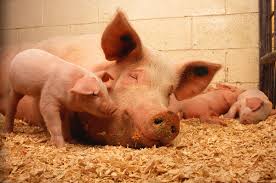
Which animal is a sow?

a)
b)
c)
d)
39.

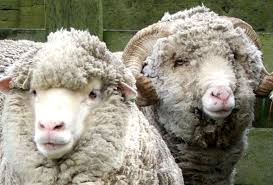
What are a female and a male sheep called?

a)

ewe and hog

b)

mare and ram

c)

ewe and ram

d)

kid and calf

40.

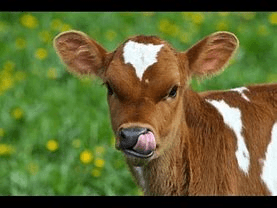
What is this?

a)

kid

b)

foal

c)

piglet

d)

calf

41.

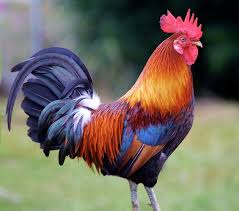
Who is this handsome fellow?

a)

hog

b)

bull

c)

hen

d)

rooster

42.

bringing animals under the control of humans

a)

exotic animal

b)

companion animal

c)

captive animal

d)

domestication

43.

The LARGEST classification group (at the top) is:

a)

Very exclusive

b)

Very inclusive

c)

Very small

d)

Very specific

44.

Why is the most specific taxonomy category?

a)

Kingdom

b)

Domain

c)

Species

d)

Order

45.

Which taxon comes next? Domain... Kingdom... Phylum

a)

Order

b)

Genus

c)

Class

d)

Family

46.

What would the scientific name of this organism be?

Kingdom: Animalia

Phylum: Chordata

Class: Reptilia

Order: Crocodila

Family: Alligatoridae

Genus: Alligator

species: mississippiensis

a)

alligator Mississippiensis

b)

Crocodila chordata

c)

Alligator mississippiensis

d)

Reptilia crocodila

47.

Binomial Nomenclature takes which two taxons to name a species?

a)

Genus and Kingdom

b)

Phylum and Class

c)

Family and class

d)

Genus and species

48.

What is the Scientific name of the Sheep?

a)

Meleagris gallopavo

b)

Ovis aries

c)

Capra hircus

d)

Bos taurus

49.

What is the Scientific name of the domestic Pig?

a)

Anas platyrhyncha

b)

Ovis aries

c)

Bos indicus

d)

Sus scrofa

50.

What is the Scientific name of the domestic Dog?

a)

Odocoileus virginianus

b)

Felis concolor

c)

Bos indicus

d)

Canis lupus

51.

These are products that pigs give us:

a)
b)
52.

We get milk ,eggs and meat from

a)

wild animals

b)

pet animals

c)

Livestock animals

53.

What animal does this Beef come from?

a)

Chicken

b)

Bee

c)

Cow

d)

Sheep

54.

Which region is shaded yellow?

a)

New England

b)

Southern

c)

Pacific

d)

Southwest

55.

What is bacon?

a)

a commodity

b)

a product

c)

a byproduct

d)

leather

56.

________________ behaviors result from an interaction between innate behaviors & past experiences.

a)

Genetic

b)

Hunting

c)

Innate

d)

Learned

57.
Which animal displays migratory behavior?
a)
geese 
b)
moose
c)
deer
d)
wild hog 
58.
A bark, snort, growl, and hoot are all examples of what type of communication 
a)
non-verbal communication
b)
verbal communication
c)
short distance communication
d)
aggressive communication 
59.

The interaction between animals of the same species, generally involving some form of communication.

a)

innate behavior

b)

response

c)

reflex

d)

social behavior

60.
Defense of a space against encroachment by other individuals.
a)
habituation
b)
migration
c)
submission
d)
territoriality
61.
A period of inactivity that some animals experience in winter that allows them to survive on stored body fat.
a)
pheromone
b)
hibernation
c)
submission
d)
estivation
62.
Any physical or verbal behavior intended to intimidate or harm.
a)
aggression
b)
reflex
c)
learned behavior
d)
trial and error
63.
A social interaction with the sole purpose of finding a mate.
a)
courtship
b)
hibernation
c)
aggression
d)
submission
64.
A reaction to a stimulus.
a)
territoriality
b)
courtship
c)
response
d)
trial and error
65.

A reaction caused by hormones that prepares an animal to either face an intense activity or remove themselves from the activity.

a)

courtship

b)

fight or flight

c)

trial and error

d)

habituation

66.
How does a taxis differ from a kinesis?
a)
A taxis is a movement in a specific direction.
b)
A taxis must be learned.
c)
A taxis is an increase in random movement.
d)
A taxis is inherited behavior.
67.
Animals need all of the following EXCEPT`
a)
Water
b)
Shelter
c)
Soil
d)
Air
68.

The organ system that breaks down food so it can be absorbed into the bloodstream.

a)

nervous system

b)

digestive system

c)

skeletal system

d)

respiratory system

69.

The set of organs that uses information from the senses to control other body systems.

a)

circulatory system

b)

muscular system

c)

endocrine system

d)

nervous system

70.

The organ system that removes cellular wastes from the body.

a)

excretory system

b)

muscular system

c)

digestive system

d)

endocrine system

71.

The body system made up of muscles that move bones.

a)

skeletal system

b)

muscular system

c)

respiratory system

d)

nervous system

72.

The organ system that consists of the heart and blood vessels and that moves blood through the body.

a)

circulatory system

b)

endocrine system

c)

digestive system

d)

respiratory system

73.

The organ system that brings oxygen to body cells and removes waste gas.

a)

circulatory system

b)

digestive system

c)

excretory system

d)

respiratory system

74.

The scenario above is best described by the interaction of what three body systems?

a)

X=respiratory system, Y=circulatory system, Z=reproductive system

b)

X=muscular system, Y=nervous system, Z=immune system

c)

X=circulatory system, Y=immune system, Z=muscular system

d)

X=muscular system, Y=digestive system, Z=circulatory system

75.

A deer hears a predator approaching and begins to run for safety. The deer has primarily engaged what body systems to escape?

a)

nervous, respiratory, and muscular systems

b)

muscular, digestive, and immune systems

c)

respiratory, endocrine, and excretory systems

d)

muscular, reproductive, and circulatory system

76.

The table above lists the types of white blood cells found in humans, indicates how abundant they are, and describes their functions. The two most abundant types of white blood cells may both be involved in a response to which of these?

a)

Injury

b)

Heat

c)

Allergens

d)

Bacterial Infection

77.

Which scenario below best describes the interaction between the endocrine and reproductive system.

a)

Hormones are produced causing ovulation in a female.

b)

Muscles are contracted, pushing food from the stomach into the small intestine.

c)

A male rabbit sees and chases a female rabbit.

d)

A bird lays her eggs, and protects them from possible predators.

78.

Animal body systems often coordinate their actions to carry out specific functions for the whole animal. Which of these correctly describes the interaction of two biological systems for a specific purpose in the human body?

a)
b)
c)
d)
79.
What are the 4 main parts of the circulatory system?
a)
heart, veins, arteries, pancreas
b)
heart, veins, arteries, liver
c)
heart, veins, arteries, lungs 
d)
heart, veins, arteries, capillaries
80.
What is the circulatory system's main purpose?
a)
It delivers carbon dioxide and waste to the lungs through blood vessels
b)
It delivers oxygen and nutrients to all the cells in the body and takes carbon dioxide and waste to the lungs through blood vessels
81.
The digestive system is a group of organs working together to 
a)
turn food into nutrients for energy and growth 
b)
break down food into smaller pieces
c)
add bile to the food in the stomach 
d)
push food through the system 
82.
The muscular systems main function include all of these except 
a)
allows movement in the body
b)
maintain posture
c)
stabilize joints
d)
converts food into nutrients 
83.
The muscular system works directly with the _____________system to allow the body to move. 
a)
skeletal 
b)
endocrine
c)
circulatory
d)
digestive 
84.
The respiratory system begins in the 
a)
Diaphragm
b)
Lungs
c)
Nose & mouth
d)
Pharynx
85.
Which of these structures are most abundant in the human body?
a)
systems
b)
tissues
c)
cells
d)
organs
86.
Which system of the human body provides protection to most of the major organs?
a)
skeletal system
b)
circulatory system
c)
respiratory system
d)
muscular system
87.
produces sperm and testosterone
a)
testicle
b)
scrotum
c)
penis
d)
vas deferens
88.
Male reproductive cell
a)
ejaculation
b)
sperm
c)
testosterone
89.
male hormone
a)
sperm
b)
testosterone
c)
ejaculation
90.
produces progesterone and estrogen
a)
ovary
b)
fallopian tube
c)
clitoris
d)
vagina
91.

The passageway for fetus during birth and organ for copulation

a)

ovary

b)

clitoris

c)

vagina

d)

uterus

92.
The release of an egg cell is called:
a)
fertilization
b)
ovulation
c)
menstruation
d)
ejaculation
93.
The female reproductive cell
a)
ovum
b)
ovary
c)
vagina
d)
uterus
94.
The placing of sperm in proximity with female reproductive cells, called eggs or ova, by a method other than natural mating.
a)
natural selection
b)
artificial insemination
c)
embryo transfer
d)
breeding
95.
Fertilized eggs are known as
a)
ova
b)
sperm
c)
zygotes
d)
chromosomes
96.
A process that removes fertilized eggs, or zygotes, from a female animal and places them in another female animal who carries them until birth is 
a)
artificial insemination
b)
zygote
c)
embryo transfer
d)
breed
97.
What is the name for a mature female goat?
a)
doe
b)
sow
c)
ewe
d)
buck
98.
young female cow
a)
cow
b)
heifer
c)
bull
d)
calf
99.
What type of agricultural product comes from swine?
a)
beef
b)
mutton
c)
pork
d)
chicken
100.
What type of agricultural product comes from cattle?
a)
beef
b)
muttton
c)
pork
d)
chicken