wayground logo

Free Printable Worksheets

Font size

S
M
L
XL
Worksheets

Biology Final #3 (Biotech, Genetics, Body Systems) 2021

Total questions: 90

Worksheet time: 2hrs 48mins

Name
Class
Date
1.

Two parents are carriers of a genetic disease. This means they are ____.

a)

homozygous

b)

homozygous dominant

c)

homozygous recessive

d)

heterozygous

2.

In the winter, the fur of this arctic fox will turn white. Is this due to genetics, the environment, or both?

a)

genetics

b)

environment

c)

both

3.

Many genes determine 1 trait (ex: skin color)

a)

Incomplete Dominance

b)

Polygenic

c)

Codominance

d)

Multiple alleles

4.
I have 2 X chromosomes. What am I?
a)
Male
b)
Female
5.
I have 1 X chromosome and 1 Y chromosome. What am I?
a)
Male
b)
Female
6.

A calico cat shows both the traits for orange fur and black fur. What kind of allele expression is this?

a)

Incomplete Dominance

b)

Co dominance with X-inactivation

c)

Independent assortment

d)

Recessive inheritance

7.
Looking at this pedigree, how many female family members are carriers?
a)
1
b)
3
c)
10
d)
7
8.
If a male has an affected x chromosome for a sex-linked trait such as colorblindness, where did he get the chromosome from?
a)
His father
b)
His mother
9.
Colorblindness is more common in males than in females because the allele for colorblindness is
a)
dominant and located on the X chromosome.
b)
recessive and located on the Y chromosome.
c)
recessive and located on the X chromosome.
d)
recessive and located on the Y chromosome.    
10.
How are Incomplete Dominance and Co Dominance different than a normal Mendelian cross?
a)
There is no difference
b)
The heterozygous genotype has a unique phenotype
c)
There is no heterozygous genotype
d)
There is only one phenotype regardless of genotype.
11.
If a gene is found only on the X chromosome and not the Y chromosome, it is said to be what?
a)
sex-linked trait
b)
polygenic trait
c)
codominant trait
d)
incomplete dominance trait
12.
Blood types are an example of co dominance and
a)
incomplete dominance
b)
sex linked traits
c)
multiple alleles
d)
polygenics
13.
Homozygous is when...
a)
the alleles are the same
b)
the alleles are different
c)
the alleles are absent
d)
the alleles are present
14.
What type of inheritance is shown?
a)
complete
b)
incomplete
c)
codominance
d)
sex-linked
15.
This is an example of ___________?
a)
Incomplete dominance
b)
Co-Dominance
16.
What you see, or the physical appearance.
a)
Genotype
b)
Phenotype
c)
Homozygous
d)
Heterozygous
17.
Aa, DD, bB, yy are all examples of
a)
genotypes
b)
phenotypes
18.

The scientific study of how traits are inherited

a)

Heredity

b)

Genetics

c)

Hybrid

d)

Purebred

19.

Weaker traits that can be hidden by others are called

a)

Inherited traits

b)

Environmental traits

c)

Dominant traits

d)

Recessive traits

20.

Traits that always overpower others are called

a)

Inherited traits

b)

Environmental traits

c)

Dominant traits

d)

Recessive traits

21.

Which is homozygous recessive?

a)

AA

b)

Aa

c)

aa

d)

None of them

22.

Which is homozygous dominant?

a)

AA

b)

Aa

c)

aa

d)

None of them

23.
How many boxes would say BB?
a)
1
b)
2
c)
4
d)
0
24.
Piece of DNA that give traits
a)
phenotype
b)
locus
c)
gene
d)
allele
25.

What are different forms of a gene called?

a)

Alleles

b)

Chromosomes

c)

Factors

d)

Traits

26.

In guinea pigs, the allele for rough coat (R) is dominant to the allele for smooth coat (r). A rough coat male and a smooth coat female mate. They produce several offspring - 50% are rough coat and 50% are smooth coat. What are the genotypes of the parents?

a)

RR x rr

b)

RR x Rr

c)

Rr x rr

d)

Rr x Rr

27.

What are punnett squares used for?

a)

Predicting the possible offspring of two parents

b)

Determining the alleles of a specific gene

c)

Identifying dominant and recessive traits

d)

Determining an individuals genotype

28.
G = green, g = yellow
The genotype for a yellow plant is...
a)
GG
b)
Gg
c)
gg
d)
all of the choices result in yellow
29.

How many chromosomes do humans have?

a)

12

b)

25

c)

46

d)

102

30.
Where do your inherited genes come from?
a)
offspring
b)
parents
c)
gametes
d)
grandchildren
31.
Who is considered the "father of genetics"?
a)
Gregor Mendel
b)
Reginald Punnett
c)
James Watson
d)
Justin Bieber
32.
What allele combination should go in the missing box?
a)
AA
b)
Aa
c)
aa
d)
none of these
33.
What are the 3 types of muscle tissue?
a)
Thigh, Calf, & Shoulder
b)
Traps, Forearm, & Abs
c)
Hamstring, Biceps, & Triceps
d)
Smooth Muscle, Cardiac Muscle, & Skeletal Muscle
34.
This picture shows how _____ connects bone to bone.
a)
tendon
b)
cartilage
c)
ligament
d)
tissue
35.
Your nose is made of a flexible tissue called______.
a)
Cartilage
b)
tendon
c)
squishy tissue
d)
marrow
36.
What is the function of tendons?
a)
they connect muscle to muscle
b)
they connect bones at the joint
c)
they produce blood  cells
d)
they connect skeletal muscle to bone
37.
 Skeletal muscles always work in______.
a)
isolation
b)
pairs
c)
alone
d)
none of the above
38.
A function of the integumentary system is ____________________.
a)
protects the organs from germs
b)
To receive pressure, pain, heat, and cold stimuli
c)
To maintain an internal body  temperature and sweat 
d)
all of these
39.

What is the correct order of urine flow through the urinary tract?

a)

Urethra, kidney, bladder, ureter

b)

Urethra, bladder, ureter, kidney

c)

Kidney, ureter, bladder, urethra

d)

Kidney, urethra, bladder, ureter

40.

Food moves down the esophagus by:

a)

Gravity

b)

Peristalsis

c)

Sphincter contraction

d)

Lacteal contration

41.

By the end of the digestive process...

a)

Starch has been changed into simple sugars

b)

Fats have been changed into fatty acids and glycerol

c)

Proteins have been changed into amino acids

d)

All of the above

42.

Which of the following best describes the acidity/basicity of pancreatic juice?

a)

Pancreatic juice needs to be acidic to neutralize the basic solution from the stomach.

b)

Pancreatic juice needs to be basic to neutralize the acidic solution from the stomach.

c)

Pancreatic juice needs to be basic to mix well with the basic solution from the stomach.

d)

Pancreatic juice needs to be acidic to mix well with the acidic solution from the stomach.

43.

The stomach continues the process of __________________ and ________________ digestion using its strong muscles and gastric acid.

a)

chemical and mechanical

b)

measuring and chemical

c)

mixing and mechanical

44.
Which organ in the digestive system absorbs the most water from food?
a)
esophagus
b)
small intestine
c)
large intestine
d)
stomach
45.
Food is changed in the stomach into a thin, watery liquid called _______.
a)
Peristalsis
b)
Villi
c)
Chyme
d)
Enzyme
46.
An _____is a type of protein that speeds up the rate of a chemical reaction in your body.
a)
Enzyme
b)
Fat
c)
Mineral
d)
Vitamin
47.

Very painful accumulation of calcium, uric acid, cystines, etc in your urine can lead to?

a)

Liver failure

b)

Kidney failure

c)

Inflamation of the Liver

d)

Kidney stones

48.
Two major branches of the nervous system
a)
central and peripheral
b)
peripheral and motor
c)
motor and sensory
d)
central and motor
49.
Major function of the nervous system
a)
movement
b)
sensation
c)
thought
d)
all of these
50.
The brain is part of the ____ nervous system.
a)
central
b)
peripheral
c)
motor
d)
internal
51.
The nerves in your fingertips are part of the ___ nervous system
a)
central
b)
peripheral
c)
internal
d)
cardiovascular
52.
Neurons send signals in the brain and body via...
a)
neurotransmitters only
b)
electrical impulses only
c)
wifi
d)
neurotransmitters AND electrical signals
53.
Which of the following delivers oxygen to cells?
a)
Red Blood cells
b)
White blood cells
c)
Platelets
d)
Plasma
54.

Which of the following are the blood vessels that have the thickest walls and carry blood away from the heart?

a)

Veins

b)

Arteries

c)

Capillaries

55.
What is the name of the circulation between the heart and lungs?
a)
Diastolic
b)
Systemic
c)
Pulmonary
d)
Coronary
56.
What is the name of the circulation between the heart and the body?
a)
Diastolic
b)
Systemic
c)
Pulmonary
d)
Coronary
57.
What is the function of a valve?
a)
Helps blood to clot
b)
Keeps blood flowing in all directions
c)
Keeps blood flowing in one direction
d)
Stops blood from flowing
58.

A blood vessel that carries blood back to the heart and is under low pressure.

a)

Cardiovascular System

b)

Heart

c)

Vein

d)

Artery

59.

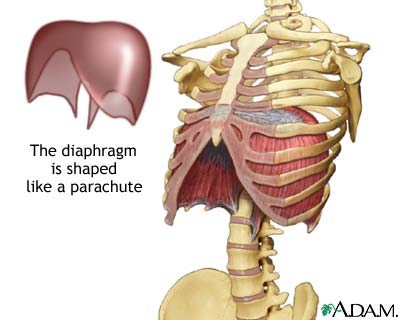
What is function of the dome-shaped diaphragm muscle?

a)

This is where gas exchange happens.

b)

Air passes through the diaphragm on the way to the lungs.

c)

It attaches to the lribs and contracts and relaxes to help in breathing.
60.
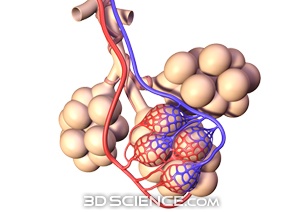
The air sacs that are covered with capillaries where gas exchange takes place
a)
bronchi
b)
lungs
c)
oxygen
d)
alveoli
61.

The finger-like structures that line the small intestine and is where absorption of nutrients (protiens, carbs, fats) occurs?

a)

cilia

b)

villi

c)

hair

d)

amoeba

62.

What organs can you see in this picture?

a)

Heart

b)

Lungs

c)

Liver

d)

Small Intestines

e)

Large Intestines

63.

What are these organs? What system of the body are they part of?

a)

Liver

b)

Kidneys

c)

lungs

d)

respiratory

e)

excretory

64.

What organ is this? And what system of the body is it part of?

a)

Brain

b)

Large Intestines

c)

Small intestines

d)

Excretory

e)

Digestive

65.

What nutrients are absorbed here?

a)

protein

b)

carbohydrates

c)

vitamins & minerals

d)

water

e)

fats

66.

What organs do you see here>

a)

Liver

b)

Heart

c)

Lungs

d)

Kidney

e)

Stomach

67.

Here in the liver there is the teardrop shaped gland (green gland). What is it called, what does it hold, where does it deliver its contents?

a)

Pancreas, Saliva, Stomach

b)

Gall Bladder, Bile, Stomach

c)

Gall Bladder, Bile, Small Intestines

d)

Pancreas, Insulin, Stomach

e)

Gall Bladder, Saliva, Small Intestines

68.

What is the LARGER tube called?

What is the smaller tube called?

Where did they come from?

a)

Esophagus, Trachea, Phaynx

b)

Trachea, Esophagus, Phaynx

c)

Aorta, Vena Cava, Heart

d)

Pulmonary Artery, Vein, Lung

69.

Genetically modified food (or GM food) is food produced from plants or animals whose DNA has been altered through genetic engineering.

a)

True

b)

False

70.
All of the following are advantages of GMO's except
a)
pest resistant crops
b)
more nutritional foods
c)
unknown long term health effects
d)
creating more human insulin
71.
Why is DNA important?
a)
it is very small and very complicated
b)
it's in everything
c)
it serves as the blueprint for traits of all living things
d)
because we eat it every day for energy
72.

What is the first cloned mammal?

a)

goat

b)

cat

c)

sheep

d)

cow

73.
In cloning, what is the purpose of the surrogate mother? 
a)
Donate her DNA
b)
Donate her egg cell
c)
Incubate and carry the baby until birth
d)
Nothing.  She's useless.
74.
Stem cells are ____________________.
a)
cells that grow uncontrollably
b)
undifferentiated and can turn into any type of cell
c)
those that never go through cell division
d)
differentiated cells that do one job
75.

This is the practice of cutting DNA and separating it by the size of the pieces

a)

Cloning

b)

Gel Electrophoresis

c)

Genetic Engineering

d)

DNA Fingerprinting

76.

During gel electrophoresis, the _______ pieces of DNA move farthest down the gel

a)

lightest

b)

heaviest

c)

ugliest

d)

deadliest

77.

What does transgenic mean?

a)

An organism that can change its genes at will

b)

A stem cell that can differentiate into anything

c)

An organism that has had another species' DNA put in it

d)

A bacteria that reproduces asexually

78.

A special protein that targets a specific base sequence and cuts DNA into smaller fragments.

a)

PCR

b)

DNA Polymerase

c)

Helicase

d)

Restriction Enzyme

79.
DNA cutting "scissors" are
a)
Bacteriophages
b)
Restriction Enzymes
c)
DNA Enzymes
d)
Plasmids
80.
Which of the following is a circular DNA from bacteria that can hold a foreign gene?
a)
plasmid
b)
restriction enzyme
c)
ligase
d)
protein expression
81.
Which of the following terms describes the process of the uptake of recombinant plasmids into bacteria cells?
a)
rDNA technology
b)
transferrence
c)
transformation
d)
rDNA plasmid
82.
Which of the following model organisms is often used in rDNA technology to make insulin?
a)
small squid
b)
mouse
c)
fruit fly
d)
E. coli
83.

On which of the plates would you expect to have transformed bacterial colonies AND Gene expression of the GFP gene (they'll be glowing)?

a)

-DNA/Amp

b)

+DNA/Amp

c)

+DNA/Amp/Ara

84.

What is the purpose of the changes in extreme temperatures?

a)

Kill off the low fitness e. coli

b)

Increase Permability of the membrane

c)

Decrease Permeability of the membrane

d)

allow bineary fission to occur easier

85.

Which tube is pGFP added to?

a)

-DNA

b)

+DNA

c)

Both

86.
What are the 4 nitrogen bases?
a)
adenine, thymine, cytoplasm, and guanine
b)
adenine, thymine cytosine, and guanine
c)
adenine, thymine, cytosine, and gylcerol
d)
adenine, thymine, cytosine, and glucose
87.
Which shows the correct complementary base pairing for DNA?
a)
C-A, T-G
b)
A-G, C-T
c)
C-G, U-A
d)
T-A, G-C
88.

A cell structure that contains genetic information along strands of DNA.

a)

Allele

b)

Chromosome

c)

DNA

89.

Which suspect should be charged with the crime?

a)

Suspect 1

b)

Suspect 2

c)

Suspect 3

d)

None of these suspects

90.
DNA fingerprinting works because
a)
Most genes are dominant
b)
All organisms contain RNA
c)
The most important genes are different among most people
d)
No two people, except identical twins, have exactly the same DNA