wayground logo

Free Printable Worksheets

Font size

S
M
L
XL
Worksheets

Final Exam Review S2021

Total questions: 106

Worksheet time: 2hrs 4mins

Name
Class
Date
1.
Which statement describes a vector?
a)
It has magnitude but no direction
b)
It has direction but no magnitude
c)
It has both direction and magnitude
d)
It has constant magnitude but no
 direction
2.

During which interval of this velocity vs. time graph is the object not moving?

a)

B to C

b)

C to D

c)

D to E

d)

only at point A

3.

Which runner won the race? Note: the y axis should be POSITION.

a)

Albert

b)

Bob

c)

Charlie

4.

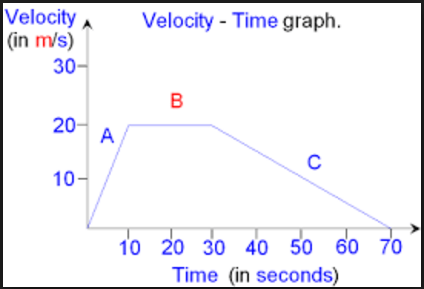
This is a velocity-time graph. What is the object doing in segment A?

a)

Speeding up

b)

Slowing down

c)

Constant Velocity

d)

Not moving

5.

The slope on a position vs time graph represents

a)

displacement

b)

velocity

c)

distance

d)

vector

6.
You and your dog go for a walk to the park.  On the way, your dog takes many side trips to chase squirrels or examine fire hydrants.  When you arrive at the park, do you and your dog have the same displacement?
a)
yes
b)
no
7.

What is total displacement of the object.

a)

4 m

b)

2 m

c)

8 m

d)

0 m

8.
Which of the following could never be negative?
a)
a distance
b)
a velocity
c)
a displacement
d)
a vector
9.
A bobsled accelerates from rest with an acceleration of 0.8 m/s2 for 5 seconds. What is the bobsled's final velocity?
a)
0.16 m/s
b)
6.25 m/s
c)
4 m/s
d)
0 m/s
10.

If the acceleration and velocity of an object point in opposite directions that object is...

a)

speeding up.

b)

slowing down

11.

Which one of the following formulas would you need to use to calculate acceleration, if you are given the change in velocity and a time interval?

a)

v = Δx / Δt

b)

Δx = x f - x i

c)

a = Δv / Δt

d)

Δt = t f - t i

12.

Which one of the following formulas would you need to use to calculate displacement, if you are given the initial and final position of an object?

a)

v = Δx / Δt

b)

Δx = x f - x i

c)

a = Δv / Δt

d)

Δt = t f - t i

13.

The slope of the velocity vs time graph is the...

a)

velocity

b)

acceleration

c)

jerk

d)

snap

14.
A car is traveling at 21.0 m/s. It slows to a stop at a constant rate over 5.00 s. How far does the car travel during those 5.00 seconds before it stops? 
a)
4.20 m
b)
52.5 m
c)
105 m
d)
158 m
15.
An object with an initial velocity of 3.50 m/s moves east along a straight and level path. The object then undergoes a constant acceleration of 1.80 m/s2 east for a period of 5.00 s. How far does the object move while it is accelerating?
a)
6.30 m
b)
17.5 m
c)
27.2 m
d)
40.0 m
16.

Objects will accelerate towards Earth at a rate of

a)

1.6 m/s2

b)

9.8 m/s2

c)

9.8 N

d)

1.6 N

17.

What is the direction of the acceleration for any projectile?

a)

The direction the projectile is traveling.

b)

Down

c)

Up

d)

Sideways

18.

If a projectile is launched with an initial vertical velocity (Voy) of 60 m/s, how long will it take to reach its highest point?

a)

5 seconds

b)

6 seconds

c)

7 seconds

d)

7.5 seconds

19.

At which of the following places does a projectile have the greatest acceleration?

a)

At the peak of its trajectory

b)

Half way to the peak

c)

At the instant it is launched

d)

All points have the same acceleration

20.
As a ball falls freely, the distance it falls each second is the same.
a)
True
b)
False
21.
A ball is thrown downward from the top of a roof with a speed of 25 m/s. After 2 s, its velocity will be:
a)
19.6 m/s
b)
-5.4 m/s
c)
-44.6 m/s
d)
44.6 m/s
22.

A push or a pull

a)

Force

b)

Friction

c)

Normal

d)

Gravitational

23.

The force that is always perpendicular to the surface

a)

Normal

b)

Gravitational

c)

Friction

d)

Applied

24.

The force that is always pointing straight down

a)

Normal

b)

Gravitational

c)

Friction

d)

Applied

25.

The force that is also called the weight force

a)

Normal

b)

Gravitational

c)

Friction

d)

Applied

26.

The force that is always parallel to the surface

a)

Normal

b)

Gravitational

c)

Friction

d)

Applied

27.

The force that is always opposite to the direction of motion

a)

Normal

b)

Gravitational

c)

Friction

d)

Applied

28.

The force(s) that comes from interacting with the surface

a)

Normal

b)

Gravitational

c)

Friction

d)

Applied

29.

What are the units for forces?

a)

Newtons

b)

Pounds

c)

Kilograms

d)

Meters/second/second

30.

An object's resistivity to changes in its motion is defined as:

a)

Force

b)

Weight

c)

Inertia

d)

Friction

31.

The amount of inertia possessed by an object is dependent solely upon its...

a)

weight

b)

normal force

c)

mass

d)

it depends

32.

When the net force is non-zero you have __________ forces.

a)

balanced

b)

unbalanced

33.

Net force means

a)

add all your forces together

b)

Normal force

c)

Friction Force

34.
Centripetal acceleration always points
a)
in the direction of the object's motion
b)
in the opposite direction of the object's motion
c)
towards the center of the circle
d)
towards the outside of the circle
35.
At the top of a roller-coaster loop, gravity and the normal force point in opposite directions.
a)
True
b)
False
36.
A particle P is moving in a circle with uniform speed. Which one of the following diagrams correctly shows the direction of the acceleration a and velocity v of the particle at one instant of time?
a)
A
b)
B
c)
C
d)
D
37.
what happens to gravity as distance increases?
a)
there was never any gravity in space
b)
it in increases rapidly 
c)
It decreases rapidly 
d)
It does not change 
38.

does mass or weight change when an object is in space

a)

Only weight

b)

only mass

c)

None of the above

d)

both of them

39.
Double the product of the masses of two objects
a)
4 times stronger gravity force
b)
4 times weaker gravity force
c)
2 times weaker gravity force
d)
2 times stronger gravity force
40.
If the force of gravity has been reduced by 1/4 which could be true?
a)
Mass was increased 4 times
b)
Mass was decreased 2 times
c)
Distance was increased 4 times
d)
Distance was doubled
41.
The force of gravity on Jupiter is a little more than 2 times the gravitational force on Earth. If an object has a mass of 50 kg and a weight of 490 N on Earth, what would be the object's approximate mass and weight on Jupiter?
a)
50 kg and 490 N
b)
100 kg and 490 N
c)
50 kg and 980 N
d)
100 kg and 980 N
42.
What is the direction of the velocity at point A, if the ball is revolving clockwise?
a)
up
b)
right
c)
down
d)
left
43.
What is the direction of the acceleration at point A, if the ball is revolving clockwise?
a)
up
b)
right
c)
down
d)
left
44.

What would happen to your weight if Earth's mass remain constant, but the Earth began to shrink.

a)

increase because gravitational force increases

b)

decrease because gravitational force decreases

c)

remains constant because gravitational force remains constant

45.
A force exerted over a distance to move an object is ______________________.
a)
power
b)
work
c)
momentum
d)
Watt
46.
The unit used to measure work is the 
a)
Watt
b)
Newton
c)
Joule
d)
meter
47.

Which of the following is the best example of work being done.

a)

doing homework

b)

lifting a box

c)

pushing a stationary box

d)

holding a box

48.
A 5000N block is lifted 10 m. How much work was done?
a)
50000 J
b)
5000 J
c)
500 J
d)
50 J
49.
What is the unit for mass?
a)
Kilogram (Kg)
b)
Newton (N)
c)
Joule (J)
d)
Watt (W)
50.
The amount of work done in a certain amount of time is known as 
a)
work
b)
effort force
c)
resistance force 
d)
power
51.
What is the equation for power?
a)
P = Work/time
b)
P = Force/time
c)
P = time/distance
d)
P = Work * time
52.
The unit used to measure power is the 
a)
Watt
b)
Newton
c)
Joule
d)
Newton*meter
53.
Person A is twice the weight of Person B and climb the same hill. If person A gets the top in half the time then...
a)
Person A is twice as powerful
b)
Person B is twice as powerful
c)
Person A is four times as powerful
d)
Person B is four times as powerful 
54.
This type of energy requires that the object is in motion...
a)
Elastic Potential Energy
b)
Chemical Energy
c)
Gravitational Potential Energy
d)
Kinetic Energy
55.

Which equation represents kinetic energy?

a)

1/2 m v2

b)

1/2 k x2

c)

mgh

d)

v/t

56.

Which equation represents elastic potential energy?

a)

1/2 m v2

b)

1/2 k x2

c)

mgh

d)

v/t

57.

Which equation represents gravitational potential energy?

a)

1/2 m v2

b)

1/2 k x2

c)

mgh

d)

v/t

58.
A 70 kg runner has a velocity of 5 m/s. Her kinetic energy is
a)
875 J
b)
175 J
c)
1750 J
d)
350 J
59.

A 5 kg ball is lifted 12 m above the ground. It's gravitational potential energy is about:

a)

60 J

b)

600 J

c)

17 J

d)

2.4 J

60.

Work is equal to:

a)

kinetic energy

b)

change in kinetic energy

c)

power

d)

force x time

61.
Compared to a sports car moving at 30 miles per hour, the same sports car moving at 60 miles per hour has 
a)
twice as much momentum
b)
four times as much momentum
c)
the same momentum.
d)
Half the momentum
62.
The momentum change of an object is equal to the 
a)
velocity change of the object
b)
force acting on it
c)
force acting on it times its velocity
d)
impulse acting on it
63.
The reason padded dashboards are used in cars is that they 
a)
decrease the impulse in a collision.
b)
increase the time of impact in a collision.
c)
increase the force of impact in a collision.
d)
decrease the momentum of a collision
64.
A table tennis ball launcher is fired. Compared to the impulse on the ball, the impulse on the launcher is 
a)
smaller
b)
larger
c)
the same
65.
Which of the following has the largest momentum?
a)
A large truck parked in a parking lot
b)
A tightrope walker crossing Niagara Falls
c)
A pickup truck traveling down the highway
d)
A dog running down the street
66.
The momentum of an object is defined as the object's 
a)
force times the time interval.
b)
force times its acceleration
c)
mass times its velocity.
d)
mass times it acceleration.
67.
A 0.250 kg cart moving at 0.500 m/s has how much momentum?
a)
0.5 kg*m/s
b)
.125 kg*m/s
c)
12.5 kg*m/s
d)
10 kg*m/s
68.
Which statement best describes the law of conservation of momentum?
a)
Momentum does not change.
b)
The energy of a system is conserved.
c)
Force is proportional to acceleration. 
d)
Total momentum of a system is conserved.
69.

Extending the time of a collision allows you to...

a)

change the impulse of the collision.

b)

diffuse the collision.

c)

increase the force of impact.

d)

decrease the force of impact.

70.

A baseball bat applies a force of 500 N to a ball for 0.1 seconds. What was the impulse on the ball?

a)

5 N x s

b)

50 N x s

c)

500 N x s

d)

5,000 N x s

71.
The direction in which a transverse wave travels is______
a)
the same direction as the disturbance
b)
toward the disturbance
c)
from the disturbance downward
d)
at right angles to the disturbance
72.
An example of a longitudinal wave is a ____
a)
water wave
b)
stadium wave
c)
sound wave
d)
rope wave
73.
Which statement best defines a wave medium?
a)
the material through which a wave travels
b)
a point halfway between the crest and trough
c)
the distance from one wave crest to the next
d)
the speed at which waves travel in water
74.
As volume increases, ____ increases.
a)
amplitude
b)
frequency
c)
pitch
d)
resting point
75.
A sound wave can travel through a vacuum or empty space.
a)
True
b)
False
76.
The distance from one point on a wave to that same point on the next wave is known as
a)
amplitude.
b)
frequency.
c)
wavelength.
d)
reflection.
77.
Which of the following waves is a light wave?
a)
mechanical
b)
longitudinal
c)
infrared
d)
seismic
78.
The bending of light is called refraction.
a)
True
b)
False
79.
The speed of sound waves depends on which of the following conditions?
a)
temperature and the material they travel through
b)
type of sound wave
c)
altitude
80.
The high points on waves are called...
a)
troughs
b)
crests
c)
zeniths
d)
wavelengths
81.
What is the lowest part of a wave?
a)
trough
b)
crest
c)
point of origin
d)
compression point
82.

According to laws of reflection,

a)

angle of incidence > angle of reflection

b)

angle of incidence < angle of reflection

c)

angle of incidence = angle of reflection

d)

both 1 and 2

83.
If the angle of incidence is 45 degree, what is the angle between the incident ray and reflecting surface
a)
45
b)
90
c)
180
d)
none of the above
84.
Light changes speed as it travels through various mediums.  What are examples of mediums that light can travel through.
a)
snow and ice
b)
air and water
c)
cloth and wood
d)
glass and wood
85.
Light has the lowest velocity in which medium?
flint glass n=1.70
barium glass n=1.60
crown glass n=1.523
water n=1.33
diamond n=2.45
a)
diamond
b)
water
c)
flint glass
d)
barium glass
86.
According to Willebord Snell, light passing from air to glass will cause the light to
a)
maintain its original speed 
b)
accelerate while it is in glass
c)
increase its speed
d)
reduce its speed
87.
A ray of light traveling from air into crown glass strikes the surface at an angle of 30 degrees. What is the angle of refraction? (air n=1, crown glass n=1.532)
a)
39.7 degrees
b)
19.2 degrees
c)
59.1 degrees
d)
12.3 degrees
88.
When socks get stuck to towels in your dryer, this is an example of________________
a)
current electricity
b)
static electricity
89.
Electric charges that are alike _______ each other.
a)
Attract
b)
Repel
90.
Why can you get a shock if you touch a metal doorknob after walking across a wool carpet?
a)
You have gained electrons; the doorknob has no electrons.
b)
You have gained neutrons; the doorknob has fewer electrons.
c)
You have lost electrons; the doorknob has many electrons.
d)
You have gained electrons; the doorknob has many electrons.
91.
Ms Jo Jo rubbed two balloons with a piece of wool. What will happen when the balloons are brought near each other?
a)
The balloons will repel each other.
b)
The balloons will attract each other.
c)
The balloons will become positively (+) charged.
d)
The balloons will pop.
92.
What do you call the process of charging a conductor by bringing it near another charged object?
a)
induction
b)
polarization
c)
neutralization
d)
conduction
93.
Which particle in an atom can you physically manipulate?
a)
protons
b)
electrons
c)
neutrons
d)
you can't manipulate any particle in an atom
94.
Which of these is the best definition of polarization?
a)
The object gains a positive or negative charge from another object.
b)
The charges in a neutral object separate due to a nearby charged object.
c)
Charges on a neutral object jump off onto a charged object due to attraction of opposite charges.
d)
Two objects attract each other because they are both charged.
95.
What kind of circuit is this?
a)
series
b)
parallel
96.
What kind of circuit is this?
a)
Series
b)
Consecutive
c)
Parallel
d)
Training
97.
Across all the paths in a parallel circuit the voltage is the same,
a)
True
b)
False
98.

What allows electricity to flow through, but opposes its motion?

a)

Conductors

b)

Insulators

c)

Resistors

99.
A __________________ is the flow of electrons through a material. 
a)
circuit
b)
current
c)
switch
d)
load
100.

How are the batteries connected in this circuit?

a)

In a series

b)

In parallel

c)

They are not connected

101.

If each battery has a voltage of 2.0V then what is the total voltage in this circuit?

a)

2.0V

b)

1.0V

c)

6.0V

102.
Voltage is measured in...
a)
Amps
b)
Volts
c)
Watts
103.
Resistance is measured in...
a)
Ohms
b)
Volts
c)
Amps
104.
Electrical power is measured in...
a)
Amps
b)
Watts
c)
Volts
105.
The symbol for Ohms is... 
a)
b)
Ω
c)
Φ
106.
Resistance is equal to...
a)
Power/Voltage
b)
Voltage/Current
c)
Current/Voltage