Wayground logo

Free Printable Worksheets

Font size

S
M
L
XL
Worksheets

Chem B States of Matter Final Exam Review

Total questions: 58

Worksheet time: 47mins

Name
Class
Date
1.
Which form of matter does not take the shape of its container?
a)
liquid
b)
gas
c)
solid
d)
air
2.
What term describes a solid changing to a gas?
a)
Deposition
b)
Sublimation
c)
Evaporation
d)
Freezing
3.
What term describes a liquid changing to a solid?
a)
Deposition
b)
Sublimation
c)
Evaporation
d)
Freezing
4.
What term describes a liquid changing to a solid?
a)
Deposition
b)
Sublimation
c)
Evaporation
d)
Freezing
5.
Particles (molecules) in a ______________________ have more energy than the other states of matter.
a)
gas
b)
solid
c)
liquid
6.
______________________ takes place when a liquid changes to a solid.
a)
freezing
b)
melting
c)
boiling
d)
sublimation
7.
Water can be a solid, liquid, and a gas.
a)
True
b)
False
liquid
8.
When a gas changes directly to a solid, the process is known as what?
a)
Sublimation
b)
Condensation
c)
Deposition
d)
Evaporation
9.
a)
It remains the same.
b)
It changes greatly.
c)
It changes minimally.
d)
Unable to tell.
10.
From 30 degrees to 55 degrees, what state of matter is the substance?
a)
Solid
b)
Liquid
c)
Gas
d)
Plasma
11.
What is increasing as time increases?
a)
state of matter
b)
boiling point
c)
melting point
d)
kinetic energy
12.
What state of matter is segment 5?
a)
Solid
b)
Liquid
c)
Gas
d)
Plasma
13.
The Kelvin temperature scale is based on
a)
potential energy
b)
kinetic energy
c)
Kelvins
d)
water
14.
30 degrees Celcius would equal
a)
273 K
b)
243 K
c)
30 K
d)
303K
15.
State of matter with no definite shape or volume.
a)
solid
b)
liquid
c)
gas
d)
Mississippi
16.
What state of matter does the picture best describe?
a)
Solid
b)
Liquid
c)
Gas
17.
Which State of Matter does the diagram best represent?
a)
Solid
b)
Liquid
c)
Gas
18.

Matter in a ...... has a ...... volume and ...... shape

a)

gaseous state ___ no definite ___ no definite

b)

liquid state _____ no definite ___ definite

c)

a. solid state _____ no definite ___ no definite

19.
What word describes when water is attracted to other substances?
a)
cohesion
b)
adhesion
c)
capillary action
d)
surface tension
20.
Attractions between the negative Oxygen atom of one water molecule and the positive Hydrogen atom of another water molecule are called
a)
Covalent bonds
b)
Ionic bonds
c)
Polar bonds
d)
Hydrogen bonds
21.
Why does ice float?
a)
As water freezes, it expands and its density decreases.
b)
As water freezes, it takes up more hydrogen from the atmosphere, causing it to have a greater buoyancy.
c)
As water freezes, air becomes trapped between the hydrogen bonds of water molecules.
d)
As water freezes, it takes up more oxygen from the atmosphere, causing it to have a greater buoyancy.
22.
Which end of the water molecule has a slightly positive charge?
a)
the oxygen end
b)
the hydrogen end
c)
both ends are slightly positive
d)
neither end is positive
23.
Water is a universal solvent because it...
a)
It can be found anywhere
b)
It freezes when it gets cold
c)
floats when frozen
d)
Dissolves most substances
24.
Which of the following is LEAST likely to dissolve in water?
a)
nonpolar fats and oils
b)
polar sugar molecules
c)
salt made of a positive sodium ion and a negative chloride ion
d)
all of the substances will dissolve easily in water
25.
 Small insects can walk across the surface of calm water. Their feet push the surface of the water down slightly, somewhat like a person walking across a trampoline, but they do not break the surface. What is the best explanation for why this happens?
a)
The insects are light enough so that they do not break the hydrogen bonds holding the water molecules together
b)
The insects actually use their wings to hover slightly above the water's surface and they only skim it with their feet
c)
The insects' feet are non-polar, so they are repelled by the polar water molecules and are pushed away from the water's surface
d)
The insects are small enough to see the individual water molecules, so they are able to step carefully from one molecule to the next
26.
What explains the very high melting and boiling point of water
a)
Strong dipole-dipole bonds between water molecules
b)
Strong hydrogen bonds between water molecules
c)
Dispersion forces which are present in all molecules
d)
Asymmetrical shape of the polar bonds.
27.
Hydrogen bonding occurs when hydrogen is bonded to N, O, or F.  Which of the following has hydrogen bonding?
a)
CBr4
b)
NO2
c)
H2S
d)
NH3
28.
Does HF have hydrogen bonding?
a)
yes
b)
no
29.
Does CH4 have hydrogen bonding?
a)
yes
b)
no
30.
Does NH3 have hydrogen bonding?
a)
yes
b)
no
31.
Which is the second strongest intermolecular force, after hydrogen bonding?
a)
dipole-dipole attraction
b)
London forces
32.
All molecules have London forces between them, but dipole-dipole and hydrogen bonding are so much stronger that when they are present we can ignore London forces.  Which of these has ONLY London forces?
a)
I2
b)
NH3
c)
OCl2
d)
SH2
33.

Which substance would have the weakest intermolecular forces of attraction?

a)

CH4

b)

NaCl

c)

H2O

d)

MgF2

34.
Determine the type of intermolecular force present in SiO2.
a)
dipole dipole
b)
dispersion
c)
ionic
d)
covalent network
35.
Which of the following statements correctly compares the behavior of a mixture of ethanol and water at STP?
a)
Water will evaporate first, because it has weaker intermolecular forces
b)
Ethanol will evaporate first, because it has weaker intermolecular forces
c)
Ethanol and water will evaporate simultaneously
d)
The aqueous solution will evaporate partially at a temperature between the boiling points of water and of ethanol
36.
Which of the following statements correctly explains why hydrogen bonding is such a strong intermolecular force?
a)
There is an attraction between a small, weakly electronegative hydrogen atom and a large, strongly electronegative atom of fluorine, nitrogen, or oxygen
b)
There is an attraction between a small, highly electronegative hydrogen atom and a large, highly electronegative fluorine atom
c)
There is an attraction between the hydrogen and oxygen atoms, only
d)
There is an attraction between the hydrogen and nitrogen atoms, only
37.
HCl and F2 both have a molecular mass of approximately 36 g/mol. Based on IMF, which will have a lower boiling point?
a)
HCl
b)
F2
38.
What information do we look for on the periodic table if we  want to examine intermolecular forces?
a)
atomic mass
b)
atomic number
c)
electronegativity
d)
ionization 
39.

When you have Br-Br, what is the polarity?

a)

Polar

b)

nonpolar

c)

Ionic

40.

How would the melting point and boiling point for polar covalent bond?

a)

High

b)

Low

41.

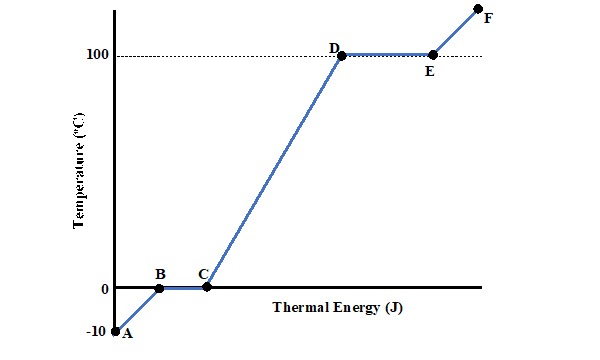
Between which two points is the solid cooling?

a)

A <---- B

b)

B <----> C

c)

C <---- D

d)

D <----> E

e)

E <---- F

42.

Between which two points is the gas heating up?

a)

A ----> B

b)

B <---- C

c)

C ----> D

d)

D ----> E

e)

E ----> F

43.
A substance's heating curve is shown in the graph.  What is its boiling point?
a)
100 C
b)
60 C
c)
80 C
d)
20 C
44.
A gas that has a pressure of 2 atm and a volume of 10 L.  What would be the new volume if the pressure was changed to 1 atm?
a)
P1/T1 = P2/T2
b)
P1V1 = P2V2
c)
V1/n1 = V2/n2
d)
PV = nRT
45.
A sample of a gas has a volume of 852 mL at 298 K. What temperature is necessary for the gas to have a volume of 945 mL?
a)
Pt = P1 + P2 + P3 + ...
b)
P1V1 = P2V2
c)
V1/T1 = V2/T2
d)
P1V1/T1 = P2V2/T2
46.
A sample of gas with a volume of 30.0 mL at 25.0oC is heated to 50.0oC.  What is the new volume of the gas?
a)
P1V1 = P2V2
b)
P1/T1 + P2/T2
c)
PV = nRT
d)
V1/T1 = V2/T2
47.
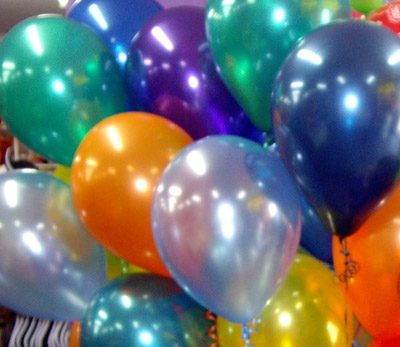
If a balloon is cooled what will happen to the volume?
a)
Volume will increase
b)
Volume will decrease
c)
Volume will not change
d)
Balloon freezes to death
48.
Which of the following would increase the (gas) pressure of a system?
a)
Increase the Temperature
b)
Pump in more gas
c)
Decrease the volume
d)
All of these
49.
In order to convert to Kelvin, you add ______ to the Celsius measurement.
a)
372
b)
273
c)
237
d)
732
50.
What is 50 °C in Kelvin?
a)
223
b)
323
c)
100
d)
50
51.
If 200 mL of a gas at 27°C is cooled to -33°C at a constant pressure, the volume will be
a)
250 mL
b)
204 mL
c)
196 mL
d)
160 mL
52.
If I have 5.6 liters of gas in a piston at a pressure of 1.5 atm and compress the gas until its volume is 4.8 L, what will the new pressure inside the piston be?
a)
1.75 atm
b)
1.8 atm
c)
1.3 atm
d)
1.29 atm
53.

If 22.5 L of nitrogen at 748 mm Hg are compressed to 725 mm Hg at constant temperature, what is the new volume?

a)

23.2

b)

21.8

c)

0.0431

d)

0.0459

54.

A 40.0 L tank of ammonia has a pressure of 12.7 kPa. Calculate the volume of the ammonia if its pressure is changed to 18.3 kPa while its temperature remains constant.

a)

27.8

b)

57.6

c)

0.172

d)

0.036

55.

A gas occupies 900.0 mL at a temperature of 27.0°C. What is the volume at 132.0°C?

a)

1215

b)

667

c)

135

d)

4400

56.

If 15.0 liters of neon at 25.0°C is allowed to expand to 45.0 liters, what must the new temperature be to maintain constant pressure?

a)

894

b)

99.3

c)

2.27

d)

75

57.

A gas exerts a pressure of 145 kPa at 65°C. What will the new pressure be at 130°C?

a)

173

b)

122

c)

290

d)

72.5

58.

The pressure of a gas is reduced from 1200.0 mm Hg to 850.0 mm Hg as the volume of its container is increased by moving a piston from 85.0 mL to 350.0 mL. What would the final temperature be if the original temperature was 90.0°C?

a)

1059

b)

124

c)

0.016

d)

62.4