
 Worksheets
Life Science Final Exam Review
Total questions: 54
Worksheet time: 54mins
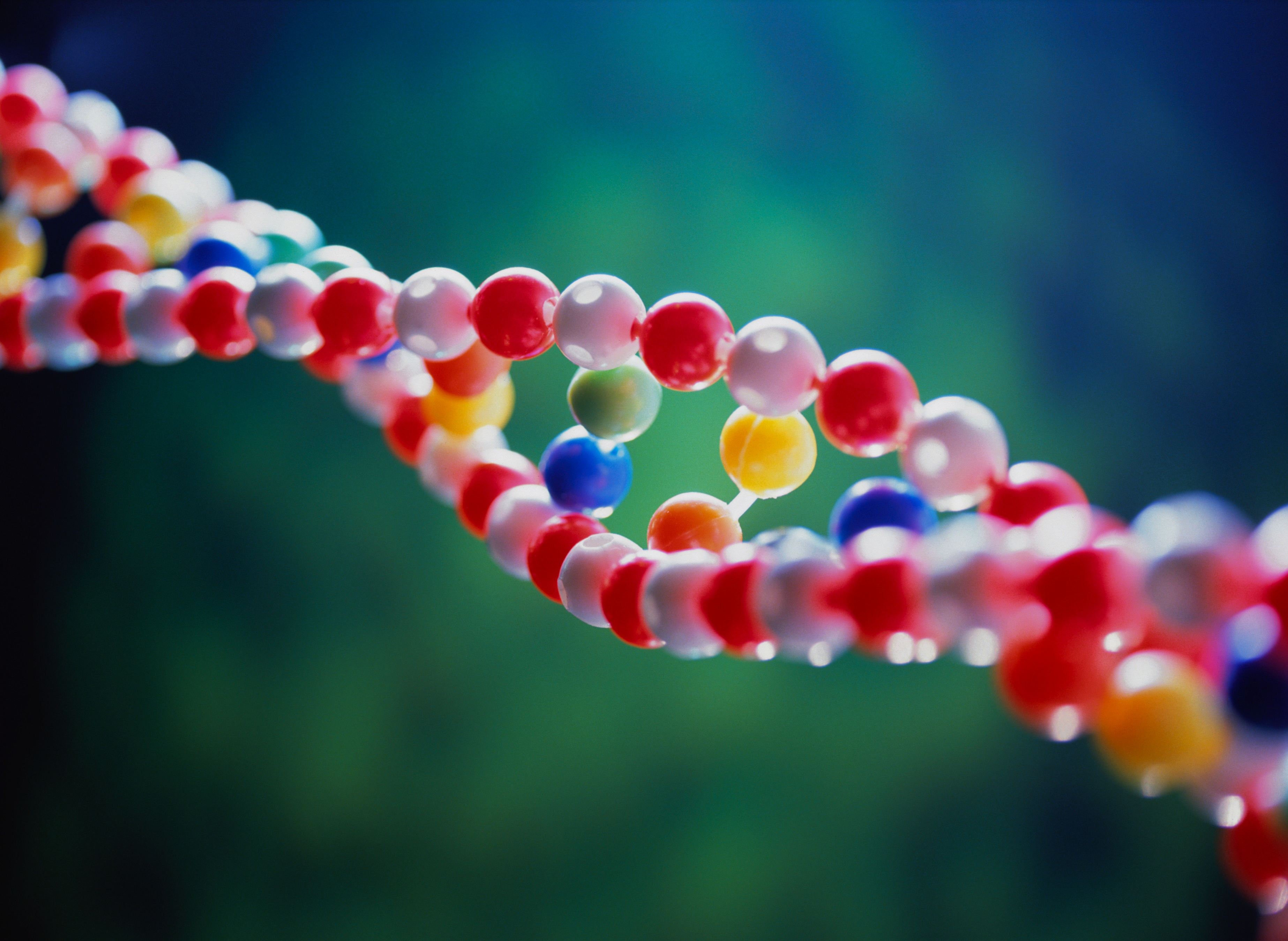
Why is DNA important?
it is very small and very complicated
it's in everything on Earth, from rocks to people
it serves as the blueprint for traits of all living things
because we eat it every day for energy
In eukaryotes, which organelle is DNA usually found in?
cell membrane
vacuole
chloroplast
nucleus

Which is in order from largest to smallest structure?
cell, nucleus, chromosome, gene
gene, chromosome, nucleus, cell
gene, nucleus, cell, chromosome
chromosome, nucleus, gene, cell
A process in which DNA has the unique ability to make an exact copy of itself so that when the cell divides each daughter cell gets a full copy.
Replication
Translation
Transcription
Protein Synthesis
A condensed (packed) version of the long DNA molecule that has genetic information in the form of genes is called a:
nucleotide
nucleolus
chromosome
base pair


An anatomical feature (body structure) that no longer seems to have a purpose in the current form of an organism
Homologous structure
Analogous structure
Vestigial structure
None of the above
How do you "win" at natural selection?
survive
go extinct
survive & reproduce
Structures or behaviors that help an organism survive in its surroundings
adaptations
inherited traits
learned behaviors
structural behaviors
Which of the following is a factor in natural selection?
Individuals of species compete with one another to survive.
All species are genetically diverse.
Individuals better able to adapt to changes leave more offspring.
All of the above.

Evolution typically happens.....
in a few weeks
never
over millions of years
in 100 years
A human’s arms, a cat’s front leg, a dolphin’s front flipper, and a bat’s wing ___________, which shows that they descended from a common ancestor.
have bones that are alike
used in the same way
share many similarities with insect wings and jellyfish tentacles
have nothing in common
Why might it be helpful for a species to have a lot of variations?
They can't be seen by predators
It is helpful in asexual reproduction
If the environment changes, they might be better able to adapt
They don't recognize each other
The small bones at the end of the human tailbone have no use today, although they may once have been useful. They are called __________.
Vestigial structures
Mutation
Organisms that have two identical alleles for a gene (for example pp) are _______.
Homozygous
Heterozygous
Dominant
Recessive
Organisms that have two different alleles for a gene (for example Pp) are called _______________.
Homozygous
Heterozygous
Dominant
Recessive
Who was the father of genetics, who determined that some traits are dominant and some are recessive?
Albert Einstein
Marie Curie
Charles Darwin
Gregor Mendel
What happens before mitosis begins?
DNA is replicated in the original cell
Meiosis must be completed
Homologous chromosomes separate
Chromosomes line up at the equator of the cell
What is the end result of meiosis?
2 daughter cells identical to the mother cell
4 daughter cells identical to the mother cell
4 gamete (sex) cells with half the number of chromosomes of the mother cell
2 gamete (sex) cells with half the number of chromosomes of the mother cell
How does mitosis differ from meiosis?
Mitosis makes gametes (sex cells), while meiosis makes offspring cells
Mitosis requires cytokinesis, meiosis does not
Mitosis makes gametes (sex cells) and meiosis makes zygotes
Meiosis makes gametes (sex cells) and mitosis makes body cells
When genes are exchanged between homologous chromosomes during meiosis it is called ____.
crossing over
fertilization
anaphase
cytokinesis
All cells in your body undergo the process of meiosis.
True
False
What is the purpose of mitosis in multicellular organisms?
production of gametes (sex cells)
division
growth and repair
reproduction
What is the purpose of mitosis in unicellular organisms?
division
asexual reproduction
production of gametes (sex cells)
growth and repair

This Punnett Square shows dominant brown color (B) and recessive blue (b). What percentage of offspring have blue eyes?
100%
75%
50%
25%
Daughter cells are genetically identical to the parent and each other at the end of
mitosis
meiosis
both
Selective breeding is...
a process in which humans create an organism with desired traits from parents with those desired traits
natural method of producing offspring with desired traits
creating a new species
making organisms reproduce during times of stress
Which of the following is NOT an example of natural selection?
People selectively breeding hamsters for size.
Insect populations developing resistance to certain pesticides.
Bacteria becoming resistant to antibiotics.
Male birds of certain species inheriting colorful feathers that are more attractive to females.
Eyes that can see in the dark are a(an) _______ inherited by nocturnal animals.
adaptation
acquired trait
learned ability

The pelvic bone of whales is not needed for movement within the water. The pelvic bone is evidence that the whale evolved from a species that made use of it. This is an example of a(n) ______________ structure.
vestigial
analogous
homologous

The forelimbs of mammals have similar anatomy because these groups descended from a recent common ancestor, showing evidence of evolution. Their bone structure is an example of a(n) ______________ structure.
vestigial
analogous
homologous

T - tall and t = short
In the punnett square below, what belongs in the missing square
tt
Tt
Bb
TT

What takes the instructions from the nucleus to the ribosomes in the cytoplasm?
mRNA
DNA
the nuclear membrane
mitochondria
The ___________ shows that species have changed over long periods of time.
energy pyramid
variety of life on Earth
fossil record
intelligence of humans

The stages of mitosis in order (with interphase before and cytokinesis after) are:
Metaphase, Anaphase, Prophase, Telophase
Prophase, Anaphase, Metaphase, Telophase
Prophase, Metaphase, Anaphase, Telophase
Anaphase, Prophase, Telophase, Metaphase
If the last set of chromosomes is different (XY), then the organism is
Male
Female
In sexual reproduction, the offspring are
clones of the parent
genetically unrelated to both parents
a combination of the genes of both parents
The transfer of genes from parents to their offspring is known as
Differentiation
Heredity
Immunity
Evolution

This diagram showing the homologous pairs of chromosomes ordered by size is called a
karyotype
genotype
teletype
omnitype
If one strand of DNA has the sequence CAAGGT, the complementary strand will have the sequence
ACCTTG
CAAGGT
GTTCCA
GCCTTC

