Wayground logo

Free Printable Worksheets

Font size

S
M
L
XL
Worksheets

8th Grade Science

Total questions: 77

Worksheet time: 59mins

Name
Class
Date
1.

What is energy of motion?

a)

Potential

b)

Kinetic

c)

Gravitational

d)

Chemical

2.
____________ is anything that has mass and takes up space.
a)
matter
b)
compound
c)
particle
d)
subatomic
3.
All mater is composed of __________.
a)
compounds
b)
atoms
c)
water
d)
H2O
4.
_____________ are the smallest unit of matter that retains the identity of the substance.
a)
compounds
b)
atoms
c)
water
d)
H2O
5.
All atoms have a ___________ in the center.
a)
electron
b)
cloud
c)
nucleus
d)
particle
6.
The nucleus of the atom has  the 
___________ and ___________ in it.
a)
protons and neutrons
b)
electrons and neutrons
c)
protons and electrons
7.
A proton has a ___________ charge.
a)
positive
b)
negative
c)
neutral
8.
An electron has a ___________ charge.
a)
positive
b)
negative
c)
neutral
9.
The variable that is changed by the scientist.
a)
Dependent Variable
b)
Independent variable
c)
Variable
d)
Law
10.
Variable being tested or measured.
a)
Independent variable
b)
Control
c)
Dependent Variable
d)
Physics
11.

A ____________ substance has a definite volume and shape.

a)

gas

b)

liquid

c)

solid

12.

All matter is made of atoms or groups of atoms that are in constant motion. This idea is the ___________________________________.

a)

States of Matter Theory

b)

Kinetic Theory of Matter

c)

Matter Theory

13.

What happens to a substance with an increase in temperature?

a)

it gains energy

b)

it loses energy

c)

its energy stays the same

14.
Evaporation is
a)
Gas changing to a liquid
b)
Solid changing to a liquid
c)
Liquid changing to a solid
d)
Liquid changing to a gas
15.
A solid changing to a liquid is...
a)
melting
b)
freezing
c)
condensing
d)
evaporating
16.
Water vapor cooling and turning into water droplets/steam is an example of......
a)
Condensation
b)
Melting
c)
Freezing
d)
Evaporation
17.
The faster an object moves, the ________ kinetic energy it has. 
a)
more
b)
less
c)
none of the above
d)
all of the above 
18.
What would have the greatest kinetic energy?
a)
A car driving down a hill.
b)
A person running down a hill. 
c)
A ball rolling down a hill. 
19.

The statement that "the energy within a system remains constant and cannot be created or destroyed, only transformed" best sums up _________.

a)

Something Mr. Lance likes to say.

b)

Life

c)

Law of Conservation of Energy

d)

The scientific method

e)

Newton's Third Law

20.
Which is the best example that something has kinetic energy?
a)
a. a car parked on a steep hill 
b)
b. a tennis ball rolling across the court
c)
c. a picture hanging on the wall 
d)
d. a piece of coal before it's burned 
21.
The SI unit in which kinetic energy is measured is 
a)
Newton
b)
Kilogram
c)
Joules
d)
Metres per second
22.
Can energy be destroyed?
a)
no
b)
yes
23.
Can energy be changed?
a)
yes
b)
no
24.
What is the force that causes objects to fall to Earth?
a)
Air resistance
b)
Gravity
c)
Water resistance
d)
Pressure
25.
What is the name of the units that we measure force in?
a)
Einsteins 
b)
Newtons
c)
Kg
d)
Metres
26.
What force does a parachute use to slow things down before hitting the ground?
a)
Friction
b)
Air resistance
c)
Water resistance
d)
Wind
27.
When two objects rub together, what force do they produce
a)
Gravity
b)
Air resistance
c)
Friction
d)
Water resistance
28.
What is the net force?
a)
10 N
b)
0 N
c)
25 N
d)
1 N
29.
If these teams are pulling with the same amount of force what will happen?
a)
The boy in blue will win.
b)
They will not move at all.
c)
The boy in red will win.
d)
Both will fall down.
30.
Balanced or unbalanced?
a)
balanced
b)
unbalanced
31.
The sum of all forces acting on an object.
a)
Contact Force
b)
Balanced Force
c)
Unbalanced Force
d)
Net Force
32.
What will cause an object to move?
a)
Applied forces
b)
Balanced forces
c)
Unbalanced forces
33.

Are forces applied when the objects involved are in direct contact.

a)

Contact forces

b)

Normal forces

c)

action-at-a-distance forces

34.

Is the force usually exerted by a surface on an object that is resisting against it.

a)

Friction

b)

Normal force

c)

Elasticity

d)

Tension

35.

When the electrons in the atoms rotate in a motion similar to a spinning top.

a)

Gravity force

b)

Rotational force

c)

Magnetic force

36.

Earth behave like a huge magnet.

a)

True

b)

False

c)

I don't know

37.

What force ultimately slows the roller coaster to a stop?

a)

Applied

b)

Normal

c)

Friction

d)

Gravitational

38.
What force holds the planets in motion around the sun?
a)
Magnetic
b)
Electrical
c)
Gravitational
d)
Air Resistance
39.
Name the missing force....
a)
weight force
b)
normal force
c)
frictional force
d)
tension force
40.
How would the absence of friction affect a marble traveling on a long, straight path?
a)
The marble’s speed would decrease.
b)
The marble’s speed would increase.
c)
The marble would stop immediately. 
d)
The marble would remain at constant speed.
41.

If negative charge is developed on two objects they will__

a)

attract each other

b)

repel each other

42.

In what condition the magnetic poles attract each other?

a)

South-South

b)

North-North

c)

North-South

d)

All of the above

43.

A water tank which is kept 10 feet high has more potential energy than a tank kept at 5 feet.

a)

True

b)

False

44.

atomic number is

a)

the number of protons

b)

the number of electrons

c)

the number of neutrons

d)

the location of an atom on the periodic table

45.

Atomic Mass is the number of

a)

protons and neutrons in the nucleus of an atom

b)

protons and electrons in the nucleus of an atom

c)

neutrons and electrons in the nucleus of an atom

46.

Conservation of mass means

a)

all the atoms present before a chemical reaction are not present after

b)

atoms present before chemical reactions are present after

c)

new substances and new elements are formed in a chemical reaction

47.

A pure substance that is a compound is made out of

a)

particles of more than one type of atom

b)

particles of the same type of atom

c)

a mixture of two or more substances that can be physically separated

48.

A molecule is

a)

a singular particle of a particular element

b)

another name for an element

c)

2 or more atoms that are combined

49.

Signs of a chemical change include;

a)

change of colour, change of temperature, precipitate (solid) formed, gas released.

b)

change of colour, reversing back to original form, precipitate (solid) formed, gas released.

50.

Water is the product of the reactants:

a)

oxygen and water

b)

oxygen and carbon

c)

hydrogen and oxygen

51.

In a chemical reaction, reactants contact each other, bonds between atoms in the reactants

are broken, and

a)

atoms rearrange and form new bonds to make the products.

b)

atoms remain the same and do not form new bonds to make the proudcts

52.

The type of reaction that releases energy as heat is called

a)

endothermic

b)

exothermic

c)

respiration

d)

photosynthesis

53.

The 'conservation of mass' theory tells us when a chemical reaction occurs in a closed system

a)

there will be no change in mass

b)

there will be a change in mass as it cannot be directly weighed and may dissipate
54.
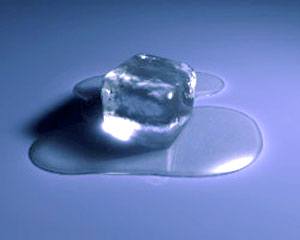
What kind of change is a phase change?
a)
Physical - it's still the same substance
b)
chemical - it's made of chemicals 
55.
A chemical change happens when...
a)
a substance is changed at the atomic level 
b)
bonds are broken and formed 
c)
a new substance is made
d)
all of the above! 
56.
Chemical Formulas ...
a)
are written in alphabetical order 
b)
represent the destruction or creation of atoms 
c)
represent how atoms are arranged in a chemical reaction 
57.
The compounds or elements present at the end of a reaction 
a)
reactants
b)
catalyst
c)
products
d)
energy 
58.
The compounds and elements that are present at the beginning of a reaction:
a)
reactants
b)
catalyst
c)
products
d)
energy 
59.
What is the law of Conservation of Mass?
a)
A measure of how much mass is created or destroyed. 
b)
Mass can neither be created nor destroyed during a chemical reaction. 
60.
What are the 3 particles that make-up the atom?
a)
protons, neutrons, and isotopes
b)
neutrons, isotopes, and electrons
c)
positives, negatives, and electrons
d)
protons, neutrons, and electrons
61.

What is the number of protons that the element in this image contain?

a)

14

b)

7

c)

15

d)

18

62.
"C" is the element symbol for which element?
a)
calcium
b)
carbon
c)
chlorine
d)
cadmium
63.

True or False? Neutrons have a negative charge

a)

True

b)

False

64.
What makes something radioactive?
a)
elements with an atomic number above 81
b)
an unstable nucleus
c)
contaminated sewage
d)
It decays over time
65.
How many elements are in C6H12O6?
a)
1
b)
2
c)
3
d)
4
66.
Which of the following is a compound?
a)
Co
b)
O2
c)
C
d)
CO2
67.

A non-contact force is between

a)

two objects that aren't touching

b)

two objects that are touching

c)

the ground and wheels

d)

you and me

68.

The three examples pictured are of

a)

Non-contact Forces

b)

Contact Forces

69.

Gravity is a

a)

Contact Force

b)

Myth

c)

Non-contact Force

70.

Which is an example of a non-contact force?

a)

elastic force

b)

normal force

c)

applied force

d)

electric force

71.

Which of the following forces can push (repel) and pull (attract)?

a)

Magnetic Force

b)

Electric Force

c)

Gravitational Force

d)

Both Magnetic and Electric Force.

e)

All Three, Magnetic, Electric and Gravitational Force.

72.

How can you increase the strength of this electromagnet?

a)

Get a larger nail.

b)

Add more loops of wire.

c)

decrease the loops of wire.

d)

Get a smaller nail.

73.

When placed at equal distances apart, the greatest gravitational attraction will be between two

a)

skateboards

b)

bowling balls

c)

school buses

74.
As the product of two objects' masses increases, the pull of gravity
a)
Increases
b)
Decreases
c)
Stays the same
75.
What types of charges attract?
a)
Positive and Positive
b)
Positive and Neutral
c)
Negative and Neutral
d)
Positive and Negative
76.
Electric charges that are alike _______ each other.
a)
Attract
b)
Repel
77.

Moving a magnet near a compass can cause the compass needle to move, even though the magnet does not touch the compass. This observation is evidence for which characteristics of magnetic fields?

a)

There is a north and south pole on a magnet.

b)

They can exert a force accross a distance.

c)

Magnetic fields do not exist.