
 Worksheets
FORM 4 CHAPTER 3 GRAVITATION
Total questions: 86
Worksheet time: 2hrs 19mins
Calculate the gravitational force between two objects when they are 0.750m apart. Each object has a mass of 5.00kg.
2.96x10⁻⁷N
3.00x10⁻⁹N
2.22x10⁻⁹N
2.23x10⁻⁸N
Calculate the gravitational force between two objects when they are 0.750m apart. Each object has a mass of 5.00kg.
2.96x10⁻⁷N
3.00x10⁻⁹N
2.22x10⁻⁹N
2.23x10⁻⁸N
What would the force between them be if the distance between them were doubled?
Two spherical objects have masses of 8000 kg and 1500 kg. Their centers are separated by a distance of 1.5 m. Find the gravitational attraction between them
5.4 X 10⁻⁴ N
1.2 X 10⁷ N
3.6 X 10⁻⁴ N
5.33 N
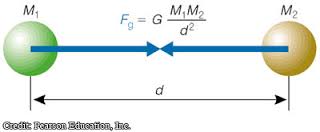
Which configuration will result in the greatest gravitational force?
small masses far apart
large masses far apart
small masses close together
large masses close together

A 500 kg asteroid is located 3.4 x10⁷m from the center of Earth. The mass of Earth is 6.0x1024 kg. What is the gravitational force between the asteroid and Earth?
F = GMm/r2
G= 6.67 x 10⁻¹¹
1.73 x 10² N
4.63 x 10⁵ N
2.94 x 10³ N
6.42 x 10⁴ N
If I double the mass of one object, but don't change anything else... What happens to the gravitational force between two objects?
Doubles
Quadruples
Cut in Half
4x Smaller

The law of universal gravitation is credited to whom?
Einstein
Galileo
Darwin
Newton

The number 6.67 x 10 -11 N* m2 / kg2 is called the
Universal speed constant
centripetal force
Universal Gravitational constant
Earth's Gravitational constant
Two masses m1 and m2 are separated by a distance R and gravitaional force between them is F. If the distance R is doubled the force will now be _
4F
2F
F/2
8F
F/4
Two masses m1 and m2 are separated by a distance R and gravitaional force between them is F. If the distance R is reduced to R/2 the force will now be
8F
2F
F/4
F/2
4F

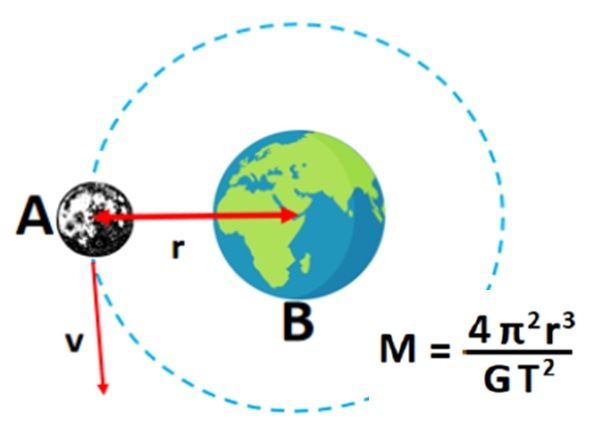
M represented in the formula is the mass of...
M di dalam formula adalah jisim untuk...
A
B
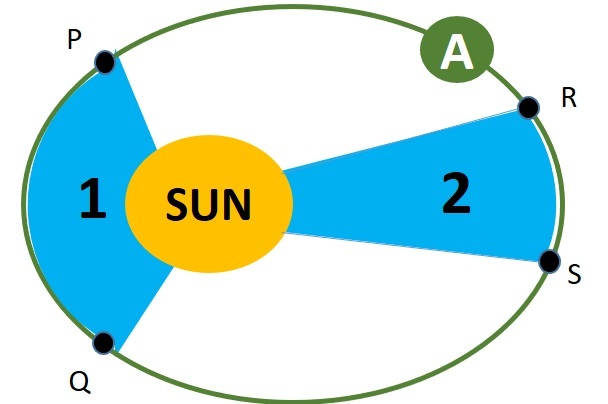
Speed of Planet A at RS is faster than PQ
Planet A lebih laju di RS berbanding di PQ.
True
Betul
False
Salah
Which of the following shows the formula to calculate escape velocity of an object from the surface of the Earth?
Antara berikut yang manakah menunjukkan formula untuk mengira halaju lepas sesuatu objek dari permukaan Bumi Bumi?


Which of the following shows the correct way to get the value of r?
Yang manakah antara berikut menunjukkan cara untuk mendapatkan nilai r?
R + h
h
R
R - h
A satellite orbits the Earth with linear speed 3.87 x 10^3 ms-1. Calculate the radius of the orbit.
Sebuah satelit mengelilingi Bumi dengan laju linear 3.87 x 10^3 ms-1. Kira jejari orbit.
(G = 6.67 x 10⁻¹¹ N m2 kg-2, M = 5.97 x 1024 kg, R = 6.37 x 10⁶ m)
5.42 x 10^7 m
3.17 x 10^7 m
2.66 x 10^7 m
A satellite with mass 1200kg and a satellite with mass 1500kg have different minimum velocity that have to be reached before they are able to escape Earth's gravity.
Satelit dengan jisim 1200kg dan satelit dengan jisim 1500kg mempunyai halaju minimum yang berbeza untuk mengatasi graviti Bumi.
True
Betul
False
Salah
Calculate the linear speed of a satellite in an orbit 900 km above Earth’s surface. Given G = 6.67 x 10^-11 N m^2 kg^-2, radius of earth is 6370 km and mass of the earth is 5.97 x 10^24 kg.
1.05 x 10^4 m s^-1
2.97 x 10^4 m s^-1
9.40 x 10^5 m s^-1
7.40 x 10^3 m s^-1
Calculate the escape velocity of a satellite in an orbit 300 km above Earth’s surface. Given G = 6.67 x 10^-11 N m^2 kg^-2, radius of earth is 6370 km and mass of the earth is 5.97 x 10^24 kg.
7.73 km s^-1
10.9 km s^-1
36.4 km s^-1
244 km s^-1
Which of the following is true about non-geostationary satellites?
Its orbital period around the earth is one day.
It is at a height of (35000-36000) km above the equator of surface of the earth.
Example of the satellites are GPS.
It can be in an orbit of which is very close to the surface of the earther or very further away from the surface of the earth.
Example of the satellites are communication satellites.
The name of the first man made satellite is ________ and was launched by _________.
Vostok, Russia
Sputnik 1, Russia
Measat 1, Malaysia
Sputnik 2, Russia
The first men on the moon were ____________ and _________ in the year __________.
Neil Armstrong, Buzz Aldrin, 1987
Neil Armstrong, Buzz Aldrin, 1969
Yuri Gagarin, Sheikh Muszaphar Shukor, 2007
Yuri Gagarin, Buzz Aldrin, 1969
How does a satellite help us ?
helps to collect information
helps us to collect information and facilitate communication
helps us play our video games better

What is the name of a body or object that orbits a larger body?
moon
comet
asteroid
satellite
The velocity a rocket must reach to escape from a planet or moons gravitational pull
Vacuum
Satellite
Escape velocity
Geosynchronous orbit

Two satellites of equal mass are in circular orbit around a planet. Satellite b is twice as far out. How much stronger is the planet’s gravity on satellite a (compared to satellite b)?
2× as much
3× as much
4× as much
5× as much
Which diagram best shows the gravitational interaction between Earth and a satellite?


Calculate the orbital height, h of the following satellite given the orbital velocity.
Linear speed = 3.871 km s-1
Earth's radius, R = 6370 km
Earth Mass, M = 5.97 x 1024 kg
Gravitational constant, G = 6.67 x 10⁻¹¹ N m2 kg-2
Orbit height, h = (a) x 103 km
(State your answer to one decimal place) 👈
What this means is that if a satellite moves away from what it is orbiting,

Which planet will take the most amount of time to revolve around the Sun?
Mercury
Venus
Earth
Mars
The orbital radius of Venus is 10.8×10¹⁰ m . Its rotation period is 224.7 days. What is its orbital speed.
20 km s−1
25 km s−1
35 km s−1
62 km s−1

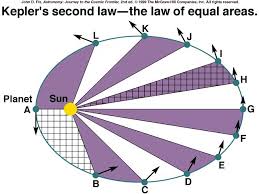
Diagram shows a planet orbiting around the sun. Based on Kepler's Second Law, Which of the following regarding the speeds of the planet at positions
vp =vQ =vR
vp >vQ >vR
vp <vQ <vR
vp >vR >vQ

Which of the following shows correctly the relationship between the period of orbit, T and radius of orbit, r, of a planet?
A
B
C
D

Diagram shows the planet Saturn with its four satellites. R and T are orbital radius and orbital period of satellites respectively.
Which of the following statements is true?
the orbital periods of all the satellites are the same.
The force on the satellite is tangential to the orbit
the attractive force on each satellite is directly proportional to R21
R2T3 is constant for all satellites.
What is the reason for the motion of the moon on its orbit?
The gravitational force exerted on the Earth by the moon
The gravitational force exerted by the sun
The gravitational force exerted by the planets
The gravitational force exerted on the Moon by the earth
A kine drawn from a planet to the Sun always sweeps over equal areas in equal intervals of time When the planet moves further from the sun, the planet will move
Faster
Slower
Constant at every point
None of the above
The period of geostationary artificial satellite is
24 hours
6 hours
48 hours
12 hours
The period of a satellite in a circular orbit of radius R is T. The period of another satellite in circular orbit of radius 4R is
8T
8T
2T
4T
The distance of venus and Saturn from the sun are nearly 1011 m and 1012 m respectively. Assuming that they move in circular orbits, their periodic times would be in ratio of
0.10.1
100
1010
10000
Kepler’s third law states
The orbit of a planet around the sun is an ellipse, with the sun at one focus
The semimajor axis is equal to the planet’s average distance from the sun
The square of the orbital period of a planet is proportional to its orbital radius
None of these answers is correct
If r represents the radius of the orbit of a satellite of mass m moving round a planet of mass M the velocity of the satellite is given by
V=(rGM) ,
v2 = rGMm
v=r2GMm
v2 = RgM
Kepler's third law is represented by the following equation:
Hukum Kepler ketiga ditunjukkan oleh persamaan:


The period of the Moon's orbit is 27.0 days. The radius of the Moon's orbit is 3.8 ×10⁸ m. The period of a geostationary satellite is 1 day. What is the radius of the geostationary satellite's orbit.
4.2 ×10⁷ m
5.4 ×10⁷ m
6.6 ×10⁷ m
8.5 ×10⁷ m
The accelerations due to gravity on the surfaces of two planets are equal in magnitudes if
mass
radiusmass
radius2mass
radius3mass
Centripetal acceleration acts towards the ___________ of the circular motion
centre
circumference
A Hot Wheels toy car races around a circular track that has a radius of 1.2 meters. It moves around the track with a velocity of 1.8 ms-1. What is the toy’s centripetal acceleration?
1.5 ms-2
2.7 ms-2
2.16 ms-2
3.89 ms-2
A dolphin swims in a circle with a radius of 30 m and moves with a velocity of 3.2 ms-1. What is the dolphin’s centripetal acceleration?
0.341 ms-2
0.106 ms-2
96 ms-2
307.2 ms-2
The velocity is always _____ to the line of a circle.
outwards
towards the center
faster
tangent

Centripetal acceleration always points
in the direction of the object's motion
in the opposite direction of the object's motion
towards the center of the circle
towards the outside of the circle
A 25kg boy is riding a merry-go-round with a radius of 5 m. What is the centripetal force on the boy if his velocity is 6 ms-1?
180 N
150 N
120 N
245 N
A man-made satellite of mass 400 kg orbits the Earth with a radius of 8.2 x 10⁶ m. Linear speed of the satellite is 6.96 x 10³ ms-1. What is the centripetal force acting on the satellite?
195.036 N
2363 N
1936 N
2000 N
A particle P is moving in a circle with uniform speed. Which one of the following diagrams correctly shows the direction of the acceleration a and velocity v of the particle at one instant of time?


What happens to gravity as distance increases?
there was never any gravity in space
It decreases rapidly
it in increases rapidly
It does not change
What is the equation to calculate the centripetal force for an object?
F = mT
F = mv2/r
F = mu mg
F = mg
A dolphin swims in a circle with a radius of 30 m and moves with a velocity of 3.2 ms-1. What is the dolphin’s centripetal acceleration?
0.341 ms-2
0.106 ms-2
96 ms-2
307.2 ms-2
Why should you reduce speed around a turn if the road is icy?
Because your car will travel in a straight line unless forced to do otherwise
Because the ice reduces the frictional force between the tires and the road.
Because a minimum amount of centripetal force is required to keep your car moving around the curve.
All of the above.
An engineer is planning a road with a turn. If the speed limit is 20 m/s and the centripetal acceleration cannot exceed 8.5 m/s/s, how big must the radius of the turn be?
2.4 m
47 m
170 m
3400 m
A yo-yo is whirled on a string, then the string breaks. What causes the yo-yo to move off in a straight line?
centrifugal force
centripetal force
inertia
centripetal acceleration
A 12 kg object undergoes circular motion with a radius of 4 m and a speed of 18 m/s. What is the centripetal acceleration of the object?
1.125 m/s2
81 m/s2
4.5 m/s2
36 m/s2
A ball on a string is spun around in a circle. Which of the following quantities is not constant?
mass
force
velocity
acceleration
NAME
CLASS
5S
5T
5A
5R
5P

