wayground logo

Free Printable Worksheets

Font size

S
M
L
XL
Worksheets

PS PRE-TEST Energy

Total questions: 87

Worksheet time: 4hrs 21mins

Name
Class
Date
1.

The blades of a toy helicopter spin when its circuit is connected to a battery. Which sequence below correctly identifies the energy changes taking place in the helicopter?

a)

chemical to electrical to potential

b)

chemical to electrical to mechanical

2.

Which of the following gadgets best shows the transformation of energy from electrical to mechanical with the correct reasoning?

a)

A light bulb because electricity is being used to create light and heat.

b)

A fan because electricity is being used to spin the blades of the fan.

3.

Two students place three ice cubes in a glass of water that was at room temperature. Which of the following scenarios would best describe the results of the investigation?

a)

Energy from the water will transfer to the ice cubes, causing the ice to melt.

b)

Cold from the ice cubes will transfer to the water, causing the water to cool.

4.

What is energy? (a)  

Choose from the below words
moving energy
stored energy
renewable energy
The ability to do work.
5.

What is potential energy? (a)  

Choose from the below words
moving energy
stored energy
renewable energy
non renewable energy
6.

What is kinetic energy?

a)

moving energy

b)

potential energy

c)

stored energy

d)

renewable energy

7.

Two factors that determine work are

a)

force

b)

acceleration

c)

mass

d)

distance

e)

velocity

8.

units of force are

a)

newtons

b)

grams

c)

joules

d)

meters

9.

units for work are

a)

newtons

b)

joules

c)

meters

d)

seconds

10.

if you push a cart with a force of 60 N for 2 m... how much work have you done

a)

120 J

b)

30 J

c)

120 N

d)

30 N

11.
What is the formula for work?
a)
Force = work x distance
b)
Distance = force x work
c)
Work = force x distance
d)
Work = force x mass
12.
You do 90 joules of work in 30 seconds. How much power have you generated?
a)
30 watts
b)
3 watts
c)
120 watts
d)
270 watts
13.

At which point of the roller coaster is potential energy the greatest?

a)

W

b)

X

c)

Y

d)

Z

14.

The faster an object moves, the (a)   kinetic energy it has.

Choose from the below words
more
less
15.

If you have a battery in a device, what is the first energy transformation that must happen?

a)

Chemical to light

b)

Chemical to electrical

c)

Electrical to chemical

d)

Electrical to light

16.
A girl on a motorbike passes by at a speed of 15 m/s. Her mass is 40 kg. What is her kinetic energy
a)
300 Joules
b)
600 Joules
c)
950 Joules
d)
4500 Joules
17.
Calculate the potential energy of a roller coaster at the top of a 72 m hill that has a mass of 112 kg.
a)
79,027 J
b)
790,720 J
c)
7,020 J
d)
790,700 J
18.
At what position does the pendulum have the greatest gravitational potential energy?
a)
Position D
b)
Position C
c)
Position B
19.
A girl on a motorbike passes by at a speed of 15 m/s. Her mass is 40 kg. What is her kinetic energy
a)
300 Joules
b)
600 Joules
c)
950 Joules
d)
4500 Joules
20.
Calculate the potential energy of a roller coaster at the top of a 72 m hill that has a mass of 112 kg.
a)
79,027 J
b)
790,720 J
c)
7,020 J
d)
790,700 J
21.
At what position does the pendulum have the greatest gravitational potential energy?
a)
Position D
b)
Position C
c)
Position B
22.
At what position does the pendulum have the greatest kinetic energy?
a)
Position D
b)
Position C
c)
Position B
23.
Which character has the greatest gravitational potential energy?
a)
Character A
b)
Character B
c)
Character C
d)
Character D
24.
Which skier has the greatest kinetic energy?
a)
Skier A
b)
Skier B
c)
Skier C
d)
Skier D
25.
Calculate the kinetic energy of a 2 kg rock that rolls down the hill with a velocity of 8 m/s.
a)
64 Joules
b)
16 Joules
c)
128 Joules
d)
8 Joules
26.
Calculate the kinetic energy of a truck that has a mass of 2900 kg and is moving at 55 m/s.
a)
4,386,250 J
b)
159,500 J
c)
79,750 J
d)
8,772,500
27.
Barry Bonds swings a bat which has a mass of 1.5 kg at a velocity of 55 m/s. How many joules of kinetic energy could he give to a baseball?
a)
2269 Joules
b)
83 Joules
c)
41 Joules
d)
4 Joules
28.
Calculate the kinetic energy of a car which has a mass of 1000 kg and is moving at the rate of 20 m/s.
a)
200,000 Joules
b)
20,000 Joules
c)
10,000 Joules
d)
40,000 Joules
29.
Calculate the potential energy of a rock with a mass of 55 kg while sitting on a cliff that is 27 m high.
a)
14,553 Joules
b)
1,485 Joules
c)
2 Joules
d)
743 Joules
30.
A cinder block is sitting on a platform 20 m high. It has a mass of 8 kg. Calculate the potential energy of the cinder block.
a)
1,568 Joules
b)
160 Joules
c)
3 Joules
d)
28 Joules
31.
There is a bell at the top of a tower that is 45 m high. The bell has a mass of 20 kg. Calculate the potential energy of the bell. 
a)
8,820 Joules
b)
900 Joules
c)
2 Joules
d)
65 Joules
32.
A 20 kg object is at a height of 20 meters. Calculate the potential energy of the object.
a)
3,920 Joules
b)
400 Joules
c)
40 Joules
d)
20 Joules
33.
Calculate the kinetic energy of a 2 kg rock that rolls down the hill with a velocity of 8 m/s.
a)
64 Joules
b)
16 Joules
c)
128 Joules
d)
8 Joules
34.
Energy from light waves.
a)
Radiant Energy 
b)
Chemical Energy 
c)
Nuclear Energy 
d)
Radiation 
35.
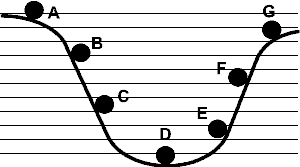
Where is the potential energy the greatest?
a)
A
b)
B
c)
C
d)
D
36.

A student is holding the end of a pendulum. The student releases the pendulum. What energy transfers are taking place?

a)

potential energy is transferred to kinetic energy

b)

chemical energy to thermal energy

c)

mechanical energy to chemical energy

d)

kinetic energy is tranferred to potential energy
37.
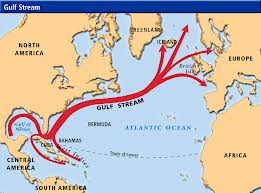
The Gulf Stream is a current that brings warm ocean water from the south to the north.
a)
conduction
b)
convection
c)
radiation
38.
Walking on the warm sand sand with your bare feet.
a)
conduction
b)
convection
c)
radiation
39.
Which direction will the heat flow while this person holds a hot cup of tea?
a)
from the cup to her hand
b)
from her hand to the cup
c)
no heat is transferred
40.
Which direction will the heat flow while this ice cap melts?
a)
there is no heat transfer
b)
from the icecap to the water
c)
from the water to the icecap
41.
In this experiment, the WARM red dye and the COLD blue dye was placed in the water at the same time. The warm red dye rose to the top while the cold blue dye sank to the bottom.
a)
conduction
b)
convection
c)
radiation
42.
Heat transfers from an area of ____temperature to an area of ___ temperature.
a)
high to low
b)
low to high
c)
high to high
43.
High temperature is connected to:
a)
Low kinetic energy.
b)
High kinetic energy.
c)
Zero net energy.
d)
Equal kinetic energies.
44.
According to the Law of Conservation of Energy, energy cannot be _________ or ____________. 
a)
destroyed, destroyed
b)
created, saved
c)
created, destroyed
d)
lost, found
45.
Gravitational potential energy depends on the ________ and ________ of the object. 
a)
Height and mass
b)
Friction and movement
c)
Mass and Movement
d)
Height and Friction 
46.
When the 2nd story of a house is warmer than the 1st floor of a house is heat transfer through 
a)
conduction
b)
convection
c)
radiation
d)
thermal equilibrium
47.
The sun warming your skin is an example of heat transfer through 
a)
conduction
b)
convection
c)
radiation
d)
thermal electricity
48.
The energy of moving particles
a)
heat
b)
thermal energy
c)
school
d)
temperature
49.
 How many joules of heat are needed to raise the temperature of 10.0 g of aluminum from 22°C to 55°C, if the specific heat of aluminum is 0.90 J/gx°C?    
a)
297 Joules
b)
0.003 Joules
c)
297 J/gx°C
d)
0.003 J/gx°C
50.
As mass increases, KE ...
a)
increases
b)
decreases
c)
stays the same
51.
The SI unit in which kinetic energy is measured is 
a)
Newton
b)
Kilogram
c)
Joules
d)
Metres per second
52.
How much kinetic energy does a moving 6 kg object have if it moves with a velocity of 3 m/s?
a)
27 J
b)
18 J
c)
9 J
d)
2 J
53.

What kind of energy does a marble at the top of a hill have?

a)

gravitational potential

b)

chemical potential

c)

kinetic

d)

thermal

54.

The marble had 5.4 J of kinetic energy and then hit the stationary basketball. The basketball started rolling and the marble stopped rolling. The rolling basketball now has 5.4 J of kinetic energy. Was energy conserved and why?

a)

Yes because the total energy stayed the same

b)

Yes because the total energy changed

c)

No because the total energy stayed the same

d)

No because the total energy changed

55.

Which best describes the kinetic energy of particles in a solid?

a)

lowest amount of energy

b)

more energy than solids but less than gases

c)

more energy than solids or liquids

d)

less energy than solids but more than liquids

56.

Which state of matter has the greatest entropy?

a)

solid

b)

liquid

c)

gas

d)

none, they're all the same

57.

The temperature of a gas is directly dependent on the _________________ of the gas.

a)

speed

b)

intermolecular forces

c)

kinetic energy

d)

volume

58.
You drop a 5 kg ball from a height of 2 m. Just before it reaches the ground, what type of energy does it have?
a)
Potential Energy
b)
Kinetic Energy
c)
Nuclear Energy
d)
Chemical Energy
59.

At which point does the ball has the greatest gravitational potential energy (GPE)?

a)

A

b)

G

c)

D

d)

C

e)

G

60.

What is potential energy?

a)

The energy an object has due to its position or condition.

b)

The energy an object has due to its motion.

c)

The energy an object has due to its chemical composition.

d)

The energy as object has due to its atomic structure.

61.

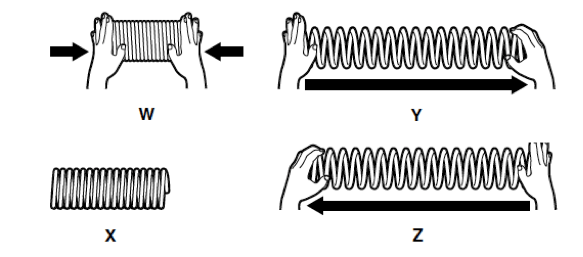
You throw a ball into the air as shown in the diagram. At what point does the ball have the most potential energy?

a)

W

b)

X

c)

Y

d)

Z

62.

Elastic potential energy is energy stored in an object, such as a spring, due to the object being stretched or compressed. In which position is it most likely that the spring has lost its elastic potential energy?

a)

W

b)

Y

c)

X

d)

Z

63.

Which object has elastic potential energy?

a)

a hanging leaf

b)

a burning coal

c)

a rolling ball

d)

a stretched bow

64.
When a rubber band is stretched, it has __________________ 
energy.
a)
Potential
b)
Kinetic
c)
Nuclear
d)
Thermal
65.
What type of energy is in this picture?
a)
Kinetic
b)
Potential
c)
Chemical
d)
Sound
66.
If I heat up 2 pans of water one has 100 mL in it and one has 1000mL. Which one heats up the fastest?
a)
100 mL
b)
1000 mL
c)
They both heat up at the same speed
d)
They cool down.
67.
There are four cups of hot cocoa. The cup sizes are shown. The temperature of the cocoa in each cup is 25 degrees celsius. Which cup has the MOST thermal energy?
a)
Large cup (Trenta)
b)
Small cup (Tall)
c)
Venti
d)
All three are the same temperature so they have same thermal energy
68.
What would be the effect on the particles if more heat is supplied to the system?
a)
They would slow down
b)
They would stop moving
c)
They would speed up
d)
There would be no effect
69.

Why is temperature a measure of internal energy?

a)

Molecule kinetic energy

b)

Molecule potential energy

c)

Molecule possibility to explode

d)

How many hours molecule can stay awake

70.
The slower molecules move, 
a)
the higher the temperature
b)
the less temperature
c)
the same temperature
d)
I don't know
71.

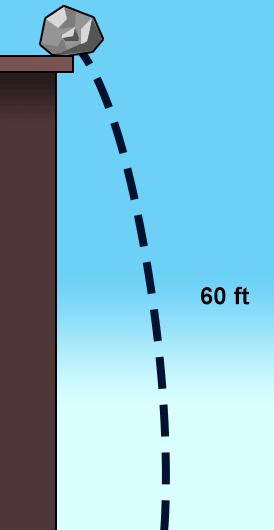
The rock in the picture is pushed over the edge and it begins to fall. Which type of energy conversion is taking place?

a)

mechanical to heat

b)

sound to mechanical

c)

potential to kinetic

d)

kinetic to potential

72.

The light bulb converts electrical energy into light and _________.

a)

chemical

b)

electromagnetic

c)

heat

d)

nuclear

73.

Maria’s father started a fire in the fireplace. He crumpled some paper, lit a match, and soon the logs in the fireplace were burning. In this case, the stored chemical energy in the logs was changed into

a)

electrical energy.

b)

mechanical motion.

c)

heat and light energy.

d)

electrical and heat energy.

74.

A pole vaulter runs forward, plants his pole, rises in the air and lands. What point represents his greatest amount of gravitational potential energy?

a)

when he initially lands

b)

as he runs forward to plant the pole

c)

just before he starts to fall to the ground

d)

after take-off as the pole expands and lifts the vaulter toward the bar

75.

A drawn bow possesses mechanical energy in the form of _______________. After the arrow is released, the energy is transformed into _________________.

a)

potential energy; mechanical energy

b)

elastic potential energy; kinetic energy

c)

gravitational potential energy; kinetic energy

d)

elastic kinetic energy; mechanical kinetic energy

76.

The Law of Conservation of Energy states that energy is never __________________ or _________________, only transferred.

a)

created, destroyed

b)

created, subtracted

c)

added, subtracted

d)

destroyed, subtracted

77.
The movement of energy through substances in longitudinal waves (vibrating matter) is called ___________ energy. 
a)
Heat
b)
Sound
c)
Electical
d)
Light
78.
Energy that is stored in the nucleus of an atom is called _________ energy.
a)
Chemical
b)
Nuclear
c)
Gravitational
d)
Elastic
79.
The vibration and movement of atoms and molecules within substances is called __________ energy.
a)
Sound
b)
Heat
c)
Electrical
d)
Light
80.
Energy that is stored in objects by tension is called _______ potential energy.
a)
Nuclear
b)
Gravitational
c)
Elastic
d)
Cheical
81.
Electromagnetic energy (such as visible waves, X-rays, gamma rays and radio waves) is called _______ energy.
a)
Heat
b)
Light
c)
Sound
d)
Electrical
82.
Energy stored in the bonds of atoms and molecules is __________ potential energy.
a)
Chemical  
b)
Elastic
c)
Nuclear
d)
Gravitational
83.
The motion of waves, electrons, atoms, molecules, substances, and objects is called ___________ energy.
a)
Kinetic
b)
Potential
c)
Moving
d)
Kaliedic 
84.
Energy delivered by tiny charged particles called electrons is called_________ energy.
a)
Electrical
b)
Light
c)
Heat
d)
Sound
85.

Where is geothermal energy generated?

a)

from the sun

b)

from the Earth's core

c)

from the atmosphere

d)

from the ocean

86.
__________is the energy created by wind turning wind turbines.
a)
Geothermal
b)
Hydro
c)
Wind
d)
Nuclear
87.
Dams are built to harness the power of this renewable resource.
a)
Sun
b)
Wind
c)
Water
d)
Geothermal