
 Worksheets
Planetary Motion and Relativity
Total questions: 81
Worksheet time: 2hrs 11mins


Kepler's First Law states
objects attract other objects with a force that is directly proportional to the product of their masses
the square of the ratio of the periods of any two planets revolving around the Sun is equal to the cube of the ratio of their average distance from the Sun
An imaginary line joining a planet and the sun sweeps out an equal area of space in equal amounts of time.
Planets move about the Sun in an elliptical orbit with the Sun at one of the foci.

Kepler's Second Law states
objects attract other objects with a force that is directly proportional to the product of their masses
the square of the ratio of the periods of any two planets revolving around the Sun is equal to the cube of the ratio of their average distance from the Sun
An imaginary line joining a planet and the sun sweeps out an equal area of space in equal amounts of time.
Planets move about the Sun in an elliptical orbit with the Sun at one of the foci.

Kepler's Third Law states
objects attract other objects with a force that is directly proportional to the product of their masses
the square of the ratio of the periods of any two planets revolving around the Sun is equal to the cube of the ratio of their average distance from the Sun
An imaginary line joining a planet and the sun sweeps out an equal area of space in equal amounts of time.
Planets move about the Sun in an elliptical orbit with the Sun at one of the foci.

Which of the following is NOT a field force?
normal force
electrostatic force
magnetic force
gravitational force

Which of the following scientists does not belong to this group?
Galileo Galilei
Tycho Brahe
Nicolaus Copernicus
Robert Boyle

This is a statement of which scientific law?
Object attract other objects with a force that is directly proportional to the product of their masses, and inversely proportional to the square of the distance between them.
Newton's First Law
Newton's Second Law
Newton's Third Law
Newton's Law of Universal Gravitation

Which of the following lists the scientists in correct chronological order?
Galileo, Copernicus, Kepler, Brahe
Copernicus, Galileo, Kepler, Newton
Kepler, Brahe, Copernicus, Galileo
Newton, Kepler, Copernicus, Brahe

According to Einstein's Theory of Relativity, which of the most accurately describes time?
Time is a human construct and is constant
Time is a human construct and varies depending upon where an object is in space
Time is relative and varies depending upon how fast an object are traveling
Time is relative and varies depending upon how fast an object is traveling; the faster an object is traveling the slower time passes

When looking at the Earth's orbit, what can be said about summer and winter in the Northern hemisphere?
Because of its orbit, Earth is the same distance from the Sun in both the Northern hemisphere's summer and winter seasons.
Because of its orbit, Earth is further away from the Sun in the Northern hemisphere's winter season and closer during the summer season.
Because of its orbit, Earth is further away from the Sun in the Northern hemisphere's summer season and closer during the winter season.
None of the above accurately describe the Earth's orbit.

As an object moves further from the surface of the Earth, what happens to its mass?
The mass of the object will not vary as it moves further from the surface of the Earth
The mass of the object will decrease as it moves further from the surface of the Earth.
The mass of the object will increase as it moves further from the surface of the Earth.

Which of the following most accurately describes the movement of the Earth around the Sun?
The Earth moves at a constant speed around the Sun.
The Earth moves faster when it is closest to the Sun.
The Earth moves slowest when it is closest to the Sun.
The Earth's speed varies dependent upon the phase of the moon.

According to Einstein, what is a fourth dimension with which astronomers should be concerned when studying space?
Time
Space
Spacetime
Infinity

What would happen to the gravitational force if one of the masses is doubled and the radius is doubled?
The gravitational force would be quadruple the original.
The gravitational force would be double the original.
The gravitational force would be one-half the original.
The gravitational force would be one-fourth the original.

When in orbit around the Earth, what is true about the relationship between a satellite's distance from the Earth's surface and its velocity in order for the satellite to stay in its orbit?
A satellite's distance and velocity are inversely proportional; that is, the satellite must travel more quickly to stay in orbit.
A satellite's distance and velocity are directly proportional; that is, the satellite must travel less quickly to stay in orbit.
A satellite's velocity is not affect by its distance from the Earth's surface.
The distance from the Earth's surface is only dependent upon the mass of the satellite.

Which of the following is the most accurate description of "escape velocity"?
Escape velocity is the velocity needed to get away from the Earth's gravitational force.
Escape velocity is the velocity needed to get away from the Earth's gravitational force and is dependent upon the mass of the satellite.
Escape velocity is the velocity needed to get away from the Earth's gravitational force and not dependent upon the mass of the satellite.
Escape velocity is the velocity needed to get away from the Earth's gravitational force and not dependent upon the mass of the satellite but is dependent upon the geometric structure of the launch vehicle.
What causes the Earth's seasons?
The Earth's rotation speed
The Earth's shape
The Earth's axis tilt
The distance from the Sun
Name the season with the longest day
Vernal equinox
Autumnal equinox
summer solstice
Winter solstice
Name the season with the shortest day
Winter solstice
Summer solstice
Vernal equinox
Autumnal equinox

If it is winter in the Northern Hemisphere, it is ________ in the Southern Hemisphere.
At position C, in the Northern hemisphere it would be _____?

What happens when the area in which you live tilts away from the sun?
When is the Earth closer to the Sun?
In January
In March
In July
In September

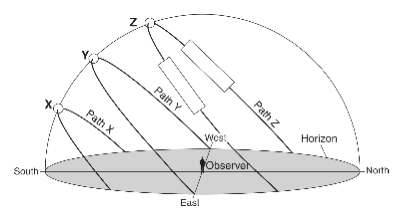

The model shows the apparent path of the Sun as seen by an observer in New York State on the first day of one of the four seasons.
Spring
Summer
Fall
Winter
If the Earth suddenly stopped having seasons, what could be the likely causes?
The Moon disappeared.
The Earth is no longer tilted.
The Earth's rotation has increased.
The Earth moved farther away from the Sun.
What is an Equinox
Full tilt toward sun
Full tilt away from sun
Shortest day
Equal day and night
define a solstice
Full tilt toward/away from sun
equal day and night
10 degrees toward sun
10 degrees away from sun
What evidence do we have that Earth's distance from the Sun DOES NOT cause our seasons?
Earth is farther from the Sun in our winter
Earth is always the same distance from the Sun
Earth is closer to the Sun during our winter
Earth is closer to the Sun during our summer

A person on the Earth weighs 180 pounds. How much will they weigh on the moon? ( Note: The moons "g" is1/6 that of Earth)
30 lbs
360 lbs
0- you are weightless in space
18 lbs
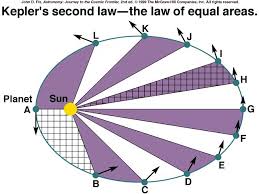

If I double the mass of one object, but don't change anything else... What happens to the gravitational force between two objects?
Doubles
Quadruples
Cut in Half
4x Smaller

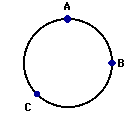
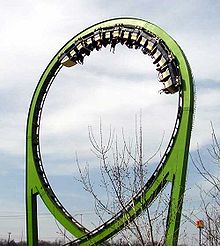
Centrifugal force is a ______
force that pushes you to the outside of a circle during uniform circular motion.
fictitious force that is really just an object resisting change
The force that keeps the planets in orbit


_____________ to the instantaneous velocity vector of an object.



Why does mud fly off a car tire rapidly spinning?
The mud is electrically charged
There is no longer a centripetal force keeping the mud in circular motion
The gravitational attraction of the moon pulls the mud off

If the disk is increasing the rate at which it spins, which lady bug will fly off first?
Lady Bug 1
Lady Bug 2
Same time!
Why do scientists think that there are these extremely large masses at the center of a galaxy aka Black holes?
All celestial objects in the galaxy revolve around a center point and must are captured by a centripetal force which must stem from a gravitational attraction between two masses
Umm well why not?
The unicorns told us!

Early astronomers proposed many theories about the objects they saw in the sky. Using these theories, they tried to explain the location and movement of these objects. The diagram shows one theory about Earth and its neighbors in space. Which theory does this diagram illustrate?
Ptolemy’s theory
Aristotle’s theory
Geocentric theory
Heliocentric theory
The motion of an object includes the speed of the object and the shape of its path. How does Kepler’s description of the paths of planets compare with Aristotle’s description?
Kepler and Aristotle both state that planets move in circles.
Kepler and Aristotle both state that planets move in elliptical paths.
Kepler states that planets move in circles, and Aristotle states that planets move in elliptical paths.
Kepler states that planets move in elliptical paths, and Aristotle states that planets move incircles.
Why does Aristarchus’ idea that the sun is much larger than Earth support the heliocentric theory of the Solar System?
Small objects rotate around large objects.
Large objects rotate around small objects.
Small objects revolve around large objects.
Large objects revolve around small objects.

Galileo used a telescope to observe Venus. The diagram explains what he saw. What did Galileo conclude from his observations of Venus?
It is always lit.
It travels around the sun.
It is farther from the sun than Earth is.
It has moons and the moons have phases.
Johannes Kepler mathematically determined the motion of planets in our Solar System. He stated those results in his Laws of Planetary Motion. According to these laws, how do planets move in the Solar System?
Circular orbits around Earth
Elliptical orbits around Earth
Circular orbits around the sun
Elliptical orbits around the sun
Which of these descriptions best defines the solar system?
Planets and asteroids
The sun and all planets
Planets and their moons
The sun and all bodies that travel around it

Aristotle stated that all objects in the universe move around Earth. One astronomer developed a model based on mathematical calculations that supported Aristotle’s theory. Who developed this model to support Aristotle’s theory of the universe?
Ptolemy
Copernicus
Galileo
Aristarchus
Aristotle stated that all objects in the universe move around Earth. One astronomer developed a model based on mathematical calculations that supported Aristotle’s theory. Which theory does this diagram illustrate?
Copernicus’ theory
Aristarchus’ theory
Geocentric theory
Heliocentric theory
How did Aristotle explain the way that objects in the universe move?
In elliptical orbits in spheres with Earth at the center.
In circles on one giant sphere with Earth at the center.
In elliptical orbits on one giant sphere with the sun at the center.
In circles on small spheres inside large spheres with Earth at the center.
How does Ptolemy’s model of the universe compare with Aristotle’s model?
Both models are heliocentric
Both models are based on parallax
Both models show that celestial objects have circular paths
Both models show that celestial objects have elliptical paths
Which statement is not part of Copernicus’ theory of the solar system?
The sun remains stationary.
Planets orbit the sun in elliptical orbits.
Earth rotates on its axis, causing day and night.
Earth revolves around the sun, causing seasons.
Many historical models of the solar system were geocentric. Which of these phrases describes a geocentric solar system?
The sun as a reference point
Existing in a star system
Earth as a reference point
Circular, orbital path of travel

Which of the following statements would be the best evidence to support the geocentric model of the solar system?
The planets wander in retrograde loops or epicycles.
The sun rises in the east and sets in the west.
The Earth is the largest object in the solar system.
The Earth does not seem like it moves, and all celestial objects appear move across the sky.
Which of the following was discovered by Johannes Kepler and helped describe planetary motion in the heliocentric model of the solar system?
The planets moved in ellipses around the sun instead of perfect circles.
All planets move in the opposite direction compared to Earth.
The planets moved in epicycles around the sun in their orbital paths.
The planets move in ellipses as they revolve around the Earth.
For centuries, the (a) model of the solar system was widely accepted because it seemed obvious that celestial objects revolved around the Earth as they appeared to move across the sky. As more observations were made, it became clear that the (b) was at the center of the solar system and not the Earth. The sun-centered model of the solar system is called the (c) model. Explaining a planet's retrograde loops created problems with the geocentric model. The ancient philosopher Ptolemy tried to explain the retrograde loops within the geocentric model by proposing (d) . However, the heliocentric model explains the retrograde loops through differences in the elliptical orbits of the planets, including their orbital periods and velocities.

