wayground logo

Free Printable Worksheets

Font size

S
M
L
XL
Worksheets

2021 Final Exam

Total questions: 135

Worksheet time: 3hrs 28mins

Name
Class
Date
1.
What do we call this tool that separates white light into the colors of the Visible Spectrum?
a)
tuning fork
b)
prism
c)
microscope
d)
graduated cylinder
2.

What is the visible spectrum?

a)

a. The part of light waves we can see

b)

b. The part of light waves we cannot see

c)

c. the whole electromagnetic spectrum

d)

d. the energy spectrum

3.

What color has the shortest wavelength and highest frequency?

a)

Violet

b)

Orange

c)

Red

d)

Blue

4.

What color has the longest wavelength?

a)

Black

b)

Green

c)

Purple

d)

Red

5.

Why do we see grass as green?

a)

Green light is absorbed

b)

Green light is reflected

6.

Why does an apple look red?

a)

because it absorbs red light and reflects white light

b)

because it absorbs red light waves and reflects the others

c)

because it absorbs all colors of light

d)

because it reflects red light waves and absorbs the others

7.

White light is made up of all of the colors of the rainbow

a)

True

b)

False

8.

Black absorbs all light.

a)

True

b)

False

9.
Which kind of wave has the greatest frequency?
a)
gamma rays
b)
infrared
c)
ultraviolet
d)
microwaves
10.
Which of the following regions of the electromagnetic spectrum has the longest wavelengths?
a)
microwave
b)
infrared
c)
x-ray
d)
gamma ray
11.
Which of the following colors of visible light has the longest wavelength?
a)
orange
b)
blue
c)
red
d)
green
12.
Which part of the electromagnetic spectrum has high enough energy to cause damage to eyes and skin, and sometimes even cancer?
a)
Infrared Rays
b)
Radio Waves
c)
Microwaves
d)
Ultraviolet Rays
13.
A wave with a large wavelength will have a ______ frequency and _____ energy
a)
high, low
b)
high, high
c)
low, high
d)
low, low
14.
Which electromagnetic waves are used in ovens and cell phone communications?
a)
Infrared rays
b)
ultraviolet rays
c)
microwaves
15.
Which type of waves are used in broadcasting?
a)
radio waves
b)
infrared rays
c)
x-rays
16.
For waves in any medium, as the wavelength decreases, what happens to the frequency?
a)
It also decrease
b)
It stays the same
c)
It increases
17.
Which electromagnetic waves allow us to diagnose & treat cancer?
a)
Gamma rays
b)
X-rays
c)
Ultraviolet rays
18.
Which electromagnetic waves help doctors detect broken bones inside your body?
a)
gamma rays
b)
x-rays
c)
ultraviolet rays
19.
Which electromagnetic waves are used in devices such as heat lamps & TV remote controls?
a)
ultraviolet rays
b)
microwaves
c)
infrared rays
20.
_____?______ materials do not allow light waves to pass through.
a)
Opaque
b)
Transparent
c)
Translucent
21.
_____?_____ materials allow some light to partially pass through, but not in a straight path.
a)
Opaque
b)
Transparent
c)
Translucent
22.
_____?_____ materials allow light waves to pass through easily.
a)
Opaque
b)
Transparent
c)
Translucent
23.
Which of these objects is "Opaque"?
a)
A Brick Wall
b)
Eye Glass Lenses
c)
Stained Glass Windows
24.
Which of these objects is "translucent"?
a)
A Brick Wall
b)
Sunglasses
c)
Mirror
25.
Which of these objects is "transparent"?
a)
Stained Glass Window
b)
Wooden Table
c)
Clear Glass Window
26.

Electromagnetic waves come from _______.

a)

lamps

b)

the sun

c)

the moon

d)

satellites

27.
What does it mean to reflect?
a)
bounce off
b)
bend
c)
refract
d)
energy
28.
What happens when light hits a mirror?
a)
it makes a color
b)
it reflects
c)
it makes a rainbow
d)
it passes through
29.
How does light travel?
a)
in a wavy path
b)
in a straight path
c)
in a zig zag path
30.
Smooth surfaces _______ a lot of light.
a)
reflect
b)
bend
c)
absorb
d)
twist
31.
Which object works by reflecting light?
a)
Mirror
b)
Burning candle
c)
Light bulb
d)
Hand lens
32.
The Law of Reflection:
The angle of incidence is _________ the angle of reflection
a)
bigger than
b)
the same as
c)
smaller than
33.

light travels in -

a)

transverse waves

b)

donkeys

c)

cats

d)

compression waves

34.

A reflected light ray makes an angle of 60 degrees with a mirror's surface. What angle did the incoming light ray form with the mirror's surface?

a)

30

b)

60

c)

90

d)

180

35.

In this diagram, which is the angle of incidence?

a)

Angle A

b)

Angle B

c)

Angle C

d)

Angle D

36.
The angle produced as a source of light bounces off a reflecting surface is called ______.
a)
angle of crookedness
b)
angle of reflection
c)
angle of incidence
d)
angle of bounce
37.
Why can you see most objects? 
a)
they emit light
b)
light refracts through them
c)
light reflects off them
d)
They absorb light
38.

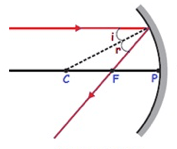
This ray diagram is for which mirror?

a)

concave

b)

convex

c)

plane

d)

window

39.
This diagram best represents 
a)
reflection
b)
refraction
c)
absorption
d)
diffusion
40.
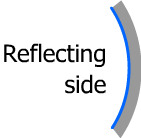
The following is a picture of what type of mirror? 
a)
Convex (diverging) mirror
b)
Concave (converging) mirror
c)
Plane Mirror
d)
Flat Mirror
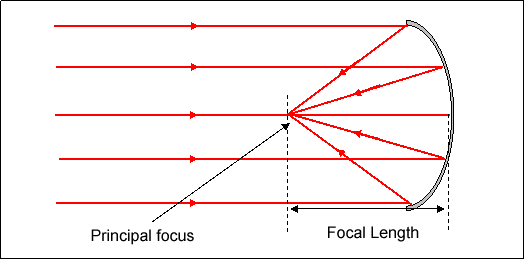
41.
The following is a picture of what type of mirror? 
a)
Convex (diverging) Mirror
b)
Concave (converging) Mirror
c)
Plane Mirror
d)
Flat Mirror
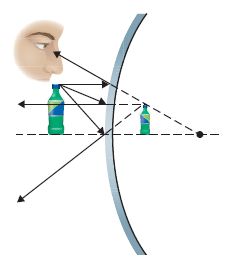
42.
This is an example of a __________ mirror.
a)
Concave
b)
Convex
c)
Plane
d)
Magnifying
43.
Convex mirrors cause light to spread out.
a)
True
b)
False
44.
What kind of mirror is shown here?
a)
plane
b)
concave
c)
convex
d)
diffuse
45.

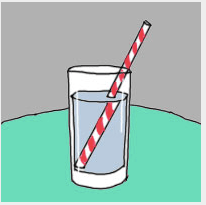
Why does the straw appear to be bent?

a)

light is reflected

b)

light is absorbed

c)

light is turned

d)

light is refracted

46.
When light bends it is ______
a)
Reflection
b)
Absorption
c)
refraction 
d)
optical density
47.
a)
Reflection
b)
Refraction
48.
a)
Reflection
b)
Refraction
49.
When light/waves move from one medium to another, change in ____ can be observed.
a)
speed, direction, frequency
b)
speed, direction
c)
frequency
d)
amplitude
50.

How does a concave lens differ from a convex lens?

a)

A convex lens is another way to describe a plane mirror; a concave lens is curved

b)

A concave lens is curved inward on both sides; a convex lens is on only one side

c)

A convex lens has a thick center and thin edges, a concave lens has a thin center and thicker edges

d)

A convex lens has a thin center and thick edges. a concave lens has a thick center and thinner edges

51.

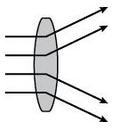
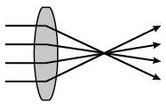
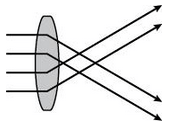
A concave lens has an inward curved shape. It refracts light outward from the lens. They light rays spread apart as they exit the lens. Which represents a concave lens?

a)

A

b)

B

c)

A and B

d)

neither A or B

52.

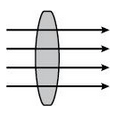
Which figure represents the path light takes through a convex lens?
a)
b)
c)
d)
53.

Which lens represents the path light takes through a concave lens?

a)
b)
c)
d)
54.

Which optical device bends light inward?

a)

convex lens

b)

concave lens

c)

plane mirror

d)

convex mirror

55.
a)
Amplitude
b)
Crest
c)
Trough
d)
Wavelength
56.
a)
Amplitude
b)
Crest
c)
Trough
d)
Wavelength
57.
a)
Frequency
b)
Amplitude
c)
Wavelength
d)
Trough
58.
a)
Trough
b)
Crest
c)
Amplitude
d)
Wavelength
59.
a)
Crest
b)
Trough
c)
Height
d)
Frequency
60.
Light waves are ___________
a)
Transverse waves
b)
Longitudinal waves
c)
Compressional waves
d)
Seismic waves
61.

What does a wave carry from place to place?

a)

energy

b)

matter

c)

people

62.

The highest point on a transverse wave is the

a)

compression

b)

crest

c)

rest position

d)

trough

63.

The lowest point on a transverse wave is the

a)

compression

b)

crest

c)

rest position

d)

trough

64.

Which property of the wave would change if you changed the amount of energy the wave had?

a)

amplitude

b)

frequency

c)

wavelength

d)

wave speed

65.

If the wavelength of a wave increased, what would happen to the frequency?

a)

decrease

b)

increase

c)

stay the same

66.

The number of waves that pass somewhere in a second is:

a)

amplitude

b)

frequency

c)

wavelength

67.
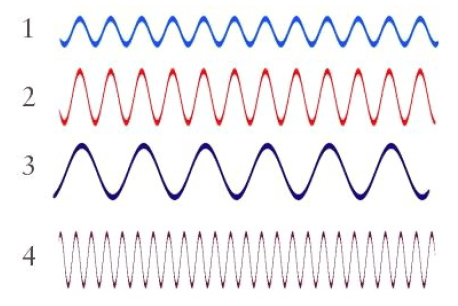
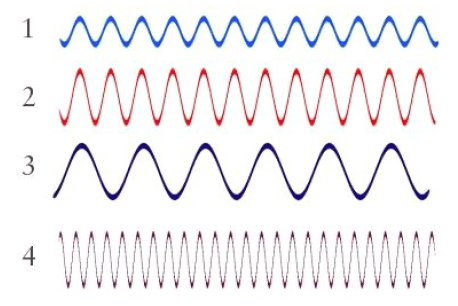
Which wave in the diagram has the greatest frequency?
a)
1
b)
2
c)
3
d)
4
68.
Which wave in the diagram has the greatest wavelength?
a)
1
b)
2
c)
3
d)
4
69.
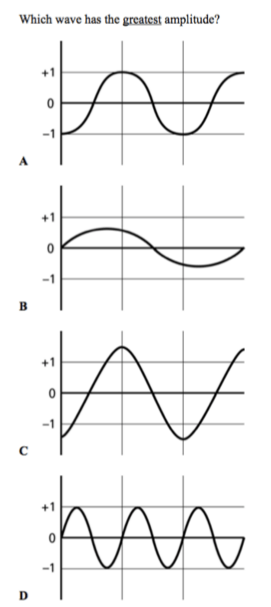
Which wave has the greatest amplitude?
a)
A
b)
B
c)
C
d)
D
70.
When the frequency of a wave increases, what happens to the wavelength?
a)
The wavelength and amplitude both increase.
b)
The wavelength increases.
c)
The wavelength decreases.
d)
Nothing happens, the two are not related.
71.
The wavelength is represented by which letter?
a)
A
b)
B
c)
C
d)
D
72.
The wave crest is represented by which letter?
a)
A
b)
B
c)
C
d)
E
73.
The wave trough is represented by which letter?
a)
A
b)
B
c)
C
d)
D
74.
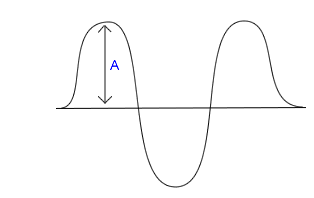
The amplitude of a wave is represented by which letter?
a)
A
b)
B
c)
C
d)
D
75.

Which wave has highest frequency?

a)

A

b)

B

c)

C

d)

D

76.

Which of these waves has the longest wavelength?

a)

P

b)

Q

c)

R

d)

S

77.

The two waves are similar in...

a)

frequency

b)

amplitude

c)

wavelength

d)

energy

78.

When a wave has increased frequency...

a)

the wavelengths become shorter.

b)

the wavelengths become longer.

c)

amplitude must increase.

d)

amplitude must decrease.

79.
The longer the _____________  the ______________ the frequency.
a)
wavelength, lower
b)
wavelength, higher
c)
amplitude, lower
d)
amplitude, higher
80.

Light travels in ...

a)

straight lines

b)

curved paths

c)

zigzags

d)

all choices are true

81.

Light needs to travel through matter.

a)

true

b)

false

82.

Energy due to motion is ____________ energy.

a)

potential

b)

energy

c)

kinetic

d)

friction

83.
The faster an object moves, the ________ kinetic energy it has. 
a)
more
b)
less
c)
none of the above
d)
all of the above 
84.
__________ is stored energy. 
a)
Potential
b)
Kinetic
c)
None of the above 
d)
All of the above 
85.
What kind of energy is in a rock at the edge of a cliff?
a)
Potential
b)
Kinetic
86.
At which point is potential energy greatest?
a)
W
b)
X
c)
Y
d)
Z
87.
What type of energy is in this picture?
a)
Kinetic
b)
Potential
c)
Chemical
d)
Sound
88.
On a roller coaster, where is maximum kinetic energy?
a)
At the bottom of a big hill
b)
When going around a corner
c)
When going upside down
d)
At the top of a big hill
89.
True or False: The people at the bottom of the hill have mostly potential energy. 
a)
True
b)
False
90.
In order to INCREASE the potential energy of an object, you need to:
a)
put the object lower to the ground
b)
raise the object higher
91.
Describe the energy at Position B.
a)
High Potential
b)
Low Kinetic
c)
High Kinetic
d)
Equal Potential and Kinetic
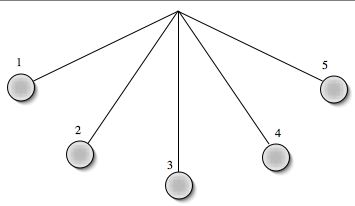
92.
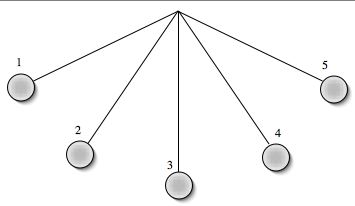
When a pendulum swings, at which point is kinetic energy highest?
a)
1
b)
2
c)
3
d)
4
93.
When a pendulum swings, at which point is potential energy at its greatest?
a)
1
b)
2
c)
3
d)
4
94.
 The maximum kinetic energy of a box sliding from the top of a ramp to the bottom is
a)
at the top
b)
at the bottom
c)
at the exact middle of the ramp
d)
stored equally within the box at all locations
95.
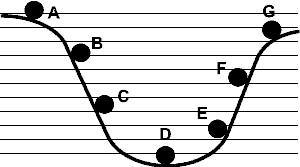
Which point has the most potential energy?
a)
G
b)
f
c)
b
d)
a
96.

The resistance of an object to change its state of motion is ...

a)

friction

b)

air resistance

c)

gravity

d)

inertia

97.

According to Newton's first law objects in motion tend to ...

a)

stay in motion

b)

become at rest

98.

Objects with more mass have ...

a)

more gravitational force

b)

more inertia

c)

both

d)

neither

99.

The force as one surface moves past another is ...

a)

friction

b)

air resistance

c)

gravity

d)

acceleration

100.

What is another name for Newton's first law?

a)

Law of Action and Reaction

b)

force = mass x acceleration

c)

Law of Inertia

101.

What is the main idea of Newton's second law?

a)

force = mass x acceleration

b)

objects in motion tend to stay in motion

c)

for every action there is an equal and opposite reaction

102.

What is the focus of Newton's third law?

a)

objects in motion tend to stay in motion

b)

for every action there is an equal and opposite reaction

c)

force = mass x acceleration

103.

Which has the least amount of inertia?

a)

pencil

b)

table

c)

car

d)

textbook

104.

Objects tend to move ...

a)

in a circular motion

b)

however it was moving

c)

in an unpredictable pattern

d)

in a straight line

105.

What is the best reason for why seat belts are a safety feature?

a)

objects in motion tend to stay in motion

b)

mass affects force

c)

for every action there is an equal and opposite reaction

106.

If you push south on a chair with a force of 30 newtons, what force does the chair exert on you?

a)

30 newtons north

b)

30 newtons south

c)

20 newtons north

d)

20 newtons south

107.

You are on a skateboard and push off the ground. The skateboard rolls forward. This best describes ..

a)

Newton's first law

b)

Newton's second law

c)

Newton's third law

108.

Objects at rest tend to ...

a)

stay at rest

b)

be put in motion

c)

move in a straight line

d)

have more inertia

109.

Two common forces that affect motion on Earth are...

a)

friction and inertia

b)

friction and pushing

c)

gravity and friction

d)

gravity and inertia

110.

Objects with more mass ...

a)

have more inertia

b)

have more gravity

c)

all choices are true

111.

Which of Newton's laws best describes the picures?

a)

law of inertia

b)

force = mass x acceleration

c)

for every action there is an equal and opposite reaction

112.

Which of Newton's laws is best shown in the picture?

a)

law of inertia

b)

force = mass x acceleration

c)

for every action there is an equal and opposite reaction

113.

In which direction is friction working?

a)

in the same direction of the moving ball

b)

in the opposite direction of the moving ball

c)

in the direction of the greater force

d)

all choices are true

114.

Which is a method of reducing friction?

a)

using wheels

b)

streamlining

c)

using oil

d)

all choices are true

115.
What is the definition of "weight"?
a)
measure of the force of gravity on your body
b)
the time it takes to get on a ride 
c)
the amount of matter in an object
d)
the size of an object
116.
What is the net force?
a)
20 N 
b)
0 N 
c)
400 N 
d)
40 N 
117.
What is the unit to MEASURE force?
a)
Kilogram
b)
Meter
c)
Pascal
d)
Newton
118.
A person would weigh more on Jupiter than on the Earth because . . .
a)
Jupiter has more mass, and therefore more gravity
b)
Jupiter has less mass, and therefore more gravity
c)
Jupiter has more mass, and therefore less gravity
d)
Jupiter has less mass and therefore less gravity
119.
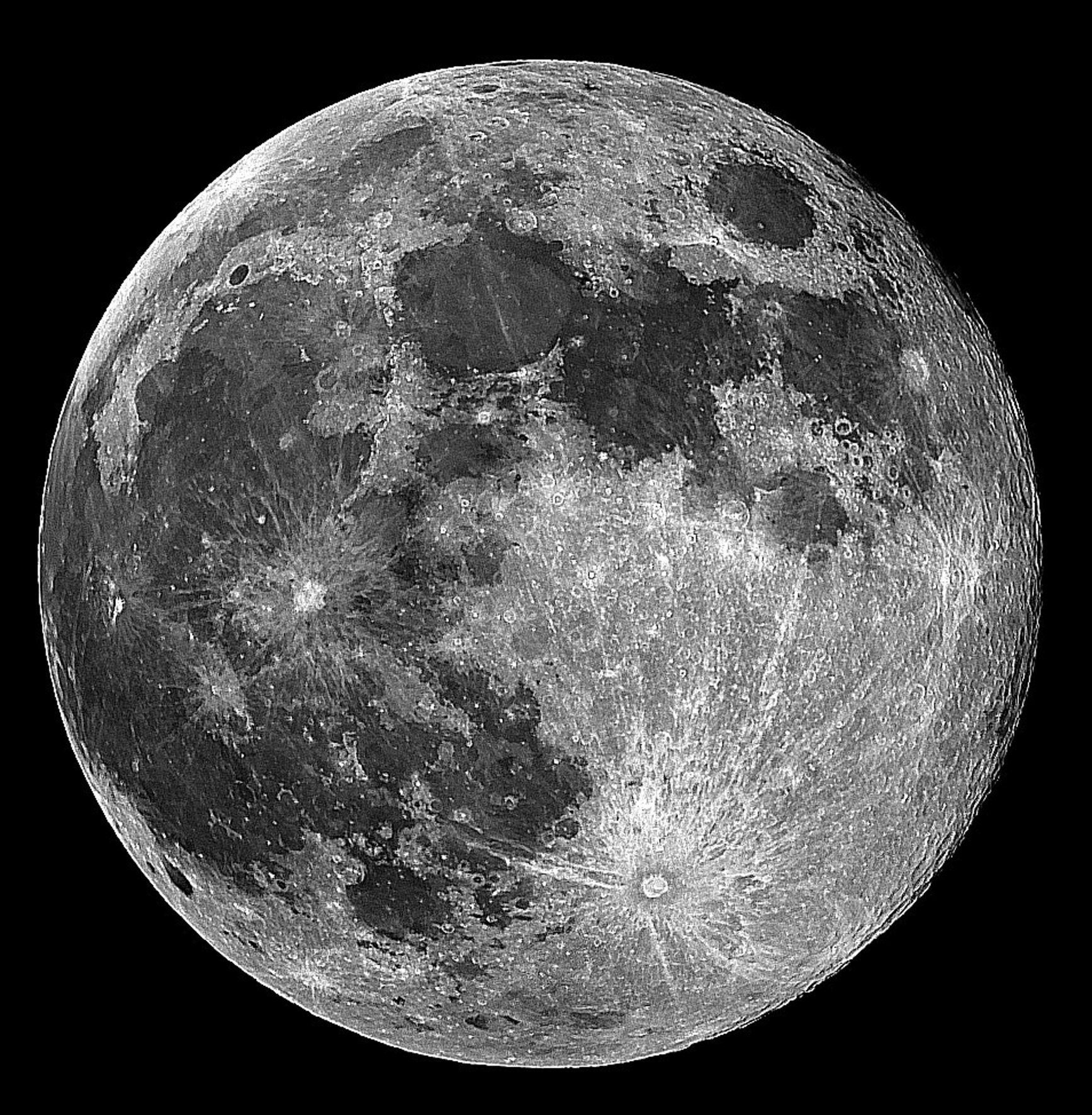
Why would you weigh less on the moon compared to Earth?
a)
less air
b)
less sunlight
c)
more gravitational pull
d)
less gravitational pull
120.

What two variables are needed to determine speed?

a)

distance and time

b)

time and mass

c)

mass and volume

d)

acceleration and mass

121.

What is the speed of a car that travels 400 meters in 20 minutes?

a)

20 meters/hour

b)

20 meters/minute

c)

800 meters/minute

d)

200 miles/hour

122.
Sound is caused by....
a)
molecules
b)
vibrations
c)
people
d)
space
123.
Sound does not travel in space because
a)
Space is too far away.
b)
There is no matter in space.
c)
Space is the final frontier
d)
Space has planets.
124.
Measure of how high or low a sound is
a)
amplitude
b)
compression
c)
speed of sound
d)
pitch
125.
If the distance represented by the letter A were increased, how would it change the way the sound was heard?
a)
The sound would be higher. 
b)
The sound would be lower. 
c)
The sound would be softer. 
d)
The sound would be louder. 
126.
If distance C on the diagram increased, what would happen to the pitch? 
a)
The pitch would be louder. 
b)
The pitch would be softer. 
c)
The pitch would be higher. 
d)
The pitch would be lower. 
127.
______ is how high or low a sound is; depends on the frequency.
a)
pitch
b)
frequency
c)
sound
d)
medium
128.
A soft, low pitch sound would have which of the following....
a)
low frequency 
high amplitude 
b)
high frequency 
high amplitude 
c)
low frequency 
low wavelength  
d)
low frequency
low amplitude 
129.
A soft, high pitch sound would have which of the following....
a)
low frequency 
high amplitude
b)
low frequency 
low wavelength 
c)
high frequency 
low amplitude
d)
high frequency 
high amplitude 
130.

Which is music?

a)

top wave

b)

bottom wave

131.

Music has...

a)

no pattern of waves

b)

a regular pattern of waves

132.

Noise has...

a)

no pattern of waves

b)

a regular pattern of waves

133.

A softer sound will have ...

a)

higher amplitude

b)

lower amplitude

c)

the same amplitude as another sound

134.

Which is a louder sound?

a)

left wave

b)

right wave

c)

they have the same volume

135.

Which sound wave has a higher pitch?

a)

top wave

b)

bottom wave

c)

they have the same pitch