
 Worksheets
Biochemistry Retake - Periodic Table
Total questions: 76
Worksheet time: 49mins


what is the biggest group on the table
metals
nonmetals
metaloids
halogens
how many rows are on the table
4
5
6
7
how many groups/families are on the table
15
16
17
18
symbols must have at least
1 cap. letter
2 cap. letters
2 lower case letters
any letter you want
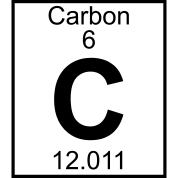
the basic structural unit of matter
atom
matter
element
nucleus
the positively charged subatomic particle contained in the nucleus of an atom
proton
neutron
electron
matter
a subatomic particle, contained in the nucleus of an atom, having the same mass as a proton but no electrical charge
proton
neutron
electron
matter
a negatively charged subatomic particle that orbits the nucleus of an atom
proton
neutron
electron
matter
one or two letters that represent the name of an element
element name
element symbol
atomic number
atomic mass
a grouping of elements based on similar properties, arranged by columns in the periodic table; also known as a group
family
period
row
isotope


Which color on the image of the periodic table corresponds with the metalloids.
bright yellow
gold
teal
light blue
The periodic table is mostly comprised of what type of element?
Metals
Nonmetals
Metalloids

Which elements are to the LEFT of the zigzag?
metals
nonmetals
metalloids

Which elements are colored red?
nonmetals
metals
metalloids


Periodic law states that the elements are arranged according to their atomic ________ so that elements with similar chemical properties are in the same ________ and properties repeat periodically.
numbers, rows
masses, rows
masses, column
numbers, column
Elements that have the same number of energy levels are said to be in the same ______.
group
period
family
classification
Elements that have the same number of energy levels are said to be in the same ______.
group
period
family
classification
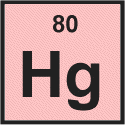


the basic structural unit of matter
atom
matter
element
nucleus
a collection of atoms of one type that cannot be broken down into simpler substances by ordinary chemical or physical means
element
subatomic particle
electron
matter
the positively charged subatomic particle contained in the nucleus of an atom
proton
neutron
electron
matter
a subatomic particle, contained in the nucleus of an atom, having the same mass as a proton but no electrical charge
proton
neutron
electron
matter
a negatively charged subatomic particle that orbits the nucleus of an atom
proton
neutron
electron
matter
one or two letters that represent the name of an element
element name
element symbol
atomic number
atomic mass
the mass of an atom, calculated by adding the number of protons and neutrons in the nucleus of the atom
element name
element symbol
atomic number
atomic mass
one of several forms of a single element, which contains the same number of protons, but different numbers of neutrons
isotope
ion
orbital
nucleus
an atom or group of atoms that has gained or lost one or more electrons and is now either positively or negatively charged
isotope
ion
orbital
nucleus
neutron
A subatomic particle that has a positive charge and that is found in the nucleus of an atom
not able to conduct heat or electricity, little to no metallic luster
A subatomic particle that has a negative charge
A small particle in the nucleus of the atom, with no electrical charge
A subatomic particle that has a positive charge and that is found in the nucleus of an atom
Proton
elecrtron
groups
neutrons
A subatomic particle that has a negative charge
nobles gases
protons
electrons
neutrons
not able to conduct heat or electricity, little to no metallic luster
Non-metals
noble gases
atomic mass
Neutron
Found in group two of the periodic table; highly reactive
period
Alkali Earth Metals (Group 2)
metalloids (semimetals)
alkali metals (group 1)
The electrons in the outermost shell (main energy level) of an atom; these are the electrons involved in forming bonds
alkali metals (group 1)
Halogens (Group 17)
atomic number
valence electrons
Halogens (Group 17)
gas at room temperature, low boiling point.
most reactive nonmetals
The electrons in the outermost shell (main energy level) of an atom; these are the electrons involved in forming bonds
Number of protons and neutrons
Number of protons and neutrons
atomic number
atomic mass
noble gases
Non-metals

