wayground logo

Free Printable Worksheets

Font size

S
M
L
XL
Worksheets

7 habits of highly effective teens

Total questions: 98

Worksheet time: 2hrs 39mins

Name
Class
Date
1.

Which of the following is NOT listed as a habit of a highly DEFECTIVE teen?

a)

React- blame your problems on others

b)

Be proactive

c)

Begin with no end in mind

d)

Wear yourself out

2.

What does the habit of SYNERGIZE mean?

a)

Work together to achieve more

b)

Take responsibilty

c)

Prioritize important things

d)

Listen to people sincerely

3.

What is the basic definition of a habit as talked about in the book?

a)

Random behaviors

b)

Bad behaviors

c)

Long head piece worn by nuns

d)

Things we do repeatedly

4.

What is a paradigm as talked about in the book?

a)

Random thought patterns

b)

True statements

c)

Perceptions

d)

Propaganda

5.

Which of the following is NOT one of the 3 paradigms listed in the book?

a)

Self

b)

Others

c)

Life

d)

School

6.

Which of the following is NOT specifically listed as a "life-center", or focus, in the book?

a)

Beauty-centered

b)

Stuff-centered

c)

Friend-centered

d)

Parent-centered

7.

Which of the following is considered to be a neutral habit (not good or bad)?

a)

Being polite

b)

Drinking diet pop

c)

Lying

d)

Listening to music while exercising

8.

Identify the false statements about being girlfriend/boyfriend centered?

a)

The more you focus on someone else, the less attractive you become to that person.

b)

You have to work hard to make them feel secure in the relationship.

c)

Does not show you love them, just dependent on them.

d)

Dependence is more attractive to people.

9.
Habit 2 says, since you are the driver of your life; what do you have to do?
a)
Draw a map of how to go there.
b)
Do not be the passenger.
c)
Hitch a ride.
d)
Look for another ride.
10.
You are 10 x's more likely to reach your goals if you _________________!
a)
say them 10 x's.
b)
Put them under your pillow.
c)
Ignore them.
d)
Write them down.
11.
If you don't control your __________ then someone else will. 
a)
destiny
b)
dog
c)
friends
d)
parents
12.
Habit #2, Begin with the End in Mind, means that you need to have a _________.
a)
lunch
b)
plan
c)
binder
d)
pencil
13.
We are free to choose our paths, but we can't choose the __________ that come with them.
a)
actions
b)
smiles
c)
behavior
d)
consequences
14.
"Count the cost" means that your are willing to make certain ___________ in order to reach your goals. 
a)
sacrifices
b)
foods
c)
money
d)
gifts
15.
When writing a Personal Mission Statement, you should include what you want to focus on and who you want to become as a _________ in this part of life.
a)
doctor
b)
athlete
c)
dancer 
d)
person
16.
Which are steps of the Goal setting process?
a)
Make a plan.
b)
List your obstacles.
c)
List your skills.
d)
All of the above.
17.
Habit #3 asks, what should you think about first when you are in a situation or doing something?
a)
The start.
b)
The middle.
c)
chinese food
d)
The end.
18.
When does your future matter?
a)
The future is the future, it doesn't matter.
b)
Always
c)
Never
d)
Sometimes
19.
Start+End=_______
a)
Success
b)
Failure
c)
Ice cream
d)
The floor
20.
Why do you need to begin with the end in mind?
a)
Because then you can look at your plan to see what to do next if you dont know.
b)
Because it is fun.
c)
No reason.
d)
To fail in life.
21.
Why is beginning with the end in mind useful?
a)
Because it is.
b)
It makes no sense.
c)
Because it can sometimes be the answer key to life.
d)
BORING
22.
Habit #2 suggests that we define our own _____________ and goals in life.
a)
values
b)
opinions
c)
mission
d)
energy
23.
Habit 2 is the habit of _______.
a)
planning ahead 
b)
setting a goal
c)
making a difference
d)
All of the above
24.
What does "Begin with the End in Mind" mean?
a)
 Always do your homework the night before.
b)
Control your own destiny or someone else will.
c)
Be born with death in mind.
d)
Begin school with a future career in mind.
25.
Beginning without the end in mind is like...
a)
Never thinking about death.
b)
Not knowing the last words to a song.
c)
Trying to solve a jigsaw puzzle when the picture's not on the box.
d)
All of these.
26.
What do you possibly need to write in order to Begin with the End in Mind?
a)
A mission statement.
b)
A letter stating possible career options.
c)
A list of goals.
d)
Your best qualities in a resume.
27.
The motto for "Begin with the End in Mind" is...
a)
Since you're the driver, decide where you want to go and draw a map to get there.
b)
Control yourself.
c)
Don't hit any road bumps.
d)
It doesn't matter which way to walk.
28.
"Begin with the End in Mind" states “I have a goal….
a)
Where do I begin?
b)
Take control of my life.
c)
How am I going to get there?
d)
Think win-win.
29.
Discipline is the common ingredient for success in time management, overcoming peer pressure, and being strong during hard moments.
a)
true
b)
false
30.
To overcome peer pressure, you’ve got to care more about what you think of you than what your peers think of you.
a)
true
b)
false
31.
Not all peer pressure is bad. Sometimes the peer pressure you get is to "be your best."
a)
true
b)
false
32.
According to Habit 3, you should plan on a daily basis.
a)
true
b)
false
33.
Moments that are conflicts between doing the right thing and doing the easier thing are called ____.  These are the defining moments of life.
a)
Safe and Security
b)
Hardships
c)
Obstacles
d)
Hard Moments
34.
Most people think that Habit 3 is the ___ of all the habits.
a)
Hardest
b)
Easiest
c)
Most enjoyable
d)
Most helpful
35.
Having the guts to stay true to your first things, like your values, is the standard is known as _____.
a)
Comfort Zone.
b)
Overcoming Peer Pressure.
c)
Not Giving In.
d)
Time Management.
36.
Learning to put first things first and prioritizing items to fulfill your mission statement and meet your goals is known as ____.
a)
Getting Organized.
b)
Time Management.
c)
Setting Goals.
d)
Being comfortable.
37.
Which zone allows you to grow and change?
a)
Relaxation
b)
Comfort
c)
Courage
d)
Stress-Free
38.
Texting, interruptions, a test tomorrow, a car breaks down are pressing things that require immediate attention. These activities are known as ___.
a)
Urgent things
b)
Activities to complete
c)
Things to do
d)
Important things
39.
Three of the four words below are in the Comfort Zone. Which word belongs in the Courage zone?
a)
Relaxation
b)
Opportunity
c)
Ease
d)
Surety
40.
Habit 3 is also known as _____.
a)
Think Win-Win
b)
Put First Things First
c)
Seek First to Talk, the Pretend to Listen
d)
Sharpen the Saw
41.
Someone who has the power to say "yes" to his/her most important things has ____.
a)
Will power
b)
Yes power
c)
Won’t power
d)
No power
42.
Someone who has the power to say "no" to less important things and to say no to peer pressure has ____.
a)
Will power
b)
Yes power
c)
Won’t power
d)
No power
43.
This is the time quadrant that is important and urgent because you put things off until the last minute.
a)
Prioritizer
b)
Yes-Man    
c)
Slacker   
d)
Procrastinator 
44.
This is the time quadrant that is important and not urgent because you planned ahead to complete tasks in a timely manner
a)
Prioritizer
b)
Yes-Man    
c)
Slacker   
d)
Procrastinator 
45.
The Procrastinator, the Yes-Man, the Slacker, and the Prioritizer are the ___.
a)
Habit 2 Quadrants
b)
Habit 3 Quadrants
c)
Sean Covey Quadrants
d)
4 Time Quadrants
46.
In which time quadrant do we want to spend most of our time?
a)
Slacker
b)
Yes-Man
c)
Prioritizer
d)
Procrastinator
47.
What is the name of those moments that occur occasionally in your life (i.e., dealing with the death of a loved one)?
a)
Life’s tough moments
b)
Large hard moments
c)
Get to work moments
d)
Hard to deal moments
48.
What is the name of those moments that occur often throughout your life, (i.e., getting up when the alarm goes off, doing homework)?
a)
Time to procrastinate moments
b)
Small hard moments
c)
Get to work moments
d)
I don’t want to do this moments
49.
What does it mean when a situation is "Lose-Win?"
a)
It means I get what I want, but you do not get what you want.
b)
It means I do not get what I want but, you get what you want.
c)
It means we both get what we want.
d)
It means me and you do not get what we want.
50.
What does it mean when a situation is "Lose- Lose?" 
a)
It means we both get what we want.
b)
It means I get what I want, and you do not get what you want.
c)
It means I do not get what I want, and you get what you want.
d)
It means we both do not get what we want.
51.
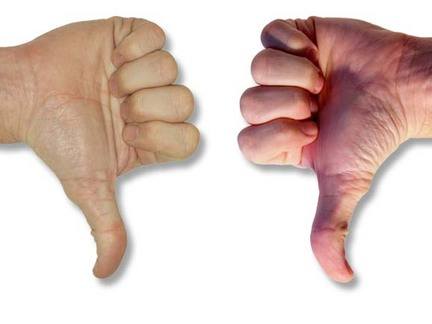
This picture shows a ______________________ resolution.  
a)
Win- Win
b)
Win- Lose
c)
Lose- Lose
d)
Lose- Win
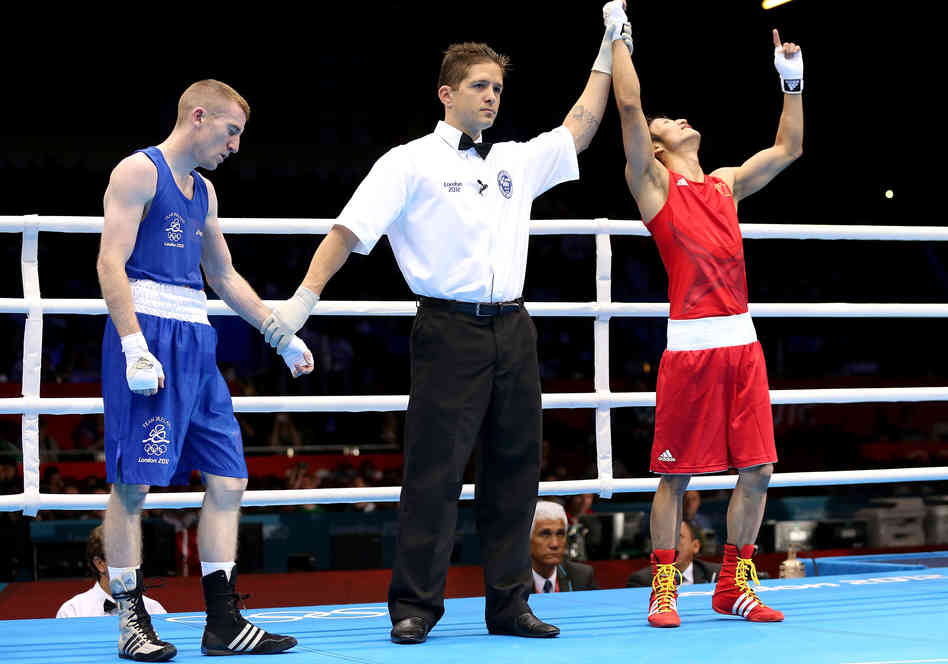
52.
This picture shows a _______________________ resolution. 
a)
Win - Win 
b)
Win- Lose
c)
Lose - Lose
d)
Lose-Win
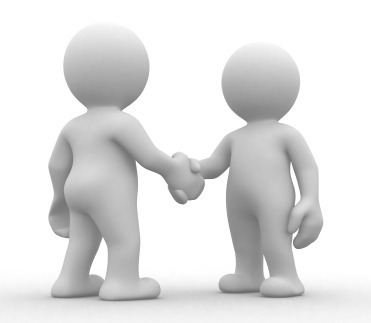
53.
This picture shows a _________________ solution. 
a)
Lose- Lose 
b)
Win- Lose 
c)
Lose- Win
d)
Win- Win
54.
How was the ending of Rainbow Fish a "Win-Win" situation? 
a)
Both Rainbow Fish and the other fish got what they wanted and were happy. 
b)
Rainbow Fish kept his scales and was happy, but the other fish were not. 
c)
Rainbow Fish gave away his scales, but was not happy and the other fish were happy.
d)
The end of the story was not a win-win situation.
55.
Cassie and I both want to play with a hula hoop but there is only one. How can Cassie and I think "Win- Win?"
a)
Cassie plays with the Hula Hoops and does not share it with me.
b)
I play with the Hula Hoop and do not share it with Cassie.
c)
We take turns playing with the Hula Hoop.
d)
Change your mind and go for a walk.
56.
My brother and I both want a pet. I want a dog. He wants a cat. My brother and I can't agree, so we do not get a pet. What kind of solution would this be? 
a)
Win- Win 
b)
Win- Lose
c)
Lose- Win
d)
Lose- Lose
57.
What does it mean to think "Win-Win?"
a)
It means I get what I want, but other people are not happy.
b)
It means that we both get what we want.
c)
It means that I am not happy, but other people are happy.
d)
It means if I can't have it, neither can you.
58.
Habit #4 suggests everyone can have a _________ attitude.
a)
personal
b)
winning
c)
competitive
d)
low-key
59.
Sharing information, power, recognition, and rewards is practicing Habit # _____.
a)
4
b)
5
c)
6
d)
7
60.
Habit #4 is...
a)
Think
b)
Think Win
c)
Think Win Win
d)
Think Win Win Win
61.
If we practice all 7 Habits we will be...
a)
tired
b)
successful
c)
unlucky
d)
finished with reading this book
62.
T or F. You are responsible for your own state of mind!
a)
True
b)
False
c)
I don't know.
d)
I don't care.
63.
Which of the following is not a poor listening skill?
a)
Pretend listening.
b)
Selective listening.
c)
Self-centered listening.
d)
None of the above.
64.
What is the deepest need of the human heart?
a)
To understand.
b)
To be understood.
c)
Love.
d)
Attention.
65.
Which is not a key to genuine listening?
a)
Listen with your eyes, ears, and heart.
b)
Stand in their shoes.
c)
Turn away from conversation.
d)
Practice mirroring.
66.
Everyone sees things the same way.
a)
True
b)
False
67.
What shouldn't you do when seeking to understand?
a)
Advise.
b)
Probe.
c)
Judge.
d)
All the above.
68.
What are ways in which we do not communicate well?
a)
Spacing out.
b)
Pretend listening.
c)
Selective listening.
d)
All of the above.
69.
Which type of poor listening is this scenario?
Someone is talking and you are thinking about how bad their actions are.
a)
Spacing out.
b)
Selective listening.
c)
Self-centered listening.
d)
Judging.
70.
Which type of poor listening is this scenario?
Your cousin is sharing about what's going on, and you reply with ten questions.
a)
Advising.
b)
Word listening.
c)
Probing.
d)
Judging.
71.
What makes up a good listener?
a)
All of these.
b)
Words.
c)
Body language.
d)
Tone/meaning.
72.
What are three things we need to practice?
a)
Less eye contact.
b)
Stand there.
c)
Practice hearing.
d)
None of these.
73.
Habit #5 suggests that we should listen to everyone  _____________.
a)
Sincerely.
b)
Quietly.
c)
Willingly.
d)
Faithfully.
74.
If you have two ears and one mouth, you are practicing Habit # _____.
a)
2
b)
3
c)
4
d)
5
75.
If we practice all 7 Habits we will be...
a)
Tired.
b)
Successful.
c)
Unlucky.
d)
Finished with reading this book.
76.
Habit #5 is...
a)
Seek first to understand, then to be understood.
b)
Seek first to understand, then be understanding.
c)
Seek first to be understood, then to understand.
d)
Seek first to be understood, then be understood.
77.
True or False. You are responsible for your own state of mind !!
a)
True
b)
False
c)
I don't know.
d)
I don't care.
78.

What is synergy? (Choose all that apply.)

a)

Celebrating differences

b)

Teamwork

c)

Open-mindedness

d)

Finding new and better ways

79.

Why do geese fly in a "V" formation? (Choose all that apply.)

a)

So they won't get pooped on.

b)

To get a lift from each other.

c)

Say they can see the geese in front of them.

80.

Do Geese cooperate with each?

a)

Yes

b)

No

81.

What happens when the lead goose gets tired?

a)

A new goose becomes the leader.

b)

Geese don't get tired.

c)

The goose flies to the ground and rests.

82.

In the book, The Crayon Box That Talked, why did the crayon's not like each other?

a)

They do not like some are taller than them.

b)

They do not like their attitudes.

c)

The do not like that each other is a different color.

83.

What happened when the little girl drew a picture with all of the crayons?

a)

The color's saw how great they could be together.

b)

The color's wanted to be a different color.

c)

They learned to like each other's uniqueness.

84.

What are the 3 approaches to celebrating each other's differences?

a)

Celebrating Diversity

b)

Accept Diversity

c)

Shun Diversity

d)

Tolerate Diversity

85.

Which type of smart learns through reading, writing, and telling stories?

a)

Linguistic

b)

Musical

c)

Spatial

86.

Which type of smart learns through logic, patterns, categories, and relationships?

a)

Linguistic

b)

Musical

c)

Logical-Mathematical

87.

Which type of smart learns through bodily sensations and touching?

a)

Spatial

b)

Bodily-kinesthetic

c)

Interpersonal

88.

Which type of smart learns through images and pictures?

a)

Musical

b)

Spatial

c)

intrapersonal

89.

Which type of smart learns through sound and rhythm?

a)

Musical

b)

Spatial

c)

Linguistic

90.

Which type of smart learns through interactions and communicating with others?

a)

Intrapersonal

b)

Logical-mathematical

c)

Interpersonal

91.

Which type of smart learns through their own feelings?

a)

Bodily-kinesthetic

b)

Intrapersonal

c)

Musical

92.

Everyone has different styles, traits, and characteristics.

a)

True

b)

False

93.

Three of the largest roadblocks to synergy are:

(choose three)

a)

Ignorance

b)

Diversity

c)

Cliques

d)

Prejudice

94.

What is the simple five-step process to help you get to synergy?

a)

Define the problem, My way, Brainstorm, Their way, High Way

b)

Define the problem, Their way, My way, Brainstorm, High Way

c)

Brainstorm, Define the problem, Their way, My way, High way

95.

Referring to the Synergy Action Plan, what does "Their way" mean?

a)

Create new options and ideas.

b)

Seek first to be understood by sharing your ideas.

c)

Seek first to understand the ideas of others.

96.

Referring to the Synergy Action Plan, what does "My way" mean?

a)

Create new options and ideas.

b)

Seek to be understood by sharing your ideas.

c)

Seek first to understand the ideas of others.

97.

Referring to the Synergy Action Plan, what does "Brainstorm" mean?

a)

Create new options and ideas.

b)

Seek first to understand the ideas of others.

c)

Seek to be understood by sharing your ideas.

98.

Referring to the Synergy Action Plan, what does "High way" mean?

a)

Find the best solution.

b)

Create new options and ideas.

c)

Seek first to understand the ideas of others.