wayground logo

Free Printable Worksheets

Font size

S
M
L
XL
Worksheets

Year 9 Summer term quiz

Total questions: 90

Worksheet time: 1hrs 9mins

Name
Class
Date
1.
What is the function of the cell nucleus found in both plant and animal cells?
a)
to produce energy
b)
to control cell activity
c)
to remove waste products
d)
to allow molecules to enter the cell
2.
All cells need energy to function.  Which cell organelle is responsible for producing energy in the cell?
a)
chloroplasts
b)
mitochondria
c)
nucleus
d)
vacuoles
3.
What is the function of a cell wall?
a)
to protect and support the cell
b)
to perform different functions in each cell
c)
to prevent water from passing through it
d)
to prevent oxygen from entering the cell
4.
In what part of the plant cell does the process of photosynthesis take place?
a)
nucleus
b)
mitochondria
c)
chloroplasts
d)
vacuoles
5.
Cells with a nucleus and membrane-bound organelles are called ____________________.
a)
prokaryotes
b)
eukaryotes
c)
bacteria
d)
protists
6.
Who was the first  person to see cells under the microscope and give them their name?
a)
Mattias Schleiden
b)
Robert Hooke
c)
Theordor Schwann
d)
Anton van Leeuwenhoek
7.
Why do Scientist use microscopes? Choose the best answer.
a)
They are fun to use.
b)
To make cells look bigger than they appear.
c)
To separate cells from each other.
d)
To make cells look smaller.
8.
Both plant AND animal cells have .....
a)
cell membrane, cell wall, nucleus
b)
cell membrane, cytoplasm, nucelus
c)
cell membrane, chloroplast and nucleus 
d)
cell wall, vacuole, nucleus 
9.
The outer layer of the plant cell is called the ....
a)
cell membrane 
b)
nucleus
c)
cell wall 
d)
the skin 
10.

Ethanol and water have different boiling point. What would be the suitable separation technique for a mixture of both substances?

a)

Distillation

b)

Chromatography paper

c)

Sieving

11.

You want to separate the components of a felt tip pen. What is the suitable separation technique?

a)

distillation

b)

chromatography paper

c)

decanting

d)

sieving

12.

What is the suitable separation technique for a mixture of iron filings and salt?

a)

sieving

b)

filtering

c)

magnetic separation

13.

You've got copper sulfate pentahydrate dissolved in water and you want to get rid of the water and get crystals. What's the suitable separation technique?

a)

sieving

b)

decanting

c)

crystallization

d)

distillation

14.

Charcoal powder is insoluble in water. When water is filtered, the charcoal powder becomes the _______.

a)

solute

b)

residue

c)

filtrate

d)

solvent

15.

What is the basis for separating the components of a mixture through distillation?

a)

freezing point of the substances

b)

room temperature

c)

decaying period

d)

boiling pint of the substances

16.

Carbon

a)

CA

b)

Ca

c)

C

d)

Cn

17.

Sn

a)

tin

b)

iron

c)

sulfer

d)

sodium

18.

Zinc

a)

Z

b)

Zc

c)

Zi

d)

Zn

19.

Sulfur

a)

Sf

b)

Sr

c)

S

d)

Su

20.

Neon

a)

Nn

b)

No

c)

N

d)

Ne

21.

Calcium

a)

Ca

b)

CA

c)

Cl

d)

CL

22.

Copper

a)

C

b)

Co

c)

Cu

d)

CP

23.

Helium

a)

H

b)

He

c)

HE

d)

Hl

24.

Which type of force is the cat using on the pizza box?

a)

push

b)

pull

c)

gravity

d)

friction

25.

Which type of force is being used by the dog?

a)

push

b)

pull

c)

gravity

d)

friction

26.

What force is greatest on a compass?

a)

push

b)

direction

c)

north

d)

magnetism

27.
What force holds the planets in motion around the sun?
a)
Magnetic
b)
Electrical
c)
Gravitational
d)
Air Resistance
28.

What do we call a force that causes an object to accelerate?

a)

net force

b)

moving force

c)

acceleration force

d)

unbalanced force

29.

What do we call a force that has a net force of zero Newtons and the object does not change its motion?

a)

balanced force

b)

unbalanced force

c)

acceleration force

d)

net force

30.

What is the magnitude and direction of the force in the free body diagram shown?

a)

70 N right

b)

70 N left

c)

50 N right

d)

50 N left

31.
a)
Quattro
b)
Audi
c)
Audio
d)
Audi Quattro
32.
a)
French
b)
French Fries
c)
Fila
d)
Fila French
33.
a)
Krispy Kreme
b)
Spy Me
c)
Whispy Fame
d)
Tripsy Time 
34.
a)
Mercedes
b)
Memories
c)
Star Wars
d)
Buzz Light Year
35.
a)
Van Wheels
b)
Vauxhall
c)
Volks Wagon
d)
Vee Dub
36.

Name the logo

a)

OLYMPIC

b)

ring

c)

none of the above

37.

Ini adalah Logo...

a)

Adidas

b)

Puma

c)

Reebok

d)

New Balance

38.

Identify the Logo

a)

ISRO

b)

Indian Air Force

c)

Indian Navy

d)

NASA

39.

Identify the Logo?

a)

BMW

b)

AUDI

c)

NISSAN

d)

FORD

40.

What is energy?

a)

moving energy

b)

stored energy

c)

renewable energy

d)

The ability to do work.

41.

What is potential energy?

a)

moving energy

b)

stored energy

c)

renewable energy

d)

non renewable energy

42.

What is kinetic energy?

a)

moving energy

b)

potential energy

c)

stored energy

d)

renewable energy

43.
A group of friends gather around a fire to stay warm.
a)
conduction
b)
convection
c)
radiation
44.
Energy due to motion is ____________ energy. 
a)
Potential 
b)
Energy
c)
Kinetic
d)
Friction
45.
What kind of energy is in a rock at the edge of a cliff?
a)
Potential
b)
Kinetic
46.
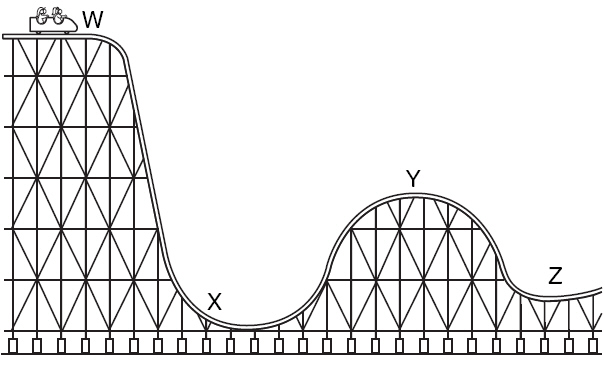
At which point is kinetic energy greatest? 
a)
W
b)
X
c)
Y
d)
Z
47.
At which point is potential energy greatest?
a)
W
b)
X
c)
Y
d)
Z
48.

can become any of the three cell layers in a

developing embryo (endoderm, mesoderm, ectoderm), but not the placenta surrounding the embryo.

a)

Totipotent

b)

Pluripotent

c)

Multipotent

49.

partially differentiated, with only the capacity to become one cell type.

a)

Totipotent

b)

Pluripotent

c)

Multipotent

50.
Which of the following is NOT a source for stem cells?
a)
umbilical cord blood 
b)
early embryos 
c)
sperm and eggs 
d)
certain adult tissues 
51.
This type of cell sends messages throughout the body in the form of electrical impulse.
a)
nerve cell
b)
sperm cell
c)
muscle cell
d)
skin cell
52.
This type of cell carries oxygen throughout the body.
a)
gamete
b)
platelet
c)
white blood cell
d)
red blood cell
53.
Which is true about embryonic stem cells?
a)
They no longer divide, their cell type is set and cannot change.
b)
They can develop into only one type of cell.
c)
They can become any cell type in the body.
d)
They are found in adults.
54.
Is water an element or a compound?
a)
Element
b)
Compound
55.
Water (H2O) freezing is an example of:
a)
A chemical change
b)
A physical change
56.
Is Iron (Fe) an element or a compound?
a)
Element
b)
Compound
57.
How many elements are in HHe
a)
3
b)
4
c)
2
d)
5
58.
Which of the following is not a compound?
a)
HCl
b)
Cl
c)
NaCl
d)
CO2
59.
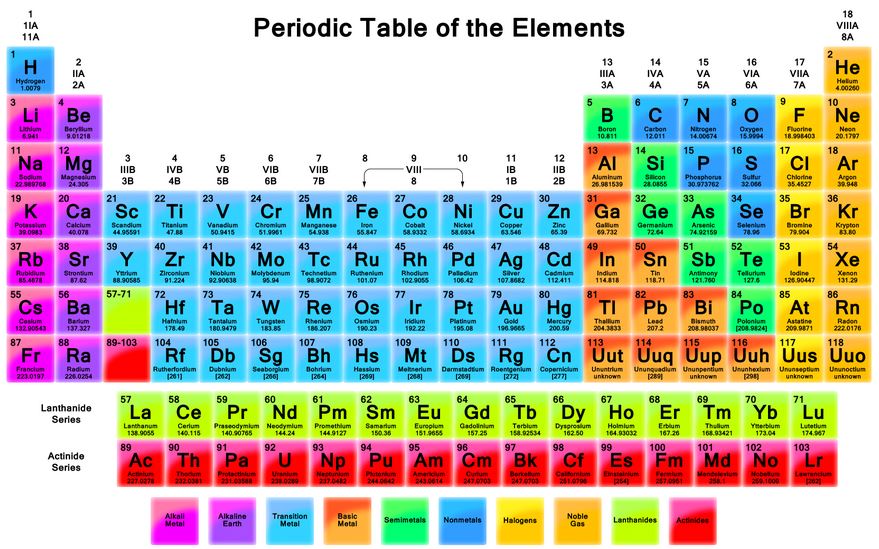
What is K?
a)
potassium
b)
berkelium
c)
sodium
d)
cacium
60.
Can compounds be found in the periodic table?
a)
Yes
b)
No
61.
Atoms combine to form _______. 
a)
electrons
b)
molecules
c)
nuclei
d)
neutrons
62.
Bonds between atoms in a molecule form as a result of the sharing  of?
a)
formulas
b)
electrons
c)
atoms
d)
chemicals
63.
Which of the following has a full valence shell?
a)
Oxygen
b)
Neon
c)
Barium
d)
Carbon
64.
Elements on the LEFT side of the periodic table will most likely form:
a)
Positive ions
b)
Negative ions
c)
Neutral Ions
d)
None of these
65.
An ionic bond forms when atoms ___________ electrons.
a)
gain
b)
share
c)
increase
d)
transfer
66.
Bonds that form between two metals are called ______________ bonds.
a)
ionic 
b)
covalent
c)
metallic
d)
pervasive
67.
If an atom loses two electrons what charge will it have?
a)
+ 2
b)
 - 2
c)
+1
d)
-1
68.
If an atom gains one electron what charge will it have?
a)
-2
b)
-1
c)
+1
69.
Covalent compounds
a)
Share electrons
b)
transfer electrons
c)
contain a sea of electrons
d)
conduct electricity
70.
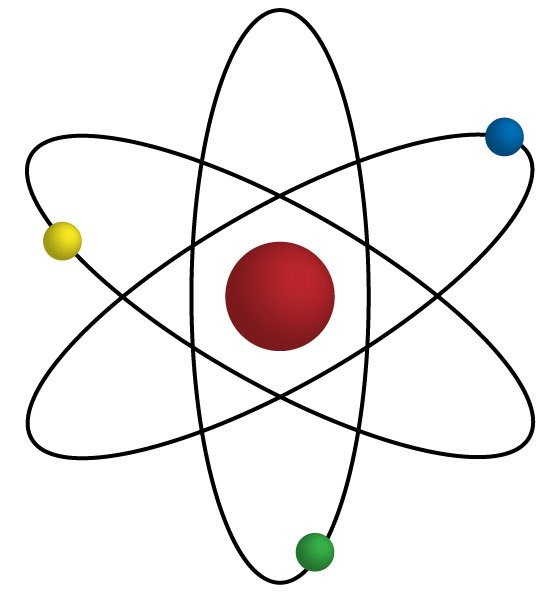
How many valence electrons in this structure?
a)
6
b)
5
c)
4
d)
7
71.
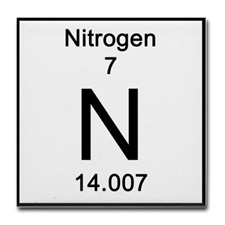
What is the number of protons that the element in this image contain?
a)
14
b)
7
c)
15
d)
18
72.
all matter is made of what 
a)
energy 
b)
atoms 
c)
electrons 
d)
compounds 
73.
The positive particles of an atom are 
a)
electrons 
b)
positrons 
c)
neutrons 
d)
protons 
74.
electrons have this type of charge?
a)
negative
b)
positive
c)
neutral
75.
What are the 3 particles that make-up the atom?
a)
protons, neutrons, and isotopes
b)
neutrons, isotopes, and electrons
c)
positives, negatives, and electrons
d)
protons, neutrons, and electrons
76.

particles are packed tightest in a

a)

solid

b)

liquid

c)

gas

d)

plasma

77.

particles move fastest in a

a)

solid

b)

liquid

c)

gas

d)

slime

78.

In which organ do you find gastric juices?

a)

heart

b)

lungs

c)

stomach

d)

liver

79.

The circulatory system is made up of the...

a)

heart only

b)

heart and blood vessels

c)

heart, blood vessels and blood

80.

The air we breathe in contains ______________ compared to when breathe out.

a)

more nitrogen

b)

more oxygen

c)

more carbon dioxide

81.

What is the function of the liver?

a)

to break down food into smaller pieces.

b)

to breakdown toxins and harmful substances.

c)

to break down food into tiny particles.

d)

digest food

82.

uses sunlight, carbon dioxide, and water to make glucose and oxygen

a)

chloroplast

b)

nucleus

c)

endoplasmic reticulum

d)

lysosome

83.

makes proteins from amino acids

a)

ribosomes

b)

mitochondria

c)

nucleus

d)

lysosome

84.

gel-like substance where all other organelles are found

it is constantly moving and some cellular reactions can occur here

a)

cytoplasm

b)

vacuole

c)

chloroplast

d)

golgi body

85.
To convert the energy of glucose into  the  usable form of ATP is a function of _________.
a)
Cell Wall
b)
Cytoplasm
c)
Nucleus
d)
Mitochondria
86.
To control what enters or leaves the cell is a function of _________.
a)
Cell Wall
b)
Cell Membrane
c)
Nucleus
d)
Mitochondria
87.
To store water, glucose (sugar) materials (building blocks) or wastes is a function of _________.
a)
Cell Wall
b)
Vacuole
c)
Chloroplast
d)
Mitochondria
88.
Breaks down food  to release energy. Known as the power plant of the cell.
a)
Endoplasmic Reticulum
b)
Mitochondria
c)
Ribosomes
d)
Cell Wall
89.

Which organelle contains DNA and controls the cell?

a)

Cell membrane

b)

nucleus

c)

nucleolus

d)

lysosme

90.

This pigment is found in chloroplasts.

a)

rhodopsin

b)

chlorophyll

c)

thylakoid

d)

stroma