
 Worksheets
final review 3
Total questions: 147
Worksheet time: 3hrs 5mins
What is the correct Lewis Dot Structure for ammonia NH3


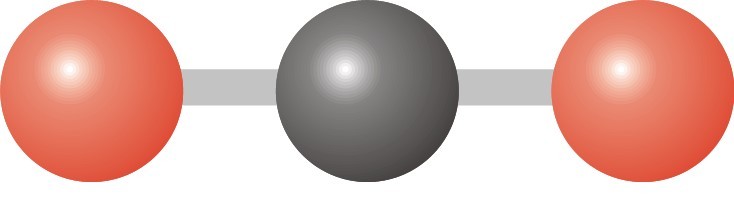
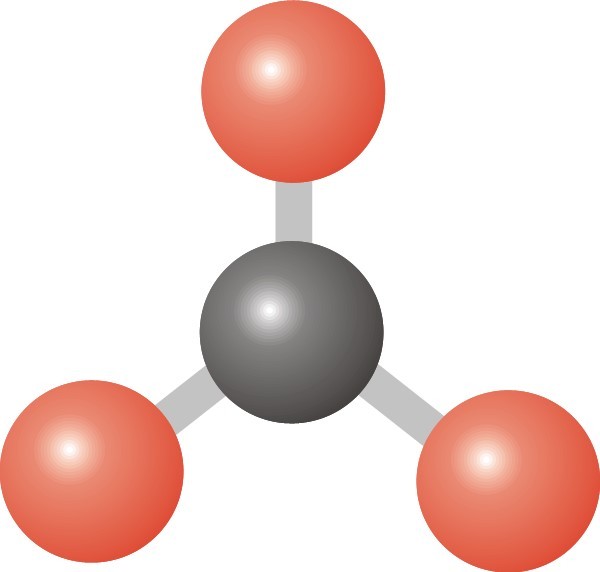
Which is the correct molecular structure for carbon dioxide?


How many total valence electrons are participating in bonding in the molecule above?
8
4
2
3
CO2 has how many lone pairs?
0
1
2
3
4
NH3 has how many lone pairs?
0
1
2
3
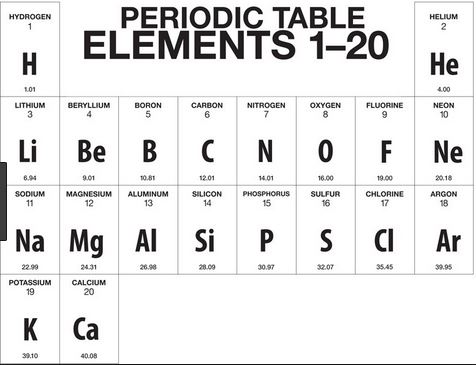
How many valence electrons does Helium Have?
1 Valence electron
2 Valence electron
3 Valence electron
4 Valence electron
5 Valence electron
Is this the correct structure for CH2O?
Yes
No
Which part of the atom is responsible for chemical bonding?
Core Electrons
Valence Electrons
Protons
Neutrons





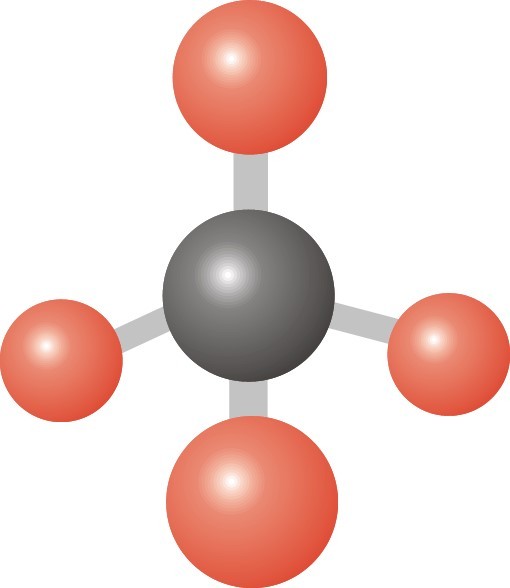
What is the correct shape of CHCl3?
Bent
Trigonal pyramidal
Tetrahedral
Trigonal planar

Polarity of a molecule is determined by
shape and charge
symmetry/asymmetry of molecule and difference in EN value
difference in EN value and size
difference in EN value and charges

CO2 has polar bonds but is a NON POLAR molecule. Why?
it has an asymmetrical shape
bond polarity or dipole moment between C and O atoms cancel
there is net dipole moment between C and O atoms in molecule
bond polarity does not exist between C+ and O- atoms
Is this molecule polar or nonpolar?
polar
nonpolar

Determine Polarity:
Polar
Nonpolar


Including the drawn structure, how many total resonance structures for NO3- ion can be drawn?
1
2
3
4

2SO2(g) + O2(g) ⇌ 2SO3(g) + Heat
Removing O2(g) will
shift equilibrium right
shift equilibrium left
increase pressure
have no change
2SO2(g)+O2(g) ⇌ 2SO3(g) + Heat
Adding SO3(g) will
shift equilibrium right
shift equilibrium left
increase K
have no change
2SO2(g) + O2(g) ⇌ 2SO3(g) + Heat
Using a catalyst
shift equilibrium right
shift equilibrium left
increase the rate of reaction
have no change
2SO2(g)+1O2(g) ⇌ 2SO3(g) + Heat
Increasing the pressure on the system will...
shift equilibrium right
shift equilibrium left
slow rate of reaction
have no change
2SO2(g)+O2(g) ⇌ 2SO3(g) + Exothermic
Adding SO3(g) will
shift equilibrium right
shift equilibrium left
increase K
have no change

What line segment represents only the solid state? (Diagram F)
A-B
B-C
C-D
D-E

A substance's heating curve is shown in the graph. What is its boiling point? (Diagram B)
100 C
60 C
80 C
20 C

What will occur when the substance transitions from B to A? (Diagram A)
condensation
evaporation
melting
freezing
What will occur when the substance changes from 1 atm to 30 at a constant temperature of -15oC? (Diagram A)
condensation
deposition
melting
sublimation

What is the normal boiling point of this substance? (Diagram C)
150 °C
100 °C
-50 °C
0 °C
What is the normal melting point of this substance? (Diagram C)
150 °C
100 °C
-50 °C
0 °C
What is point A? (Diagram C)
triple point
critical point
equilibrium point
normal melting point
**An ice cube feels cold when we hold it. Which of the following best explains why?
Heat moves from our hands into the ice cube.
Cold moves from our hands into the ice cube.
Heat moves from the ice cube into our hands.
Cold moves from the ice cube into our hands.
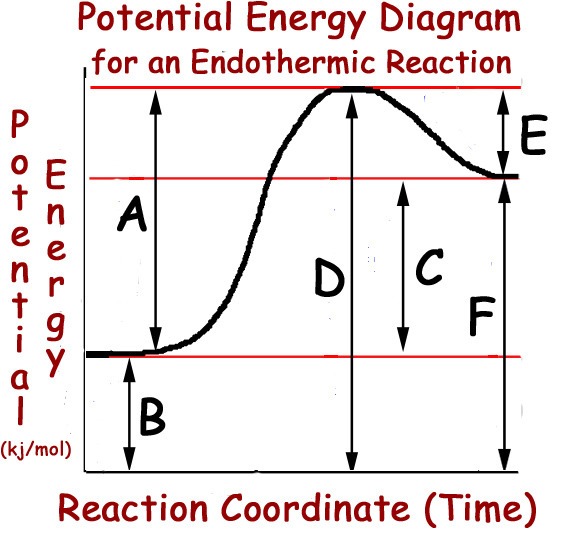
What letter represents the activation energy?
A
B
C
D
rate = k[A]
The rate constant in the rate law above is 0.5 L/mol·s. If the initial concentration of A is 0.1 M, how long will it take for [A] to drop to 0.025 M?
0.7 s
1.4 s
2.8 s
There is not enough information given.
Which of the following best describes why increasing temperature increase reaction rate?
Activation energy is reduced.
Collisions become more frequent.
Collisions become more energetic.
Collisions become more frequent and more energetic.

What is the rate law for this mechanism?
rate = k[A][B]2
rate = [B][X]
rate = [A]0.5[B]1.5
rate = [W][Y][Z]
Which factors increase the rate of a reaction?
increasing temperature
increasing concentration
increasing surface area
all of the above

The iodide ion reacts with hypochlorite ion in the following way:
OCl- + I- ⟶ OI- + Cl-.
This rapid reaction gives the rate data shown. What is the rate law?
rate = [OCl-]2[I-]
rate = [OCl-][I-]2
rate = [OCl-][I-]
rate = [OCl-]
Which of the following best describes why increasing temperature increase reaction rate?
Activation energy is reduced.
Collisions become more frequent.
Collisions become more energetic.
Collisions become more frequent and more energetic.
Given the following rate law,
rate = k[A]2[B]
if [A] were doubled, what must happen to [B] to keep the rate constant?
[B] must quadruple
[B] must double
[B] must be havled
[B] must be quartered
rate = k[A]
The rate constant in the rate law above is 0.5 L/mol·s. If the initial concentration of A is 0.1 M, how long will it take for [A] to drop to 0.025 M?
0.7 s
1.4 s
2.8 s
There is not enough information given.
Which of the following is NOT a factor affecting reaction rate?
temperature
catalysts
concentration
polarity
What does Gibbs Free Energy tell us?
How much energy is given off by a reaction.
The tendency of a reaction to become "random"
How spontaneous a reaction is.
What information do we need to perform a calculation of Gibbs Free Energy?
Enthalpy of the reaction.
Entropy of the reaction.
The temperature of the reaction in Kelvin.
All of the above are needed.
Which of the following situations demonstrates high entropy?
water freezing
water vaporizing
steam condensing to water
Your enthalpy is high and negative but your entropy is also negative. What type of temperature would you want to get a spontaneous reaction?
low
high
What will happen to the Volume if it was 5.5 L while the Pressure started at 2.7 atm and increased to 3.6 atm? PV=nRT
Volume increases
Volume decreases
A container holds 50.0 mL of nitrogen at 25° C and a pressure of 736 mm Hg. What will happen to the volume if the temperature increases by 35° C? PV=nRT
Volume increases
Volume decreases
A sample of gas has a volume of 852 mL at 25°C. What will happen to the temperature if the volume increases to 945 mL? PV=nRT
Temperature increases
Temperature decreases
A balloon with a volume of 5.3 L is taken from an indoor temperature of 24ºC to the outdoors. The volume of the balloon outside is 4.9 L. What happened to the Celsius temperature outside? PV=nRT
Temperature increase
Temperature decreases
A balloon with a volume of 5.3 L is taken from an indoor temperature of 24ºC to the outdoors. The volume of the balloon outside is 4.9 L. What happened to the Celsius temperature outside? PV=nRT
Temperature increase
Temperature decreases
The volume of a gas at 99.0kPa is 300mL. If the pressure is increased to 188kPa, what will happen to the volume? Increase or Decrease
volume increases
volume decreases
Using the equations below:
C(s) + O2(g) → CO2(g) ∆H = –390 kJ
Mn(s) + O2(g) → MnO2(s) ∆H = –520 kJ
what is ∆H (in kJ) for the following reaction?
MnO2(s) + C(s) → Mn(s) + CO2(g)
910
130
-130
-910
Using the equations below
Cu(s) + 1/2O2(g) → CuO(s) ∆H = –156 kJ
2Cu(s) + O2(g) → Cu2O(s) ∆H = –170 kJ
what is the value of ∆H (in kJ) for the following reaction?
2CuO(s) → Cu2O(s) + 1/2O2(g)
142
15
-15
-142
Standard conditions are defined as...
298K and 1.00 x 10⁵ kPa
273K and 1.00 x 10⁵ kPa
The standard enthalpy change of formation values of two oxides of phosphorus are:
P4(s) + 3O2(g) → P4O6(s) ΔHf = –1600 kJ mol–1
P4(s) + 5O2(g) → P4O10(s) ΔHf = –3000 kJ mol–1
What is the enthalpy change, in kJ mol–1, for the reaction below?
P4O6(s) + 2O2(g) → P4O10(s)
+4600
+1400
–1400
–4600
The following equations show the oxidation of carbon and carbon monoxide to carbon dioxide.
C(s) +O2(g) → CO2(g) ΔH = –x kJ mol–1
CO(g) + O2(g) → CO2(g) ΔH = –y kJ mol–1
What is the enthalpy change, in kJ mol–1, for the oxidation of carbon to carbon monoxide?
C(s) + O2(g) → CO(g)
x + y
-x - y
y - x
x - y
Which of the following statements are true for the reaction:
SO2(g) + 1/2O2(g) ↔ SO3(g) ΔH = –92 kJ mol-1
Where ↔ indicates that the reaction can proceed in the forward and the reverse direction.
The forward and reverse reaction both produce 92 kJ of energy.
Oxidising 2 moles of SO2 would produce twice as much energy.
The reverse reaction has an enthalpy of +92 kJ mol-1.
Collecting the SO3 produced in the liquid state would not change the measured enthalpy.
The standard enthalpy change of formation values of two oxides of phosphorus are:
P4(s) + 3O2(g) → P4O6(s) ΔHf = –1600 kJ mol–1
P4(s) + 5O2(g) → P4O10(s) ΔHf = –3000 kJ mol–1
What is the enthalpy change, in kJ mol–1, for the reaction below?
P4O6(s) + 2O2(g) → P4O10(s)
+4600
+1400
–1400
–4600
1 Mg + 2 HCl --> 1 MgCl2 + 1 H2
1 C10H8 + 12 O2 --> 10 CO2 + 4 H2O
What is the limiting reactant if 12 moles of P4 react with 15 moles of O2?
What is the Ksp expression for Cu3(PO4)2?
Ksp = [Cu+2]3[PO4-3]2
Ksp = [Cu+2]2[PO4-3]3
Ksp = [Cu+2][PO4-3]
Ksp = [Cu+2]3[PO4-3]
The molar solubility of silver sulphide is 5.0 x 10⁻¹⁷ mol/L. Calculate its solubility product.
Ksp = 5 x 1049
Ksp = 5 x 1033
Ksp = 5 x 10-49
Ksp = 5 x 10-33

PV=nRT
How many molecules are in 2.5 mol of NaCl?
1.5 x 1024 molecules
1.5 molecules
4.15 molecules
1.5 x 10²³ molecules
What is the empirical formula for the following:
32.40% sodium, 22.5% sulfur; 45.1 % oxygen, 37.75% water?
Na2SO4H6O3
Na2SO4 * 2H2O
Na2SO4 * 3H2O
Na2SO4 * (H2O)
What is the limiting reactant is 12 moles of P4 react with 15 moles of O2?
Actual yield = 62g
Calculate the percent yield.
Which combination of ΔH and ΔS NEVER has a spontaneous reaction?
+ΔH and +ΔS
+ΔH and -ΔS
-ΔH and -ΔS
-ΔH and +ΔS
The rate-determining step is
step of reaction in reaction mechanism which has the fastest rate among the other step of reaction
step of reaction in reaction mechanism which has the slowest rate among the other step of reaction
step of reaction in reaction mechanism which isn't the proper step in reaction mechanism
an unimportant step of reaction in reaction mechanism
Reaction :
2A + B → C + D
is proposed to have reaction mechanism shown below :
A + B → AB + D (slow)
A + AB → C (fast)
the consistent rate equation with the reaction mechanism above is ____
rate = k [A]2 [B]
rate = k [A]2 [B]2
rate = k [A] [B]
rate = k [A] [B]2
If there is two substances (atom, molecule, or ion) involved in the rate-determining step, that reaction is said to be
unimolecular
bimolecular
trimolecular
polimolecular
The decomposition of nitrous oxide :
2N2O(g) → 2N2(g) + O2(g)
is believed to occur by two-step mechanism
N2O(g) → N2(g) + O(g) (slow)
N2O(g) + O(g) → N2(g) + O2(g) (fast)
the consistent rate equation based on the mechanism above is ____
rate = k [N2O]2
rate = k [N2O]
rate = k [N2O]2 [N2]
rate = k
What is the order of reaction with respect to A?
What is the overall order of reaction?
The rate of a reaction is dependent on the concentration of the reactants
True
False

What are the units of k for the rate law: Rate = k[A][B]2, when the concentration unit is mol/L?
s-1
s
L mol-1 s-1 or M-1s-1
L2 mol-2 s-1 or M-2s-1
L2 s2 mol-2 or M2s2
The buffer solution is able to maintain pH by some events, except . . .
The addition of a little acid
The addition of a little base
Dilution
Addition of water
The addition of excess acid

CuCl2(aq) + NaOH(aq) → Cu(OH)2(s) + NaCl(aq)
The concentration of OH– in a saturated solution of Mg(OH)2 is 3.6 x 10⁻⁴ M. The Ksp of Mg(OH)2 is
1.3 x 10⁻⁷
4.7 x 10⁻¹¹
3.6 x 10⁻⁴
2.3 x 10⁻¹¹
Which of the following compounds has the lowest molar solubility in mol/L in water at 25°C?
Ag3PO4 Ksp = 1.8 x 10⁻¹⁸
Sn(OH)2 Ksp = 5 x 10–26
CdS Ksp = 3.6 x 10⁻²⁹
Al(OH)3 Ksp = 2 x 10–33
Barium carbonate has a measured solubility of 4.0 x 10⁻⁵ at 25°C. Determine the Ksp.
5.3 x 10⁻¹⁰
6.1 x 10⁻⁵
9.1 x 10⁻⁷
1.6 x 10⁻⁹
Sodium chloride is added slowly to a solution that is 0.010 M in Cu+, Ag+, and Au+. The Ksp values for the chloride salts are 1.9 x 10⁻⁷, 1,6 x 10⁻¹⁰, and 2.0 x 10⁻¹³, respectively. Which compound will precipitate first?
CuCl(s)
AgCl(s)
AuCl(s)
All will precipitate at the same time.
A 300.0-mL saturated solution of copper(II) periodate, Cu(IO4)2, contains 0.44 grams of dissolved salt. Determine the Ksp.
1.4 x 10⁻⁷
6.72 x 10⁻⁷
9.2 x 10⁻⁶
6.1 x 10⁻⁵
Calculate the solubility of Ag2CrO4 [Ksp = 9.0 x 10⁻¹²] in a 1.0 x 10⁻² M AgNO3 solution.
1.3 x 10⁻⁴ mol/L
2.3 x 10⁻⁸ mol/L
9.0 x 10⁻⁸ mol/L
9.0 x 10⁻¹⁰ mol/L
The Ksp expression for a saturated solution of Ca3(PO4)2 is
Ksp = [Ca2+][PO43-]
Ksp = [3Ca2+][2PO43-]
Ksp = [Ca2+]3[PO43-]2
Ksp = [3Ca2+]3[2PO43-]2
What is the Ksp expression for an ionic compund of BaSO4
Ksp= [Ba2+][SO42-]
Ksp= [Ba2+][4SO42-]4
Ksp= [Ba2+][4SO42-]
Ksp= [2Ba2+][4SO42-]

