
 Worksheets
Semester II: Module 2 : Law of Gravitation & Satellites
Total questions: 95
Worksheet time: 2hrs 55mins
Calculate the gravitational force between two objects when they are 0.750m apart. Each object has a mass of 5.00kg.
2.96x10⁻⁷N
3.00x10⁻⁶N
2.22x10⁻⁹N
2.23x10⁻⁸N
What would the force between them be if the distance between them were doubled?

What is the gravitational force between two identical 50,000 kg asteroids whose centers of mass are separated by 1000 m?
2500 N
3.3 x 10⁻¹² N
1.67 x 10⁻⁴ N
1.67 x 10⁻⁷ N
Two spherical objects have masses of 8000 kg and 1500 kg. Their centers are separated by a distance of 1.5 m. Find the gravitational attraction between them
5.4 X 10⁻⁴ N
1.2 X 10⁷ N
3.6 X 10⁻⁴ N
5.33 N
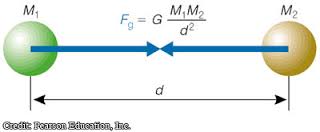
Which configuration will result in the greatest gravitational force?
small masses far apart
large masses far apart
small masses close together
large masses close together
What is
the relation between the escape velocity and orbital velocity of a satellite,
if the satellite is close to the earth’s surface?
Vo = 2√Ve
Ve = √2 Vo
Ve = 2√Vo
Vo = √2Vo
Consider a body of mass m which needs to be moved from an orbit of radius 2R to 3R. What is the energy required?
GmM/(12R)
GmM/(6R)
GmM/R
GmM/2R
Choose the factor on which the orbital velocity does not depend when the satellite is orbiting close to the earth’s surface:
The mass of the earth
The mass of the satellite
The orbital radius
The radius of the earth
If a satellite takes time T for revolution, the kinetic energy is proportional to:
1/T
T32
T−2
A satellite of the earth is revolving in a circular orbit with a uniform speed v. If the gravitational force suddenly disappears, the satellite will:
Continue to move with velocity v along the original orbit
Move with a velocity v, tangentially to the original orbit
Fall down with increasing velocity
Ultimately come to rest somewhere on the original orbit
The period of geostationary artificial satellite of earth is:
6 hours
24 hours
12 hours
365 days
A satellite is revolving around the sun in a circular orbit with uniform velocity v. If the gravitational force suddenly disappears, the velocity of the satellite will be:
Zero
V
2 V
Infinity
A satellite S is moving in an elliptical orbit around the earth. The mass of the satellite is very small compared to the mass of earth:
The acceleration of S is always directed towards the centre of the earth
The angular momentum of S about the centre of the earth changes in direction, but its magnitude remains constant
The total mechanical energy of S varies periodically with time
The linear momentum of S remains constant in magnitude
An astronaut orbiting the earth in a circular orbit 120 km above the surface of earth gently drops a spoon out of space-ship. The spoon will:
Fall vertically down to the earth
Move towards the moon
Will move along with space-ship
Will move in an irregular way then fall down to earth 10. The period of a satellite in a circular orbit around a planet
The period of a satellite in a circular orbit around a planet is independent of:
The radius of the planet
The mass of the planet
The mass of the satellite
All of these
A satellite revolves around the earth in an elliptical orbit. Its speed:
Is the same at all points in the orbit
Is greatest when it is closest to the earth
Is greatest when it is farthest from the earth
Goes on increasing or decreasing continuously depending upon the mass of the satellite
Out of the following, the only incorrect statement about satellites is:
A satellite cannot move in a stable orbit in a plane passing through the earth's centre
Geostationary satellites are launched in the equatorial plane
We can use just one geostationary satellite for global communication around the globe
The speed of a satellite increases with an increase in the radius of its orbit

The sun is the anchor point of our solar system because of
the gas Hydrogen
its small density
its huge mass
its location


of F?
The force of gravity on you is greatest when you are standing _____.
far above Earth's surface
just above Earth's surface
on Earth's surface
below Earth’s surface
The gravitational field is directed
towards the earth
away from earth
with no direction
in a specific direction making angle with earth
The Earth attracts a body with a force equal to its_____________.
weight
area
volume
pollution
Energy object possesses due to its position is called _______.
kinetic energy
mechanical energy
potential energy
chemical energy
The force due to which everybody of the universe attracts every other body is ________.
force of gravitation
force of limiting friction
force of inertia
force of mechanics
In the mathematical form of Newton’s law of universal gravitation, the symbol G stands for ________________.
gravity
the acceleration of gravity
the gravitational constant
the gravitational potential energy
According to Newton’s law of universal gravitation, the force of gravitational attraction between a planet and an object located upon the planet’s surface depends upon ______________.
the radius of the planet
the mass of the object
the mass of the planet
All of the above

What are the types of satellites?
artificial & homemade
natural & organic
natural & artificial

What do natural and artificial satellites have in common?
the don't have anything in common
they orbit celestial bodies
they send information to the Earth
the float outer space with no direction
What is the moon?
The only natural satellite of the Earth
It reflects the sun's light
It rotates around the Earth
All of the Above
How far is the moon away from the Earth?
3,86,000
3,74,000
3,84,000
4,84,000
How long is the LUNAR CYCLE mainly?
14
28
29
12
What is the full form of VSSC ?
Vikram Sarabhai Space Center
Vishnu Sarabhai Space Center
Vikram Sarabhai Science Center
Venkataraman Sarabhai Space Center
What is the full form of NASA?
National Aeronautics and Space Administration
National Airplane and Space Administration
National Aeronautics and Science Administration
National Aeronautics Space Administration
What is communication satellites?
They help us forecast weather
They help us giving radio/T.V. signals
They help in giving is the position of a vehicle or a vessel.
None of the Above
Who is the father of the Indian Space Programme?
Dr. APJ Abdul Kalam
Vikram Sarabhai
Meghnad Saha
Bhaskara-1
What is India's first lunar probe?
EduSat-1
Rohini-1
Manglayaan-1
Chandrayaan-1
What is the full form of GPS?
Global Positioning Service
Global Positioning System
Geothermal Positioning System
Global Posting System
The path that an object follows around another object is called ___________.
A circle
A progression
An orbit
A force
Human made objects that orbit the Earth are called ___________.
Artificial asteroids
Artificial satellites
Natural asteroids
Natural satellites
The orbit of a satellite is determined by a balance between ___________.
It's velocity and it's mass
It's mass and it's function
It's mass and the gravitational pull
It's velocity and the gravitational pull
The velocity a rocket must reach to escape from a planet or moons gravitational pull
Vacuum
Satellite
Escape velocity
Geosynchronous orbit
The velocity a rocket must achieve to establish an orbit around another object in space
Orbit Velocity
Velocity
Space shuttle
probe
Calculate the linear speed of a satellite in an orbit 900 km above Earth’s surface. Given G = 6.67 x 10^-11 N m^2 kg^-2, radius of earth is 6370 km and mass of the earth is 5.97 x 10^24 kg.
1.05 x 10^4 m s^-1
2.97 x 10^4 m s^-1
9.40 x 10^5 m s^-1
7.40 x 10^3 m s^-1
Calculate the escape velocity of a satellite in an orbit 300 km above Earth’s surface. Given G = 6.67 x 10^-11 N m^2 kg^-2, radius of earth is 6370 km and mass of the earth is 5.97 x 10^24 kg.
7.73 km s^-1
10.9 km s^-1
36.4 km s^-1
244 km s^-1
Satellites X and Y orbit the Earth at distances R and 4R respectively, as shown in the diagram.
Which statement is incorrect?
The speed of Y is greater than the speed of X
The time period of Y is greater than the time period of X
The potential energy of Y is greater than the potential energy of X.
The gravitational force acting on Y is less than the gravitational force acting on X.
The Earth moves around the Sun in a circular orbit with a radius of 1.5 × 10⁸ km. What is the Earth’s approximate speed?
1.5 × 10³ms–1
5.0 × 10³ms–1
1.0 × 10⁴ms–1
3.0 × 10⁴ms–1
A satellite is in orbit at a height h above the surface of a planet of mass M and radius R.
What is the velocity of the satellite?


A satellite of mass m travels in a circular orbit of radius r around a planet of mass M. Which one of the following expressions gives the angular speed of the satellite?


An artificial satellite of mass m is in a stable circular orbit of radius r around a planet of mass M. Which one of the following expressions gives the speed of the satellite? G is the universal gravitational constant.


A planet of mass M and radius R rotates so rapidly that loose material at the equator only just remains on the surface. What is the period of rotation of the planet?
G is the universal gravitational constant.


A satellite is in orbit at a height h above the surface of a planet of mass M and radius R. What is the velocity of the satellite?


Energy stored because of gravity is called:
Gravitational Potential Energy
Kinetic Energy
Mechanical Advantage
Chemical Energy
How could you increase the gravitational potential energy of an object without changing its mass and gravity?
Make the object larger
Lower the object towards the ground
Raise the object farther off the ground
Allow the object to roll on the ground
Gravitational potential energy depends on the strength of gravity, ________ and ________ of the object.
height and mass
friction and movement
mass and movement
height and friction
Which of the following is the correct equation for calculating an object's gravitational potential energy?
PE = mgh
PE = mg / h
PE = mg + h
PE = gh
What is the value of the Earth's acceleration due to gravity (g)?
9.8 m/s2
100 m/s2
25 m/s2
3.14 m/s2

What is the gravitational potential energy of a 26 kg eagle, flying at an altitude of 65 m at a speed of 19 m/s?
Let g = 9.8N/kg
32,110 J
1690 J
172.4 J
16,562 J

