wayground logo

Free Printable Worksheets

Font size

S
M
L
XL
Worksheets

Final-Chemistry

Total questions: 182

Worksheet time: 3hrs 9mins

Name
Class
Date
1.

Convert 675 mL to L

a)

6500 L

b)

0.675 L

c)

67.5 L

d)

675,000 L

2.

2.7 L = _____ mL

a)

0.27 mL

b)

270 mL

c)

2,700 mL

d)

27 mL

3.

8,400 mL = _____ L

a)

840 L

b)

84 L

c)

0.84 L

d)

8.4 L

4.

What is an observation?

a)

Something you measure or detect with your senses.

b)

The way you feel about something

c)

An educated guess

d)

A theory that has been disproved

5.

What is a hypothesis?

a)

An educated prediction or answer to a testable question

b)

A random guess

c)

An observation based on feelings or emotions

d)
6.

A series of steps designed to help you solve problems and answer questions is

a)

the scientific method

b)

results

c)

observations

d)

the two step

7.

Which science tool(s) would you use that involve milliliters (mL)?

a)

beaker and graduated cylinder

b)

beaker and ruler

c)

graduated cylinder and meter stick

d)

triple beam balance

8.
This tool can measure in Celsius or Fahrenheit....
a)
speed gauge
b)
ruler
c)
glassware
d)
thermometer
9.
What is a unit to measure length?
a)
liters
b)
seconds
c)
meters
d)
grams
10.
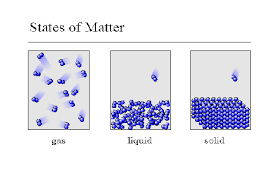
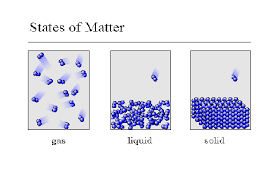
state of matter with a fixed shape; does not take the shape of its container
a)
solid
b)
liquid
c)
gas
d)
water
11.
state of matter that can be poured; takes the shape of its container
a)
solid
b)
liquid
c)
gas
12.
state of matter that spreads out to completely fill its container
a)
solid
b)
liquid
c)
gas
d)
water
13.

What must happen to water vapor (gas) to become liquid water?

a)

It must be heated.

b)

It must be cooled.

14.

What must be done to change water from solid to liquid?

a)

Raise the temperature.

b)

Lower the temperature.

15.

What must be done to change water from liquid to solid?

a)

Raise the temperature.

b)

Lower the temperature.

16.

Matter is anything that takes up space

a)

True

b)

False

17.

What state of matter is an apple?

a)

Liquid

b)

Solid

c)

Gas

18.

What state of matter is milk?

a)

Liquid

b)

Solid

c)

Gas

19.

The oxygen is...

a)

Gas

b)

LIquid

c)

Solid

20.
At higher temperatures
a)
particles in an object have less energy
b)
particles in an object move faster
c)
a gas contracts
21.
A gas
a)
has a definite shape but no definite volume
b)
has a definite volume but no definite shape
c)
has fast-moving particles
22.

Particles in a ______________________ move quickly and are far apart.

a)

gas

b)

solid

c)

liquid

23.

Particles of a liquid

a)

are tightly packed together and stay in a fixed position.

b)

are free to move around one another but still touch.

24.

The slower the particles in a substance move,

a)

the colder it is.

b)

the warmer it is.

c)

the more energy it has.

25.
In which state of matter are particles packed tightly together in fixed positions?
a)
gas 
b)
solid
c)
liquid
d)
plasma
26.
Which state of matter undergoes changes in volume most easily?
a)
solid
b)
liquid
c)
gas
d)
frozen
27.
state of matter with a fixed shape; does not take the shape of its container
a)
solid
b)
liquid
c)
gas
d)
water
28.
48 inches = _______ feet
a)
16
b)
1 1/2
c)
4
d)
144
29.
How many seconds are in a day?
a)
There are only seconds in a minute.
b)
1440sec
c)
86,400sec
d)
84,600sec
30.
71 km = ___ m
a)
71
b)
710
c)
7,100
d)
71,000
31.
1 kg = ___ g
a)
1
b)
10
c)
100
d)
1000
32.
21 kg 415 g = _________ g
a)
436 g
b)
21,415 g
c)
210,415 g
d)
9
33.

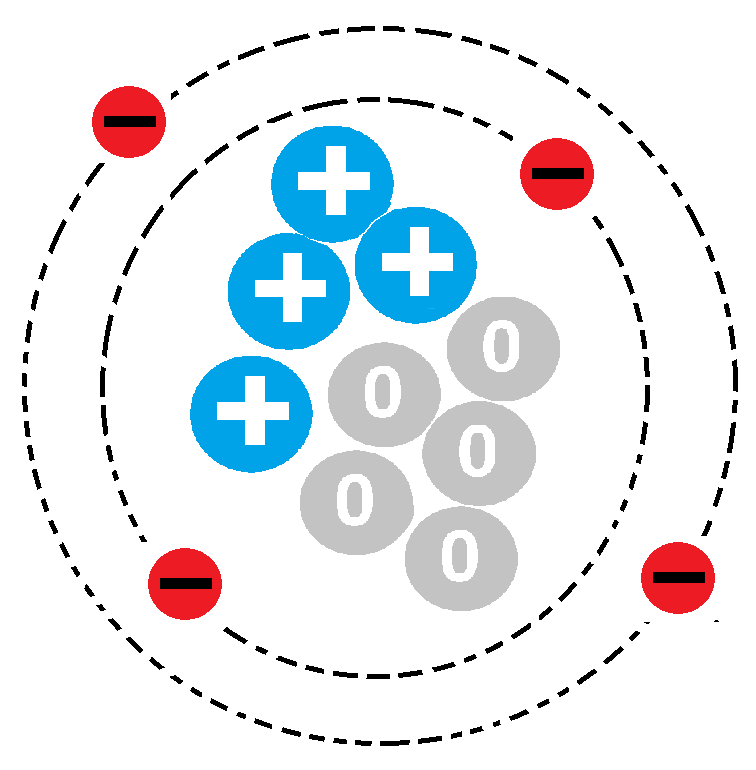
Subatomic particles with a negative charge

a)

Electrons

b)

Neutrons

c)

Protons

d)

Quarks

34.
Subatomic particles with a positive charge
a)
neutrons
b)
atomic mass
c)
protons
d)
isotopes
35.
Value representing the number of protons in an element
a)
Atomic Mass
b)
Mass Number
c)
Valence Electrons
d)
Atomic Number
36.
Subatomic particles that are neutral in charge
a)
Neutrons
b)
Protons
c)
Nucleus 
d)
Electrons
37.

What is one way Neutrons are different from electrons?

a)

they both are negative

b)

neutrons have no charge, while electrons have a negative charge

c)

Both are in the nucleus( center of atom)

d)

Electrons are inside nucleus and neutrons are outside the nucleus.

38.

What is the atomic number?

a)

35

b)

18

c)

17

d)

52

39.

How many protons and electrons does this element have?

a)

35

b)

18

c)

17

d)

52

40.

What is the atomic mass of Arsenic?

a)

33

b)

107

c)

75

41.
An element's identity is determined by the number of
a)
electrons.
b)
protons.
c)
neutrons.
d)
valence.
42.
Which is an electron?
a)
A
b)
B
c)
C
43.
Which is a proton?
a)
A
b)
B
c)
C
44.
Which is a neutron?
a)
A
b)
B
c)
C
45.

Hydrogen has an atomic number of 1. How many electrons does hydrogen have?

a)

1

b)

2

c)

4

d)

0

46.

The atomic mass of an atom is equal to

a)

number of protons plus number of neutrons

b)

number of protons plus number of electrons

c)

number of electrons plus the number of neutrons

47.
What is the atomic number of this nucleus?
a)
1
b)
3
c)
4
d)
7
48.
What is the atomic number of this atom?
a)
4
b)
5
c)
9
d)
none of the above
49.
What is the atomic number of this atom?
a)
2
b)
4
c)
6
d)
none of the above
50.
The atomic number of Lithium is
a)
3
b)
4
c)
5
d)
6
51.
The atomic number of Hydrogen is
a)
1
b)
2
c)
3
d)
4
52.
The atomic number of Nitrogen
a)
7
b)
6
c)
8
d)
9
53.

An atom of silicon has 14 protons and 15 neutrons. What is the mass number of this atom of silicon?

a)

14

b)

15

c)

29

54.

An element has the mass number 12 and atomic number 6. The number of neutrons in it is:

a)

6

b)

10

c)

4

d)

8

55.
An atom with 19 protons, and 19 electrons and a mass of 39 has how many neutrons?
a)
19
b)
39
c)
20
d)
58
56.
Frank has a paper clip. It has a mass of 9g and a volume of 3cm3. What is its density?
a)
3 g/cm3
b)
1/3 g/cm3
c)
27 g/cm3
d)
39 g/cm3
57.
Frank has an eraser. It has a mass of 4g, and a volume of 2cm3. What is its density?
a)
8 g/cm3
b)
2 g/cm3
c)
1/2 g/cm3
d)
24 g/cm3
58.
A student knows the mass of an object. What other variable does the student need to know to calculate the object's density?
a)
Color
b)
Weight
c)
Volume
d)
Length
59.
Which would be the most useful for identifying an unknown liquid?
a)
Weight
b)
volume
c)
mass
d)
density
60.
What units are used to measure mass?
a)
g
b)
cm3
c)
g/cm3
d)
cm3/g
61.
What is this tool to get volume?
a)
triple beam balance
b)
ruler
c)
thermometer
d)
graduate cylinder
62.
What is this tool to get mass?
a)
triple beam balance
b)
ruler
c)
thermometer
d)
graduate cylinder
63.
What is the formula for density?
a)
density = mass x volume
b)
density = mass / volume
c)
density = mass + volume
d)
density = mass - volume
64.
Calculate the density of the cube.
a)
2 g/cm3
b)
4 g/cm3
c)
6 g/cm3
d)
8 g/cm3
65.
What is the volume of Object X?
a)
10.0 cm3
b)
15.0 cm3
c)
20.0 cm3
d)
25.0 cm3
66.
An empty beaker has a mass of 60 grams.  When mercury is added to the beaker, it has a mass of 200 grams. What is the mass of the mercury?
a)
140 grams
b)
200 grams
c)
140 mL
d)
260 g
67.
What is the volume of the fish?
a)
18.0 cm3
b)
6.0 cm
c)
38.0 cm3
68.
Which box has a higher density?  
a)
Box A
b)
Box B
c)
cannot be determined
d)
they are the same
69.
The element symbol for potassium:
a)
P
b)
Po
c)
Pt
d)
K
70.

What is the symbol for hydrogen?

a)

Hy

b)

H

c)

He

d)

Ho

71.

What is the symbol for helium?

a)

Hy

b)

H

c)

He

d)

Ho

72.

What is the symbol for beryllium?

a)

Be

b)

B

c)

Ba

d)

Br

73.
What is the name of N2O3
a)
Nitrogen trioxide
b)
Dinitrogen oxide
c)
Dinitrogen trioxide
d)
Nitrogen oxide
74.
What is the chemical formula for Tetrasulfur pentoxide?
a)
SO
b)
S4O
c)
S4O5
d)
S5O4
75.
What is the name of C3Cl?
a)
Carbon octachloride
b)
Tricarbon octachloride
c)
Carbon trichloride
d)
Octacarbon trichloride
76.
What is the chemical formula for Nitrogen triiodide?
a)
NI
b)
N3I
c)
NI3
d)
None of these
77.
What is the name of Br6F10 ?
a)
Bromium fluoride
b)
Hexabromine fluoride
c)
Bromium decafluoride
d)
none of the above
78.
What is the chemical formula for Tetraphosphorous Pentachloride ?
a)
4P5Cl
b)
PCl
c)
P4Cl5
d)
none of the above
79.

What is the name of CO

a)

Carbon tetraoxide

b)

Carbon dioxide

c)

Carbon monoxide

d)

Carbon II oxide

80.
What is the chemical formula for Fluorine trisulfide ?
a)
S3F
b)
FS3
c)
FS
d)
none of the above
81.

What is the name of NO3 ?

a)

Nitrogen trioxide

b)

Nitrogen oxide

c)

Mononitrogen oxide

d)

Mononitrogen dioxide

82.
What is the name of S2I4 ?
a)
Sulfur iodide
b)
Disulfur iodide
c)
Sulfur tetraiodide
d)
none of the above
83.

What is the chemicalname for NI3 ?

a)

Nitrogen hydroxide

b)

Nitrogen trinitride

c)

nitrogen triiodide

d)

Triiodide mononitrogen

84.
What is the name of S2Br6?
a)
sulfur hexabromide
b)
disulfur hexabromine
c)
disuflur hexabromide
d)
disulfur pentabromide
85.
What is the chemical formula for iodine heptafluoride?
a)
IF7
b)
I7F
c)
I7F7
d)
IF
86.
What is the name of CH4?
a)
carbon trihydride
b)
carbon hydride
c)
carbon tetrahydrogen
d)
carbon tetrahydride
87.
What is the chemical formula for dinitrogen tetraoxide?
a)
N4O2
b)
NO4
c)
N2O4
d)
N2O
88.
What is the chemical formula for phosphorus triiodide?
a)
P3I
b)
PI
c)
P3I3
d)
PI3
89.
What is the chemical formula for chlorine pentaoxide?
a)
ClO5
b)
CO5
c)
Cl5O
d)
C5O
90.
What is the name of P4S5?
a)
pentasulfur tetraphosphide
b)
pentaphosphorus tetrasulfide
c)
tetraphosphorus pentasulfide
d)
phosphorus pentasulfide
91.
What is the chemical formula for sulfur hexafluoride?
a)
S6F
b)
SF
c)
S6F6
d)
SF6
92.
What is the name of SeF3?
a)
selenium fluoride
b)
selenium trifluoride
c)
triselenium fluoride
d)
selenium trifluorine
93.
What is the chemical formula for iodine pentafluoride?
a)
IF5
b)
IF
c)
I5F5
d)
I5F
94.
What is the name of NF3?
a)
trinitrogen fluoride
b)
nitrogen trifluorine
c)
trinitrogen fluorine
d)
nitrogen trifluoride
95.
What is the chemical formula for tetraboron silicide?
a)
B4S
b)
B4Si
c)
BSi4
d)
BS4
96.
How many Hydrogen are in 4H2O?
a)
6
b)
8
c)
2
d)
4
97.
How many Oxygen are in H2O?
a)
1
b)
2
c)
0
d)
4
98.
How many Oxygen are in H2O?
a)
1
b)
2
c)
0
d)
4
99.
How many Magnesium are in 10MgCl2?
a)
10
b)
5
c)
20
100.
How many atoms are there TOTAL in:
H2SO4
a)
6
b)
5
c)
7
d)
3
101.
How many Sodium (Na) are in 6NaCl?
a)
1
b)
12
c)
6
102.
How many Sodium (Na) are in 6NaCl?
a)
1
b)
12
c)
6
103.

How many CARBONs are in this formula?

a)

1

b)

4

c)

8

d)

12

104.

How many total POTASSIUM atoms are in this formula?

a)

8

b)

2

c)

4

d)

12

105.
Which is the correct formula for:
 three hydrogen (H)
one sulfur (S)
four oxygen (O)
a)
H3SO4
b)
HSO4
c)
H4S3O
d)
H2O
106.
Number of C's in 2Na₂CO₃
a)
1
b)
2
c)
3
d)
5
107.
The number of Na's in Na₂CO₃
a)
1
b)
2
c)
3
d)
6
108.
How many total atoms are in the compound C2H8O ?
a)
11
b)
2
c)
8
d)
1
109.
How many Aluminum are in Al2O3?
a)
3
b)
2
c)
5
110.
How many TOTAL atoms are in this compound?
H2C3O4N5
a)
5
b)
14
c)
15
d)
19
111.

What type of reaction?

Zn + 2HCl --> ZnCl2 + H2

a)

Synthesis

b)

Decomposition

c)

Single Replacement

d)

Double Replacement

112.
What kind of reaction is this:
2H2 + O2 --> 2H2O
a)
Synthesis
b)
Decomposition
c)
Single Replacement
d)
Double Replacement
113.
What kind of reaction is this:
4Fe  +  3O2 →   2Fe2O3 
a)
Synthesis
b)
Decomposition
c)
Single Replacement 
d)
Double Replacement
114.
What kind of reaction is this:
2H2O2 →2 H2+ O2
a)
Synthesis
b)
Decomposition
c)
Single Replacement 
d)
Combustion
115.
What kind of reaction is this:
Fe + CuSO4 -> Cu + FeSO4
a)
Double Replacement
b)
Decompostion
c)
Single Replacement
d)
Combustion
116.
The reaction below is an example of?
AgNO3 + NaCl 
→ AgCl + NaNO3
a)
Single Replacement
b)
Double Replacement
c)
Decomposition
d)
Combustion
117.
Which type of reaction can be recognized by the general pattern?
A + BC--> AC + B
a)
Decomposition
b)
Combustion
c)
Single Replacement
d)
Double Replacement
118.
What type of reaction is illustrated below?
2HI --> H2  +  I2
a)
synthesis
b)
decomposition
c)
single replacement
d)
double replacement
119.
Classify
Zn + H
2S → ZnS + H2
a)
synthesis
b)
combustion
c)
single replacement
d)
double replacement
120.
Classify
Fe + O
2 → Fe2O3
a)
synthesis
b)
decomposition
c)
double replacement 
d)
single replacement
121.
Which of the following general formulas represents a single-displacement reaction?
a)
AB → A + B   
b)
A + B → AB
c)
A + BC → AC + B
d)
AB + CD → AD + CB
122.
The formula AB → A+B represents what type of chemical reaction?
a)
synthesis
b)
decomposition
c)
single displacement
d)
double replacement
123.

Which type of reaction is shown?

a)

Combustion

b)

single replacement

c)

double replacement

d)

decomposition

124.

What type of reaction is shown?

a)

Decomposition

b)

Single replacement

c)

Combustion

d)

Combination (or Synthesis)

125.

What type of reaction is this?

a)

Combination (or Synthesis)

b)

Single replacement

c)

Double replacement

d)

Decomposition

126.

Which type of chemical reaction involves the production of a single more complex compound from several simpler reactants?

a)

Decomposition

b)

Combustion

c)

Combination (or Synthesis)

d)

Single replacement

127.
One reactant into several products.
a)
Decomposition
b)
Synthesis
c)
Combustion
d)
Single Replacement
128.
One element replaces another in a compound.
a)
Synthesis
b)
Combustion
c)
Single Replacement
d)
Double Replacement
129.
4Si   + S8   -->   2Si2S4
a)
Synthesis
b)
Decomposition
c)
Single Displacement
d)
Double Displacement
130.
The following is what type of reaction:
NH3 + HCl  → NH4Cl
a)
Synthesis
b)
Decomposition
c)
Single Replacement Replacement
d)
Double Replacement Replacement
131.
What is decomposition?
a)
putting substances together
b)
breaking substances apart
c)
element replacing another element in a compoud
d)
burning of a subtance
132.
The number in front of a compound or element is a 
a)
Subscript
b)
Coefficient
c)
Superscript
d)
Charge
133.
Is this equation balanced?
a)
yes
b)
no
c)
Not enough information
134.
Is this equation balanced?
a)
yes
b)
no
c)
Not enough information
135.
Number written below & to the right of a chemical symbol
a)
subscript
b)
reactant
c)
product
d)
coefficient
136.
Substances that form as the result of a chemical reaction
a)
products
b)
reactants
c)
coefficients
d)
subscripts
137.
Substances present at the start of a chemical reaction
a)
subscripts
b)
coefficients
c)
reactants
d)
products
138.
Is this chemical equation balanced?
2Na + Cl2 ----> 2NaCl
a)
Yes
b)
No
139.
The total amount of matter (atoms) before and after a chemical reaction remains the same.
a)
True
b)
False
140.

Which are the reactants in the following reaction?

2Mg + O2 ---> 2MgO

a)

Mg and O2

b)

MgO

c)

Mg and MgO

d)

O2 and MgO

141.
Balance this equation:
MgCl2 --> Mg4+ Cl2
a)
It's already balanced.
b)
4MgCl2 --> Mg4+ 4Cl2
c)
4MgCl2 --> Mg4+ 5Cl2
142.
 Mg  +  ___ HCl  →   MgCl2  +   H2
a)
1
b)
2
c)
3
d)
4
143.
Balance this equation.
_Mg + _Cl--> _MgCl2
a)
1, 2,1
b)
already balanced
c)
2,1,1
d)
1,1,2
144.
Balance this equation
_N+ _H--> _NH3
a)
1,2,3
b)
1,3,2
c)
1,1,2
d)
2,1,1
145.
How many atoms of aluminum are on each side of the following equation: 4Al + 3O--> 2AlO3
a)
2
b)
6
c)
1
d)
4
146.
At the end of chemical reactions, what is the total mass of the reactants compared to the total mass of the products?
a)
the product is doubled
b)
the product is half the mass of the reactants
c)
the mass is the same
d)
the mass changes depending on the reaction
147.
N2 + H2 = NH4
a)
Balanced
b)
Unbalanced
148.
Name the part in red:

H2 + O2 -> H2O
a)
Coefficient
b)
Product
c)
Yield
d)
Subscript
149.
Name the part in red:

_2_H+ _1_O2 -> _2_H2O
a)
Coefficient
b)
Product
c)
Yield
d)
Subscript
150.
Name the part in red:

H+ O2 -> H2O
a)
Coefficient
b)
Product
c)
Reactant
d)
Subscript
151.
Name the part in red:

H+ O-> H2O
a)
Coefficient
b)
Product
c)
Reactant
d)
Subscript
152.
Which number should go in the blank?
_ H2 + O2 -> 2 H2O
a)
1
b)
2
c)
3
d)
0
153.
Is this balanced?
Al + O2 → 2Al2O3
a)
Yes
b)
No
154.
Which problem is balanced?
a)
PbO2 + 2H2
b)
SO2 + H20 --> H2SO4
c)
2Na + 2H2O --> 2NaOH + H2
155.
Balance this equation:
MgCl2 --> Mg4+ Cl2
a)
It's already balanced.
b)
4MgCl2 --> Mg4+ 4Cl2
c)
4MgCl2 --> Mg4+ 5Cl2
156.
Balance this equation:
 2Li + Cl2 -> LiCl
a)
2Li + Cl2 -> 4LiCl2
b)
2Li + Cl2 -> LiCl2
c)
2Li + Cl2 -> 2LiCl
157.

We receive ________ and heat energy from the Sun.

a)

sound

b)

mechanical

c)

light

d)

kinetic

158.

Vibrations produce _______ energy.

a)

chemical

b)

sound

c)

potential

d)

light

159.

Which of the following is an example of kinetic energy?

a)

A rock at the top of a hill.

b)

Water falling down a waterfall.

c)

A pencil sitting on a desk.

d)

A backpack on the ground.

160.

Objects with a higher temperature have particles that are vibrating _______.

a)

faster

b)

slower

161.

Pushing a filing cabinet across the room is an example of ________ energy.

a)

light

b)

thermal

c)

chemical

d)

mechanical

162.

_________ energy is the energy of motion.

a)

Potential

b)

Kinetic

c)

Thermal

d)

Sound

163.

______ energy is a type of potential energy that is stored in links between molecules of food and fuel.

a)

Mechanical

b)

Light

c)

Chemical

d)

Sound

164.

_____ is the flow of thermal energy from one substance to another.

a)

Heat

b)

Light

c)

Sound

d)

Movement

165.
Electromagnetic energy (such as visible waves, X-rays, gamma rays and radio waves) is called _______ energy.
a)
Heat
b)
Light
c)
Sound
d)
Electrical
166.
Energy stored in the height of an object is called ___________ potential energy.
a)
Elastic
b)
Chemical
c)
Gravitational
d)
Nuclear
167.
Energy delivered by tiny charged particles called electrons is called_________ energy.
a)
Electrical
b)
Light
c)
Heat
d)
Sound
168.

When a firecracker explodes, stored chemical energy turns into sound and light energy. What other type of energy is also released?

a)

mechanical

b)

potential

c)

electrical

d)

thermal

169.

If an item has mass and height ABOVE the surface of the Earth, then the item has ____________________

a)

elastic potential energy

b)

gravitational potential energy

170.

Fuel

a)

radiant

b)

chemical

c)

potential

d)

kinetic

e)

sound

171.

batteries

a)

Kinetic

b)

Thermal

c)

Sound

d)

Chemical

172.
This form of energy does NOT come from the sun.
a)
Solar
b)
Thermal
c)
Light
d)
Sound
173.
If you are playing sports, this type of energy is present when the ball is going the fastest.
a)
Electrical
b)
Potential
c)
Kinetic
d)
Chemical
174.
What form of energy transfer is most likely responsible when your clothes dryer dries your clothes?
a)
Potential to Chemical to Nuclear
b)
Kinetic to Thermal to Light
c)
Chemical to Mechanical to Electrical
d)
Electrical to Mechanical to Thermal
175.

True or False. Energy cannot be created or destroyed, rather it is transformed from one energy type to another.

a)

True

b)

False

176.
A battery converts what type of energy to another?
a)
sound to kinetic
b)
light to heat
c)
mechanical to electrical
d)
chemical to electrical
177.
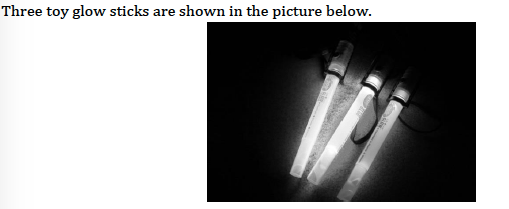
The glow sticks produce light for a short amount of time. The light from the glow stick is a conversion from what to what?
a)
thermal to light
b)
gravitational to potential
c)
radiant to electrical
d)
chemical to light
178.
Wind turbines and windmills convert what energy to another?
a)
Kinetic to electric
b)
Gravitational potential to electric
c)
Mechanical to potential
d)
Thermal to sound
179.
What machine changes electrical energy into light and sound energy?
a)
battery
b)
lightbulb
c)
alarm clock
d)
apple
180.
On a roller coaster, where is maximum potential energy?
a)
At the bottom of a big hill
b)
When going around a corner
c)
When going upside down
d)
At the top of a big hill
181.
On a roller coaster, where is maximum kinetic energy?
a)
At the bottom of a big hill
b)
When going around a corner
c)
When going upside down
d)
At the top of a big hill
182.
The purpose of the panels is to change solar energy into ____________.
a)
light energy
b)
electrical energy
c)
chemical energy
d)
mechanical energy