wayground logo

Free Printable Worksheets

Font size

S
M
L
XL
Worksheets

Chemistry 101

Total questions: 65

Worksheet time: 42mins

Name
Class
Date
1.

What is true about electrons?

a)

They have a positive charge

b)

They have a negative charge

c)

They have no charge

2.

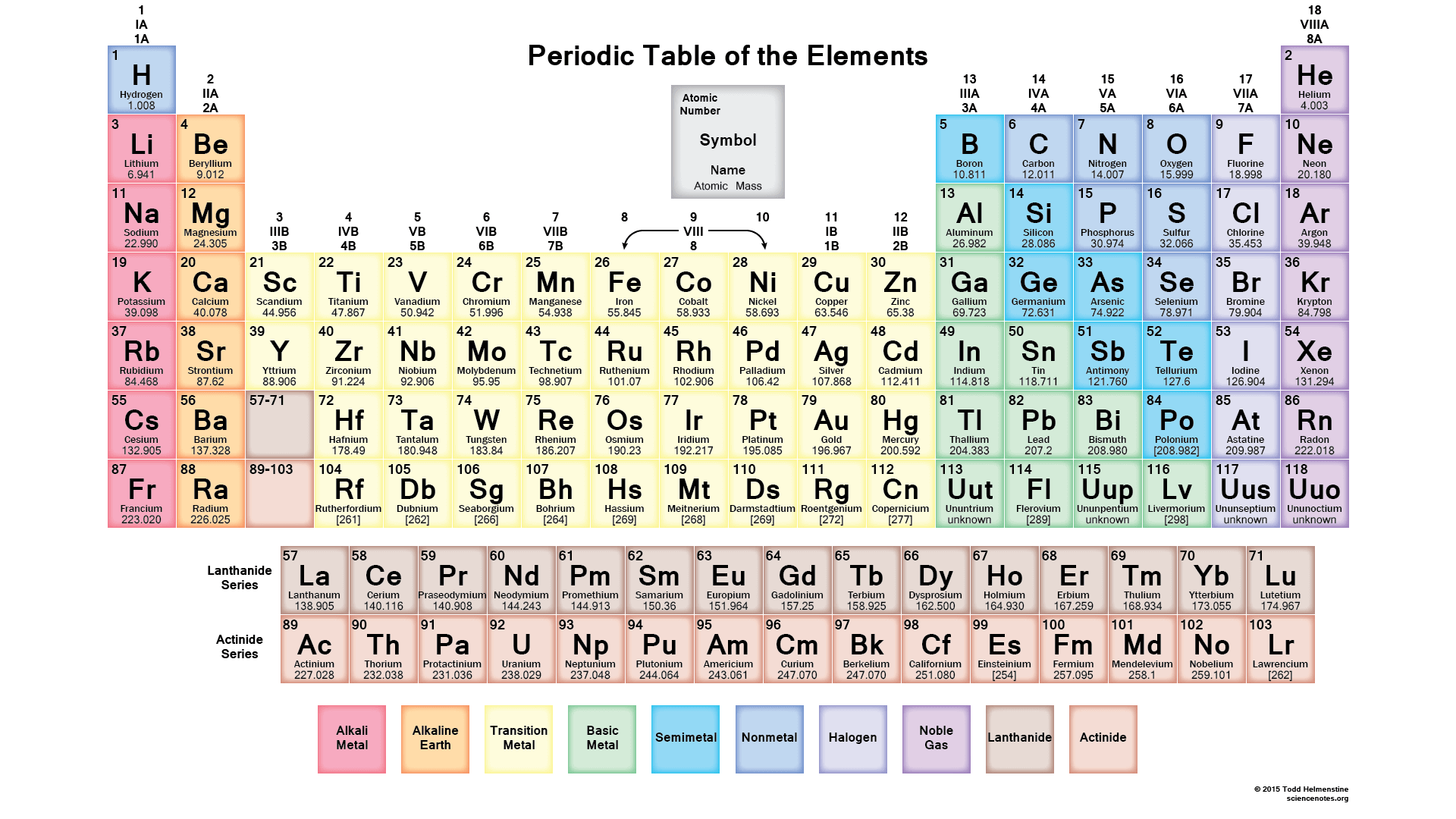
The atomic number shows how many protons there are in an atom. Which atom has the atomic number 8 and the symbol "O"?

a)

Oxygen

b)

Carbon

c)

Helium

d)

Nitrogen

3.

Electrons move around the nucleus in "shells". How many electrons fit in the first shell?

a)

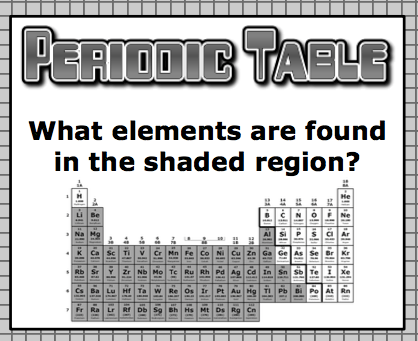
2

b)

4

c)

8

d)

18

4.

Sugar (C6H12O6) does not contain...

a)

Carbon

b)

Hydrogen

c)

Oxygen

d)

Nitrogen

5.

The formula for Salt is NaCl. What is Na in English?

a)

Potassium

b)

Fluorine

c)

Sodium

d)

Neon

6.

In room temperature, a vast majority of all elements are...

a)

Metals

b)

Non-metals

c)

Liquids

d)

Gases

7.

The air we breathe consists of 21% Oxygen (O2) and 78% of...

a)

N2

b)

CO2

c)

H2

d)

He

8.
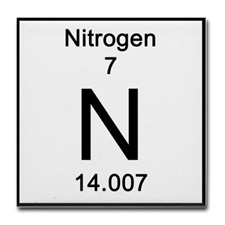
What is the number of protons that the element in this image contain?
a)
14
b)
7
c)
15
d)
18
9.
What is the atomic mass of "F"
a)
9
b)
18
c)
17
d)
19
10.
The positive particles of an atom are 
a)
electrons 
b)
positrons 
c)
neutrons 
d)
protons 
11.
the central region of an atom where its neutrons and protons are is its 
a)
nucleus 
b)
electron cloud
c)
core 
d)
center 
12.
What is the mass of an atom if it has 11 protons, 12 neutrons, and 11 electrons?
a)
22
b)
11
c)
34
d)
23
13.
What are the 3 particles that make-up the atom?
a)
protons, neutrons, and isotopes
b)
neutrons, isotopes, and electrons
c)
positives, negatives, and electrons
d)
protons, neutrons, and electrons
14.
Who first proposed that everything in the world was made up of tiny particles?
a)
Aristotle
b)
Democritus
c)
Plato
d)
Socrates
15.
Democritus called the tiniest particles of matter "atomos", which is Greek for _____
a)
empty space
b)
invisible
c)
very small
d)
indivisible
16.
Which scientist became known as "the father of the nuclear age"?
a)
J. J. Thomson
b)
John Dalton
c)
Ernest Rutherford
d)
Niels Bohr
17.
Rutherford referred to the center of the atom, where the mass was concentrated, as _____
a)
the kernel
b)
the nucleus
c)
the focus
d)
the heart
18.
Who drew on the work of Planck and Einstein to develop the planetary model of the atom?
a)
John Dalton
b)
Niels Bohr
c)
J. J. Thomson
d)
Ernest Rutherford
19.

What does the atomic number represent?

a)

how many atoms are in a group.

b)

how much an atom weighs.

c)

the number of protons in the nucleus of the atom.

20.

particles are packed tightest in a

a)

solid

b)

liquid

c)

gas

d)

plasma

21.

particles move fastest in a

a)

solid

b)

liquid

c)

gas

d)

slime

22.

Which particles are contained in the nucleus of an atom?

a)

neutrons and electrons

b)

protons and neutons

c)

protons, neutron, and electrons

23.

which subatomic particles have no charge (they are neutral)?

a)

protons

b)

neutrons

c)

electrons

24.

What is a subatomic particle with a positive charge?

a)

Proton

b)

Neutron

c)

Electron

25.

What are kinds of subatomic particles?

a)

Protons neutrons, and electrons

b)

the nucleus

c)

the smallest particles of matter

26.

smallest part of an element that has all of the properties of that element.

a)

nucleus

b)

atom

c)

mineral

d)

gem

27.

What is the area surrounding the nucleus that contains negatively charged particles called?

a)

electron cloud

b)

center

c)

outer region

28.

Which subatomic particles are much smaller than the others and have a negative charge?

a)

protons

b)

neutrons

c)

electrons

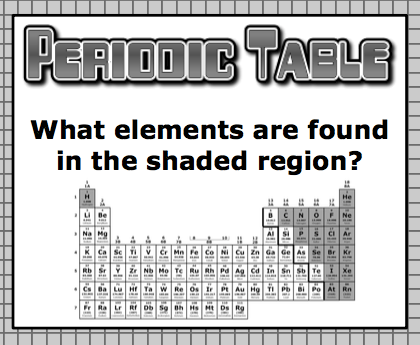
29.
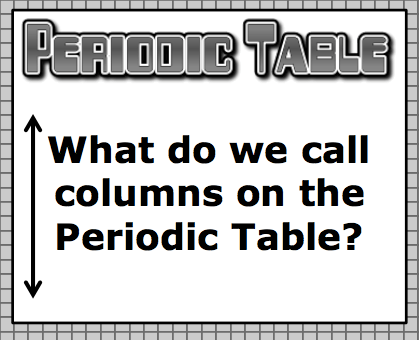
a)
Periods
b)
Groups
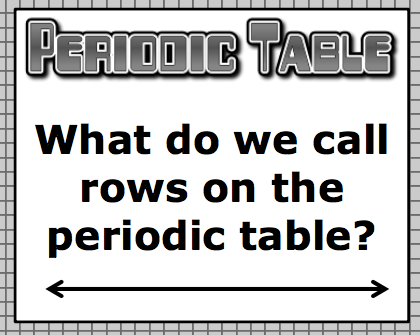
30.
a)
Periods
b)
Groups
31.
a)
energy levels
b)
valence electrons
c)
protons
d)
neutrons
32.
a)
energy levels
b)
valence electrons
c)
protons
d)
neutrons
33.
a)
Group 1
b)
Group 17
c)
Group 2
d)
Group 18
34.
a)
Group 1
b)
Group 17
c)
Group 18
d)
Group 2
35.
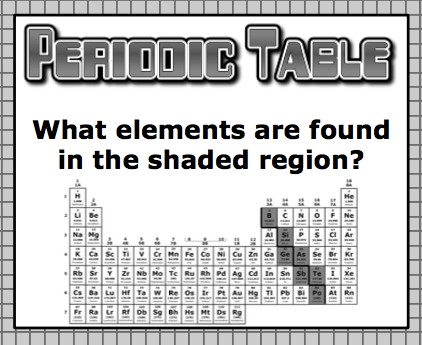
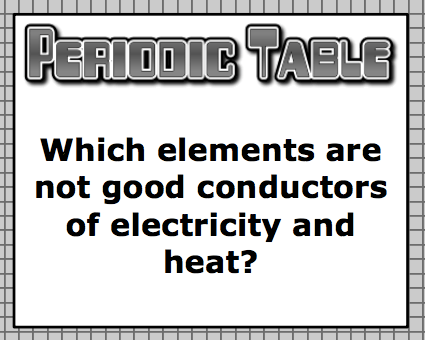
a)
Metals
b)
Nonmetals
c)
Metalloids
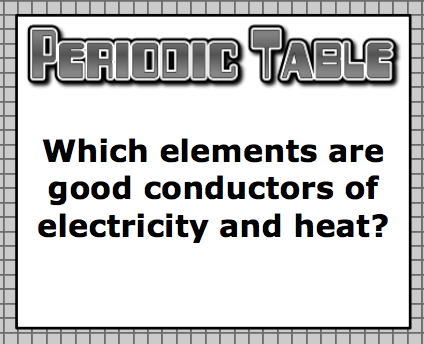
36.
a)
Metals
b)
Nonmetals
c)
Metalloids
37.
a)
Metals
b)
Nonmetals
c)
Metalloids
38.
a)
Metals
b)
Nonmetals
c)
Metalloids
39.
a)
Metals
b)
Nonmetals
c)
Metalloids
40.

who discovered the first scientific and systematic periodic table

a)

Henry Mosley

b)

Dmitri Mendeleev

c)

John Dalton

d)

sir Isaac Newton

41.

how many groups are there in modern periodic table

a)

8

b)

9

c)

18

d)

17

42.

The vertical (up and down) columns in the Periodic Table are called

a)

groups

b)

towers

c)

periods

d)

atomic numbers

43.
The Modern Periodic Table of Elements is arranged by
a)
atomic mass
b)
atomic number
c)
valence electrons
d)
number of isotopes
44.
Sodium (Na) is found in period 
a)
3
b)
2
c)
4
d)
1
45.
Sodium (Na) is found in group 
a)
1
b)
2
c)
3
d)
4
46.
The atomic number tells you what?  READ THE ANSWERS CAREFULLY
a)
only the number of electrons
b)
 only the number of protons
c)
only the number of neutrons
d)
the number of both electrons and protons in an atom.
47.
What does the atomic mass tell you? 
a)
Basically,the number of electrons and protons
b)
The number of neutrons
c)
Basically, the number of protons and neutrons
d)
The number of protons.
48.
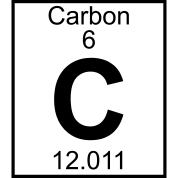
What does the 6 represent?
a)
atomic mass
b)
atomic number
c)
element name
d)
chemical symbol 
49.
What does 12.011 represent?
a)
atomic mass
b)
atomic number
c)
element name
d)
chemical symbol 
50.
These are found on the Periodic Table.
a)
Compounds
b)
Elements
c)
Mixtures
51.
How many electrons can the first energy level hold?
a)
1
b)
2
c)
8
d)
0
52.
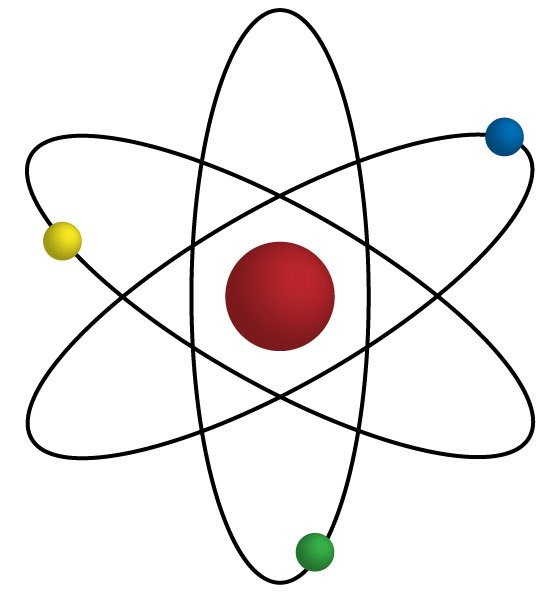
How many valence electrons are represented here?
a)
7
b)
5
c)
2
d)
8
53.
How many total electrons does element 15 have?
a)
5
b)
2
c)
8
d)
15
54.
What is the maximum number of electrons in the second energy level?
a)
18
b)
8
c)
32
d)
2
55.
What are Valence electrons defined as ?
a)
as electrons in the atom's outermost orbitals. 
b)
as electrons in the atom's innermost orbitals.
56.
How many valence electrons does Si contain? 
a)
14
b)
28
c)
2
d)
4
57.
Neutrons are:
a)
Positive
b)
Neutral
c)
Negative
d)
Exist outside the nucleus
58.
What is the electron configuration of calcium?
a)
2.8.8.2
b)
2.8.10
c)
20
d)
2.18.2
59.
What is the electron configuration of sodium?
a)
2.8
b)
2.8.2
c)
2.8.1
d)
11
60.
Which element has an electron configuration of 2.5?
a)
Oxygen
b)
Nitrogen
c)
Phosphorus
d)
Carbon
61.
Which element has an electron configuration of 2.8.8?
a)
Lead
b)
Flourine
c)
Neon
d)
Argon
62.
What is the electron configuration of Aluminium?
a)
2.8.3
b)
2.11
c)
13
d)
2.8.2
63.
What is the electron configuration of chlorine?
a)
17
b)
2.7
c)
2.8.7
d)
2.8.4
64.
Which element has the electron configuration of 2.8.2?
a)
Magnesium
b)
Sodium
c)
Sulfur
d)
Arsenic
65.
Which element has the electron configuration of 2.8.4?
a)
Neon
b)
Boron
c)
Gallium
d)
Silicon