wayground logo

Free Printable Worksheets

Font size

S
M
L
XL
Worksheets

Skeletal

Total questions: 133

Worksheet time: 1hrs 16mins

Name
Class
Date
1.
What is the name for the connector that attaches muscle to bone?
a)
ligament
b)
tendon
c)
patella
d)
string
2.
What is the name for the connector that attaches bone to bone?
a)
ligament
b)
tendon
c)
patella
d)
string
3.

Which of the following is not a function of bones?

a)

Protection

b)

Blood cell formation

c)

Storage

d)

Absorption

4.
What do the bones create?
a)
white blood cells
b)
platlets
c)
red blood cells
d)
flying turkeys
5.
Humans are made of many cells, or ____.
a)
Unicellular
b)
Multicellular
6.
The ________is very dense and gives your bone strength.
a)
Joint
b)
Compact bone
c)
Spongy bone
7.
Humans have ______ bones in their bodies, on average.
a)
106
b)
201
c)
206
8.
What are the functions of the skeleton?
a)
A) protection
b)
b) Body shape 
c)
C) movement
d)
D) A,b and c
9.
The ribs protect your...
a)
heart
b)
lungs
c)
liver
d)
all of the above
10.
The part of the bone that makes blood cells is...
a)
compact bone
b)
spongy bone
c)
marrow
11.

The bones in your back make up what?

a)

fingers

b)

phalanges

c)

vertebral column

d)

toes

12.

What bones is highlighted?

a)

Femur

b)

Humerous

c)

Skull

d)

Shin

13.
a)
mandible
b)
skull
c)
scapula
d)
spine
14.
a)
cranium
b)
ribs
c)
mandible
d)
vertebrae
15.
a)
clavicle
b)
ribs
c)
humerus
d)
ulna
16.
a)
rib
b)
spine
c)
scapula
d)
clavicle
17.
a)
ulna
b)
humerus
c)
radius
d)
vertebrae
18.
a)
ulna
b)
humerus
c)
radius 
d)
vertebrae
19.
a)
ulna
b)
radius
c)
humerus
d)
clavicle
20.
a)
tibia
b)
fibula
c)
radius
d)
calcaneus
21.
a)
metatarsals
b)
carpals
c)
tarsals
d)
metacarpals
22.
a)
tibia
b)
femur
c)
fibula
d)
humerus
23.
a)
metacarpals
b)
phelanges
c)
tarsals
d)
metatarsals
24.
Name the bone
a)
Patella
b)
Femur
c)
Radius
d)
Tibia
25.
Name the bones
a)
phalanges
b)
carpals
c)
fingers
d)
sternum
26.
Name the green bones
a)
carpals
b)
tarsals
c)
ribs
d)
ulnas
27.
Name the bone
a)
clavicle
b)
sternum
c)
humerus
d)
scapula
28.
Name the bone
a)
sternum
b)
scapula
c)
radius
d)
clavicle
29.
Name the bone
a)
Sacrum
b)
Pelvis
c)
Femur
d)
Tibia
30.
What bones are these?
a)
Carpals
b)
Metacarpals
c)
Phalanges
d)
Metatarsals
31.

Bones are alive and can heal.

a)

True

b)

False

32.

What mineral helps keep your bones healthy and strong?

a)

iron

b)

zinc

c)

calcium

33.
The first vertebrae in your neck is called:
a)
C1
b)
C2
c)
T1
d)
L1
34.
The second vertebrae in your neck is called:
a)
C1
b)
C2
c)
T1
d)
L1
35.
Your baby teeth that end up falling out and are replaced with adult teeth are called?
a)
Bicuspids
b)
Dentistry
c)
Deciduous Teeth
d)
Incisors
36.
The arms & legs of a person make up which skeleton?
a)
Limbs
b)
Skeleton
c)
Axial Skeleton
d)
Apendicular Skeleton
37.
The skull, vertebral column, and thorax make up which skeleton?
a)
Axial Skeleton
b)
Appendicular Skeleton
c)
Skeleton
d)
Bones 
38.
What bone is missing in the pig compared to the human?
a)
Mandibule
b)
Clavicle
c)
Femur
d)
Frontal
39.
The rounded head of a bone that makes it move easier is called?
a)
Condyle
b)
Joint
c)
Tendon
d)
Socket
40.
An example of a condyle is the:
a)
Distal Femur
b)
Sutures
c)
Sternum Bones
d)
Diaphysis of Humerus
41.
What are the nicknames of the Malleus, Incus, Stapes in the correct order?
a)
Anvil, Hammer, Stirrups
b)
Hammer, Stirrups, Anvil
c)
Stirrups, Anvil, Hammer
d)
Hammer, Anvil, Stirrups
42.
What is the only bone that doesn't articulate with another bone?
a)
Mastoid Process
b)
Hyoid
c)
Mandible
d)
Sternocleidomastoid
43.
The outside bump of your ankle is the:
a)
Medial Malleolus
b)
Tibial Tuberosity
c)
Greater Trochanter
d)
Lateral Malleolus
44.
The inside bump of your ankle is?
a)
Medial Malleolus
b)
Tibial Tuberosity
c)
Lesser Trochanter
d)
Lateral Malleolus
45.
The types and arrangements of teeth is called?
a)
Deciduous
b)
Dentistry
c)
Dentition
d)
Incisors
46.
The occipital, temporal, parietal, sphenoid, ethmoid, & frontal bones make up our:
a)
Sutures
b)
Cranium
c)
Facial Bones
d)
Skull
47.
An animal that walks on all fours like a pig is called a(n):
a)
Biped
b)
Quadruped
c)
Tripod
d)
Omnivore
48.
An animal that walks on all fours like a pig is called a(n):
a)
Biped
b)
Quadruped
c)
Tripod
d)
Omnivore
49.
An animal that walks on two legs like a human is called?
a)
Biped
b)
Quadruped
50.

The term for blood cell formation

a)

osteocyte

b)

hematopoiesis

c)

osteogenesis

d)

osteoblast

51.

Another name for compact bone is

a)

trabecular bone

b)

cortical bone

c)

coxal bone

d)

big bad bone

52.

The shaft, or middle, of a bone is called the

a)

epiphysis

b)

osteocyte

c)

periosteum

d)

diaphysis

53.

The ends of a bone are called

a)

epiphyses

b)

diaphyses

c)

osteoblasts

d)

lacunae

54.

This is included in the axial skeleton

a)

pelvic girdle

b)

clavicle

c)

femur

d)

vertebrae

55.

This is included in the appendicular skeleton

a)

skull

b)

ribs

c)

scapula

d)

sternum

56.

The hyaline cartilage covering the ends of bones is ________________ cartilage.

a)

periosteal

b)

articular

c)

medullary

d)

osteal

57.

The periosteum is located

a)

inside the medullary cavity

b)

on the outside of the bone

c)

in chambers called lacunae

d)

in the lamellae

58.

Yellow bone marrow is located in the _________________ and contains ______________

a)

medullary cavity; fat

b)

medullary cavity; red blood cells

c)

epiphyses; fat

d)

epiphyses; osteocytes

59.

The lining of the medullary cavity is called the ______________

a)

epiphysis

b)

diaphysis

c)

endosteum

d)

periosteum

60.

Mature bone cells are called _________________

a)

osteoblasts

b)

osteoclasts

c)

osteocytes

d)

canaliculi

61.

The broad flat bones of the skull are _______________________ bones

a)

endochondral

b)

osteoclastic

c)

suture

d)

intramembranous

62.

The cells that produce bone cells are called

a)

osteocytes

b)

osteoclasts

c)

osteoblasts

d)

lacunae

63.

The cells that dissolve bone tissue in the resorption process are called

a)

Osteocytes

b)

Osteoclasts

c)

Osteoblasts

d)

Cartilaginous

64.

Example of a synarthrotic joint:

a)

shoulder

b)

sutures of the skull

c)

vertebrae

d)

thumb

65.

Example of an amphiarthrotic joint:

a)

elbow

b)

vertebrae

c)

sutures of skull

d)

knee

66.

Example of a diarthrotic joint

a)

sutures of skull

b)

vertebrae

c)

hip

d)

none of the above

67.
The term ossification refers to...?
a)
the formation of bone
b)
a lack of calcium in the bones
c)
a lack of phosphorus in the bones
d)
how bones align with each other
68.
Which of the following is NOT a function of the skeletal system?
a)
Supports the body
b)
Helps control body temperature
c)
Stores minerals and fat
d)
Produces blood cells
69.

The cells that produce bone cells are called

a)

osteocytes

b)

osteoclasts

c)

osteoblasts

d)

lacunae

70.

The cells that dissolve bone tissue in the resorption process are called

a)

Osteocytes

b)

Osteoclasts

c)

Osteoblasts

d)

Cartilaginous

71.

Mature bone cells are called _________________

a)

osteoblasts

b)

osteoclasts

c)

osteocytes

d)

canaliculi

72.

Yellow bone marrow is located in the _________________ and contains ______________

a)

medullary cavity; fat

b)

medullary cavity; red blood cells

c)

epiphyses; fat

d)

epiphyses; osteocytes

73.

This is included in the appendicular skeleton

a)

skull

b)

ribs

c)

scapula

d)

sternum

74.

Your elbow forms this type of synovial joint:

a)

Gliding

b)

Hinge

c)

Pivot

d)

Ellipsoid

75.

What feature of the skull allows babies to be born easier and allows for rapid brain growth?

a)

Skull plates

b)

Membrane

c)

Soft spots

d)

Stretchy skin

76.

What is the name for the bone in your upper arm?

a)

Femur

b)

Humerus

c)

Ulna

d)

Patella

77.

What is the name for a partial fracture (doesn't go all the way through the bone)?

a)

Communited

b)

Compound

c)

Greenstick

d)

Spiral

78.

What is the name of the bone disorder that involves a lack of vitamin D and calcium?

a)

Rickets

b)

Osteoarthritis

c)

Rheumatoid Arthritis

d)

Fracture

79.

What kind of synovial joint does the radius and ulna form?

a)

Pivot

b)

Ellipsoid

c)

Ball and Socket

d)

Saddle

80.

What is the name of the thin membrane that wraps around a long bone?

a)

Medullary cavity

b)

Periosteum

c)

Haversian Canal

d)

Spongy Bone

81.

Inflammation of the joints that results in twisted gnarled fingers is:

a)

Gout

b)

Rheumatoid Arthritis

c)

Osteoarthritis

d)

Rickets

82.

What do you find at the end of long bones that helps joints glide smoothly?

a)

Compact Bone

b)

Cartilage

c)

Blood Vessels

d)

Periosteum

83.

Which of the following is NOT a function of the spinal column?

a)

Allows for muscle attachment

b)

Protects the spinal cord and allows nerves to branch out

c)

Holds the head and trunk up

d)

Encases and protects the brain

84.

Where do you find compact bone in a long bone?

a)

Around the outside, especially along the diaphysis

b)

In the interior of the bone

c)

In the Epiphyses

85.

Which of the following is a type of ball and socket joint? Select all that apply.

a)

Shoulder

b)

Skull and 1st vertebra

c)

Elbow

d)

Hip

86.

What is the name for the cavity inside the diaphysis of a long bone?

a)

Epiphyseal Plate

b)

Medullary Cavity

c)

Periosteum

d)

Haversian Canal

87.

The fused plates in your skull (little/no flexibility) are an example of which type of joint?

a)

Cartilagenous

b)

Fibrous

c)

Synovial

88.

Which disease causes a build up of uric acid crystals in the joints (usually the big toe)?

a)

Osteoporosis

b)

Rickets

c)

Gout

d)

Rheumatoid arthritis

89.
Bones are classified according to their 
a)
size
b)
shape
c)
location
d)
color
90.
The vertebra of the backbone is considered a(n)_______ bone
a)
long
b)
short
c)
irregular
d)
flat
91.
The femur of the thigh is considered a(n)________ bone
a)
long
b)
short
c)
irregular
d)
flat
92.
A special type of short bone is the kneecap or patella it is classified as a
a)
long
b)
short
c)
seasomoid
d)
irregular
93.
The skeletal system can be divided into what two systems? 
a)
Maxillary and cuboid 
b)
axial and appendicular
c)
integument and myocytic
d)
long and short
94.
At each end of a long bone is an expanded portion called an 
a)
epiphysis
b)
diaphysis
c)
endosteum
d)
osteon
95.
The shaft of a long bone is called the...
a)
epiphysis
b)
diaphysis
c)
periosteum
d)
endosteum
96.
The term ossification refers to...?
a)
the formation of bone
b)
a lack of calcium in the bones
c)
a lack of phosphorus in the bones
d)
how bones align with each other
97.
After a bone fracture, there are a series of four steps that occur to repair the bone.  The first step of the process is called a ...?
a)
Bony callus
b)
Fibrocartilaginous callus
c)
Hematoma
d)
Remodeling
98.
What is the name of bone D?
a)
Cervical vertebrae
b)
Thoracic vertebrae
c)
Lumbar vertebrae
d)
Coxal bone
99.
What is the name of bone P?
a)
Radius
b)
Ulna
c)
Tibia
d)
Fibula
100.
attaches bone to bone
a)
tendon
b)
ligament 
101.
attaches muscle to bone 
a)
tendon
b)
ligament 
102.
Osteocytes
a)
Make new bone and help repair damage
b)
Carry nutrients and waste products to and from blood vessels in the bone.
c)
They grow within the bone to aid in flexibility.
d)
Break down bone and help to sculpt and shape it.
103.
adduction means ?
a)
Move toward the body
b)
Move away from the body
c)
All joints straight
d)
Joints bent 
104.
all joints are straight or extended 
a)
flexion
b)
adduction
c)
abduction
d)
extension 
105.
cancer that starts in the bone marrow?
a)
osteoporosis
b)
lordosis
c)
kyphosis
d)
leukemia 
106.
This is the smaller bone in the lower leg positioned behind the Tibia?
a)
Tibia
b)
Femur
c)
Fibula
d)
Pelvis
107.
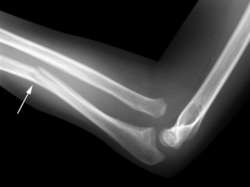
a)
Compound Fracture
b)
Greenstick Fracture
c)
Transverse fracture displaced
d)
Compression fracture
108.
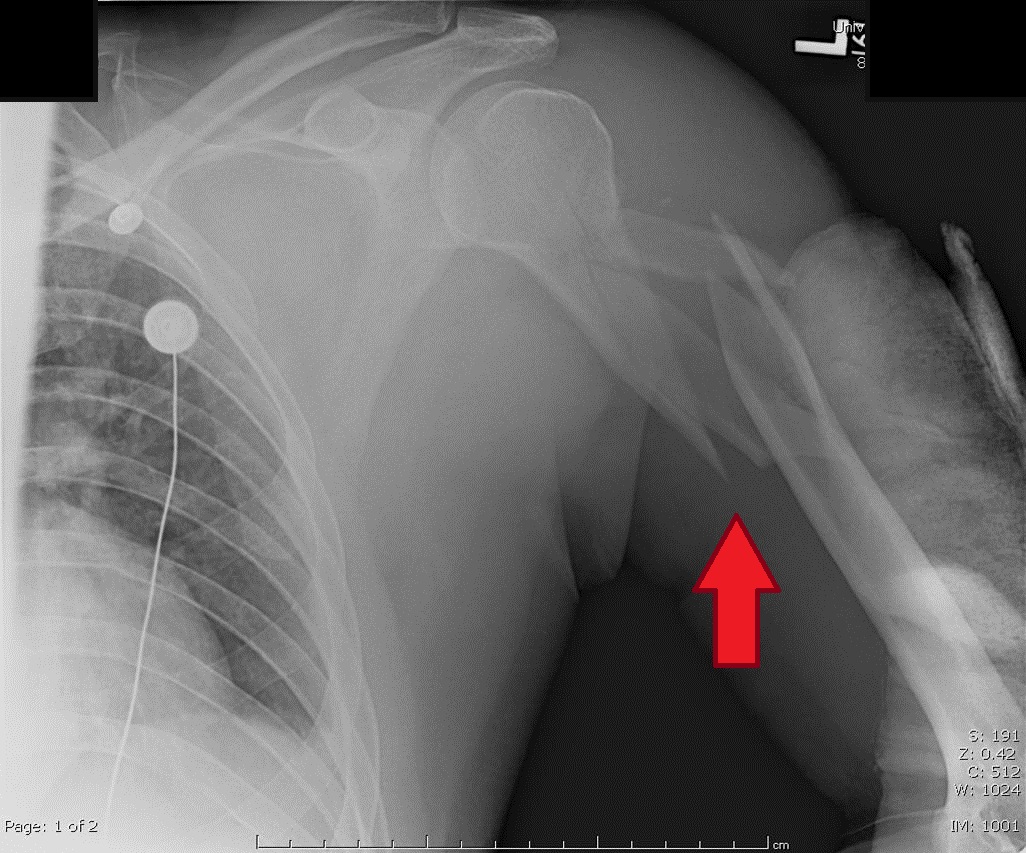
a)
Compound fracture
b)
Transverse Fracture displaced
c)
Comminuted fracture
d)
Compression Fracture
109.
a)
Compression Fracture
b)
Compound Fracture
c)
Greenstick Fracture
d)
Comminuted Fracture
110.
A small crack in the bone caused by repetitive excessive impact is called a  ____________ fracture.
a)
stress
b)
greenstick 
c)
Colle's
d)
compression
111.
When a vertebrae does not fully close around the spinal cord to protect it that condition is called ____________
a)
Lumbago
b)
Rheumatoid arthritis
c)
Spina Bifida
d)
Ankylosing spondylitis
112.
Rickets is caused by a lack of which vitamin? 
a)
A
b)
D
c)
E
d)
C
113.
Where are blood cells made? 
a)
Yellow marrow 
b)
Red marrow
c)
Spongy Bone 
d)
Periosteum
114.
The knee joint is
a)
Hinge
b)
Gliding
c)
Ball and socket
d)
Pivot
115.
The skull is what kind of joint
a)
Solid
b)
Fixed
116.

The cushion between bones.

a)

Tendon

b)

Cartilage

c)

Ligament

117.

This type of joint allows your first two vertebrae to rotate (example - shaking your head, "No")

a)

condyloid

b)

gliding

c)

pivot

d)

saddle

118.
Carpals and tarsals (flat bones) are examples of this type of joint
a)
condyloid
b)
gliding
c)
hinge
d)
saddle
119.

What are the four types of bones?

a)

Long, short, medium, thin

b)

Regular, long, flat, short

c)

Flat, short, long, Irregular

d)

None of the options

120.

Which is the longest bone in the body?

a)

Femur

b)

Tibia

c)

Radius

d)

Vertebrae

121.

Ligaments attach what to what?

a)

Bone to Muscle

b)

Bone to Bone

c)

Muscle to Muscle

d)

Tails to Donkeys

122.

What food contain Calcium that helps our bones?

a)

Milk

b)

Oranges

c)

Mountain Dew

d)

Celery

123.
Where is the smallest bone in our body?
a)
Toes
b)
Spine
c)
Ear
d)
Wrist
124.

The bones at the end of our fingers and toes are known as _______________.

a)

Tarsals

b)

The phalanges

125.

The forearm bone closest to the thumb is the __________.

a)

Ulna

b)

Radius

126.
Another name for your collar bone.
a)
clavicle
b)
scapula
c)
maxilla 
d)
radius 
127.
What group of bones make-up the area of your hips and where your femurs are attached?
a)
Pelvic girdle
b)
Parietal girdle 
c)
Patella girdle
d)
Grandma's girdle 
128.
Where is your sacrum?
a)
near the tail-end of your backbone
b)
in your chest 
c)
front of your skull
d)
your shoulder blade 
129.

Where does hematopoiesis (blood cell formation) occur?

a)

marrow cavity

b)

endosteum

c)

articular cartilage

d)

periosteum

130.
There are four stages in the healing of a bone fracture.  Which of the following gest illustrates the sequence of these stages? 
a)
hematoma, 
fibrocartilage callus, bony callus, 
bone remodeling
b)
bony callus, 
hematoma, 
fibrocartilage callus, bone remodeling 
c)
fibrocartilage callus, 
bone remodeling, 
hematoma, 
bony callus
d)
bone remodeling, bony callus, 
fibrocartilage callus, 
hematoma
131.
A newborn baby has an S-shaped spinal curvature known as a primary curvature. 
a)
True
b)
False
132.
Cells that can build bony matrix.
a)
osteoblasts
b)
osteoclasts
133.
Which general observations are matched properly?
a)
sway back is lordosis, humped back is kyphosis, curved back is scoliosis
b)
sway back is scoliosis, humped back is kyphosis, curved back is lordosis
c)
humped back is scoliosis, 
sway back is lordosis, 
curved back is kyphosis
d)
sway back is kyphosis, humped back is lordosis, 
curved back is scoliosis