
 Worksheets
CHAPTER 2 CARBON COMPOUND CHEMISTRY FORM 5 KSSM
Total questions: 100
Worksheet time: 1hrs 14mins

A
B
C
D

A
B
C
D

A
B
C
D

A
B
C
D

A
B
C
D

A
B
C
D

A
B
C
D

A
B
C
D

A
B
C
D

A
B
C
D

A
B
C
D

A
B
C
D

General formula of Alkene is
CnH2n+2
CnH2n+1OH
CnH2n
Propene reacts with steam in the presence of concentrated phosphoric acid as catalyst at temperature 300°C and pressure 60 atm to produce compound X
what is compound X?
C3H6
C3H8
C3H7OH

Hitungkan jisim molekul relatif sebatian Y tersebut .
Calculate the relative molecular mass of compound Y.
[Jisim
atom relatif: H=1, C=12] / [Relative atomic mass: H=1, C=12]
(a)

Apakah yang dimaksudkan dengan isomer ?
What is meant by isomer?
Molecular formula that shows the type and number of atoms of each element in a molecular compound.
A phenomenon where a compound has the same molecular formula but different structural formula
Molecular structures that have different chemical properties but the same physical properties

Nyatakan dua sifat fizik bagi sebatian X dan Y
State two physical properties of compound X and Y
Insoluble in water
Soluble in water
Charged molecules
Conduct electricity in aqueous and molten state
Does not conduct electricity

Dalam tindak balas I, sebatian P ditindakbalaskan dengan
wap air untuk menghasilkan sebatian R.
In reaction I, compound P is reacted with steam to produce compound R.
Nyatakan syarat-syarat bagi tindak balas I
State the conditions for reaction I
Phosphoric acid
temperature 300 degree C
Pressure 60 atm
Heat under reflux
Concentrated sulphuric acid

Sebatian X adalah bukan hidrokarbon. Jelaskan.
Compound X is a nonhydrocarbon compound. Explain.
Produce less soot
Have high melting and boiling points
Have other elements besides C and H in its compounds
Have isomers
Form carbon dioxide and water upon combustion

Which formula represents a saturated hydrocarbon?
A
B
C
D
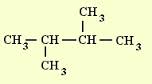
Which is the structure of
2,2,4-trimethylpentane?


Which is a molecular formula?

C4H9Cl

This structure belongs to the group called
alkane
alkene
alcohol
carboxylic acid
What is a functional group?
Group of atoms that give specific characteristics to a molecule
Group of molecules that give specific characteristics to an atom
Group of molecules that make up a group of atoms
Group of atoms that give specific characteristics to an element
Butane and pentane are in the same homologous series because
they have the same general formula
they are differ from each other by a -CH2 group.
they can be prepared using similar methods.
they have the same physical properties.
A homologous series is series of compounds which
have the same general formula
differ from each other by a -CH2 group in the molecular formula
show a gradual change in physical properties
have similar chemical properties
Both pentane and pentene can react with bromine water under the presence of sunlight but they do not belong to the same homologous series because
they have different molecular size
their melting point and boiling point not the same
they do not have the same functional group
they differ from each other by a -H2 group in the molecular formula
Alcohol exists as liquid at room temperature
yes
no
Carboxylic acid exist as liquid at room temperature
yes
no
Solubility decreases in alcohol when the number of carbon is increases
yes
no
Compound Q has the following properties.
- soluble in water
- boiling point is 780C
What is compound Q
Ethane
Ethene
Ethanol
Ethanoic acid
Possible products of INCOMPLETE combustion
Carbon (C)
Carbon Monoxide (CO)
Carbon Dioxide (CO2)
Water (H2O)
Which of the following can be used to distinguish between alkanes and alkenes?
add a few drops of aqueous bromine
add a few drops of Universal indicator
add a piece of blue litmus paper
add a piece of red litmus paper
Which of the following statement is correct?
Alkenes can turn aqueous bromine from reddish-brown to colourless.
Alkenes can turn aqueous bromine from colourless to reddish-brown.
Alkanes can turn aqueous bromine from reddish-brown to colourless.
Alkanes can turn aqueous bromine from colourless to reddish-brown.
Which are the following are all alkanes?
methane, ethane, propane
methane, ethene, propene
methene, ethene, propene
ethene, propene, butene
What are the conditions for cracking?
solid catalyst of aluminium oxide and silicon dioxide, at 600oC
nickel catalyst at 200oC
nickel catalyst at 600oC
solid catalyst of aluminium oxide and silicon dioxide, at 200oC
Alkanes undergo substitution by chlorine only in the presence of
UV light
oxygen
water
aqueous bromine
Which of the following reactions apply to alkenes only
cracking
substitution
addition
combustion
Alkanes and alkenes molecules are held together by
weak covalent bond
weak London forces of attraction
strong covalent bonds
both covalent and London forces
Which statement is correct regarding the amount of carbon dioxide and water produced when 1 mole of butane and 1 mole of butene burn in excess oxygen?
the amount of carbon dioxide produced by butene is less than butane
the amount of carbon dioxide produced by butene is more than butane
the amount of water produced by butene is less than butane
the amount of water produced by butene is more than butane
Alkenes undergo all the reactions below except
combustion
substitution
addition
polymerisation

1 mole of ethene reacts with 0.5 mole of water according to the equation shown above. The percentage yield of the ethanol produced is 50%. What is the mass of ethanol produced? (RAM C=12, O=16, H=1)
14g
9g
23
11.5g

Which of the following is the monomer for this polymer ?
ethene
ethane
propane
propene
In polymer Z every carbon atom in the polymer chain is bonded to one hydrogen atom and one methyl group.
Which alkene could be polymerised to make polymer Z?
but-1-ene
but-2-ene
methylpropene
propene
What is meant by an isomer?
A molecule with the same structural formula but a different displayed formula
A molecule with the same displayed formula but a different molecular formula
A molecule with the same structural formula but a different molecular formula
A molecule with the same molecular formula but a different displayed formula
What problem is caused by both sulphur dioxide and nitrogen oxides?
Global dimming
Acid rain
Global warming
Toxic; stops haemoglobin transporting oxygen efficiently
How are nitrogen oxides produced when burning fuels?
The nitrogen impurities in the fuel react with oxygen from the air
By complete combustion
By nitrogen and oxygen in the air reacting together at high temperatures
By incomplete combustion
Out of alkanes and alkenes, which are more reactive and why?
Alkanes, because they are more flammable
Alkanes, because C-C are more easily broken than C=C
Alkenes, because C=C are more easily broken than C-C
Alkenes, because they have lost electrons to become ions
What process is used to separate crude oil in hydrocarbons with different chain lengths?
distillation
fractional distillation
cracking
polymerisation
What are the products of incomplete combustion?
carbon monoxide
water
carbon
hydrogen
What are the products of incomplete combustion?
carbon monoxide
water
carbon
hydrogen
What conditions are needed for cracking?
high temperature
high pressure
catalyst
low temperature
What type of chemical reaction is this:
C3H8 + 5O2 --> 3CO2 + 4H2O
Incomplete combustion
Substitution with oxygen
Complete combustion
Substitution with chlorine
What type of chemical reaction is this:
C3H8 + Br2 --> C3H7CBr + HBr
Incomplete combustion
Substitution with chlorine
Complete combustion
Substitution with bromine
The following is a product of the reaction between propane and chlorine: C3H8Cl
TRUE
FALSE
The following is a product of the reaction between propane and chlorine: C3H8Cl2
TRUE
FALSE
The following is a product of the reaction between propane and chlorine: C3H7Cl
TRUE
FALSE
The following is a product of the reaction between propane and chlorine: C3H7Cl2
TRUE
FALSE
The following is a product of the reaction between propane and chlorine: C3HCl7
TRUE
FALSE
The following is a product of the reaction between propane and chlorine: HCl
TRUE
FALSE
What color does bromine water turn in the presence of an alkane?
Orange
Blue
Colorless
Green
What are the first 3 alkenes in increasing carbon chain length?
Methene, ethene, propene
Ethene, propene, pentene
Ethene, propene, butene
Butene, ethene, propene
Methene, ethene, propane
What conditions are necessary in the reaction of alkenes with hydrogen?
300°C, Iron catalyst
60°C, Nickel catalyst
600°C, High pressure
Low temperature, Nickel catalyst
600°C, High temperature
What is the suitable chemical tests to distinguish between propane and propene?
Baeyer's Test and Bromine Test in dichloromethane
Baeyer's Test and Lucas Test
Brady Test and Tollen's Test
Bromine Test in dicloromethane and Lucas Test
Which name of reaction not in chemical reactions of alkene?
Halogenation
Hydrohalogenation
Hydration
Esterification

What is the type of reaction in chemical reactions of dehydration?
Addition
Substitution
Rearrangement
Elimination
What is the Markonikov's Rule?
H atom add to the carbon atom of the duuble bond greater number of C atoms
H atom add to the carbon atom of the double bond greater number of H atoms
H atom add to the carbon atom of the double bond greater number of N atoms
Which of the catalyst can not use in chemical reaction hydrogenation?
Pd
Pt
Ps
Ni
C10H22 --> C5H12 + C3H6 + ?
C2H4
C3H4
CO2
CH4

Alcohol can react with hydrogen halides to produce alkyl halides but not all hydrogen halides react spontaneously (need catalyst). Based on above information, which of the follwing reactions is correct?
A
B
C
D
E
Ether molecules are polar, but do not form hydrogen bonds with other ether molecules because:
Ether molecules are so reactive that they never have an opportunity to form hydrogen bonds
The molecules are generally too large
There are too many hydrogen atoms on the molecules to bond with just one oxygen atom
Only binary compounds form hydrogen bonds.
There is no hydrogen atom bonded to the oxygen.
The molecular formula of pentanoic acid is
C5H11O2
C5H9O2
C5H10O
C5H10O2
C5H12O2
Physical and chemical properties of alcohols are mainly due to the presence of hydroxyl group. Which of the following is not describe the physical properties of alcohols?
Alcohols have higher boiling points than alkanes of similar molecular weight
The boiling point increases with increase in branching in aliphatic carbon chains
The boiling point of alcohols increases with increase in the number of carbon atoms in the aliphatic carbon chain
Low-molecular-weight alcohols are completely soluble in water
ethanol not soluble in n-hexane
Which one of the isomeric alcohols of formula C5H12O can be prepared by reduction of a ketone with LiAlH4 ?
Pentan-1-ol
2-methylbutan-1-ol
3-methylbutan-2-ol
2,2-dimethylpropan-1-ol
3-methylpentan-3-ol
How many chain isomer that C5H10O2 (carboxylic acid only) has?
4
5
6
7
8
which of product will be obtained when 2-methyl-2-pentanol oxidized by K2Cr2O7?
there is no reaction
Ketone
aldehyde
ester
carboxylic acid

This functional group is the product from oxidation of a
primary alcohol
secondary alcohol
tertiary alcohol
no more alcohol please miss!
What can be used to oxidise alcohols?
MnO4-
KMnO4/H+
H+
KMnO4
What can be used to oxidise alcohols?
K2Cr2O72-
Cr2O72-/H+
H+
Cr2O72-

What is the product from the oxidation of propan-2-ol?
propandiol
propanal
propanoic acid
propanone
What is the functional group formed when conc. H2SO4 reacts with alcohols?
alkene
chloroalkane
diol
alkane
How could you form an alcohol from an alkene?
H2O/H+
KOH(alc)
KOH(aq)
SOCl2

Which would be the major product from the reaction of butan-2-ol with conc. H2SO4?
but-1-ene
but-2-ene
Can propan-2-ol form major and minor products when reacted with conc. H2SO4?
yes
no

Which would be the major product from the reaction of propene with H2O/H+?
propan-1-ol
propan-2-ol


Select the formula for the following name: Butanol
C4H9OH
C4H10OH
C4H10
C4H7OH
Which of the following must be true about ethanol?
It has an amine functional group
It is made from a 3 carbon chain
It contains only single bonds
All the above are true

What is the name of the compound?
2-chloropropan-1-ol
2-chloropentan-1-ol
3-chloropropanol
2-bromopropan-1-ol

What is the name of this compound?
2-2,dichloropropane
2,2-chloropropane
2,2-dichloropropene
2,2-dichloropropane

What is the name of this compound?
2,4-chlorohex-3-ene
2,4-dichlorohexene
2,4-dichlorohex-3-ene
2,3,4-trichlorohexane

What is the name of this compound?
ethanoic acid
methanoic acid
propanoic acid
carboxylic acid

