
 Worksheets
Year 6 Unit 3 Material Change
Total questions: 133
Worksheet time: 1hrs 17mins
In a chemical change, new substances are formed, for example
heating glass and bending it
melting an ice
burning of wood
boil water
which of following are irreversible changes? Tick (v) 2 Boxes
boiling an egg
freezing ice cream
pour viegar on baking soda
boiling water
Raw egg to fried egg is an example of _____________.
chemical changes
physical changes
freezing
biological changes

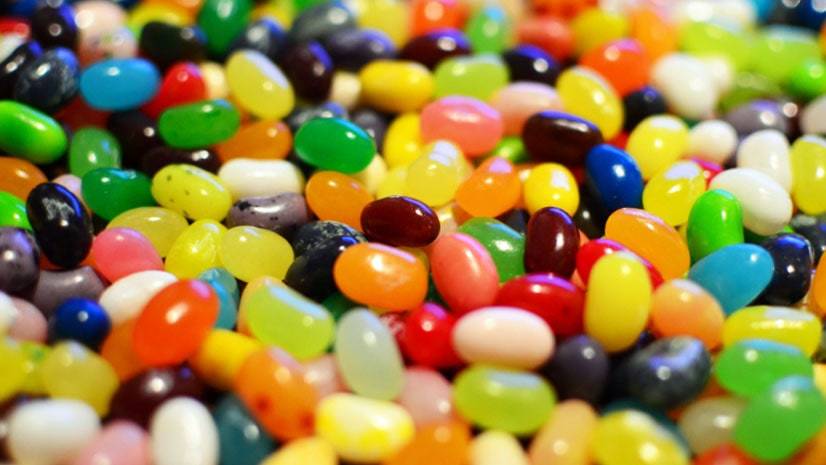
Which of these is a mixture?
Laundry Detergent
Salt (NaCl)
Oxygen (O)
Fluorine (Fl)


Mixing salt and sugar form a substance.
false
true
The changes of water into ice are_
reversible
irreversible
Burning a match into a black substance called carbon is __
irreversible
reversible
The substances in a mixture that are chemically joined can be separated.
false
true
Burning wood on a fire:
Reversible change
Irreversible change
Ice melting and refreezing is:
A reversible change
An irreversible change
A material or piece of equipment with holes in it that will only allow substances of a certain size to go through the holes.
Windpipe
Stomach
Sieve
Circuit
Rice and flour mixture can be separated by:
Sorting
Sieving
It cannot be separated by by sieving or sorting:
Rice and flour
Salt and sand
Bean and marbles
Tea leaves and sugar
A cake mixture is ___________
reversible
irreversible
Melting of an ice-cube is ____________.
reversible
irreversible
No new substance is formed in a/an ____________ change.
reversible
irreversible

sand in water
solution
colloid
suspension
alloy

snow globe
solution
suspension
alloy
colloid

In this beaker there is some sand floating in water, but most of the sand has settled at the bottom. This would be best described as
A solution
A colloid
A suspension
A compound
A mixture that looks clear contains _________ substance.
soluble
insoluble
A dissolved substance like salt can be seen in a mixture.
true
false

flour
soluble
insoluble
A substance in the mixture that you can see float or sink at is ______________.
soluble
insoluble

pepper
soluble
insoluble

tea leaves
soluble
insoluble

rice grains
soluble
insoluble

baking powder
soluble
insoluble

instant coffee (3 in 1coffee mix)
soluble
insoluble
The word DISSOLVE meaning________
When a substance, often a solid, mixes with a liquid and becomes part of the liquid
When a substance, often a solid, do not mixes with a liquid and becomes part of the liquid
none of the above
both of the above
The word "INSOLUBLE" meaning ________
Something which dissolve in water/liquid
Something which cannot dissolve in water/liquid
none
both

A cloudy mixture of insoluble solid particles in a liquid
Solution
Suspension
None

If you mix sand with water you will get a ______?
Solution
Suspension
A cloudy mixture of insoluble solid particles in a liquid
A clear mixture of soluble solid particles in a liquid

What is filtration?
A method used to separate a solid from a liquid that dissolves in the liquid
A separating technique used to separate a mixture of a solid and liquid where the solid does not dissolve in the liquid
Th components of filtration are separated based on
boiling point
solubility
particle size
In making tea, which of these techniques is used to separate the tea leaves from the water?
Filtration
Distillation
Evaporation
Hand picking
is used to separate mixtures with different sizes
MAGNETIC SEPARATION
MANUAL PICKING
DECANTATION
SIEVING
FILTERING

In nature wetlands such as marshes and swamps do not filter the water.
true
false
Which birds have filters in their beaks to catch food like algae and small fish.
swan
flamingo
ducks
none
Seawater is not a solution
false
true
The substance that dissolves is called
solute
solvent
The liquid which is used to dissolve a substance is called
solute
solvent
The solute cant be seen after it has dissolved because
solute particles move between the solvent particles
solute particles evaporate into the air
solute particles crystalizes
solute changes colour same as the solvent
When you cannot see the solute particles in the solvent we say the solution has a
uniform appearance
camouflage appearance
disappearing appearance
vanishing appearance
We can separate mixtures because the particles are not chemically joined together.
true
false
A pure substance consists of
only particles of that substance
mix of 2 types of particles
mix of 3 types of particles
mix of 4 types of particles
Powder for a cool drink is a
mixture
pure substance
Sugar is a
pure substance
mixture
Seawater is a
solute
solvent
solution
A solute will dissolve faster because the particles spread out into the spaces between the solvent__
more quickly
slower
further
closer
Stirring __ the rate a solute dissolves
increases
decreases
When a solute dissolves, the particles__ in the solvent.
stick together
spread out
Increasing the temperature of a substance allows the solute to spread through the solutions__
more easily
more difficult
no change
Particles of the solute move faster in a cooler solvent than a heated solvent.
false
true
Which are pure substances?
salt
water
sugar
baking soda
In a chemical change, new substances are formed, for example
heating glass and bending it
melting an ice
burning of wood
boil water

Rainwater falls through the cave dissolving some rock to come out of the solution forming these dripstones.
true
false
Rainwater cannot dissolve some types of rock.
false
true
__ affects the rate of a solute dissolving in a liquid
grain size of a solute
stirring a solution faster
heating a solution
cooling a solution
none
Larger grains of a solute dissolve faster than smaller grains
true
false

After popcorn kernels popped into popcorn, is this a reversible change?
no
yes
Mixing jelly powder with water. Which is the solute?
jelly powder
water
Mixing jelly powder with water. Which is the solvent?
jelly powder
water
Stirring the solution...
decrease the rate of solubility
Doesn't change the rate of solubility
increase the rate of solubility
None of the above
When you measure how fast a solute dissolves, you are measuring the
amount of dissolving
rate of particle movement
amount of particle movement
rate of solubility
The smaller the particle size results in a....
increase in solubility
decrease in solubility
decrease in surface area
increase in bond strength
Select the 3 properties that affect the rate of dissolving materials
surface area
volume
temperature
texture
stirring
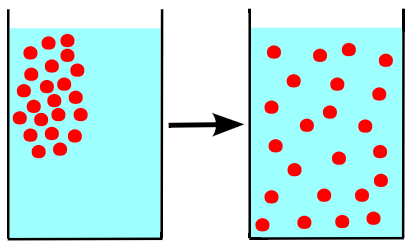
to spread out evenly in a liquid
Evaporation
Dissolve
Magnetic
Solute
material with very tiny holes that blocks solid or larger particles but allows gas, liquid, or small grains to pass through
Filter
Magnet
Tweezers
Beaker
a change to matter in which no new kinds of matter are formed; ex: mixture
Chemical Change
Flammability
Physical change
Substance

The figure shows a tool that is used to separate certain types of mixtures. This type of tool is best used to separate what type of mixture?
a mixture that is a solution
a mixture that is partly magnetic
a mixture of particles that have different sizes
a mixture of particles that are all about the same size

The pot contains a mixture. The method shown in the picture can be used to separate what type of mixture?
a solution, such as salt water
a mixture of particles with different densities
a mixture of particles of different sizes, such as seashells and sand
a mixture of steel, which is magnetic, and aluminum, which is not magnetic
Reggie has a sample of raw sugar made up of large particles and a sample of white sugar made up of much smaller particles. He dissolved 1 tsp of each sample in 1 cup of water. Which dissolved faster?
Both dissolved at the same rate.
The white sugar dissolved slowly, and the raw sugar dissolved quickly
The white sugar dissolved quickly, and the raw sugar dissolved slowly.
The white sugar dissolved quickly, and the raw sugar did not dissolve.

A student is pouring milk on his cereal.
Which of the following best explains what he is making?
He is making a mixture because the properties change.
He is making a solution because he is pouring a liquid.
He is making a mixture because the substances can be separated.
He is making a solution because the substances can be separated.

A student performed an investigation in which she dissolved sugar in water. She was asked to model what happened in this process. She drew the diagram above to show what she observed.
What does she need to do to model what happened to the sugar?
Show that the sugar mixed completely with the water.
Show that the sugar evaporated and went into the air.
Show that the sugar melted and turned into water.
Show that the sugar disappeared and was no longer there.
How do you test to see if something is soluble?
put it in the microwave
take it outside
shake it
put the substance in water
What occurs when a solid substance dissolves in a liquid?
It sinks to the bottom.
It floats on top.
It breaks down and becomes part of the liquid substance.
What happens when an insoluble substance is mixed with water?
It needs to be shaken up and then it will dissolve in the water.
It will remain solid and not dissolve.
It becomes clear.
Say whether this change is reversible or irreversible:
melting butter in a hot pan
reversible
irreversible
Say whether this change is reversible or irreversible:
baking a cake
reversible
irreversible
Say whether this change is reversible or irreversible:
dissolving salt in water
reversible
irreversible
Say whether this change is reversible or irreversible:
burning wood on a fire
reversible
irreversible
Say whether this change is reversible or irreversible:
rusting on a tin can
reversible
irreversible
Say whether this change is reversible or irreversible:
making a paper plane from a folded sheet of paper
reversible
irreversible
Say whether this change is reversible or irreversible:
a chocolate bar melting in your pocket
reversible
irreversible
Say whether this change is reversible or irreversible:
water freezing to become ice
reversible
irreversible
A mixture is made up of one substance.
true
false
A mixture is made up of more than one one substance.
true
false
An example of a mixture is marbles and sand.
true
false
An example of a mixture is salt
true
false
Mixtures can be separated.
true
false
No new substances are made when different substances are mixed together.
true
false
When a solid mixes with a liquid and becomes part of the liquid it___
dissolves
soluble
insoluble
A solid that dissolves in a liquid is __
dissolves
soluble
insoluble
A solid that does not dissolve in a liquid is __
dissolves
soluble
insoluble

Which mixture/s contained soluble substances?
Mixture A
Mixture B
Mixture C
Which mixture/s contained insoluble substances?
Mixture A
Mixture B
Mixture C

What is this method for cleaning water called?
(a)
A mixture is a liquid that can be separated into different substances.
true
false

Which factor that affects dissolving is being tested?
stirring
amount of solvent
air temperatures
beaker size
amount of solute
Which factors are the same in both beakers?
stirring
amount of solvent
amount of solute
beakers
Which factors are the different in both beakers?
stirrer
amount of solvent
amount of solute
beakers
Which beaker is the control?
beaker with the stirrer
beaker without the stirrer
Will this be a fair test?
yes
no
For a fair test
more than one factor can change
one factor only can change

Which factor that affects dissolving did they investigate?
size of solute
time to dissolve
amount of solvent
types of sugar
The smaller the solute
the shorter it takes to dissolve
the longer it takes to dissolve
Sugar particles move slowly and collide less in cold water.
true
false
Water boiling is a/an__ change
reversible
irreversible
insoluble
suspension
pure
Sugar dissolved in tea is an example of a __ and a __
solution
mixture
insoluble
suspension
pure
We can use a __ to separate a mixture of gravel and sand
sieve
filter
insoluble
suspension
pure
Chalk is __ in water
soluble
insoluble
A mixture of flour and water is cloudy because it is a __
mixture
solvent
uniform
suspension
pure
We cannot see sugar dissolved in tea as the tea has a __ appearance
filter
soluble
uniform
suspension
pure
Tea is not a mixture
false
true
Which method of separation is best for separating mixtures of: peanuts and beans
sorting
sieving
Which method of separation is best for separating mixtures of: salt and breadcrumbs
sorting
sieving
Which method of separation is best for separating mixtures of: peas and flour
sorting
sieving
What happened to the solids in the cloudy mixture?
they do not mix
they dissolve
You can separate the solid and liquid in a solution by filtering.
false
true
Filtering a mixture of flour and water, the flour will be left because the solution is colloid
true
false
In a colloid solution, the particles are suspended.
true
false
Heating a liquid is a way of determining the liquid is a mixture or pure substance.
true
false

