wayground logo

Free Printable Worksheets

Font size

S
M
L
XL
Worksheets

Mid Term Review

Total questions: 135

Worksheet time: 3hrs 29mins

Name
Class
Date
1.
When is it OK to eat or drink in the lab?
a)
Always
b)
Never
2.
What should you do if you break glass in the lab?
a)
Tell the teacher.
b)
Sweep up the glass.
c)
Pick up the glass with your hands.
d)
Ignore it; the teacher will clean it up when she sees it later.
3.
When should you tie back long hair or baggy clothing?
a)
When working with chemicals
b)
When working with a Bunsen burner
c)
When doing dissections.
d)
Any time you are working in the lab.
4.
I must follow all instructions, written and verbal, about the laboratory procedures given by the teacher.
a)
True
b)
False
5.
I will perform only those activities that have been authorized by the instructor.
a)
True
b)
False
6.
If a laboratory fire erupts, immediately
a)
notify your teacher
b)
run for the fire extinguisher
c)
throw water on the fire
d)
open a window
7.
Approved eye protection devices (such as goggles) are worn in the laboratory
a)
to improve vision
b)
only if you don't wear glasses
c)
anytime heat, chemicals, or glassware are used
d)
to avoid eye strain
8.
If you do not understand a direction or part of a lab procedure, you should
a)
figure it out as you do the lab
b)
try several methods until something works
c)
skip it and go to the next part
d)
ask your teacher
9.
After completing an experiment, all chemical wastes should be
a)
dumped down sink
b)
taken home
c)
thrown in trash
d)
disposed of according to teacher's directions
10.
Is sugar (C12H22O11) an element or a compound?
a)
Element
b)
Compound
11.
Is water an element or a compound?
a)
Element
b)
Compound
12.
Water (H2O) freezing is an example of:
a)
A chemical change
b)
A physical change
13.
Which of the following is not a compound?
a)
HCl
b)
Cl
c)
NaCl
d)
CO2
14.
Which of the following represents an element?
a)
H2O
b)
H2
c)
NaCl
d)
CaCO3
15.
Which of the following could be a symbol on he periodic table of elements?
a)
JZ
b)
jz
c)
Jz
d)
JZa
16.
Salt water boils and the water completely evaporates, salt (NaCl) is left in the bottom of the beaker. Which of the following is left in the beaker?
a)
Compound
b)
Element
c)
Mixture
d)
None of the Above
17.
What cannot be broken down into other substances?
a)
Compound
b)
Mixture
c)
Solids
d)
Element
18.
What is made up two or more elements that are chemically combined?
a)
Element
b)
Mixture
c)
Compound
d)
Solids
19.
How many elements are represented in the compound?
Na2CO3
a)
1
b)
2
c)
3
d)
4
20.
Which of these grouping of elements could have the characteristic of luster (shiny)?
a)
Metal
b)
Nonmetal
c)
metalloids
d)
Both metals and metalloids
21.
Which of these is a property of metals?
a)
It's malleable
b)
It can't conduct electricity
c)
They are used in food
d)
It's very brittle
22.
Brittle
a)
Metal
b)
Nonmetal
23.
Good conductor of heat
a)
Metal
b)
Nonmetal
24.
Which element is a metalloid?
a)
Titanium
b)
Selenium
c)
Potassium
d)
Polonium
25.
Iron is a good conductor, malleable and magnetic. What type of element is Iron? 
a)
Metal
b)
Nonmetal
c)
Metalloid
d)
Pretty
26.
Which of the following correctly lists the three main groups of elements from greatest conductivity to least conductivity?
a)
Nonmetals -metalloids-metals
b)
metals-nonmetals-metalloids
c)
metalloids-metals-nonmetals
d)
metals-metalloids-nonmetals
27.
Which of the following is NOT a characteristic of most metals?
a)
Brittle
b)
Good conductor
c)
Ductile
d)
Malleable
28.
Which of these is a property of metals?
a)
It's malleable
b)
It can't conduct electricity
c)
They are used in food
d)
It's very brittle
29.
How do metals differ from nonmetals?
a)
metals are shiny, nonmetals are dull
b)
metals are good insulators, nonmetals are good conductors
c)
metals are powdery
d)
nonmetals are shiny
30.
At room temperature metals are ____________.
a)
plasma
b)
gases
c)
liquid
d)
solid
31.
Metals that can be used as wire are ____________.
a)
metallic
b)
shiny
c)
malleable
d)
ductile
32.
What makes an atom neutral?
a)
A balance of charges
b)
Multiple neutrons
c)
Electrons in the nucleus
d)
Being French
33.
What are the three major categories of the periodic table?
a)
Alpha, Beta & Gamma
b)
Metals, Non-Metals and Metalloids
c)
Metals, Semi-metals and Metalloids
d)
Non-Metals, Semi-Metals and Metalloids
34.
Which of the following is a good conductor of heat?
a)
Metal
b)
Nonmetal
c)
Metalloid
35.
Which of these grouping of elements could have the characteristic of luster (shiny)?
a)
Metal
b)
Nonmetal
c)
metalloids
d)
Both metals and metalloids
36.
Pure sodium has luster, bends easily, and conducts electricity.  Based off these properties, it would be classified as?
a)
A Metal
b)
A non metal
c)
A metalloid
37.
A substance that has luster, is brittle, and can't conduct electricity would be known as?
a)
A metal
b)
A non metal
c)
A metalloid
38.
Which elements are found on the left to middle of The Periodic Table? 
a)
Metals
b)
Nonmetals
c)
Metalloids
d)
Candles
39.
Describe what luster means
a)
How an object reflects light
b)
How soft an object is
c)
If an object floats
d)
If an object can be dug out of the earth.
40.
When an object changes shape when struck by a hammer.
a)
luster
b)
malleable
c)
brittleness
d)
ductile
41.
If you have a material that can conduct electricity well it is probably a...
a)
Metalloid
b)
Matter
c)
Non-metal
d)
Metal
42.
Which is the name of the kind of solid substance formed in this figure?  
a)
aqueous 
b)
precipitate
c)
acid
d)
synthesis 
43.
Provides evidence that a chemical reaction has occurred. 
a)
dissolving 
b)
melting
c)
formation of a gas
d)
bending
44.
Evidence of Chemical Change.
a)
New Substance 
b)
Size change
c)
State change
d)
Mixture 
45.
Evidence of a physical change.
a)
New substance
b)
Shape Change
c)
Light produced
d)
Gas released.
46.
Water boiling is a _______ change. 
a)
Physical Change 
b)
Chemical Change 
47.
Fireworks Exploding are a ________ change.
a)
Physical Change
b)
Chemical Change
48.
A chemical reaction accompanied by the absorption of heat. 
a)
Chemical Change
b)
Physical Change
c)
Endothermic Reaction
d)
Exothermic Reaction 
49.
A chemical reaction accompanied by the releasing of heat. 
a)
Endothermic
b)
Exothermic
c)
Mesothermic
d)
Misothermic
50.
A substance that has mass and takes up space. 
a)
Energy
b)
Matter
c)
Protery
d)
Endothermic 
51.
What is a physical property of this table? 
a)
Brown
b)
Flammable
c)
Reactive to Acid
52.
What is the evidence of the chemical change seen here?
a)
Color change
b)
Light produced
c)
state change
d)
mixture
53.
Ice melting
a)
Chemical Change
b)
Physical Change
54.

What kind of change occurs if matter changes in amount, size, or shape?

a)

substance change

b)

chemical change

c)

physical change

d)

elemental change

55.
Is burning wood a chemical or physical change?
a)
chemical
b)
physical
56.
What is an example of a Chemical change?
a)
Ripped paper 
b)
boiled egg
c)
cracked egg
d)
sugar in water
57.
Which property of matter is determined by dividing its mass by its volume?
a)
elasticity
b)
buoyancy
c)
density
d)
viscosity
58.
What is the density of water?
a)
0 g/ml
b)
1 g/ml
c)
10 g/ml
d)
100 g/ml
59.
Why do some substances float on water?
a)
they are warmer than water
b)
they are cooler than water
c)
they are more dense than water
d)
they are less dense than water
60.
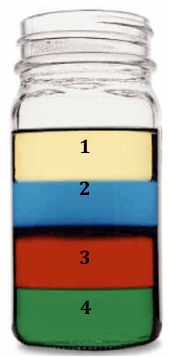
Put the liquids in order from most dense to least dense?
a)
4, 3, 2, 1
b)
1, 2, 3, 4
c)
3, 4, 2, 1, 
d)
4, 3, 1, 2
61.
Which box has a higher density?  
a)
Box A
b)
Box B
c)
cannot be determined
d)
they are the same
62.
What is the measuring unit for mass?
a)
centimeter 
b)
millimeter 
c)
grams 
d)
pounds
63.
Which units of measurement are used for volume?
a)
grams
b)
centimeters
c)
grams/milliliter
d)
milliliter
64.
Which lab tool might you use to measure the volume of a liquid?
a)
electric scale
b)
bunsen burner
c)
test tube
d)
graduated cylinder
65.
What units are used to measure Density?
a)
cm3/g
b)
g
c)
g/cm3
d)
cm3
66.
Define the term "mass".
a)
Mass/Volume
b)
Anything that has mass and takes up space 
c)
The amount of space an object occupies.
d)
The amount of matter in an object.
67.
Volume is ...
a)
Mass/Volume
b)
The amount of matter in an object.
c)
The amount of space an object occupies.
d)
Anything that has mass and occupies space.
68.
Density is...
a)
the amount of mass in an object
b)
the amount of space an object takes up
c)
the amount of mass in a given space
d)
the weight of an object
69.
True or False:  The density of a specific type of material never changes.  
a)
True
b)
False
70.
Frank has a paper clip. It has a mass of 9g and a volume of 3cm3. What is its density?
a)
3 g/cm3
b)
1/3 g/cm3
c)
27 g/cm3
d)
39 g/cm3
71.
Frank has an eraser. It has a mass of 4g, and a volume of 2cm3. What is its density?
a)
8 g/cm3
b)
2 g/cm3
c)
1/2 g/cm3
d)
24 g/cm3
72.
A student knows the mass of an object. What other variable does the student need to know to calculate the object's density?
a)
Color
b)
Weight
c)
Volume
d)
Length
73.
Which would be the most useful for identifying an unknown liquid?
a)
Weight
b)
volume
c)
mass
d)
density
74.
Jack has a rock. The rock has a mass of 14g and a volume of 2cm3. What is the density of the rock?
a)
7 mL
b)
7 g/cm3
c)
28 g/cm3
d)
1/7 g/cm3
75.
What kind of energy is in a moving skateboard?
a)
Potential
b)
Kinetic
76.
What kind of energy is in a rock at the edge of a cliff?
a)
Potential
b)
Kinetic
77.
What kind of energy is in flowerpot sitting on a windowsill?
a)
Potential
b)
Kinetic
78.
What kind of energy is in a battery?
a)
Potential
b)
Kinetic
79.
Which is the best example that something has kinetic energy?
a)
a. a car parked on a steep hill 
b)
b. a tennis ball rolling across the court
c)
c. a picture hanging on the wall 
d)
d. a piece of coal before it's burned 
80.
When a pendulum swings, at which point is kinetic energy highest?
a)
1
b)
2
c)
3
d)
4
81.
Which point has the most potential energy?
a)
G
b)
f
c)
b
d)
a
82.
Which 2 letters have the most kinetic energy
a)
W & Y
b)
X & Z
83.
How much potential energy is at the top of a hill on a rollar coaster ride
a)
100%
b)
50%
c)
0%
d)
20%
84.
At which point is potential energy greatest?
a)
W
b)
X
c)
Y
d)
Z
85.
At which point is potential energy greatest?
a)
W
b)
X
c)
Y
d)
Z
86.
At which point is kinetic energy greatest?
a)
W
b)
X
c)
Y
d)
Z
87.
As a pendulum swings from its highest to lowest position, what happens to its kinetic and potential energy? 
a)
Both the potential energy and kinetic energy decrease
b)
The potential energy decreases while the kinetic energy increases 
c)
The kinetic energy decreases while the potential energy increases 
d)
Bothe the potential energy and kinetic energy increase 
88.
 What kind of energy is in gasoline in a car tank (car is not on)?
a)
Potential
b)
Kinetic
89.
What kind of energy is in basketball passing through the hoop?
a)
Potential
b)
Kinetic
90.
What kind of energy is in a waving hand?
a)
Potential
b)
Kinetic
91.
What kind of energy is in an acorn hanging from an oak tree?
a)
Potential
b)
Kinetic
92.
What energy is pulling an arrow back 
a)
kinetic energy
b)
potential energy
c)
energy
93.
A rubber band has been pulled backward but hasn’t been let go yet.
a)
Potential
b)
Kinetic
94.
A basketball is being held in the hands of a player.
a)
Potential
b)
Kinetic
95.
Girl serving a volleyball
a)
Potential
b)
Kinetic
96.

What type of energy transformation occurs, when a hawk eats a mouse and then uses the energy from the mouse to fly?

a)

mechanical energy to chemical energy

b)

thermal energy to mechanical energy

c)

chemical energy to mechanical energy

d)

mechanical energy to thermal energy

97.

What is the energy transformation that occurs in an electric pencil sharpener?

a)

mechanical energy to electrical energy

b)

electrical energy to mechanical energy

c)

radiant energy to sound energy

d)

chemical energy to mechanical energy

98.

Which object shows an energy transformation from electrical to mechanical?

a)
b)
c)
d)
99.

When a car burns gasoline it creates hot air to move the pistons in the engine, which causes the car to move. What energy transformation occur from the fuel to the movement of a car?

a)

thermal energy to mechanical energy

b)

thermal energy to chemical energy to mechanical energy

c)

chemical energy to thermal energy to mechanical energy

d)

chemical energy to electrical energy

100.
Which of the following energy transformations occur when a lamp that is plugged into a wall socket is functioning correctly?
a)
Chemical to light
b)
Electrical to chemical
c)
Electrical to light
d)
Chemical to electrical
101.

The roller coaster cart has the most kinetic energy at position-

a)

W

b)

X

c)

Y

d)

Z

102.
A hairdryer converts -- 
a)
electrical energy into chemical
b)
electrical energy into thermal
c)
chemical energy into mechanical
d)
thermal energy into mechanical
103.

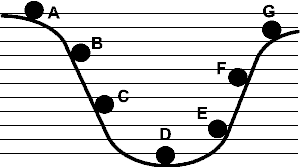
Where is the kinetic energy the greatest?

a)

A

b)

B

c)

C

d)

D

104.
Which items would have this energy transformation: electrical energy -> thermal energy and light energy?
a)
toaster
b)
candle burning
c)
windmill turning
d)
Iron for your clothes
105.

Which items would have this energy transformation: chemical energy -> thermal and light energy?

a)

tanning bed

b)

candle burning

c)

wind turbine turning

d)

solar calculator

106.

Which items would have this energy transformation: mechanical energy -> sound energy?

a)

turning on a flashlight

b)

nuclear power plant

c)

wind turbine turning

d)

playing a violin

107.

Which items would have this energy transformation: mechanical energy -> electrical energy?

a)

turning on a flashlight

b)

nuclear power plant

c)

wind turbine turning

d)

tanning bed

108.

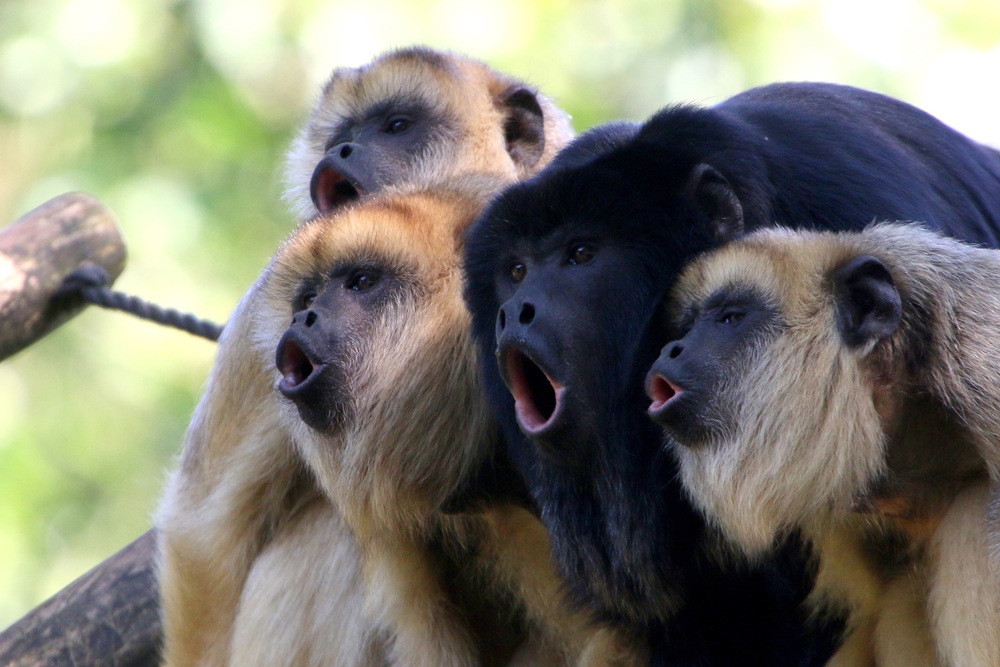
What kind of energy is represented in the picture?

a)

Thermal

b)

Chemical

c)

Sound

d)

Kinetic

109.

What energy transformation occurs as howler monkeys loudly call to each other in the forest?

a)

Chemical --> Mechanical --> Sound

b)

Chemical --> Sound --> Thermal

c)

Sound --> Chemical --> Radiant

d)

Mechanical --> Chemical --> Sound

110.

What is energy?

a)

moving energy

b)

stored energy

c)

renewable energy

d)

The ability to do work.

111.

What is potential energy?

a)

moving energy

b)

stored energy

c)

renewable energy

d)

non renewable energy

112.

What is kinetic energy?

a)

moving energy

b)

potential energy

c)

stored energy

d)

renewable energy

113.
The kind of heat transfer that travels through space in electromagnetic waves is ______________________.
a)
insulation.
b)
Radiation
c)
Conduction
d)
Convection
114.
In heat transfer, heat always flows from the _______________ substance to the _______________ substance.
a)
Hotter to colder
b)
Colder to hotter
c)
Hotter to hotter
d)
Colder to colder
115.
The type of heat transfer that happens through direct contact of molecules or particles with each other is ___________________.
a)
Convection
b)
Conduction
c)
Radiation
d)
insulation.
116.
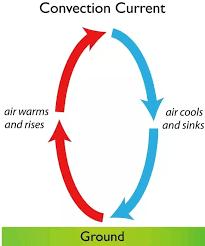
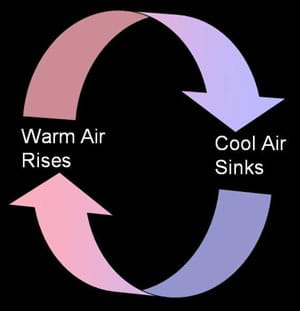
___________________ is the type of heat transfer that occurs in fluids, such as warm air rising and cold air sinking; creating wind.
a)
Convection
b)
Conduction
c)
Radiation
d)
insulation.
117.
Which statement is true?
a)
The quicker a molecule moves, the colder it is.
b)
The slower a molecule moves, the warmer it is.
c)
The quicker a molecule moves, the warmer it is
d)
The movement on molecule don�t affect its temperature
118.
Two objects at different temperatures are in contact. Which of the following happens to their thermal energy?
a)
Their thermal energies remain the same.
b)
Thermal energy passes from the cooler object to the warmer object
c)
Thermal energy passes from the warmer object to the cooler object.
d)
Thermal energy passes back and forth equally between the two objects.
119.
Heat from warm sand at the beach moves through the atmosphere by what method of heat transfer?
a)
Convection
b)
Conduction
c)
Radiation
d)
insulation.
120.
Heat from warm sand at the beach moves through the atmosphere by what method of heat transfer?
a)
Convection
b)
Conduction
c)
Radiation
d)
insulation.
121.
When you use a microwave, what is the main way that heat is transferred?
a)
Convection
b)
Conduction
c)
Radiation
d)
insulation.
122.
The handle of a metal spoon warms up when it is placed in a hot bowl of soup because of
a)
Convection
b)
Conduction
c)
Radiation
d)
insulation.
123.
Which of the following is NOT a conductor?
a)
oven mitt
b)
curling iron
c)
iron skillet
d)
copper pipe
124.
A large house being heated by heater warms a house when the air is circulating.
a)
Convection
b)
Conduction
c)
Radiation
d)
insulation.
125.

Which of the following is an example of convection?

a)

A hair dryer is drying up your hair.

b)

When the AC or heater changes the temperature.

c)

When a car engine turns hot after being turned on.

d)

When you are making soup and the water is rising and lowering.
126.
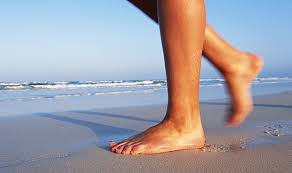
Walking on the warm sand sand with your bare feet demonstrates this type of heat transfer. 
a)
conduction
b)
convection
c)
radiation
127.
The baby chickens are kept warm from the heat lamps demonstrates this type of heat transfer. 
a)
conduction
b)
convection
c)
radiation
128.
A group of friends gather around a fire to stay warm.
a)
conduction
b)
convection
c)
radiation
129.

Near the ceiling of a room the air is warmer. The warm air rises because of

a)

conduction

b)

convection

c)

radiation

130.

A huge rock at the state park gets so hot during the day because of

a)

conduction

b)

convection

c)

radiation

131.

In heat transfer, heat always flows from the _______________ substance to the _______________ substance.

a)

Hotter to colder

b)

Colder to hotter

c)

Hotter to hotter

d)

Colder to colder

132.

A pot is placed directly on a stove. The pot gets hot due to

a)

conduction

b)

convection

c)

radiation

133.

You get sunburned due to __________ from the sun.

a)

conduction

b)

convection

c)

radiation

134.

Near the ceiling of a room the air is warmer. The warm air rises because of

a)

conduction

b)

convection

c)

radiation

135.

Which of the following is not a method for heat transfer

a)

Radiation

b)

Insulation

c)

Conduction

d)

Convection