wayground logo

Free Printable Worksheets

Font size

S
M
L
XL
Worksheets

Cells

Total questions: 94

Worksheet time: 1hrs 27mins

Name
Class
Date
1.
Every living organism is made up of one or more cells
a)
True
b)
False
2.
A cell is...
a)
the basic unit of structure and function in living organism
b)
an organism
c)
a basic part of everything that we see
d)
found only in animals, not plants
3.
The nucleus is like the ____________ of the cell.
a)
foot
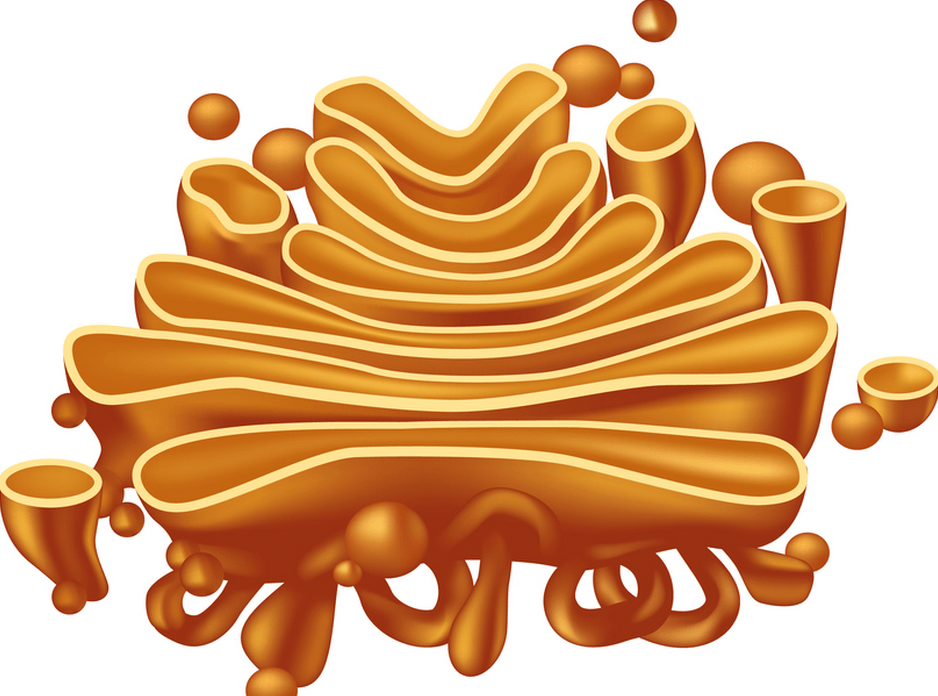
b)
hand
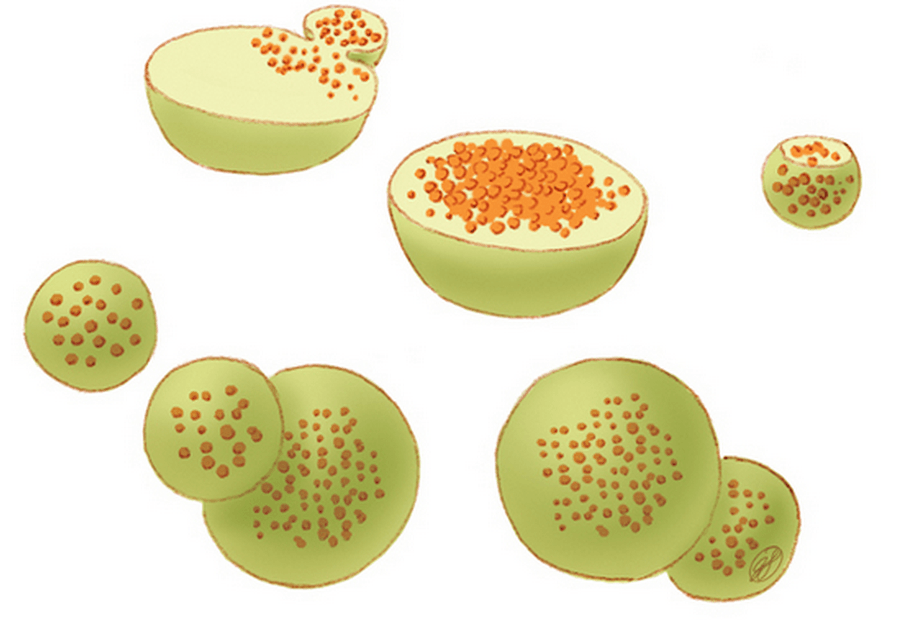
c)
stomach
d)
brain
4.

Which of the following converts food into energy for the cell?

a)

vacuole

b)

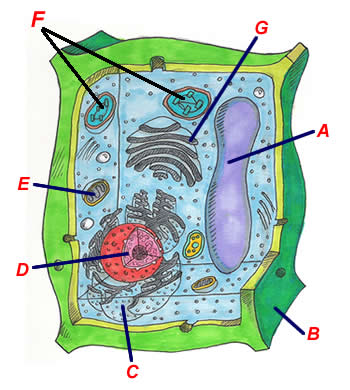
mitochondria

c)

cytoplasm

d)

cell membrane

5.

The fluid that surrounds the organelles is... (hint... "Try to pull a fast one and..."

a)

chloroplast

b)

cytoplasm

c)

vacuole

d)

cell wall

6.
What do vacuoles do? 
a)
They actually do not have an important role
b)
They protect the cell
c)
They are the brain of the cell
d)
storage area for cells; water storage in plants 
7.

Which organelle takes in "sun showers" and helps plants with the process or photosynthesis?

a)

Vacuole

b)

Mitochondria

c)

Cytoplasm

d)

Chloroplast

8.
Which of the following are NOT found in animal cells
a)
chloroplasts and cytoplasm
b)
chloroplasts and cell wall
c)
cell wall and cell membrane
d)
mitochondria and nucleus
9.
If you were some bad guy trying to sneak into an animal cell, who would be there to stop you?
a)
nucleus
b)
mitochondria
c)
cell membrane
d)
cell wall
10.
Which of the following, found ONLY in plant cells, provides structure?
a)
cell wall
b)
chloroplast
c)
mitochondria
d)
vacuole
11.

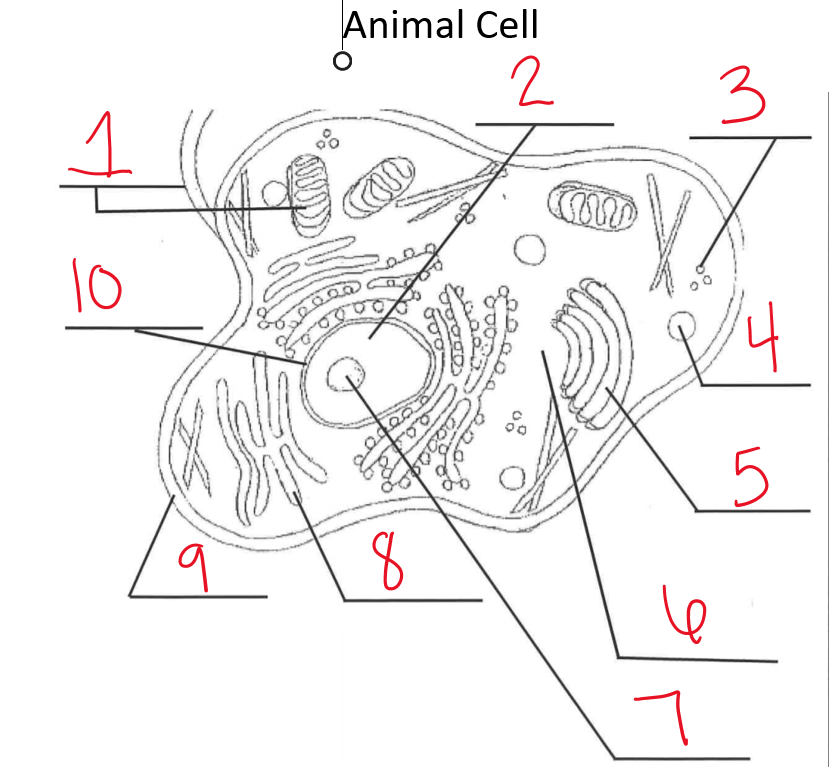
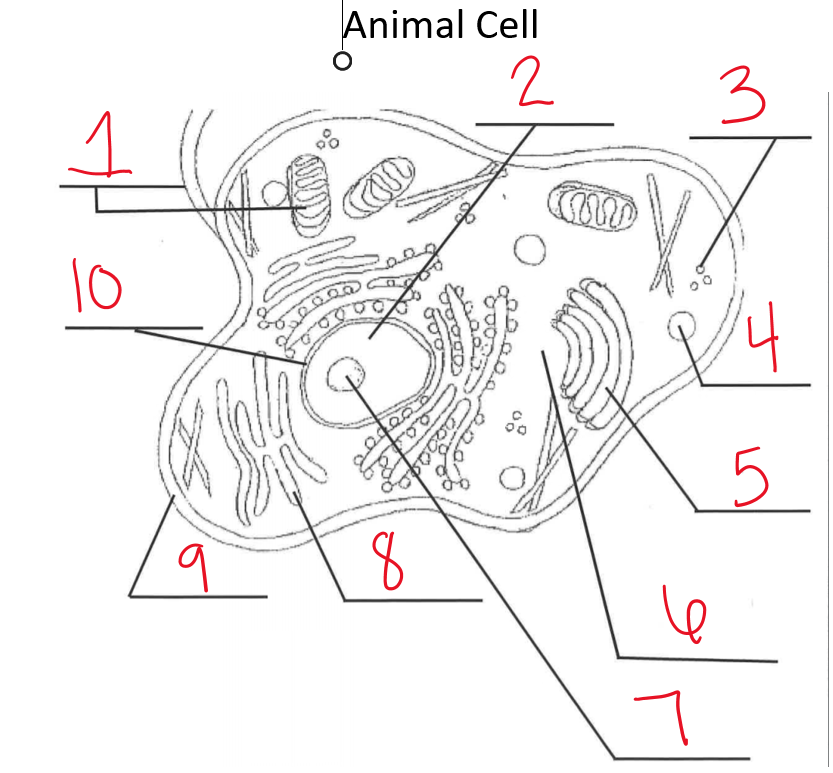
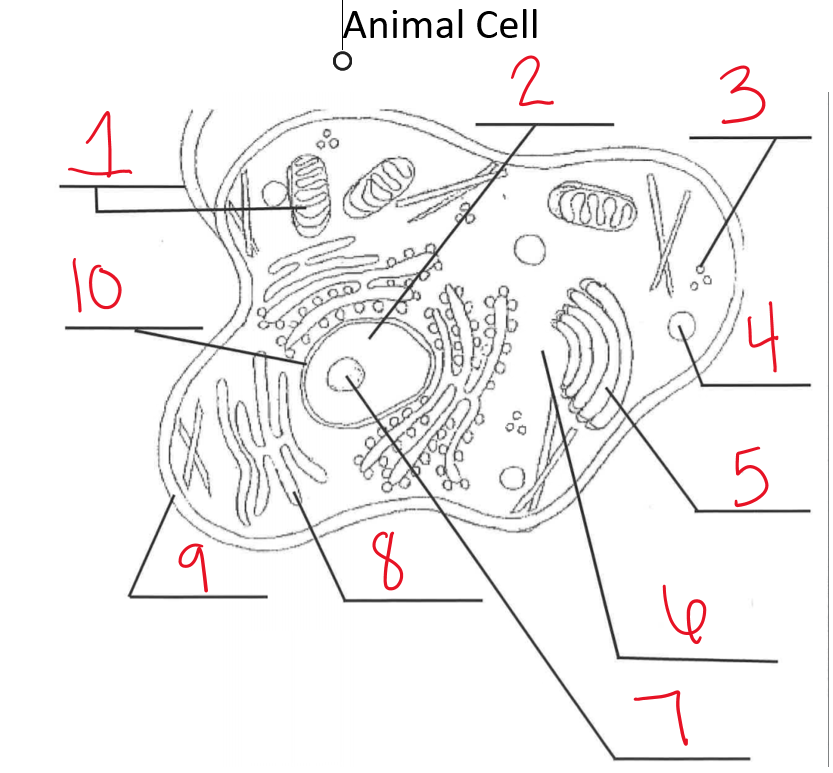
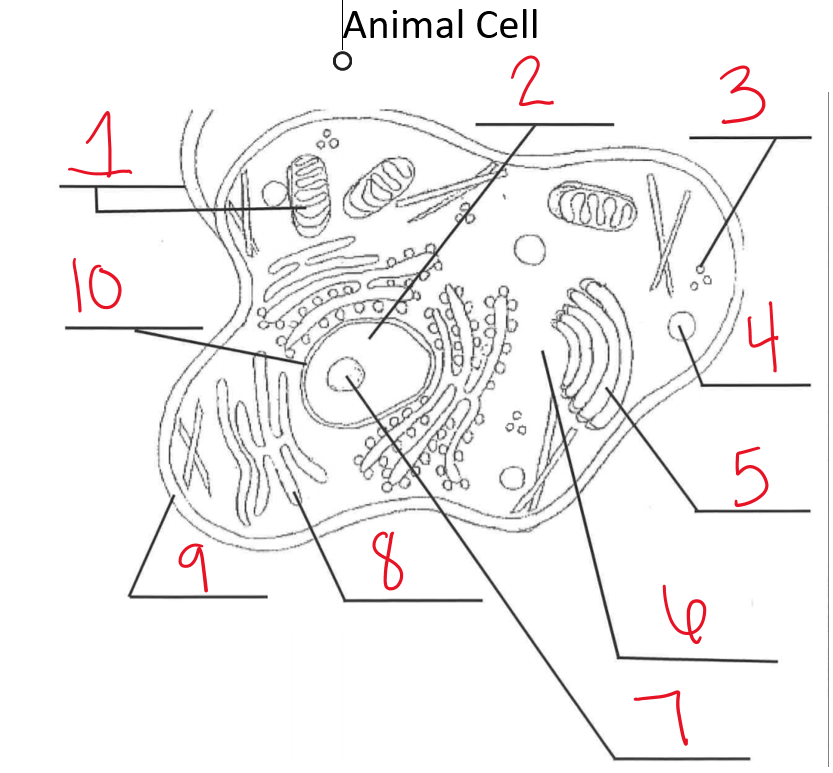
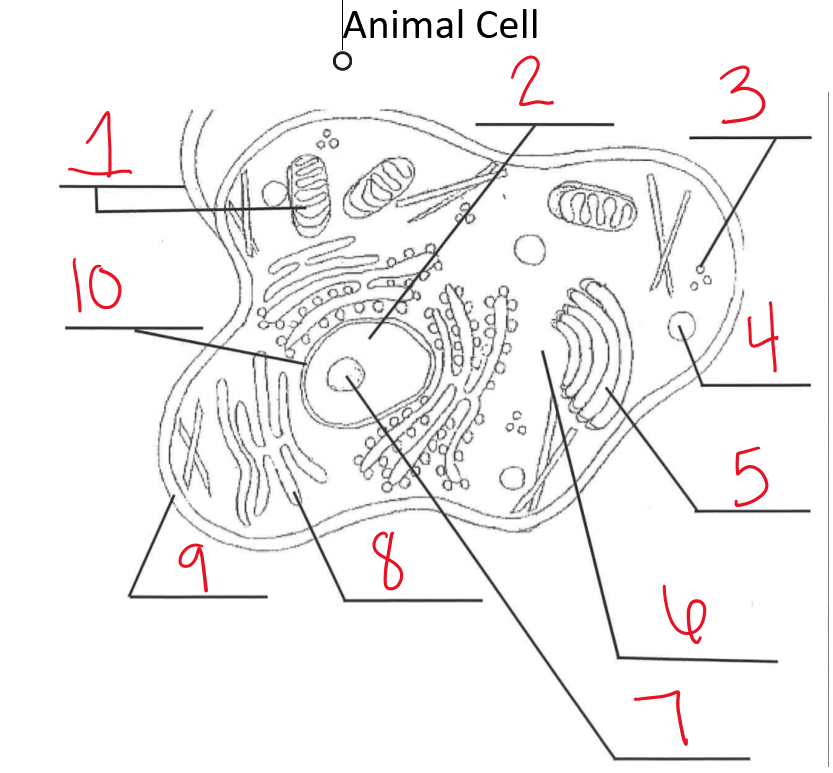
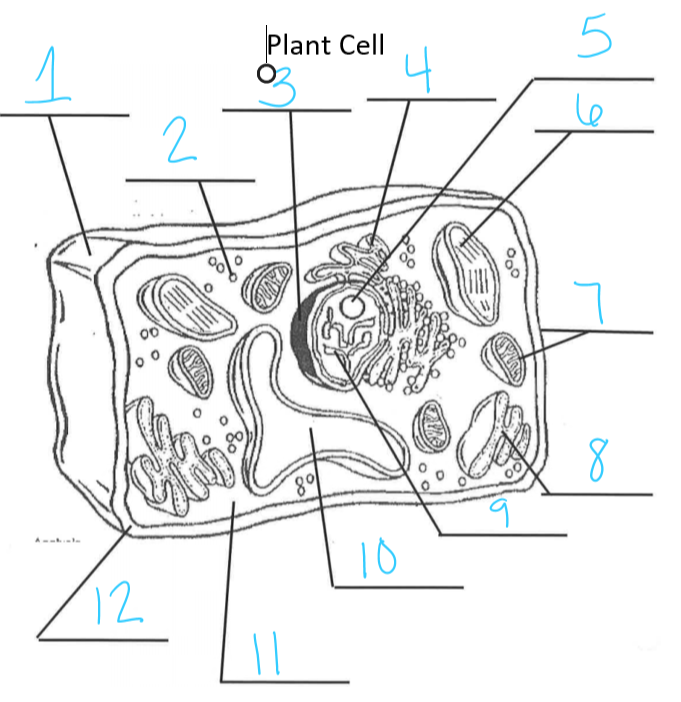
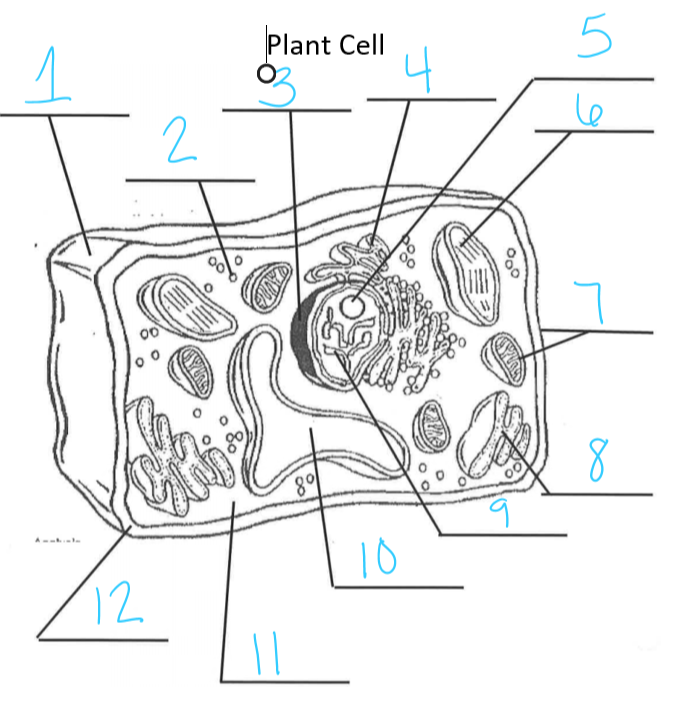
What organelle is labeled #1?

a)

Mitochondria

b)

Vacuole

c)

Chloroplast

d)

Nucleus

12.

What organelle is labeled #2?

a)

Nucleus

b)

Nuclear membrane

c)

Nucleolus

d)

Cell membrane

13.

What organelle is labeled #3?

a)

Vacuole

b)

Golgi body

c)

Ribosomes

d)

ER

14.

What organelle is labeled #4?

a)

DNA

b)

ER

c)

Golgi body

d)

Vacuole

15.

What organelle is labeled #5?

a)

DNA

b)

ER

c)

Golgi body

d)

Nucleus

16.

What organelle is labeled #6?

a)

Nucleolus

b)

Cell membrane

c)

Cytoplasm

d)

Mitochondria

17.

What organelle is labeled #7?

a)

Nucleus

b)

Nuclear membrane

c)

Nucleolus

d)

Vacuole

18.

What organelle is labeled #8?

a)

ER

b)

Golgi body

c)

DNA

d)

Mitochodria

19.

What organelle is labeled #9?

a)

Cell wall

b)

Cell membrane

c)

Nuclear membrane

d)

DNA

20.

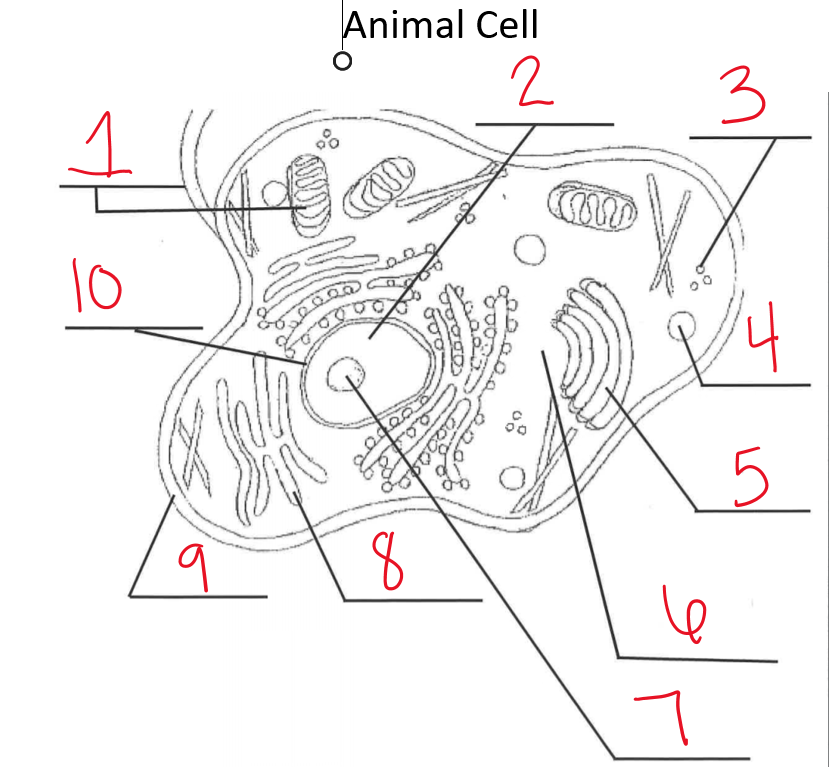
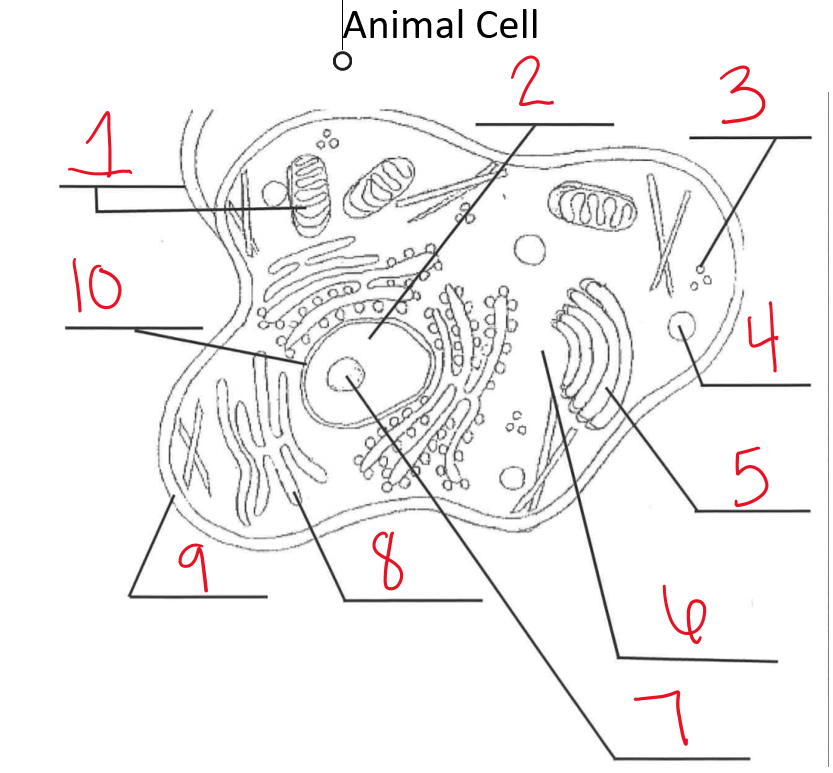
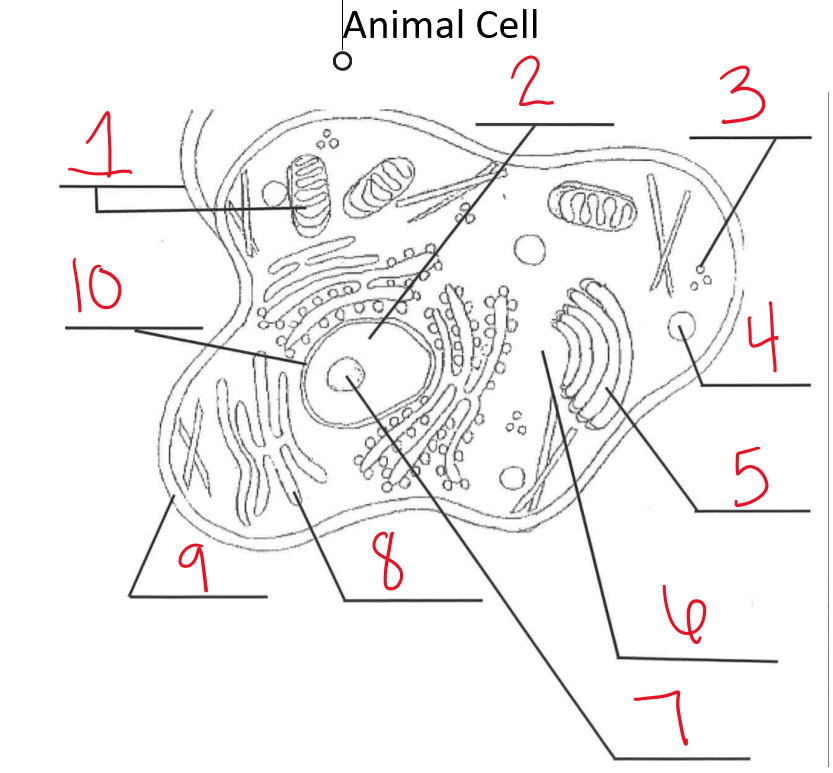
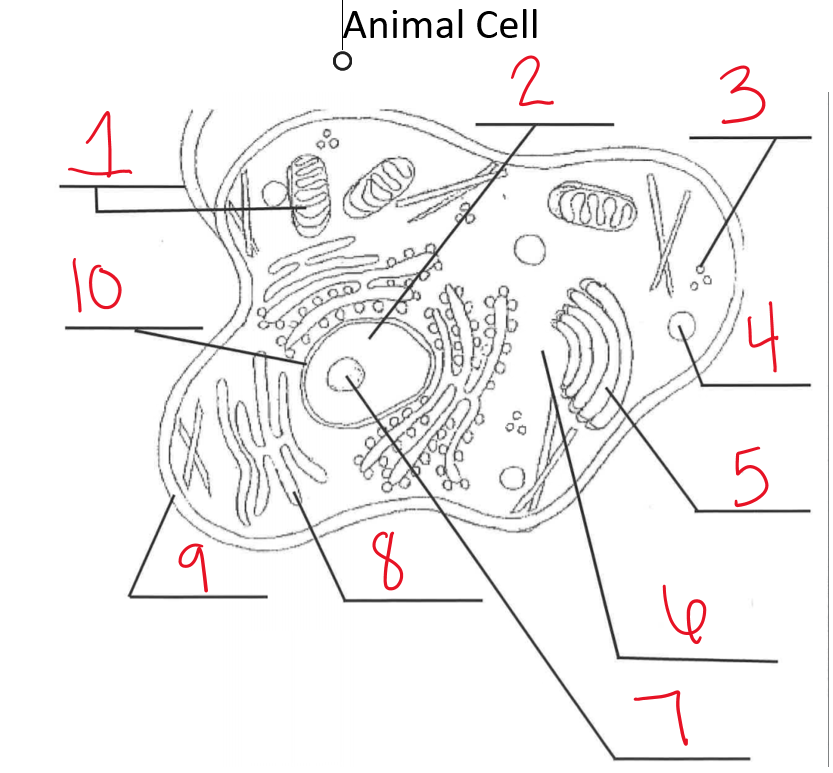
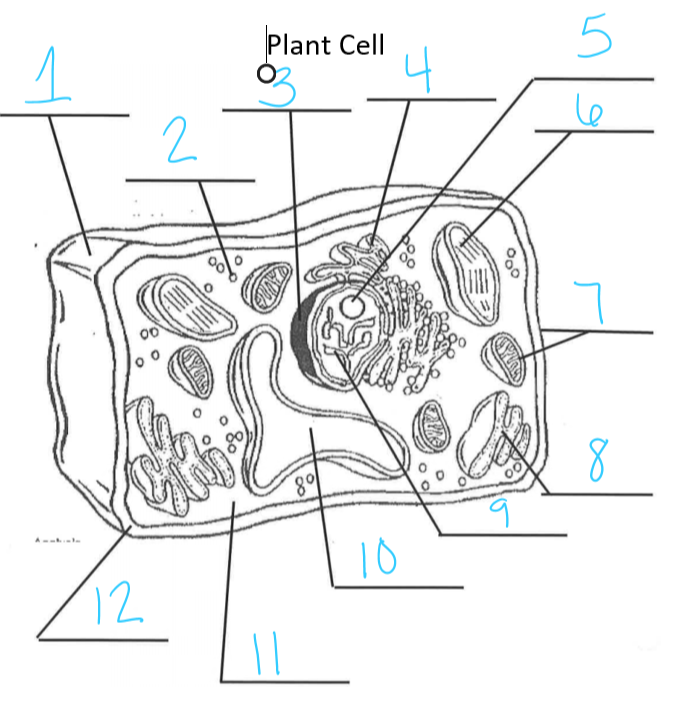
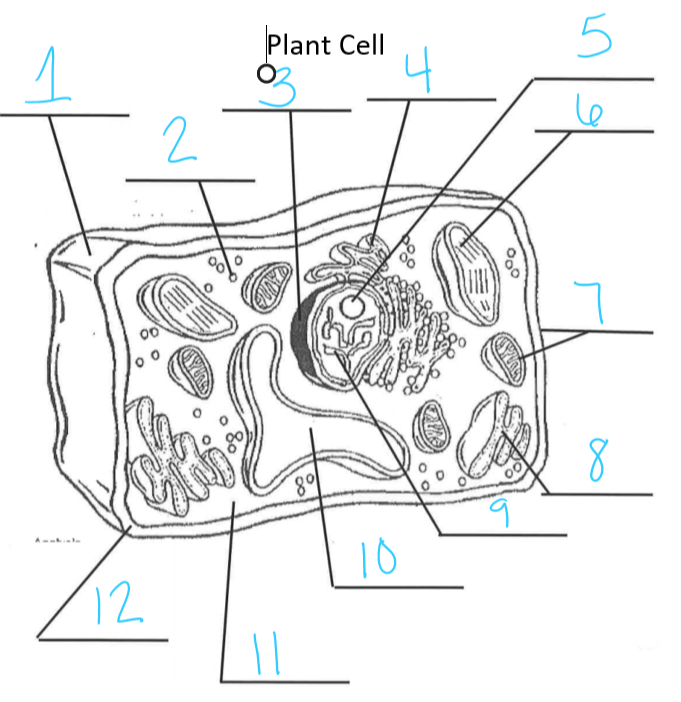
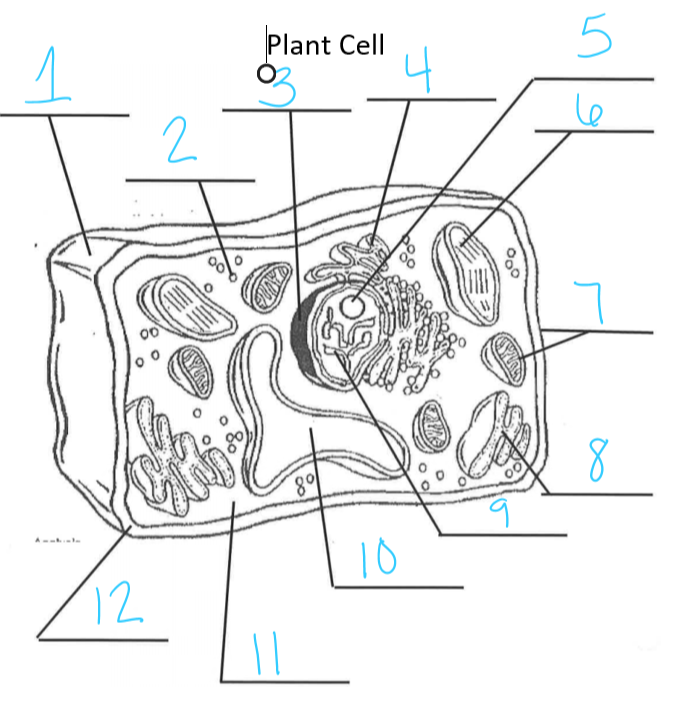
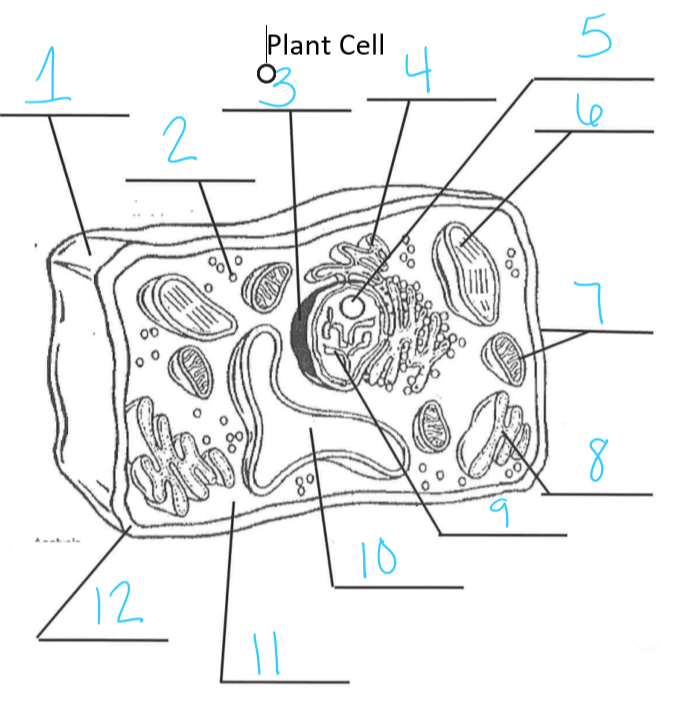
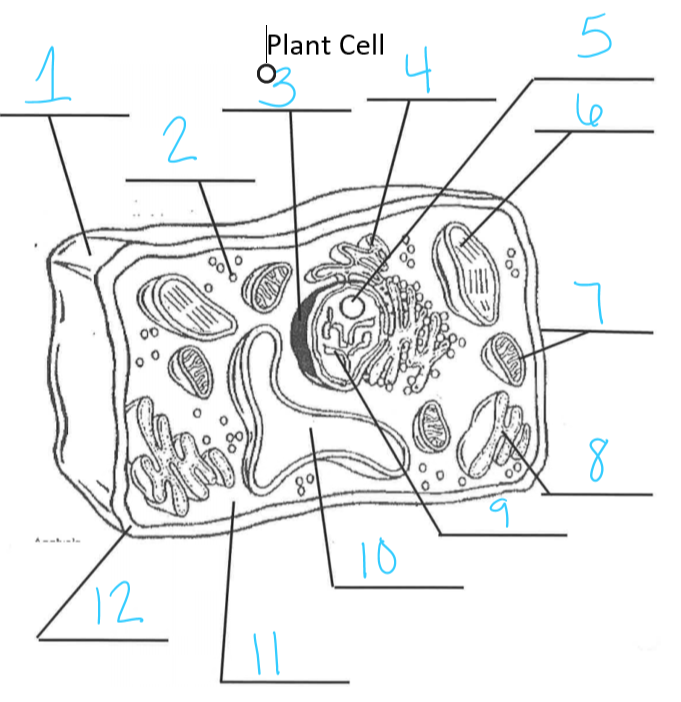
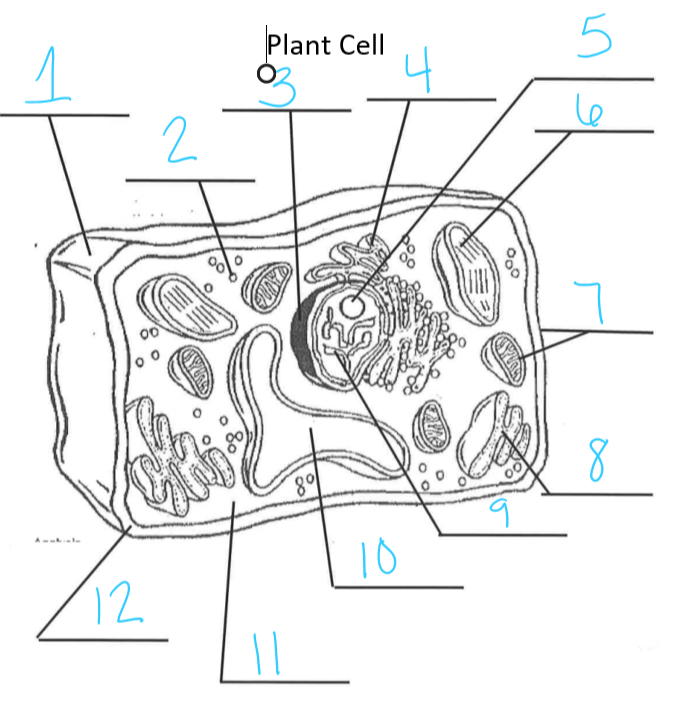
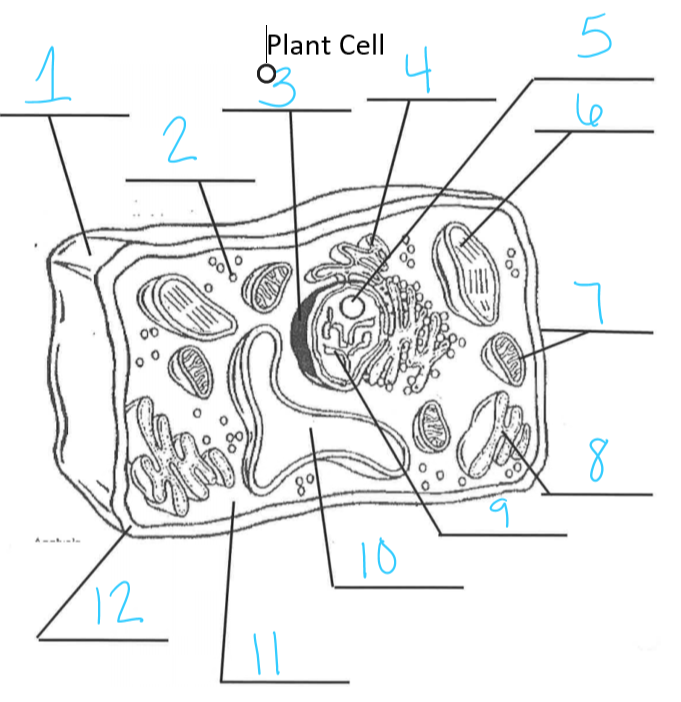
What organelle is labeled #1?

a)

Cell wall

b)

Cell membrane

c)

Cytoplasm

d)

Nuclear membrane

21.

What organelle is labeled #2?

a)

Vacuole

b)

Mitochondria

c)

Ribosomes

d)

Nucleolus

22.

What organelle is labeled #3?

a)

Nucleolus

b)

Nucleus

c)

DNA

d)

Cytoplasm

23.

What organelle is labeled #4?

a)

Golgi body

b)

Ribosome

c)

Mitochondria

d)

ER

24.

What organelle is labeled #5?

a)

Nucleus

b)

DNA

c)

Nucleolus

d)

Ribosomes

25.

What organelle is labeled #6?

a)

Chloroplasts

b)

Mitochondria

c)

Vacuole

d)

Ribosomes

26.

What organelle is labeled #7?

a)

Chloroplasts

b)

Vacuole

c)

Mitochondria

d)

Golgi body

27.

What organelle is labeled #8?

a)

ER

b)

Golgi body

c)

Cytoplasm

d)

Ribosomes

28.

What organelle is labeled #10?

a)

Cytoplasm

b)

Vacuole

c)

Mitochondria

d)

ER

29.

What organelle is labeled #11?

a)

Cell wall

b)

Cell membrane

c)

Cytoplasm

d)

Chloroplast

30.

What organelle is labeled #12?

a)

Cell wall

b)

Nuclear membrane

c)

Cell membrane

d)

Ribosome

31.
This organelle takes food and turns it into ENERGY for plant and animal cells.
a)
Chloroplast
b)
Mitochondria
c)
Lysosome
d)
Ribosome
32.
The site of photosynthesis
a)
ribosome
b)
mitochondria
c)
chloroplast
d)
nucleus
33.
Directs all cell activities through the DNA located there.
a)
Lysosomes
b)
Nucleus
c)
ribosomes
d)
Mitochondria
34.
I am a packaging and shipping machine! Who am I?
a)
vacuole
b)
ribosome
c)
mitochondrion
d)
golgi apparatus
35.
Which of the following is directly involved in the transportation of materials inside/within the cell?
a)
Endoplasmic Reticulum
b)
Vacuole
c)
Lysosome
d)
Mitochondria
36.
You might think of me as the trash collector, but recycler is maybe more accurate. What am I?
a)
mitochondria
b)
lysosome
c)
vacuole
d)
ribosome
37.
What is found in both plant and animal cells but is much larger in plant cells?
a)
Nucleus
b)
Mitochondria
c)
Chloroplast
d)
Vacuole
38.
Where are proteins made?
a)
Golgi body
b)
Mitoichondria
c)
Chromosomes
d)
Ribosomes
39.
A rigid layer that lies outside the cell's  membrane is...
a)
Cytoskeleton
b)
Cilia
c)
Cell Wall
d)
Flagella
40.
What organelle is called the "powerhouse" of a cell?

a)
Endoplasmic Reticulum
b)
Nucleus
c)
Mitochondria
d)
Nucleolus
41.
What is the gel-like substance inside of cells called?

a)
photoplasm
b)
photosynthesis
c)
cytoskeleton
d)
cytoplasm
42.
This organelle acts as the cell's skin and keeps everything inside.
a)
cell membrane
b)
cytoplasm
c)
nucleus
d)
ribsome
43.
I am only found in a plant cell. What am I?
a)
cell wall
b)
mitochondria
c)
cytoplasm
d)
chloroplast
44.
What is the difference between rough and smooth ER?
a)
There is no difference.
b)
Plants have rough ER, animals have smooth ER.
c)
What type of injuries the Doctors treat.
d)
Rough has ribosomes, smooth does not.
45.
What is the function of the organelle labelled "E"?
a)
Protein packaging and shipping
b)
Provides energy to the cell
c)
Breaks down food and waste
d)
Creates proteins
46.
What is the function of the organelle labelled "K"?
a)
Protein packaging and shipping
b)
Provides energy to the cell
c)
Breaks down food and waste
d)
Creates proteins
47.
What is the function of the organelle labelled "B"?
a)
Protein packaging and shipping
b)
Provides energy to the cell
c)
Contains the DNA (genetic material)
d)
Creates proteins
48.
What is the function of the organelle labelled "K" (the bumps on the ER)?
a)
Protein packaging and shipping
b)
Provides energy to the cell
c)
Breaks down food and waste
d)
Creates proteins
49.
What is the function of the organelle labelled "D"?
a)
Protein packaging and shipping
b)
Provides energy to the cell
c)
Breaks down food and waste
d)
Helps with transportation in the cell
50.
What is the function of the organelle labeled "F"?
a)
Use sun energy to make food
b)
Break food down for energy
c)
Contains DNA
d)
Protects the cell
51.
This organelle creates the energy for the cell
a)
mitochondria
b)
cell membrane
c)
ribosome
d)
endoplasmic reticulum
52.
The ____________ regulates what enters and leaves the cell.
a)
mitochondria
b)
cell membrane
c)
golgi bodies
d)
cytoplasm
53.
The _________ holds the dna for the cell
a)
vacuole
b)
smooth ER
c)
rough ER
d)
nucleus
54.
What creates the protein for the cell?
a)
Cytoplasm
b)
Nucleus
c)
Golgi bodies
d)
Ribosomes
55.
Jelly-like material that makes up most of the cell
a)
cytoskeleton
b)
cytoplasm
c)
cyclops
d)
cytoliquid
56.
What gives the cell its structure?
a)
cell membrane
b)
cytoskeleton
c)
cytoplasm
d)
vacuole
57.
_________ ship and package materials
a)
Golgi bodies
b)
Mitochondria
c)
Rough endoplasmic reticulum
d)
Smooth endoplasmic reticulim
58.
This organelle creates lipids
a)
Smooth endoplasmic reticulum
b)
Rough endoplasmic reticulum
c)
Ribosomes
d)
Nucleus
59.
The _____________ carries the proteins though the cell.
a)
ribosomes
b)
nucleus
c)
smooth endplasmic reticulum
d)
rough endoplasmic reticulum
60.
This organelle is stores food, water and waste.
a)
Ribosome
b)
Cytoplasm
c)
Vacuole
d)
Mitochondria
61.
A specialized structure inside of the cell are known as _____________.
a)
organ
b)
items
c)
organelle
d)
excess materials
62.
What gives instructions to the cells?
a)
DNA
b)
PNA
c)
MBA
d)
NBA
63.
Energy that is usable by a cell is called ___________.
a)
ATP
b)
ASAP
c)
AVP
d)
JYU
64.

What makes up all living things?

a)

cells

b)

energy

c)

hair

d)

breathing

65.

what is genetic information that is passed down?

a)

AMD

b)

RLH

c)

DNA

d)

H2O

66.

metabolic action:

a)

converts liquid to solid

b)

converts plants to food

c)

converts gas to oxygen

d)

converts food to energy

67.

what is it called when the bodies of living things take actions to protect itself?

a)

external environmental changes

b)

internal environmental changes

c)

growth

d)

balance

68.

to create more like itself (a-sexual or sexual)

a)

art of regrowing

b)

art of reproduction

c)

art of copying

d)

art of making

69.
Osmosis is the movement of _____ across a membrane.
a)
food
b)
energy
c)
oxygen
d)
water
70.
Which is true about active transport?
a)
It requires energy
b)
it does not require energy
c)
It moves substances down the concentration gradient
d)
it moves material from high to low concentration
71.

This cell structure helps organisms maintain homeostasis by controlling what substances may enter or leave cells.

a)

vacuole

b)

nucleus

c)

cell membrane

d)

cell wall

72.

The cell membrane is selectively permeable, which means...

a)

All materials can enter and leave the cell

b)

Certain things can enter while others cannot

c)

The cell manually sorts through all materials

d)

Only certain cells can interact with the cell.

73.

Type of cell with only genetic material, cytoplasm and ribosomes inside.

a)

Eukaryotic

b)

Prokaryotic

c)

Plant

d)

Animal

74.

Cells that contains membrane bound organelles...

a)

Eukaryotic Cell

b)

Prokaryotic Cell

c)

Bacteria

d)

Blood cell

75.

This organelle's function is to make protein.

a)

Golgi Apparatus

b)

Cell membrane

c)

Ribosome

d)

Nucleus

76.
The function of this organelle is to break down food, worn out cell/cell organelles.
a)
Nucleus
b)
Vacuole
c)
Ribosome
d)
Lysosome
77.

Which structures are found in every living cell? Select all that apply.

a)

cell membrane

b)

cytoplasm

c)

cell wall

d)

ribosomes

78.
Chloroplasts in plant cells allow the plant to perform a function that animal cells cannot do.  What is the main function of the chloroplasts found in plant cells?
a)
to absorb light energy and manufacture food
b)
to remove waste materials by active transport
c)
to manufacture chemical energy from food
d)
to control the shape of the cell
79.
All cells need energy to function.  Which cell organelle is responsible for producing energy in the cell?
a)
chloroplasts
b)
mitochondria
c)
nucleus
d)
vacuoles
80.
___________ have 2 functions in the cell membrane.
1.) They act like gatekeepers, only let certain things in. 
2.) Enzyme receptors embedded in the membrane.
a)
Carbohydrates 
b)
Proteins 
c)
Phospholipids 
d)
Cholesterol
81.
How does a cell maintain homeostasis?
a)
Regulates what enters and leaves the cell
b)
Flexibility
c)
Protective barrier
d)
Structure and support
82.
What is diffusion?
a)
when molecules move 
b)
when molecules move from a high concentration to a low.
c)
no movement 
d)
molecules move everywhere
83.
During osmosis
a)
water moves from high to low concentration
b)
large or oddly shaped molecules move across a cell membrane
c)
water moves when energy is used
d)
proteins are built
84.
The picture is an example of...
a)
active tranport
b)
passive transport
c)
diffusion
d)
osmosis
85.

Which is NOT a function of the cell membrane

a)

Determines what exits the cell

b)

It dissolves in water

c)

Determine what enters the cell

d)

Contains proteins to help pass molecules

86.

Exocytosis and Endocytosis are examples of...

a)

Passive Transport

b)

Active Transport

87.
Solutes move against the concentration gradient, therefore energy is needed
a)
Passive Transport
b)
Active Transport
88.
Which of the following are found in plant cells ONLY?
a)
mitochondria
b)
chloroplast
c)
nucleus
d)
Endoplasmic reticulum
89.
This organelle protects and gives shape to plant cells.
a)
Cell wall
b)
Cell membrane
c)
Cytoskeleton
d)
Cytoplasm
90.
Organelle H is the:
a)
Nucleolus
b)
Lysosome
c)
Mitochondria
d)
Endoplasmic Reticulum
91.
structures in the cytoplasm that perform different functions are called:
a)
organisms
b)
organelles
c)
organs
d)
tissues
92.
The function of the Golgi is to
a)
make proteins
b)
move materials around the cell
c)
break down food molecules and waste
d)
sort and package substances like proteins
93.
The gel-like substance that surrounds the organelles
a)
Cytoskeleton
b)
Cell wall
c)
Cytoplasm
d)
Septoplasm
94.
What creates the protein for the cell?
a)
Cytoplasm
b)
Nucleus
c)
Golgi bodies
d)
Ribosomes