wayground logo

Free Printable Worksheets

Font size

S
M
L
XL
Worksheets

ENERGY FULL REVIEW

Total questions: 61

Worksheet time: 59mins

Name
Class
Date
1.

Energy of motion is called

a)

Potential Energy

b)

Kinetic Energy

c)

Chemical Energy

d)

Sound Energy

2.

The energy of something because of its position or condition is

a)

Potential Energy

b)

Kinetic Energy

c)

Chemical Energy

d)

Sound Energy

3.

Kinetic Energy + Potential Energy =

a)

Wind Energy

b)

Sound Energy

c)

Light Energy

d)

Mechanical Energy

4.

Which is an example of electrical energy becoming light energy?

a)

A radio is plugged in and plays music.

b)

The sun shines on a plant.

c)

The fire on a grill cooks a hot dog.

d)

A lamp is plugged in and turns on.

5.

Fossil fuels are an important source of energy. Which materials are fossil fuels. Choose all that apply.

a)

Oil

b)

Solar panels

c)

Windmills

d)

Coal

e)

Natural gas

6.

Choose all the statements that are true.

a)

Energy can change from one form to another.

b)

Some examples of energy are mechanical energy and chemical energy.

c)

Most sources of energy are renewable.

d)

Objects with potential energy don't really have energy.

7.

A sound's pitch is directly related to

a)

How loud the vibrations are.

b)

How fast the vibrations are.

c)

Whether the rubber band breaks or not.

d)

How long the vibration goes on.

8.

Water flowing down a river and then falling down a waterfall is an example of which type of energy?

a)

Wind Energy

b)

Light Energy

c)

Mechanical Energy

d)

Solar Energy

9.

Jon carries an empty backpack while walking to school in the morning and a heavy, full backpack while walking home in the afternoon. Which statement is true about the energy he uses on his trip?

a)

Jon uses the same amount of energy walking to school as he does walking home from school.

b)

Jon uses more energy while carrying the empty backpack to school than he did carrying the full backpack home.

c)

Jon doesn't use any energy carrying the empty or full backpack.

d)

Jon uses more energy while carrying the full backpack than he did carrying the empty backpack.

10.

Which of these is a nonrenewable resource?

a)

Wind

b)

Sun

c)

Waterfall

d)

Oil

11.
At which point does the apple have the most POTENTIAL energy?
a)
On the grass
b)
Just dropped from the tree
c)
Attached to the tree
d)
Right before it hits the ground
12.
Jill is getting ready to push little Frank in his swing. She pulls Frank back as high as she can and then releases the swing.  What is the initial transfer of energy that accelerates the swing when she lets go?
a)
Mechanical energy is converted into potential energy.
b)
Electrical energy is transformed into kinetic energy.
c)
Potential energy is converted into kinetic energy.
d)
Kinetic energy is converted into potential energy.
13.
Which process provides the MOST energy for the water cycle?
a)
warming of the ocean water by the sun
b)
flow of water from mountain top down to ocean due to gravity
c)
movement of clouds caused by winds
d)
precipitipation from clouds in the form of rain of snow
14.
An object that has a large amount of elastic potential energy will most likely be which type of object?
a)
one that can burn
b)
one that can stretch
c)
one that can change state
d)
one that has a lot mass
15.
You shine a flashlight on your friend's hand.  Your friend moves his hand closer to the flashlight. What happens to the size of the shadow?
a)
The shadow stays the same.
b)
The size of the shadow decreases.
c)
The shape of the shadow changes.
d)
The size of the shadow increases. 
16.
What happens to the space between molecules when water is heated? (Think, what happens to the molecules as they get warmer?)
a)
The molecules get closer together.
b)
The molecules spread out from each other. 
17.
When looking at a section of a mountain, how do you know which layer is the YOUNGEST?
a)
it's on the bottom
b)
it's on the top
c)
it's filled with oil
d)
it's full of fossils
18.
Yolanda and Rick make a solar oven to bake marshmallows.  They put it on the playground on a sunny afternoon to see how fast it can cook a marshmallow.  Which energy transfer cooks the marshmallows?
a)
light to electric
b)
light to heat
c)
electrical to heat
d)
heat to chemical
19.

What kind of energy makes the microwave work?

a)

heat

b)

wind

c)

electricity

20.

You shined a flashlight on object and light bounced back. What kind of object would bounce back the light?

a)

mirror

b)

paper

c)

jar

21.

A small bell produces what kind of sound?

a)

soft

b)

loud

22.

A small bell produces what kind of sound?

a)

soft

b)

loud

23.

The sun produces what kind of energy?

a)

Heat

b)

Light

c)

Electricity

d)

Solar

24.

What does the term impetus mean?

a)

Point of the greatest Potential energy

b)

point of greatest kinetic energy

c)

The projectile has finally hit the ground

d)

Position within the arc where gravity overcomes the projectile force and begins the downward descent.

25.

The sun provides ____________ and ____________ energy that can be harnessed and used for solar power.

a)

chemical, sound

b)

mechanical, light

c)

sound, light

d)

light, thermal

26.

Energy can't be .....

a)

transformed.

b)

made or destroyed.

c)

converted.

d)

harnessed or produced.

27.
This is energy that is stored for later use. 
a)
kinetic energy 
b)
potential energy 
c)
mechanical energy 
d)
electromagnetic energy. 
28.
Light is a form of __________ energy. 
a)
Sound 
b)
Electromagnetic
c)
Fun
d)
Thermal 
29.

Why does the piston move up in the second stroke?

a)

Because the crankshaft pushes it

b)

Because the combustion chamber gets narrower

c)

To compress particles and make explosion more powerful

d)

Air-fuel mixture pushes it

30.

What does a catalytic converter do?

a)

Converts pollutants into a less toxic form

b)

Varies utilization of fuel depending on need

c)

Control timing to make engine function more efficient

d)

Only use number of cylinders required

31.

What mixture enters through the intake valve?

a)

Water vapors and air

b)

Gasoline and air

c)

Water vapors and gasoline

32.

Name the four strokes of an internal combustion engine.

a)

Intake, conditioning, combustion, outake

b)

Intake, compression, combustion, exhaust

c)

Intake, compression, transmission, outake

d)

Intake, compression, conditioning, exhaust

33.
The faster an object moves, the ________ kinetic energy it has. 
a)
more
b)
less
c)
none of the above
d)
all of the above 
34.
What would have the greatest kinetic energy?
a)
A car driving down a hill.
b)
A person running down a hill. 
c)
A ball rolling down a hill. 
35.
Which is the best example that something has kinetic energy?
a)
a. a car parked on a steep hill 
b)
b. a tennis ball rolling across the court
c)
c. a picture hanging on the wall 
d)
d. a piece of coal before it's burned 
36.
What is kinetic energy?
a)
energy of work
b)
energy of motion
c)
energy of gravity
d)
energy of power
37.

What two factors affect an object's kinetic energy?

a)

area and volume

b)

mass and weight

c)

weight and height

d)

mass and speed

38.

Where would this tossed baseball have the least amount of kinetic energy?

a)

point W

b)

point X

c)

point y

d)

point z

39.

Where would this tossed baseball have the greatest amount of kinetic energy?

a)

point W

b)

point X

c)

point y

d)

point z

40.

Increasing an object's mass will increase its kinetic energy.

a)

true

b)

false

41.

Increasing an object's speed will increase its kinetic energy.

a)

false

b)

true

42.
What kind of energy is in a rock at the edge of a cliff?
a)
Potential
b)
Kinetic
43.
What kind of energy is in a moving skateboard?
a)
Potential
b)
Kinetic
44.
What kind of energy is in a stretched rubber band?
a)
Potential
b)
Kinetic
45.
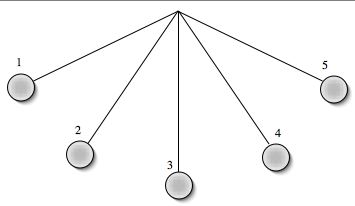
When a pendulum swings, at which point is kinetic energy highest?
a)
1
b)
2
c)
3
d)
4
46.
Explain what happens to the potential energy of a rock as it falls off the side of a cliff.
a)
The kinetic energy decreases as the potential energy increases.
b)
The kinetic energy decreases as the potential energy decreases.
c)
The potential energy decreases as the kinetic energy increases.
d)
The potential energy decreases as the kinetic energy decreases. 
47.
Click to look at the picture. 
The picture is an example of _____ .
a)
gravity
b)
potential energy
c)
kinetic energy
d)
friction
48.

The sun provides ____________ and ____________ energy that can be harnessed and used for solar power.

a)

chemical, sound

b)

mechanical, light

c)

sound, light

d)

light, thermal

49.

Energy can't be .....

a)

transformed.

b)

made or destroyed.

c)

converted.

d)

harnessed or produced.

50.
This is energy that is stored for later use. 
a)
kinetic energy 
b)
potential energy 
c)
mechanical energy 
d)
electromagnetic energy. 
51.
Light is a form of __________ energy. 
a)
Sound 
b)
Electromagnetic
c)
Fun
d)
Thermal 
52.
___________ energy can move through empty space.  
a)
Sound 
b)
Nuclear 
c)
Electromagnetic 
d)
Chemical 
53.
This is the energy that moves objects. 
a)
cool 
b)
nuclear 
c)
chemical 
d)
mechanical 
54.
This is the energy of vibrating molecules that move through matter. 
a)
sound 
b)
thermal 
c)
mechanical 
d)
electrical 
55.
The is the energy due to the splitting of atoms. 
a)
nuclear 
b)
chemical 
c)
mechanical 
d)
sound 
56.
The energy from the random movement of particles is _______ energy.
a)
chemical 
b)
potential 
c)
thermal 
d)
interesting 
57.
The splitting of a nucleus into smaller nuclei is
a)
fusion
b)
fission
c)
decay
d)
gamma radiation
58.
This happens naturally due to an unstable nucleus.
a)
fission
b)
fusion
c)
radioactive decay
d)
K-capture
59.

This is an example of...

a)

Chain reaction

b)

Fusion reaction

c)

Decomposition reaction

d)

Decay

60.
Where does fusion occur naturally?
a)
Underwater
b)
All around us
c)
In the radioactive waste
d)
On the sun
61.
Takes two small nuclei and combines them into a larger nucleus
a)
fission
b)
fusion