wayground logo

Free Printable Worksheets

NEW

Font size

S
M
L
XL
Worksheets

sound

Total questions: 65

Worksheet time: 2hrs 10mins
Name
Class
Date
1.
You and your father inspect an empty house with the hopes of buying it. You walk through the rooms talking to one another, and you notice that your voices and footsteps are echoing in the big, empty house. What causes the echo?
a)
sound waves reflecting off smooth, flat surfaces throughout the house
b)
sound waves moving around the large rooms
c)
sound waves moving slowly through air
d)
sound waves refracting around corners in the empty rooms
2.
Hearing your brother's music playing from down the hall is an example of what type of wave interaction?
a)
reflection
b)
interference
c)
refraction
d)
diffraction
3.
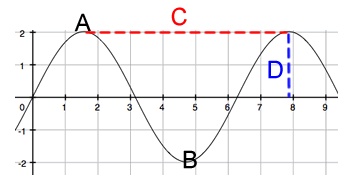
If distance C on the diagram increased, what would happen to the pitch? 
a)
The pitch would be louder. 
b)
The pitch would be softer. 
c)
The pitch would be higher. 
d)
The pitch would be lower. 
4.
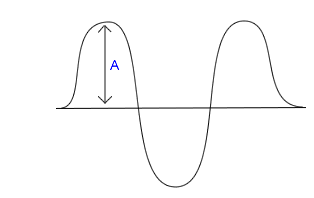
If the distance represented by the letter A were increased, how would it change the way the sound was heard?
a)
The sound would be higher. 
b)
The sound would be lower. 
c)
The sound would be softer. 
d)
The sound would be louder. 
5.
______ is how high or low a sound is; depends on the frequency.
a)
pitch
b)
frequency
c)
sound
d)
medium
6.
A soft, low pitch sound would have which of the following....
a)
low frequency 
high amplitude 
b)
high frequency 
high amplitude 
c)
low frequency 
low wavelength  
d)
low frequency
low amplitude 
7.
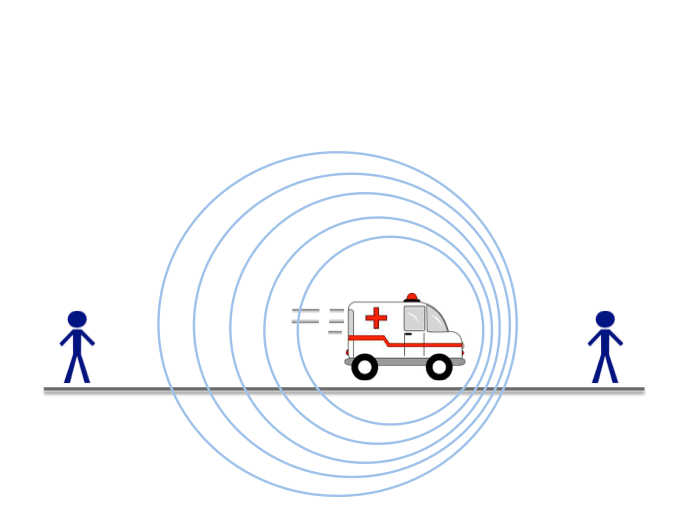
When the car moves AWAY from you, its horn seems...
a)
Low pitched
b)
High pitched
c)
Normal
8.
How are light waves and sound waves similar?
a)
The both carry matter & energy
b)
They both carry energy.
c)
They both travel in vacuums.
d)
They both carry matter.
9.

Sound travels fastest in...

a)

solids

b)

liquids

c)

gases

d)

air

10.
Sound is a form of? 
a)
energy
b)
pitch
c)
volume
11.
An object that does not vibrate cannot produce
a)
sound
b)
light
c)
heat
d)
electricity
12.

A place where no sound exists is...

a)

in the air

b)

under water

c)

space

d)

all of the above

13.
__________ means to move back and forth quickly.
a)
Pitch
b)
Amplitude
c)
Vibration
d)
Echo
14.
Sound is a form of energy produced by ______________.
a)
vibrations
b)
distances
c)
prisms
d)
Ms. Crews
15.
Sound waves travel the SLOWEST through _____________.
a)
gases
b)
solids
c)
liquids
16.
The volume of a sound is measured in units called ________
a)
decibels
b)
liters
c)
sound waves
d)
inches per minute
17.
Why is sound able to travel faster through a solid than a gas?
a)
Gas molecules are packed tightly.
b)
Sound does not travel faster through a solid than a gas.
c)
Solid molecules are packed tightly.
d)
Gas molecules move slowly.
18.
Sound does not travel in space because
a)
Space is too far away.
b)
There is no matter in space.
c)
Space is the final frontier
d)
Space has planets.
19.
You stand outside a room that has the doors and windows closed. Why can you still hear sounds made inside the room?
a)
Vibrations are absorbed in the doors and windows
b)
Vibrations are reflected inside the room
c)
Vibrations travel through the door and the window
d)
Vibrations echo in the room
20.
Why do we see lightning before we hear the thunder?
a)
Our eyes trick us
b)
Light travels faster than sound
c)
they're two separate things
21.

Which of these is NOT a medium?

a)

light

b)

air

c)

wood

d)

metal

22.

Which sentence BEST describes how sound moves?

a)

Sound can move through solids, liquids, or gases.

b)

Sound can move through empty space or through matter.

c)

Sound can move through solids and liquids but not through gases.

d)

Sound can move through liquids and gases but not through solids.

23.

How can I produce a sound?

a)

heating an object

b)

hitting an object

c)

moving the mouth

d)

looking an object

24.
Which of the following is an example of sound traveling through a solid?
a)
When you hear people in another room
b)
When you hear things underwater
c)
When you are talking to the person next to you
d)
Sound cannot travel through solids
25.

When people speak their ________ vibrate.

a)

ear drums

b)

vocal chords

c)

ears

d)

tongue

26.

Sarah and Maria made a telephone using two cans and a string. It was a very long string. Maria went upstairs in her house and Sarah stayed downstairs. Maria spoke softly into the can. "I can hear you!' Sarah said back. How can this happen?

a)

Sound waves travel through a vacuum.

b)

Sound waves travel from high to low.

c)

Sound waves travel through solids like the string.

d)

Maria talked so loudly that Sarah could hear her without the phone.

27.

Sound travels faster in objects that have a greater.....

a)

Mass

b)

Density

c)

Volume

d)

Yards

28.
Area of a longitudinal wave where particles are CLOSE together.
a)
Compression
b)
Rarefaction
29.
Area of a longitudinal wave where particles are APART. 
a)
Compression
b)
Rarefaction
30.
Which device measures sound waves?
a)
Oscilloscope
b)
Stethoscope 
c)
Radio
d)
I don't know
31.
The reflection of sound waves off of a hard surface can create ______.
a)
A wave
b)
An echo 
32.
Soft surfaces _______ sound waves. 
a)
Reflect
b)
Absorb
33.
Sound travels FASTEST through which of these materials?
a)
Air
b)
Empty space
c)
Metal
d)
Water
34.
What is volume?
a)
how high or low a sound is
b)
the loudness or softness of a sound
c)
the number of vibrations per second
d)
vibrations
35.
Amplitude is used to measure what?
a)
Pitch
b)
Volume
c)
Sound
d)
Echoes
36.
A rapid back and forth movement?
a)
Echo
b)
Vibrate
c)
Pitch
d)
Amplitude
37.
A sound with a low frequency and low amplitude would be....
a)
Loud with a high pitch
b)
Loud with a low pitch
c)
Quiet with a high pitch
d)
Quiet with a low pitch
38.
We measure pitch in....
a)
Volume
b)
Decibles
c)
Amplitude
d)
Frequency
39.
How LOUD or quiet a sound is...
a)
Pitch
b)
Fequency
c)
Volume
d)
Echo
40.
Energy that you can hear? 
a)
Sound
b)
Light 
c)
Heat 
d)
pitch
41.
When a sound bounces back at you off of a surface
a)
Volume
b)
Pitch
c)
Frequency
d)
Echo
42.
How High or Low a sound is
a)
Volume
b)
Amplitude
c)
Pitch
d)
Vibrate
43.
We measure sound in...
a)
Decimals
b)
Decibles
c)
Frequency 
d)
Amplitude
44.

What type of wave are sound wave?

a)

longitudinal

b)

transverse

c)

electromagnetic

d)

sea wave

45.

In which medium sound can't travel?

a)

solid

b)

liquid

c)

gas

d)

vacuum

46.

What is an echo

a)

deflected sound

b)

refracted sound

c)

reflected sound

d)

diffracted sound

47.

In which medium speed of sound are fastest?

a)

vacuum

b)

solid

c)

liquid

d)

gas

48.

What is the range of frequencies audible to the human ear

a)

lower than 20 Hz

b)

20 Hz - 20.000 Hz

c)

higher than 20.000 Hz

d)

0 Hz - infinite Hz

49.

What is ultrasound?

a)

Sound with a frequency higher than 20.000 Hz

b)

Sound with a frequency lower than 20 Hz

c)

Sound with a frequency 20 Hz

d)

sound with a frequency 20.000 Hz

50.

look at the picture. There are 4 sound wave with different amplitude and wavelength. Which sound wave has loudest sound?

a)

A

b)

B

c)

C

d)

D

51.

look at the picture. There are 4 sound wave with different amplitude and wavelength. Which sound wave has highest pitch?

a)

A

b)

B

c)

C

d)

D

52.
Sound does not travel in space because
a)
Space is too far away.
b)
There is no matter in space.
c)
Space is the final frontier
d)
Space has planets.
53.
Why is the school library covered with carpet?
a)
So everyone can make a lot of noise
b)
to help absorb sounds to keep it quiet
c)
because it looks good
d)
to help absorb sounds so it can stay noisy
54.
How will loud sound affect your hearing? 
a)
More Ear Wax 
b)
Make it better 
c)
Damage it 
d)
No affect 
55.
The reflection of sound waves off of a hard surface can create ______.
a)
A wave
b)
An echo 
56.
___________ measures  how close or  far particles are.
a)
Amplitude
b)
Frequency 
57.
________ describes how LOUD a sound is. 
a)
Amplitude
b)
Frequency 
58.
____________ is determined by sound wave's frequency. 
a)
Compression
b)
Pitch 
59.
What part of the ear is #2?
a)
Ear canal
b)
Ear wax
c)
Ear drum
d)
Outer ear 
60.
What part of the ear is #1?
a)
Ear drum
b)
Outer ear
c)
Ear canal
d)
Cochlea
61.
What part of the ear is #3?
a)
Ear canal
b)
Hammer
c)
Ear drum
d)
Ear canal
62.
High pitch sounds are caused by a ______ vibration
a)
fast 
b)
slow
c)
hard
d)
soft
63.
Low pitch sounds are caused by a ______ vibration
a)
fast 
b)
slow
c)
hard
d)
soft
64.
True or False: Sound travels better through solids than through liquids
a)
True 
b)
False
65.
What is a pitch?
a)
highness or lowness of a sound
b)
the intensity of a vibration
c)
the amplitude of the sound wave
d)
volume of sound