
 Worksheets
ISAT Standard PS3 - Energy
Total questions: 68
Worksheet time: 1hrs 19mins




Increasing an object's mass will increase its kinetic energy.
True
False

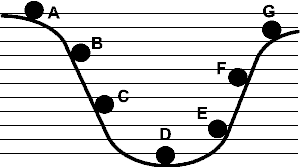
Where would this baseball have the least amount of kinetic energy?
W
X
Y
Z
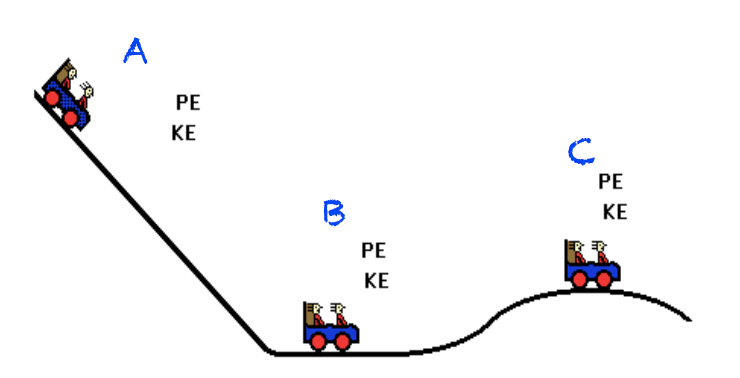
The coaster at B is at -
Maximum PE, Minimum KE
Minimum PE, Minimum KE
Minimum PE, Maximum KE
Maximum PE, Maximum KE

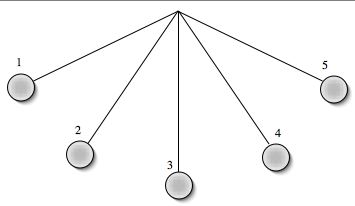
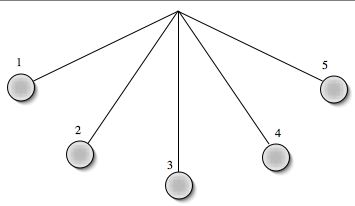
Which number shows kinetic energy at its maximum?
three
two
four
five
An object falling from 50 m will have ______ potential than an object falling from 40 m.
greater
less
equal
lower
If you have 2 objects with different masses fall from the same height, which one has more potential energy?
smallest
flattest
larger
rounder
The amount of kinetic energy in an object is determined by...
Mass and Speed
Speed and height
Mass and Height
Speed and Velocity
An objects potential energy will increase with...
Mass and Velocity
Mass and Height
Mass and Speed
Speed and time
m x g x h , what is this the equation for?
Potential Energy
Kinectic Energy
Mass
Height
21mv2 , what is this the equations for
Velocity
Mass
Kienetic Eenrgy
Potentail Energy
Thermal energy being transferred from a hot mug of cocoa to the table it is sitting on is an example of __________.
convection
conduction
radiation
chemistry
Which best explains how this roasting marshmallows happens?
Heat from the fire is conducted to the marshmallow.
Heat from the fire is radiated to the marshmallow.
The coolness of the marshmallow is conducted to the fire.
The coolness of the marshmallow is radiated to the fire.
Which best describes heat transfer by radiation?
A slice of bacon frying in a pan.
A pot on a stove boiling water.
Cooking a hotdog in a microwave.
A hot air balloon.
Which of the following best describes CONVECTION?
When heat is transferred through waves.
When heat is transferred through objects that are touching.
The movement of gas or liquid in which warmer parts move up and the colder parts moves down.

Warm air rises and the cool air sinks demonstrates this type of heat transfer.
Conduction
Convection
Radiation

Walking on hot sand with your bare feet shows this type of heat transfer.
conduction
convection
radiation

Ironing a shirt is an example of:
condensation
evaporation
conduction
convection

This is the transfer of thermal energy through "space".
conduction
radiation
convection
spaceship


a convective flow of energy is set up inside the iron bar.
energy is conducted from atom to atom along the length of the iron bar.

Which type of heat transfer is happening inside the hot air balloon?
convection
conduction
radiation
hot air balloon

Heat transfers from an area of ________ temperature to an area of _______ temperature.
high to low
low to high
high to high
low to low
What happens to temperature in a endothermic reaction?
Temperature increases
Temperature decreases
There is no change in temperature
Energy is given off
What happens to energy in an endothermic reaction?
energy is given off
energy is absorbed
energy is equal throughout the reaction
temperature increases
What happens to temperature in a exothermic reaction?
temperature decreases
there is no change in temperature
temperature increases
energy is absorbed
What happens to energy in an exothermic reaction?
energy is absorbed
energy is constant
energy is both released and absorbed
energy is released

Mr. Reynolds' cheap cooler only kept his soda cold for 6 hours (before all the ice melted). Why?
The heat energy inside the cooler went to the outside
The coldness escaped to the outside of the cooler
The heat energy outside the cooler went to the inside
Plastic is a poor insulator of heat energy

Mr. Reynolds got him a Yeti cooler for Valentine's Day- which keeps soda cold ALL WEEKEND! Why does it work better?
It is a much better conductor of heat energy
It prevents air molecules from getting inside the cooler
It stops the motion of molecules inside the cooler
It is better insulated to prevent heat energy from getting inside
The flow of thermal energy.
Heat
Temperature
Thermal Energy
Absolute Zero
The average kinetic energy of particles in a substance.
Heat
Temperature
Thermal Energy
Absolute Zero
The total kinetic energy of particles in a substance.
Heat
Temperature
Thermal Energy
Absolute Zero
Heat always moves from...
warm area to cold areas.
cold areas to warm areas.
evenly from warm to cold and cold to warm.
The temperature of a substance increases as___.
the substance's mass increases
the average kinetic energy of its particles increases
the substance's volume increases
When temperature decreases, the particles move __________.
faster
slower

A thermometer measures the _______________________.
temperature
potential energy
mass

Which one has a higher temperature?
Boiling Kettle
Freezing Iceberg
Which one has a higher thermal energy?
Boiling Kettle
Freezing Iceberg
The ICEBERG has a higher thermal energy because:
Iceberg's temperature is higher than the kettle.
The amount of particles in the iceberg is much more than the kettle.

Why do we wear sweaters in cold weather?
To reduce heat loss.
To reduce cold gain.
When holding an ice cube, what causes the ice to melt?
Thermal energy from the ice is transferred to the air.
Thermal energy from the hand is transferred to the ice.
The hand absorbs thermal energy from the ice.
Hot coffee in a mug cools over time and the mug warms up. Which describes the energy in this system?
Thermal energy from the coffee is transferred to the mug.
Thermal energy from the mug is transferred to the coffee.
The average kinetic energy of the particles in the mug decreases.
What happens when the thermal energy of a substance increases?
Both the motion of the particles in the substance and the temperature of the substance increase.
Both the motion of the particles in the substance and the temperature of the substance decrease.
The motion of the particles in the substance increases, and the temperature of the substance decreases.

Substance X has the highest temperature because its particles have more kinetic energy.
Substance X has the highest temperature because it has fewer particles.
Substance Y has the highest temperature because it particles have more kinetic energy.
What happens to the temperature of a substance when it is experiencing a change of state (undergoing a phase change)?
temperature increases
temperature decreases
temperature stays the same
temperature reaches thermal equilibrium
In which state do particles move fastest and with little effect on each other and fill the shape of whatever container they are in?
solid
liquid
gas
water

The graph below is called a phase change diagram (or heating curve). This graph shows water changing from one state of matter to another based on temperature and the addition or removal of heat over time. At which point on the graph would water be entirely SOLID?
A
B
C
D
E
The graph below is called a phase change diagram (or heating curve). This graph shows water changing from one state of matter to another based on temperature and the addition or removal of heat over time. At which point on the graph would water be entirely LIQUID?
A
B
C
D
E
The graph below is called a phase change diagram (or heating curve). This graph shows water changing from one state of matter to another based on temperature and the addition or removal of heat over time. At which point on the graph would water be entirely GAS?
A
B
C
D
E
Which best describes what's happening at 0° C
All the particles are liquid
Water particles are in a phase transition between solid and liquid
Water particles are in a phase transition between liquid and gas
All the particles are solid
Which best describes what's happening at 100° C
All the particles are liquid
Water particles are in a phase transition between solid and liquid
Water particles are in a phase transition between liquid and gas
All the particles are gas
Which of the following statements are true about point B
The waters current temperature is 0° C
The water is increasing in temperature
Some particles are solid and some are liquid
If the water loses energy all of the particles will become solid
Are the melting and freezing points for a substance the same temperature?
Yes
No
Depends on the substance

