
 Worksheets
2. Revision Biology VII
Total questions: 80
Worksheet time: 59mins
these plants have a system of tubes to carry water and nutrients from the roots to the leaves
mosses
vascular
non-vascular
tropisms

these plants are non-vascular and seedless
mosses
ferns
conifers
flowering plants

This group of plants is vascular and has seeds in cones. The name means "naked seeds."
mosses
ferns
gymnosperms
angiosperms

This group of plants is vascular and has seeds in flowers or fruits.
mosses
ferns
gymnosperms
angiosperms
Tulips, daisies, sunflowers, apple trees, maple trees
mosses
ferns
gymnosperms
angiosperms
Spruce, Ginkgo, Fir, and Pine trees
mosses
ferns
gymnosperms
angiosperms
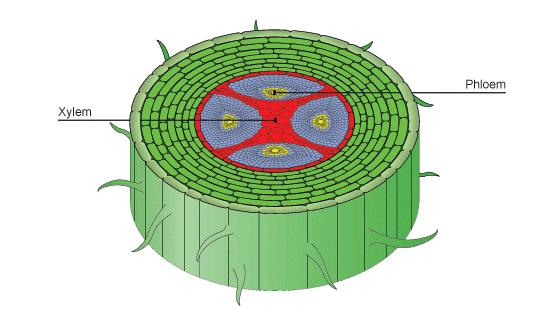
Specific type of plant tissue that transports water and minerals from the roots, through the stems, to leaves
vascular plant
nonvascular plant
xylem
phloem

Specific type of plant tissue that transports food (sugar) made in the leaves to the entire plant
vascular plant
nonvascular plant
xylem
phloem
Examples of these plants include mosses, liverworts, and other plants with no xylem or phloem
dicot
Gymnosperms
Angiosprems
Bryophytes
these plants have a system of tubes to carry water and nutrients from the roots to the leaves (choose all that apply)
mosses
ferns
conifers
flowering plants
ALL plants are
eukaryotic
prokaryotic
unicellular
mutlicellular

Plants are called __________ because they can make their own food (choose all that apply)
heterotrophs
autotrophs
consumers
producers
Mosses and ferns are seedless so they reproduce by
cones
flowers
spores
pollen

This group of plants is vascular and seedless. They reproduce with spores under their fronds.
mosses
ferns
gymnosperms
angiosperms

a plant with a cycle of ONE year is a(n)
annual
biennial
perennial

a plant that comes back year after year is called a(n)
annual
biennial
perennial
Prokaryotic cells are
cells lack organized nucleus and membrane-bound organelles
Cells that have a nucleus with cell wall and membrane
Cells that are free of ribosomes and DNA
Cells that do not have a membrane or flagellum
Hierarchical classification and Binomial nomenclature are proposed by
Carolus Linnaeus
Robert Whittaker
Carl Woese
Bacteria are organisms in Kingdom
Protista
Monera
Fungi
Plantae
Animalia
All bacteria are bad
True
False
Where do we find bacteria?
Only in rotten food
Only outside
Everywhere
Only in our digestive system
A eukaryotic cell
has no cell membrane and no nucleus
has a cell membrane and a nucleus
has no cell wall
has a cell wall
Which of the units below is not present in a bacterial cell?
Plasmid
Mitochondria
Flagella
Capsule

Part A is used for movement, what is it?
Flagella
Capsule
Pseudopods
Plasmid
Saprophytic bacteria are
Bacteria that feed on a living host
Bacteria that feed on dead organisms
Bacteria that use chemical reactions to provide energy


Identify the correct taxon order
domain, kingdom, phylum,order,class,family,genus,species
domain, kingdom, phylum, class, order, genus, family, species
domain, phylum, kingdom, class, order, genus, family, species
domain, kingdom, phylum, class, order, family, genus, species
Identify the mode of nutrition of a mushroom?
saprophytic
photosynthetic
holozoic

In the absence of light, this organism...
cannot move
undergo photosynthesis
undergo heterotrophic nutrition
become parasite

this unicellular organism is NOT in Kingdom Monera due of the presence of
distinct nucleus
flagella
cup-shaped chloroplast
Fungi are reproduced by
flower
seed
spore
cone
What is the similarity between Kingdom Monera, Fungi and Plantae?
All organisms consist of cell walls.
All organisms are eukaryotes.
All organisms are multicellular.
All organisms are not autotrophs.
Fungi have several ways of asexual reproduction such as
produce spores enclosed in sporangia
naked spores known as conidia
budding
all of the above
Which of the following statements about organisms in the kingdom Fungi are TRUE?
I. Cell wall mainly made of chitin
II. Stores glycogen
III. Some fungi are motile
IV. Heterotrophs
I, II and III
I, II and IV
II, III and IV
I, II, III and IV
Fungi are NOT classified as plants because
They do not have cell wall
They produce asexual spores
They do not produce flowers
They do not have chlorophyll
Fungi can exist as
I. saprotrophs
II. autotrophs
III. parasites
IV. mutualists
I only
I, II and III
I, III and IV
I, II and III
Which of the following is the mode of digestion for fungi?
Photosynthetic
Chemotrophic
Saprophytic
Holozoic
Which of the following is a rootlike structure of a mold?
Rhizoid
Stolon
Gametangium
Zygospore
A tangled mass of hyphae
Fungi
Mold
Mycelium
Penicillin
An organism that obtain food from decaying organic matter
mutualistic
autotrophs
parasites
saprobes
A symbiotic association between a fungus and an alga or cyanobacterium is a
mycorrhiza
fruiting body
lichen
mushroom
In baking, yeast cells bud and carry out the process of
lactic acid fermentation
aerobic respiration
alcoholic fermentation
digestion


The protist, euglena, is special because of its ability to ....
come in three different shapes: rod, round, or spiral.
move through water with their structure, the pseudopodia.
make their own food or consume other organisms for food.
eat through a oral groove that serves as a mouth.

Describe how the protist, amoeba, gets its food?
The protist paralyzes it's prey with its flagella to adsorb the food.
Uses cilia to sweep food in its oval groove.
The pseudopodia surrounds and engulfs its prey.
The chloroplasts captures energy from sunlight to make food.

Under a microscope, a single-celled eurkaryotic organism contains small-like hairs that beat and help the organism move and sweep food in its mouth. Identify this structure used for locomotion and to sweep food in the organism's mouth.
cilia
flagella
pseudopodia
chloroplast

Which structure on the paramecium has the same function as specialized structure on the euglena?
1
2
3
4

What is the difference between the two organisms in the photo?
Euglena moves with cilia; amoeba move with pseudopodia.
Euglena can be photosynthetic; ameoba is never photosynthetic.
Euglena is bacterium; amoeba is protista.
Euglena moves with a flagellum; amoeba is unable to move.

According to diagram, which microbes have both a cilia and nucleus?
1
2
3
4

According to diagram, which microbe has both a pseudopodia and a nucleus?
1
2
3
4

A student lists characteristics of two organism on the diagram. Identify the protist.
1: euglena; 2:amoeba
1: paramecium; 2: euglena
1: amoeba; 2: paramecium
1: euglena; 2: paramecim

I am always multicellular, eukaryote and a heterotroph What kingdom do I belong to?
Animalia
Plantae
Fungi
Prokaryote
What does a cilia belong to?
Amoeba
Euglena
Paramecium
Volvox
Name all the protists
Amoeba
Paramecium
Fungi
Euglena


The name for bad bacteria is:
(a)
Examples where bacteria are useful include:
In the nitrogen cycle
Breaking down food in the digestive system
Fighting pathogens
All of the above

