

wayground logo

Free Printable Worksheets

Font size

S
M
L
XL
Worksheets

Photosynthesis VS Cellular Respiration

Total questions: 67

Worksheet time: 2hrs 33mins
Name
Class
Date
1.
What are the products of photosynthesis?
a)
water and carbon dioxide
b)
oxygen and glucose
c)
oxygen and carbon dioxide
d)
oxygen and water
2.
Plants need ________ for photosynthesis
a)
oxygen
b)
soil
c)
carbon dioxide
d)
sugar
3.
What is photosynthesis?
a)
The process in which humans eat their food
b)
When a photographer takes a photo.
c)
To get your pictures from the photo lab.
d)
The process in which plants make their food.
4.
Which of the following is the correct equation for PHOTOSYNTHESIS?
a)
CO+ light + H2O --> O+ Sugar
b)
CO+ sugar + H2O --> O+ light
c)
O2 + light + H2O --> CO+ Sugar
d)
CO+ O2 + H2O --> Light+ Sugar
5.
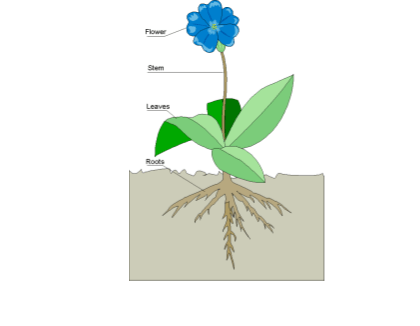
Which plant part absorbs water and nutrients?
a)
Leaf
b)
Stem
c)
Roots
d)
Flower
6.

Where do plants get the energy for photosynthesis to take place?

a)

nutrients in the soil

b)

the sun

c)

chlorophyll

d)

bee pollination

7.

Photosynthesis is used to produce food for plants in the form of glucose. In the process, oxygen is released. As shown in the diagram, plants require water and carbon dioxide (from the air). What else is required for photosynthesis and what role does it play?

a)

Light is required to provide energy for photosynthesis.

b)

ATP is required as an energy source for photosynthesis.

c)

Glucose is required as an energy source for photosynthesis

d)

Oxygen is required to split water molecules in photosynthesis.

8.
What does chlorophyll capture?
a)
Chlorophyll captures water from the air.
b)
Chlorophyll captures carbon dioxide from the air.
c)
Chlorophyll captures the energy of sunlight.
d)
Chlorophyll captures baseballs.
9.
During photosynthesis, what form does the food take?
a)
The food takes the form of sugar.
b)
The food takes the form of carbon dioxide.
c)
The food takes the form of soil.
d)
The food takes the form of a ham sandwich.
10.
The energy released from sugar was once energy from what?
a)
The energy from sugar was once energy from water.
b)
The energy from sugar was once energy from the air.
c)
The energy from sugar was once energy from the sun.
d)
The energy from sugar was once energy from an iPad battery.
11.
Leaves use the energy from the sun to change carbon dioxide and water into what?
a)
chlorophyll
b)
oxygen
c)
carbon dioxide
d)
sugar
12.
Where does photosynthesis take place?
a)
The leaves.
b)
The roots.
c)
The branches.
d)
The kitchen.
13.

What pigment captures/absorbs sunlight?

a)

stomata

b)

chlorophyll

c)

chloroplast

d)

phloem

14.

What is the tiny openings that let in the carbon dioxide needed for photosynthesis?

a)

stomata

b)

xylem

c)

phloem

d)

chloroplast

15.

Which product is "waste" and mostly released by the producer (plant)?

a)

oxygen

b)

carbon dioxide

c)

sugar

d)

glucose

16.

Which of the following are TRUE statements? (Select ALL that apply)

a)

Photosynthesis takes place in the chloroplasts of leaf cells

b)

Photosynthesis means "making food using sun"

c)

Photosynthesis can occur in the dark

d)

All plants, plant-like protists, and some bacteria go through photosynthesis

17.

2. What gas goes into the plant during photosynthesis?

a)

Oxygen

b)

Nitrogen

c)

Carbon dioxide

d)

Hydrogen

18.

4. Most plant appear green because of _________________ .

a)

oxygen

b)

chlorophyll

c)

carbon dioxide

d)

water

19.

6. Where do plants get the energy for photosynthesis to take place?

a)

Nutrients in the soil

b)

The Sun

c)

Pollination

d)

Chlorophyll

20.

7. TRUE or FALSE: Plants make their own food and use the energy from the food that is made.

a)

True

b)

False

21.

9. What are the 3 main ingredients needed for photosynthesis

a)

glucose, oxygen, carbon dioxide

b)

carbon dioxide, water, glucose

c)

water, soil, sunlight

d)

sunlight, water, carbon dioxide

22.
Which of the following is the correct equation for PHOTOSYNTHESIS?
a)
CO+ light + H2O --> O+ Sugar
b)
CO+ sugar + H2O --> O+ light
c)
O2 + light + H2O --> CO+ Sugar
d)
CO+ O2 + H2O --> Light+ Sugar
23.
What is the pigment in chloroplasts that performs photosynthesis?
a)
Chlorosynthesis
b)
Chlorophyll
c)
ADP
d)
Electron Transport
24.
Which statement about photosynthesis is correct?
a)
Plants get the energy they need for photosynthesis from water.
b)
Plants get the energy they need for photosynthesis from soil.
c)
Plants get the energy they need for photosynthesis from sunlight.
d)
Plants get the energy they need for photosynthesis from carbon dioxide.
25.
Most plants appear green because chlorophyll
a)
absorbs green light.
b)
absorbs violet light.
c)
reflects green light.
d)
does not absorb violet light.
26.
In which  organelle does photosynthesis occur?
a)
mitochondria
b)
stomata
c)
xylem
d)
chloroplast
27.
What are the products of photosynthesis?
a)
Glucose and Chlorophyll
b)
Glucose and Oxygen
c)
Water and Light energy
d)
Carbon Dioxide and Light energy
28.
How does photosynthesis benefit heterotrophs?
a)
It adds carbon dioxide to the air.
b)
It creates a source of energy they can eat.
c)
It creates clean water.
d)
It eliminates harmful sugars.
29.
What are the reactants for cellular respiration?
a)
glucose and carbon dioxide
b)
water and glucose
c)
glucose and ATP
d)
glucose and oxygen
30.

In photosynthesis, energy is transformed from

a)

Light energy to chemical energy

b)

Chemical energy to light energy

c)

ATP energy to light energy

d)

Light energy to dark energy

31.
How can photosynthesis be related to cellular respiration?
a)
What's produced (made) by one is needed (the reactants) for the other
b)
They both produce the same products
c)
They both have the same reactants (need the same things)
d)
These 2 processes have nothing in common
32.

Which organelle is in this picture?

a)

Mitochondria

b)

Ribosome

c)

Chloroplast

d)

Nucleus

33.

Which organelle is in this picture?

a)

Nucleus

b)

Golgi Apparatus

c)

Chloroplast

d)

Mitochondria

34.

Which types of cells does cellular respiration take place in?

a)

Plant cells only

b)

Animal cells only

c)

Neither plant cells nor animal cells

d)

Both plant and animal cells

35.

Any organism that can create its own food from inorganic materials.

a)

autotroph

b)

heterotroph

c)

photosynthesis

d)

cellular respiration

36.

An organism that cannot create its own energy and must instead rely on consuming nutrients from other organisms.

a)

fermentation

b)

photosynthesis

c)

heterotroph

d)

autotroph

37.

The form of in cell respiration that requires free oxygen.

a)

aerobic

b)

anaerobic

c)

photosynthesis

d)

cellular respiration

38.

The form of cell respiration that can take place in the absence of free oxygen.

a)

diffusion

b)

anaerobic

c)

aerobic

d)

osmosis

39.

This is the cell organelle called a Mitochondria, it is commonly referred to as the powerhouse of the cell. What cells can you find it in?

a)

Animal Cells Only

b)

Plant Cells Only

c)

Both Plant and Animal Cells

d)

Bacteria Cells Only

40.
Chloroplasts are organelles found in leaves.
a)
TRUE
b)
FALSE
41.
This molecule contains three phosphate groups
a)
ADP
b)
ATP
c)
Mitochondria
d)
Nucleus
42.
Use the diagram to answer the question. Between which parts of the molecule must the bonds be broken to form an ADP molecule?
a)
A and B
b)
A and C
c)
B and C
d)
C and D
43.
When a bond is broken
a)
energy is stored
b)
energy is released
44.
When a bond is made
a)
energy is stored
b)
energy is released
45.

What happens if there is no oxygen available for cellular respiration?

a)

Fermentation

b)

Photosynthesis

c)

Amino Acids

46.

What are the reactants of cellular respiration?

a)

Oxygen and glucose

b)

Carbon dioxide and glucose

c)

Sunlight and oxygen

d)

Carbon dioxide and sunlight

47.

Cellular Respiration is the process of what?

a)

Cells making food for themselves

b)

Cells turning glucose into energy and carbon dioxide

c)

Cells absorbing food

48.

What are the products of cellular respiration?

a)

Carbon Dioxide and Oxygen

b)

Oxygen and Sugar

c)

Sugar and Carbon Dioxide

d)

Carbon Dioxide and Water

49.

Because plants can do both photosynthesis and cellular respiration, plants have

a)

Chloroplasts only

b)

Mitochondria only

c)

Chloroplasts and Mitochondria

50.
During cellular respiration, what do animal cells use to produce energy from food?
a)
sunlight
b)
meat
c)
water
d)
oxygen
51.
What are the reactants (what's needed) for photosynthesis?
a)
glucose and oxygen
b)
light, water, and carbon dioxide
52.
What is the purpose of photosynthesis?
a)
make glucose
b)
make ATP
c)
make light
d)
release carbon dioxide
53.
In which organelle (part of the cell) does photosynthesis take place?
a)
mitochondria
b)
chloroplast
c)
nucleus
d)
cell membrane
54.
What is one of the reactants of cellular respiration?
a)
energy
b)
glucose
c)
carbon dioxide
d)
water
55.
In which way are photosynthesis and cellular respiration different?
a)
Cellular respiration stores ATP, while photosynthesis releases ATP.
b)
Cellular respiration produces oxygen, while photosynthesis uses oxygen.
c)
Photosynthesis releases energy, while cellular respiration stores energy.
d)
Photosynthesis used carbon dioxide, while cellular respiration produces carbon dioxide.
56.
Cellular Respiration's goal is to
a)
make water
b)
make ATP
c)
make glucose
d)
make  oxygen
57.

What are the inputs of photosynthesis?

a)

Sunlight

b)

Oxygen

c)

Carbon Dioxide

d)

Water

e)

Glucose

58.

What are the outputs of photosynthesis?

a)

Sunlight

b)

Oxygen

c)

Carbon Dioxide

d)

Glucose

e)

Water

59.

What is the purpose of photosynthesis?

a)

To make oxygen for animals.

b)

To make matter and energy for plants.

c)

To make matter and energy for animals.

d)

To make oxygen for plants.

60.

What are the reactants (taken into) of cellular respiration? (Mark all of them!)

a)

oxygen

b)

glucose

c)

carbon dioxide

d)

water

e)

energy

61.

white light can be separated into_____.

a)

different colors (wavelengths) of light

b)

nothing

c)

black light

d)

only red and blue light

62.

what is the chemical formula for glucose and why is it important?

a)

C6H12O6C_6H_{12}O_6 ; it gives energy to living organisms

b)

C12H6O12C_{12}H_6O_{12} ; it gives energy to living organisms

c)

C6H12O6C_6H_{12}O_6 ; it is not important

d)

C12H6O12C_{12}H_6O_{12} ; it is not important

63.

plant/animal relationship:

a)

plants give us oxygen; we give plants carbon dioxide

b)

plants give us carbon dioxide; we give plants oxygen

c)

plants give us glucose; we give plants oxygen

d)

plants give us oxygen; we give plants glucose

64.

What does C6H12O6 tell you about the glucose molecule?

a)

That it has 6 carbon (C) atoms, 12 hydrogen (H) atoms, and 6 oxygen (O) atoms

b)

That it has too many atoms for us to count, so we just assign random numbers to show that its really big

c)

That it is smaller than a water (H2O) atom

d)

That it has 12 carbon (C) atoms, 12 hydrogen (H) atoms, and 12 oxygen (O) atoms

65.

If you run as fast as you can for 5 minutes, your cells in your muscles will most likely use which process to get the energy?

a)

cellular respiration

b)

fermentation

c)

photosynthesis

d)

ribosomes

66.
What cells in the body may undergo lactic acid fermentation during exercise? 
a)
Muscle cells
b)
Fat cells
c)
Liver cells
d)
Skin cells
67.

What kind of relationship does Cellular Respiration and Photosynthesis reactions have?

a)

they are the same

b)

there is no relationship

c)

they are opposite

d)

all cells perform both processes
