Wayground logo

Free Printable Worksheets

Font size

S
M
L
XL
Worksheets

PBS - 1.1.3 Practice Test

Total questions: 38

Worksheet time: 19mins

Name
Class
Date
1.

Label the part of the microscope. What is part A?

a)

eyepiece lens

b)

eyepiece tube

c)

turret

d)

objective lens

2.

Label the part of the microscope. What is part D?

a)

body

b)

foot

c)

objective lens

d)

turret

3.

Label the part of the microscope. What is part E?

a)

stage

b)

stage clips

c)

focus knob

d)

eyepiece tube

4.

Label the part of the microscope. What is part F?

a)

stage

b)

stage clips

c)

body

d)

focus knob

5.
What part is 3?
a)
eye piece
b)
base
c)
arm 
d)
coarse adjust
6.
What part is 5?
a)
coarse adjustment
b)
fine adjustment
c)
diaphragm
d)
stage
7.
What is part 11?
a)
coarse adjustment
b)
fine adjustment
c)
diaphragm
d)
stage
8.
What is part 6?
a)
arm 
b)
base
c)
body tube
d)
illuminator
9.

The one variable in an experiment that is purposely changed by the scientist is the________________.

a)

dependent variable

b)

independent variable

c)

data

d)

control group

10.

Research Question: Does the type of gasoline put in a car affect how fast the car can drive.


What is the independent variable?

a)

Type of gasoline

b)

which car the gas is put into

c)

how fast the car can drive

d)

how much gas is put into the car

11.

Does changing the scent of a brand of dog food affect how much the dog eats?


Which variable is the part in red?

a)

independent

b)

dependent

12.
If I study for my scientific method quiz, then I will have a better test score. What is the dependent variable?
a)
Scientific Method
b)
Studying
c)
Independent variable
d)
Test score
13.
An experiment is performed on plants to see how different liquids affect plant growth. Each plant in the experiment is given a different liquid; water, apple juice, or milk. Each plant has the same amount of soil, sunlight, and listens to the same music. In this investigation, the independent variable is ...
a)
The type of plant
b)
The amount of sunlight
c)
The type of music
d)
The type of liquid
14.
Mr. S set up an experiment to see how the mass of a ball affects the distance it rolls off a ramp. Identify the independent variable.
a)
Distance traveled by the ball
b)
Height of the ramp
c)
Mass of the ball
15.

Changes in the _________ variable causes changes in the _________ variable.

a)

independent; dependent

b)

dependent; independent

16.
A student wants to test the effects of different types of exercise on heart rate.  What is the dependent variable?
a)
heart rate
b)
type of exercise
c)
amount of exercise
d)
time of day exercise occurs
17.
This variable in an experiment is the one being deliberately changed by the scientist. 
a)
dependent variable
b)
independent variable
c)
data
d)
control group
18.
What would the INDEPENDENT variable be in an experiment testing which types of paper airplane goes furthest?
a)
the paper used
b)
the type of paper airplane
c)
the distance of each plane's flight
d)
how hard the plane is thrown
19.
This variable in an experiment is the one being deliberately changed by the scientist. 
a)
dependent variable
b)
independent variable
c)
data
d)
control group
20.

What is the hair’s protective layer

a)

Cuticle

b)

Cortex

c)

Medulla

21.

What is Loccard's Exchange Principle?

a)

Perpetrators always leave evidence behind.

b)

Every contact leaves a trace.

c)

All touches leave evidence.

d)

Long, violent confrontations leave evidence.

22.

What are the three layers of hair?

a)

Medulla, keratin, cortex

b)

Cuticle, medulla, keratin

c)

Keratin, cuticle, cortex

d)

Medulla, Cortex, and Cuticle

23.

The region of a hair located outside of the medulla containing granules of pigment. (wood part of pencil)

a)

Cuticle

b)

Medulla

c)

Cortex

24.

The tough outer covering of a hair composed of overlapping scales. (outer part of pencil)

a)

Cortex

b)

Cuticle

c)

Medulla

25.

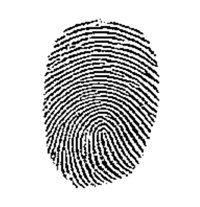
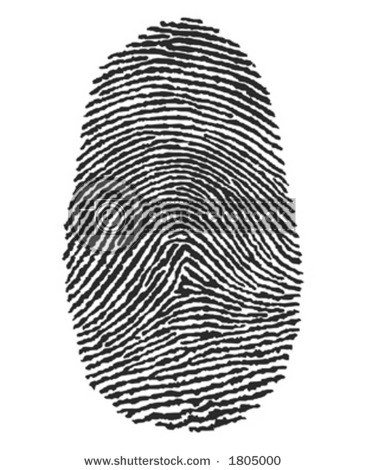
Is the fingerprint on the left (taken from a crime scene) a match for the one on the right (taken from a suspect)?

a)

Confirmed match

b)

No match

26.

Is the fingerprint on the left (taken from a crime scene) a match for the one on the right (taken from a suspect)?

a)

Confirmed match

b)

No match

27.

Is the fingerprint on the left (taken from a crime scene) a match for the one on the right (taken from a suspect)?

a)

Confirmed match

b)

No match

28.
An invisible print that must be developed using powder or chemicals is called
a)
plastic
b)
latent
c)
patent
d)
underdeveloped
29.

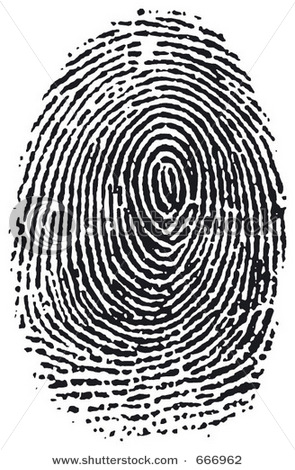
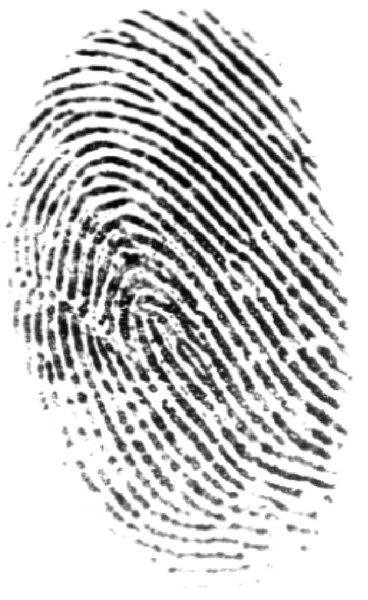
What type of fingerprint is this?

a)

Plain Arch

b)

Radial Loop

c)

Accidental Whorl

30.
What pattern is this?
a)
Loop
b)
Arch
c)
Whorl
31.
What pattern is this?
a)
Loop
b)
Arch
c)
Whorl
32.
What pattern is this?
a)
Loop
b)
Arch
c)
Whorl
33.
What pattern is this?
a)
Loop
b)
Arch
c)
Whorl
34.
Do two people ever have the same fingerprints?
a)
yes
b)
no
35.

Data such as phone, text, and internet use is called

a)

digital forensics

b)

trace forensics

c)

confirmed forensics

d)

speculative forensics

36.

Where were fingerprints found at the crime scene?

a)

there were no fingerprints found

b)

one on the knife, one on the door, and one on the note

c)

only on the note

d)

one on the flask and one on the note

37.

Which of our POI matched the fingerprint on the handwritten note?

a)

Anna Garcia

b)

Eric Piedmont

c)

Taylor Diaz

d)

Elsie Opal

38.

Which of our POI matched the fingerprint on the flask?

a)

Anna Garcia

b)

Eric Piedmont

c)

Taylor Diaz

d)

Elsie Opal