
 Worksheets
Cells Quiz Review
Total questions: 40
Worksheet time: 36mins

What organelle does photosynthesis occur in?

The ____________________ controls what enters and exits the cell and helps to keep it safe. It's almost like the cell's "gate."
Vacuole
Cell Membrane
Cell Wall
Chloroplasts
The ____________________ stores nutrients and other things that the cell needs to survive.
Vacuole
Cell Membrane
Cell Wall
Chloroplasts

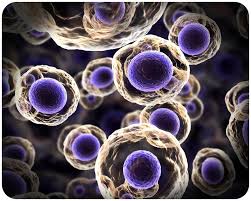

Which of these organisms is considered prokaryotic?
Bacteria
Fox
Algae
Human

If a cell produces a lot of protein, which organelle would it have a lot of?
Mitochondria
Lysosomes
Chloroplasts
Ribosomes

If a cell needed to make a large amount of energy, which organelle would it have a lot of?
Mitochondria
Ribosomes
Vacuoles
Golgi Bodies

Which of the following cells would NOT have a cell wall?
Bacteria
Fungus
Plant
Animal

Which organelle has digestive enzymes to break things down in a cell?
Lysosomes
Vacuoles
Rough ER
Ribosomes

Which of the following would have chloroplasts, a central vacuole, and a cell wall?
Eukaryotic Plant Cell
Prokaryotic Plant Cell
Eukaryotic Animal Cell
Prokaryotic Animal Cell

Which of these is NOT a characteristic of all living things?
The ability to reproduce
The need to get and use energy
Having multiple cells
Growing and developing
The theory of Endosymbiosis explains
The origin of eukaryotes
How bacteria live
How species develop
Why cells rely on one another
____________ & _________________ are organelles that definitely arose from endosymbiosis.
Nucleus and cell membrane
Chloroplast and mitochondria
Mitochondria and nucleus
Cell wall and chloroplast
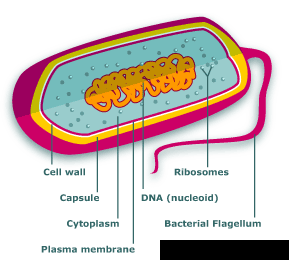
The theory of Endosymbiosis explains
The origin of eukaryotes
How bacteria live
How species develop
Why cells rely on one another
____________ & _________________ are organelles that definitely arose from endosymbiosis.
Nucleus and cell membrane
Chloroplast and mitochondria
Mitochondria and nucleus
Cell wall and chloroplast
Which of the following is evidence to support the endosymbiotic theory?
Prokaryotes have the same number and types of enzymes as eukaryotes.
Mitochondria and chloroplasts have their own DNA, which is similar to prokaryotic DNA.
All eukaryotic cells have a double-layered membran composed of phosplipids and proteins.
Fossil evidence shows that the first forms of life were prokaryotic cells.
What causes differentiation?
The DNA is different in each type of cell.
Some cells have more or less DNA than others.
Only specific genes in the DNA are activated.

Students use a microscope to look for structures in four different cells. The students place an X for each that was viewed for each on the table shown.
Which cell that was viewed is most likely a prokaryote?
Cell W
Cell X
Cell Y
Cell Z
All cells contain __________ and are surrounded by _________
Nucleus , Cytoplasm
Ribosomes, DNA
Genetic Material , Cell membrane
Nucleus, Cell wall
Which type of animal cells would have more mitochondria than others?
Blood cells
Brain cells
Skin cells
Muscle cells
Which type of plant cell would have more chloroplasts than others?
Leaf cell
Root cell
Stem cell
Root epidermal cell
Which of the following has a cell membrane?
prokaryotes
eukaryotes
prokaryotes and eukaryotes
Nucleolus is found inside the nucleus, of Eukaryotes only, and makes _____.
ribosomes
cilia
flagella
prokaryotes
There are two types of Endoplasmic Reticulum, smooth and rough. They ______.
make energy
protect the cell
carry out chemical reactions and transports materials
make the ribosomes
What is something that Prokaryotes and Eukaryote both have in common?
small in size
bacteria
have DNA
complex cells
What structures do all cells have in common?
Nucleus, chloroplast, cell wall, cytoplasm
cell membrane, cytoplasm, cytoskeleton, ribosomes
Cell wall, Mitochondria, Ribosomes, Cytoplasm
Cell membrane, cytoplasm, chloroplast, ribosomes
A Vacuole can temporarily store materials it is found in _____ and ____.
plants and animals
reptiles and anphibians
dogs and cats
fruits and vegetables

