
 Worksheets
Biochemistry
Total questions: 81
Worksheet time: 58mins


True of False. Glycogen is a polysaccharide that is found in animals.
True
False
The bond that joins two amino acids together
double bond
hydrogen bond
ionic bond
peptide bond
Which of the following categories includes all the others on the list?
Monosaccharide
Carbohydrate
Polysaccharide
Starch
The enzyme amylase can break the glycosidic linkages between glucose monomers only if the monomers are in (alpha) form. Which of the following could amylase break down?
Glycogen, starch, and amylopectin
Glycogen and cellulose
Cellulose and Chitin
Starch, chitin and cellulose

What characteristics would you expect this amino acid to have?
Polar/Hydrophobic
Polar/Hydrophilic
Nonpolar/Hydrophobic
Acidic/Polar

This molecule is a:
(most specific answer is correct).
Steroid
Lipid
Protein
Carbohydrate

What chemical reaction likely bonded these 2 sugars together?
Hydrolysis
Dehydration synthesis
Hydrogen bonding
Covalent bonding

When surrounded by water, this functional group is likely to:
Accept a proton
Donate a proton
None of the choices are correct
Become positively charged

What functional group is shown?
amino
hydroxyl
carboxyl
sulfhydryl

sulfhydryl
hydroxyl
amino
phosphate


What functional group is -HC=O
Carbonyl Aldehyde
Carbonyl Ketone
Carboxyl
Methyl

Classify the compound based on the functional group present.
ketone
ester
carboxylic acid
In the cell, macromolecules such as lipids and proteins are transported using____.
Vesicles
Ribosomes
Rough endoplasmic reticulum
DNA
Which of these is NOT a part of the endomembrane system?
Nuclear membrane
Endoplasmic reticulum
Golgi apparatus
Mitochondria
Which organelle acts like a cellular stomach and degrades things?
Lysosome
Mitochondria
Vacuole
Vesicle
Contains hydrolytic (digestive) enzymes to break down worn out parts of the cell.
vacuole
lysosome
ribosome
nucleolus
Found in both prokaryotes and eukaryotes
mitochondria
chloroplast
ribosome
lysosome
This double-membraned organelle is the site of cellular respiration (production of ATP).
chloroplast
mitochondria
smooth endoplasmic reticulum
rough endoplasmic reticulum
Semi-fluid matrix inside the cell (outside the nucleus) that contains organelles.
cytoskeleton
cytoplasm
nucleus
nucleolus
Contains centrioles (in some cells)...important in microtubule organization and cell division.
cytoplasm
extracellular matrix
cytoskeleton
centrosome
Specialized vesicle that contains enzymes that are used to catalyze reactions that produce hydrogen peroxide.
peroxisome
smooth endoplasmic reticulum
rough endoplasmic reticulum
chromoplast
Structure in the nucleus that produces ribosomes.
nucleus
nucleolus
cell membrane
golgi apparatus
Protein fibers that maintain the shape of the cell and assist in movement of cell parts.
cytoplasm
cystoplast
cytoplast
cytoskeleton
which of the following terms refers to the order in which amino acids are linked together in a protein.
Primary
Secondary
Tertiary
Quaternary
The chain of amino acids folds and coils on itself
Primary
Secondary
Tertiary
Quaternary
The entire polypeptide forms a three-dimensional structure
Primary
Secondary
Tertiary
Quaternary
Two or more polypeptides attached together and work as one unit
Primary
Secondary
Tertiary
Quaternary
What is the name for a chain of amino acids?
Polypeptide chain
Triglycerides
Polysaccharides
Nucleotides
What is the name of the bond that joins two amino acids together?
Ester bond
Glycosidic bond
Peptide bond
Nucleic bond
Globular proteins typically serve functional purposes, while fibrous proteins typically serve structural purposes.
True
False
The main bonding in the secondary structure of the protein is due to...
covalent bonding
ionic bonding
hydrogen bonding
polar bonding
The two types of folding in the protein structure are
polypeptide and nucleotide
globular and fibrous
alpha-helix and beta-pleated sheets
Tertiary protein structures are mainly maintained by
hydrogen bond
disulfide bridges
covalent bonds
all of the above
What is the monomer of Nucleic acids?
Monosaccharides
Fatty Acids
Nucleotides
Amino Acid
Which bond is present in the sugar and phosphate group in a nucleotide?
Phosphodiester bond
Peptide Bond
Ester Bond
Glycosidic Bond

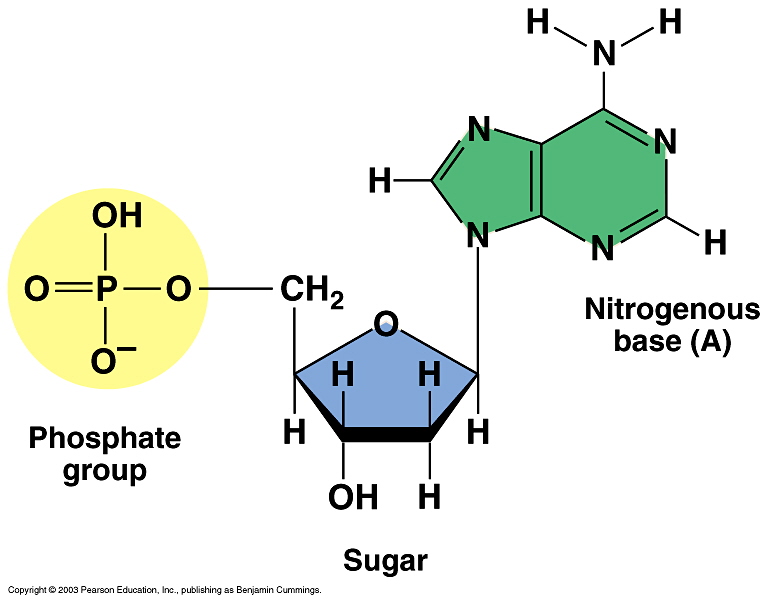
Nitrogenous bases are classified into two. Which nitrogenous base is shown above?
Pyrimidines
Purines
Which of the following nitrogenous bases are present ONLY in an RNA molecule?
Adenine, Guanine, Cytosine, Thymine
Adenine, Guanine, Cytosine, Ribose
Adenine, Guanine, Cytosine, Uracil
Adenine, Guanine, Cytosine, Deoxyribose
What type of bond links two nitrogenous bases?
Peptide bond
Hydrogen Bond
Covalent Bond
Glycosidic Bond

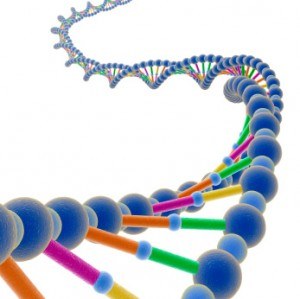
Which of the following describes the shape of a DNA molecule?
double helix
sphere
pyramid
rectangle
In the DNA alphabet, T always pairs with:
A
T
G
C


Active transport is movement of particles through the cell membrane from a region of ...1... to a region of ...2... using energy in the form of ...3...
1: lower concentration, 2: higher concentration, 3: NADPH
1: higher concentration, 2: lower concentration, 3: NADPH
1: higher concentration, 2: lower concentration, 3: ATP
1: lower concentration, 2: higher concentration, 3: ATP


Is it safe to drink salt water?
Yum, so salty!
No, you could die of dehydration.

Identify a peripheral protein
structure a
strucure b
structure g
structure h
Plasma membranes are selectively permeable. This means
anything can pass in and out
the membrane regulates the passage of the material in and out of the cell
glucose cannot enter the cell
cholesterol cannot enter
Small, nonpolar, hydrophobic molecules such as oxygen
easily pass through the membrane's bilayer
very slowly diffuse through the bilayer
require transport proteins
enter through endocytosis
Membrane phospholipids
have hydrophobic heads that face the center of the membrane and are shielded from water
have hydrophilic tails that face outward
remain fluid because they are tightly packed
none of these
The cholesterol associated with membranes
is attached to proteins and extends into the environment surrounding the cell
helps stabilize the membrane at body temperature
is an abnormality resulting from a diet high in cholesterol
both a and c
A major function of glycoproteins and glycolipids in the membane is to
glue cells together to form tissues
allow cells to identify each other
attach membrane to cytoskeleton
help retain shape
When doctors perform organ transplants, they choose a donor tissue match. Which component is being matched?
membrane phospholipids
cytoskeleton
cell surface carbohydrates
cholesterol
What kinds of molecules pass through a cell membrane most easily?
ionic
small and hydrophobic
large polar
large and hydrophobic
Which of the following allows water to move faster across cell membranes?
aquaporins
ATP
peripheral proteins
the sodium-potassium pump
Which of the following would likely move through the lipid bilayer most rapidly?
potassium
an amino acid
Carbon dioxide
glucose
These are the most diverse group of cytoskeletal elements and have no role in cell movement, just purely structural, and these are called (a) filaments.
Peroxisomes digest food and waste materials.
TRUE
FALSE
This type of cytoskeleton is responsible for pulling replicated chromosomes to opposite ends of a dividing cell.
Microfilament
Intermediate filament
Microtubules
Actin filament

