
 Worksheets
BIO REVIEW DAY PRACTICE UNIT 1
Total questions: 86
Worksheet time: 1hrs 23mins
Which building blocks are correctly matched to the macromolecule they form?
Amino acids make proteins.
Glucose molecules make lipids.
Nucleotides make carbohydrates.
Fatty acid chains make nucleic acids.
Which of the following groups of macromolecules are composed of three fatty acid chains bonded to a glycerol?
lipids
proteins
nucleic acids
carbohydrates

The diagram below shows three repeating units of a polymer.
Which of the following molecular structures make up the repeating units shown in the diagram?
fatty acid
nucleotide
amino acid
monosaccharide
Which group of macromolecules is responsible for transferring genetic information
to new cells?
lipids
proteins
nucleic acids
carbohydrates

Water is a polar molecule, which means it has a positive and a negative side. Hydrogen bonds form when:
HINT: LOOK AT THE DIAGRAM
The positive end of one water molecule bonds to the positive end of another water molecule.
The negative end of one water molecule bonds to the negative end of another water molecule.
The positive end of one water molecule bonds to the negative end of another water molecule.

The ability of water molecules to stick to each other, creating surface tension is called:
Cohesion
Adhesion
Insulation
pH

The fact that water can stick to other substances is called:
pH
Adhesion
Cohesion
Insulation
The insects are light enough so they do not break the hydrogen bonds holding the water molecules together
The insects actually use their wings to hover slightly above the water’s surface and they only skim it with their feet.
The insect’s feet are non-polar, so they are repelled by the polar water molecules and are pushed away from the water’s surface.
The insects are small enough to see the individual water molecules, so they are able to step carefully from one molecule to the next
What macromolecule is made up of C,H,O,N?
Carbon, Hydrogen, Oxygen & Nitrogen
Carbohydrates
Lipids
Proteins
Nucleic acids
Which macromolecule is used as our main source of energy?
Lipids/Fats
Nucleic Acids
Proteins
Carbohydrates
Which macromolecule stores energy?
Carbohydrates
Proteins
Lipids/Fats
Nucleic Acids
Match the following MONOMERS and MACROMOLECULES

Nucleic Acid

Protein

Lipid

Carbohydrate
Which macromolecule gives LONG-TERM energy?
lipid
carbohydrate
nucleic acid
The Endosymbiotic Theory gives an explanation of how eukaryotic cells could have evolved from prokaryotic cells. Which part of the Cell Theory supports this explanation?
Cells are the basic unit of structure & function of living organisms
All living things are made of cells
All cells come from pre-existing cells
Which statement is NOT a part of the Cell Theory?
All cells come from pre-existing cells
All living things are made of cells
All cells form from spontaneous generations
Cells are the basic unit of structure & function of living organisms
Check all that applies to the Cell Theory:
Plants
Animals
Bacteria
Water

Type of microscope that commonly uses visible light and a system of lenses to magnify images of small objects
Electron Microscope
Scanning Electron Microscope
Transmission Electron Microscope
Light Microscope
What is the basic unit of an organism?
Chloroplast
Organ
Organelles
Cell
When an organism has cells with a nucleus, they are called _______.
Prokaryotes
Eukaryotes
Bacteria
Archaea
What are the small structures inside of cells that carry out specific functions called?
Organelles
Tissues
Organs
One example of a prokaryote is a.....
Animal
Plant
Virus
Bacteria

What kind of cell?
Eukaryote
Prokaryote
Both

What kind of cell?
Prokaryote
Eukaryote
Both

What kind of cell?
Prokaryote
Both
Neither
Eukaryote
Where is DNA found in Prokaryote cell?
Inside of the Nucleus
Inside of the cell (No specific place)
Where is DNA found in a Eukaryotic Cell?
No specific location (Scattered around the cell)
Inside of the Chloroplast
Inside of the cell membrane
Inside of the nucleus

Where is DNA stored in a eukaryotic cell?
Cytoplasm
Mitochondria
Ribosomes
Nucleus

This is a picture of:
Prokaryotic Cell
Eukaryotic Cell
Plants & Animal cells are examples of ___ cells
An organism made of only one cell is called _____ .
Eukaryotic
Mutlicellular
Monocellular
Unicellular
An organism made of many cells is called _____ .
Eukaryotic
Mutlicellular
Monocellular
Unicellular
Organisms whose cells do not have a nucleus are called _____.
Eukaryotes
Multicellular
Unicellular
Prokaryotes

The cell below is in a _____________ solution. You can determine this because water is entering the cell, which will make the cell SWELL.
DNA is replicated during ______ of the cell cycle.
Gap 1
Synthesis (S phase)
Gap 2
Gap 0

During what phase of Mitosis do the chromosomes line up in the Middle
Metaphase
Prophase
Telophase
Anaphase

What stage of mitosis is depicted here
Prophase
Metaphase
Anaphase
Telophase
In the cell cycle, what is the next stage after Mitosis's last stage TELOPHASE (most of the time)?
Metaphase
anaphase
cytokinesis
interphase

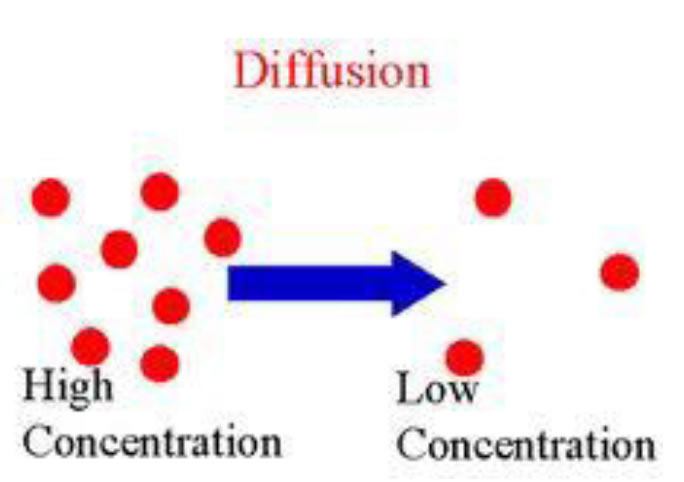
Simple Diffusion
When molecules passively cross the plasma membrane through the phospholipid bilayer
Facilitated Diffusion
When molecules passively cross the plasma membrane through a channel protein
Osmosis
The movement of water across the cell membrane
Endocytosis
Bringing in large materials through the cell membrane into a vacuole.
Exocytosis
Moving larger amounts or large quantities of materials through the cell membrane
Hypertonic
The solution contains a high concentration of solute an and low concentration of water
Hypotonic
The solution contains a low concentration of solute an and high concentration of water
Isotonic
The solution has an equal concentration of solute and water compared to the inside of the cell
What type of microscope do we use in this science classroom?
compound light microscope
scanning electron microscope
tunneling electron microscope
magnifying glass

What is number 1?
arm
base
light source
stage

What is number 2?
fine adjustment knob
coarse adjustment knob
light source
base
What is number 10?
Nose piece (rotating)
coarse adjustment knob
light source
base

What is number 3?
fine adjustment knob
coarse adjustment knob
stage
diaphragm

What is number 5?
base
stage
light source
arm

What is number 6?
diaphragm
light source
stage
stage clips

What is number 9?
rotating nose piece
objective lens
ocular lens
adjustment knob

What is number 12?
body tube
objective lenses
ocular lens
arm

What is the name of this part of the microscope?
Eye piece
Objective lenses
Arm
Light source
Used to focus specimen, smaller adjustment than coarse adjustment
Fine adjustment
Stage
Arm
Base

Which of the following are subatomic particles? (Check all that apply)
protons
neutrons
megatrons
electrons

Which subatomic particle has a positive charge?
proton
neutron
electron
midichlorian

What is the center of an atom called?
The headquarters
The centrometer
The hypothesis
The nucleus

The nucleus of an atom contains which subatomic particles?
protons and electrons
protons and neutrons
electrons and neutrons
protons, electrons, and neutrons

Which subatomic particle does the YELLOW(-) circle represent?
proton
neutron
electron
nucleus
Which of the following are the outermost electrons
Protons
Neutrons
Core electrons
Valence electrons
Covalent Bond vs Hydrogen Bond
Hydrogen Bond
Covalent Bond
James Bond
Match the Macromolcules with each molecule
Proteins
Carbohydrates
Nucleic Acids
Lipids

