
 Worksheets
AP Biology Review Vann
Total questions: 84
Worksheet time: 1hrs 8mins
Name
Class
Date
1.
Which of the following organisms are LEAST closely related?
a)
organisms that share a domain
b)
organisms that share a family
c)
organisms that share a genus
d)
organisms that share a species
2.
The scientific name for an organism is made from the:
a)
class and family name
b)
genus and species name
c)
domain and kingdom name
d)
kingdom and phylum name
3.
Term given to describe the 2 name naming system is:
a)
dichotmous key
b)
binomial nomenclature
c)
2 scientific names
d)
binomial key
4.
Who first proposed binomial nomenclature as a way of classifying organisms?
a)
Carl Linnaeus
b)
Carl's Jr.
c)
Charles Darwin
d)
Henry Groseclose
5.
Cells that do not have a true nucleus are called....
a)
eukaryote
b)
prokaryote
c)
unicellular
d)
multicellular
6.
Cells that have a true nucleus are called....
a)
eukaryotes
b)
prokaryotes
c)
unicellular
d)
multicellular
7.
The ___ control what enters and leaves the cell.
a)
cell membrane
b)
cell wall
c)
nucleus
d)
cytoplasm
8.
An organisms scientific name is made of (in order) ...
a)
species, class
b)
genus, kingdom
c)
genus, species
d)
species
9.
The eight levels of classification, from general to specific, are
a)
domain, kingdom, class, order, phylum, family, genus, species
b)
somain, kingdom, phylum, class, family, order, genus, species
c)
domain, kingdom, phylum, class, order, family, genus, species
d)
domain, kingdom, class, phylum, order, family, genus, species
10.
Which 2 organisms have the fewest characteristics in common?
a)
2 organisms in the same kingdom
b)
2 organisms in the same genus
c)
2 organisms in the same species
d)
2 organisms in the same family
11.
Organisms are the same ___________ when they can have offspring, then those have more offspring.
a)
Class
b)
Family
c)
Species
d)
Phylum
12.
Fill-in-the-blank:
Domain--Kingdom--Phylum--____________
Domain--Kingdom--Phylum--____________
a)
Order
b)
Family
c)
Class
d)
Species
13.
A rigid supporting layer that provides support in plant cells:
a)
cell membrane
b)
cell wall
c)
chloroplasts
d)
cytoplasm
14.
A thin flexible barrier that controls substances moving into and out of the cell:
a)
cytoplasm
b)
mitochondria
c)
cell membrane
d)
cell wall
15.
Passageways for proteins and other materials to be carried to other parts of the cell:
a)
golgi apparatus
b)
ribosomes
c)
endoplasmic reticulum
d)
cytoplasm
16.
Protein builders of the cell:
a)
nucleus
b)
ribosomes
c)
cell wall
d)
chloroplasts
17.
Controls what enters and leaves the cell
a)
Mitochondria
b)
Cell Membrane
c)
Cell Wall
d)
Nucleus
18.

According to cell theory, where did this cell come from?
a)
another living cell
b)
energy from sun
c)
a multicellular organism
d)
the nonliving environment
19.

Robert Hooke, Anton van Leeuwenhoek, Theodor Schwann, Rudolf Virchow, and Matthias Schliden were all responsible for what theory?
a)
The Theory of Gravity
b)
The Theory of Relativity
c)
The Cell Theory
d)
The Theory of Continental Drift
20.
Who was the first person to see cells under the microscope and give them their name?
a)
Mattias Schleiden
b)
Robert Hooke
c)
Theordor Schwann
d)
Anton van Leeuwenhoek
21.

Number 3
a)
Ocular Lens
b)
Objective Lens
c)
Diaphragm
d)
Base
22.
The main difference between prokaryotic and eukaryotic cells?
a)
Prokaryotic cells have a cell membrane but eukaryotic cells do not.
b)
Eukaryotic cells contain DNA in a nucleus while prokaryotic cells do not.
c)
Eukaryotic cells have flagella but prokaryotic cells do not.
d)
Prokaryotic cells contain membrane-bound ribosomes while eukaryotic cells do not.
23.

What type of cell is pictured?
a)
Prokaryotic
b)
Eukaryotic
c)
Plant
d)
Animal
24.
What type of cell is pictured?
a)
Prokaryotic
b)
Eukaryotic
c)
Plant
d)
Animal
25.

Type of cell shown?
a)
Bacterial
b)
Prokaryotic
c)
Eukaryotic
d)
Red blood
26.
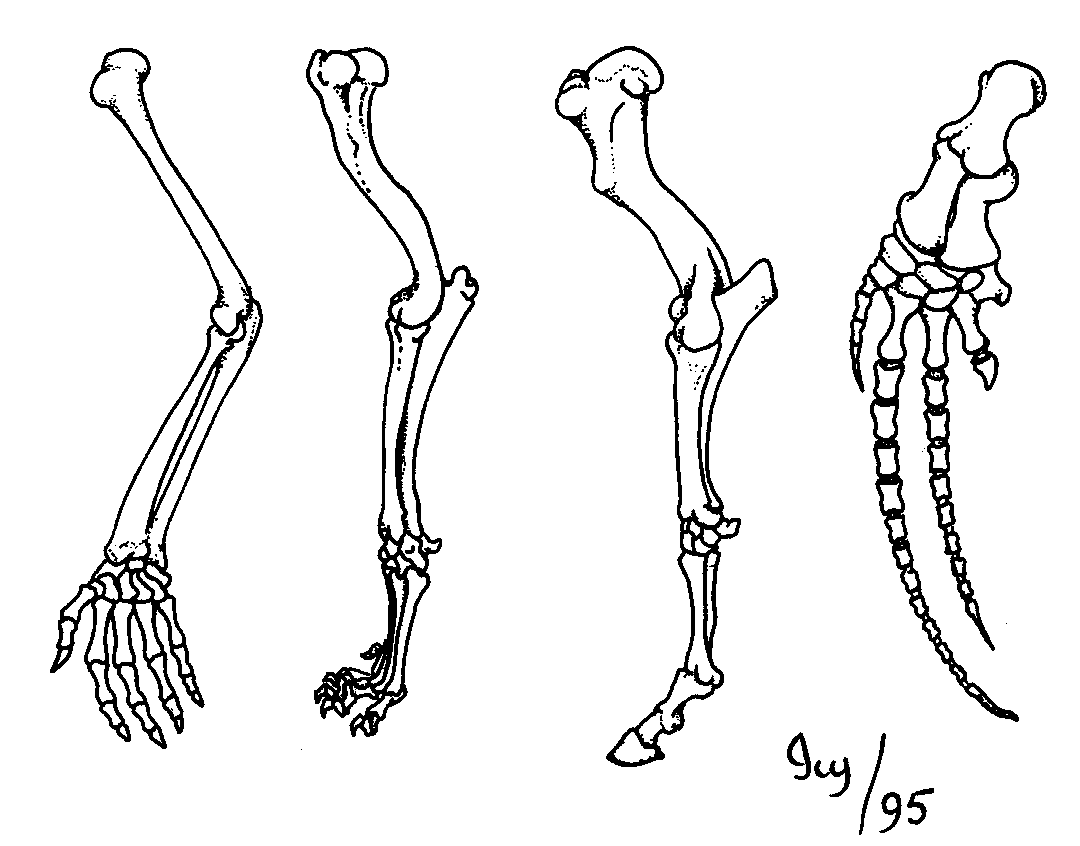
Structures with the same parts have different functions; suggests that organisms share a common ancestry
a)
vestigial structures
b)
homologous structures
c)
adaptive radiation
d)
fossil
27.

If an organism has a vestigial structure, that structure likely once had a function in a(n)
a)
close relative
b)
early ancestor
c)
unrelated organism
d)
embryological stage
28.
The process by which populations slowly change over time is called__________
a)
selective breeding
b)
adaptation
c)
sepeciation
d)
evolution
29.

Study of embryos of various organisms to show a common ancestor because of similarities in development
a)
natural selection
b)
embryology
c)
speciation
d)
evolution
30.
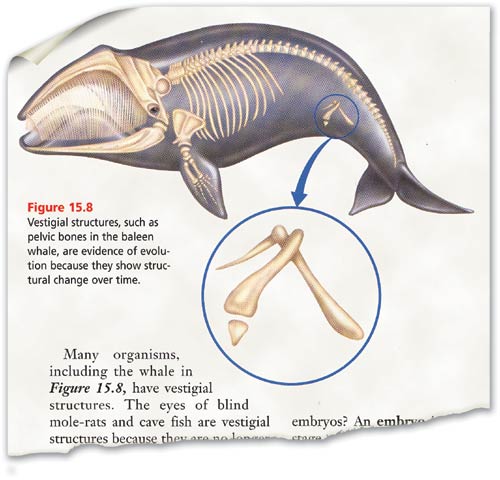
Which of the following is an example of a vestigial structure?
a)
the wings of a red-tailed hawk
b)
the hind limbs of a house cat
c)
the fins of sharks
d)
the tailbone of a human
31.
What does Darwin's theory of evolution suggest?
a)
species change over time
b)
extinct species are not related to living species
c)
different species can interbreed
d)
animals that look alike are most closely related
32.

Individuals that are well adapted to their environment will survive and produce:
a)
Fewer mutations
b)
Stronger genes
c)
More offspring
d)
Better traits
33.
Which of the following pieces of evolution evidence contain both homologous and vestigial structures?
a)
fossil record
b)
comparing embryology
c)
comparing biochemistry
d)
comparing anatomy
34.

Who was the naturalist that traveled the world to study plants and animals?
a)
Albert Einstein
b)
Charles Darwin
c)
Charles Barkley
d)
Isaac Newton
35.
What is the name of an organism that cannot produce its own food and must get it from another source?
a)
prokaryotic
b)
eukaryotic
c)
autotroph
d)
heterotroph
36.
How are protists different than bacteria?
a)
Protists are eukaryotic and bacteria are prokaryotic
b)
Protists are prokaryotic and bacteria are eukaryotic
c)
There is no difference; protists and bacteria are the same thing
d)
Protists are always unicellular and bacteria are always multicellular
37.

What is the name of the structure shown in the model?
a)
cilia
b)
flagella
c)
amoeba
d)
pseudopod
38.

Which of the following is the best model for cilia?
a)
A
b)
B
c)
C
d)
D
39.

Which type of protist is shown in the picture?
a)
euglena
b)
paramecium
c)
amoeba
d)
autotroph
40.

How does this protist move?
a)
Flagellum
b)
Cilia
c)
Pseudopods
41.

How does this protist move?
a)
Cilia
b)
Pseudopods
c)
Flagellum
42.
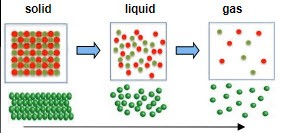
Entropy increases from solid, liquid to gas. Why?
a)
Molecular disorder increases
b)
Molecular randomness decreases
c)
Molecules are more energetic
d)
Molecules are more reactive
43.
Enthalpy is energy absorbed or relased during a chemical reaction as
a)
light.
b)
heat.
c)
sound.
d)
pressure.
44.
Entropy always increases when
a)
enthalpy decreases.
b)
temperature decreases.
c)
temperature increases.
d)
volume increases.
45.
Where do substrates bind on an enzyme?
a)
voltage-gated channels
b)
surface receptor
c)
calcium channels
d)
active site
46.
What is the purpose of an enzyme?
a)
give permission for the reaction
b)
raise activation energy
c)
speed up reactions
d)
control how many reactions occur
47.
Enzymes are capable of increasing the rate of a chemical reaction within a living cell. Enzymes accomplish this through which of the following means?
a)
reducing the number of products
b)
reducing the activation energy
c)
increasing the temperature of the cell
d)
increasing the concentration of reactants
48.
What 3 letters do enzymes typically end in?
a)
-ose
b)
-ase
c)
-ese
d)
-tic
49.

Which of the following conclusions can be drawn from this graph?
a)
The optimum pH of the enzyme is 6.6.
b)
The optimum pH of the enzyme is 5.8
c)
The enzyme’s activity increases as pH increases 5.0 to 9.0
d)
The enzyme’s activity is greater around pH of 8.0 .
50.

What is the optimum pH of pepsin?
a)
0
b)
2
c)
3
d)
7
51.
How many substrates can one enzyme work with?
a)
1
b)
2
c)
there is no limit
52.
Which word means speeding up reactions without being used up?
a)
Catalyst
b)
Bolt
c)
Renewable energy
d)
Carrying Capacity
53.
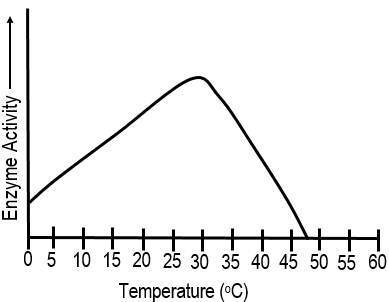
Based on the graph, what temperature does this enzyme work best?
a)
15 C
b)
40 C
c)
30 C
54.
What is the function of an enzyme?
a)
enzymes break themselves into small pieces
b)
they slow down chemical reactions
c)
they speed up chemical reactions
d)
enzymes combine products to form reactants
55.

The effect of temperature on the relative rate of action of an enzyme is represented in the graph below.
The optimum temperature for the action of this enzyme is approximately
The optimum temperature for the action of this enzyme is approximately
a)
15 C
b)
22 C
c)
37 C
d)
50 C
56.
What is the name of the signaling molecule that triggers a transduction pathway?
a)
ligand
b)
GTP
c)
kinase
d)
phosphatase
57.
What is the name of the pathway that occurs when a signal is received and then converted into a cellular response?
a)
signal transduction
b)
biochemical
c)
catabolic
d)
anabolic
58.
What is the name of the molecule that is used in long distance signaling; travels from one gland to another location to trigger the signal?
a)
hormone
b)
neurotransmitter
c)
ion
59.
The 3 steps of signal transduction, in order, are
a)
reception, transduction, response
b)
response, transduction, reception
c)
reception, response, transduction
d)
transduction, reception, response
60.
What is the monomer of proteins?
a)
amino acids
b)
polypeptides
c)
nucleotides
d)
monosaccharides
61.
How many different amino acids are there?
a)
15
b)
20
c)
25
d)
30
62.

The structure of proteins can be changed by environmental factors such as temperature or pH.
a)
True
b)
False
63.
Bond formed between two amino acids that results in a water molecule being released
a)
peptide bond
b)
complete protein
c)
dipeptide
d)
casein
64.

The diagram shows a bond forming between two amino acids. What is the name of this reaction?
a)
Dehydration Synthesis
b)
Hydrolysis
c)
Pepysis
d)
Oxidation
65.
Each amino acid is different from the other due to....
a)
The R group
b)
The amino group
c)
The carboxyl group
d)
The central carbon
66.
When a protein unfolds, it is
a)
Denatured
b)
Building
c)
Adding amino acids
d)
Making food
67.
The polymer which folds into proteins
a)
Polypeptide
b)
Amino Acids
c)
Nucleic Acids
d)
Polynucleotides
68.
Vasopressin is an important signaling molecule made of 164 amino acids. This molecule is responsible for signaling nephron tubules in the kidney to reabsorb water, and thus controls blood pressure. What type of biomolecule is Vasopressin?
a)
Lipid
b)
Nucleic Acid
c)
Protein
d)
Carbohydrate
69.

The diagram shows the structure of an amino acid. Which type of molecule is formed from amino acids?
a)
lipids
b)
proteins
c)
carbohydrates
d)
nucleic acids
70.
What elements make up carbohydrates?
a)
Carbon, hydrogen, nitrogen, oxygen
b)
sulfur, carbon, hydrogen
c)
glucose and fructose
d)
carbon, hydrogen, oxygen
71.
The 3 categories of carbohydrates are:
a)
Monosaccharide, disaccharide, polysaccharide
b)
glucose, fructose, galatose
c)
starch, cellulose, chitin
d)
There are no categories of carbohydrates
72.

What molecule is this
a)
sucrose
b)
protein
c)
glucose
d)
cellulose
73.

What type of carbohydrate is this?
a)
polysaccharide
b)
disaccharide
c)
monosaccharide
d)
it isn't a carbohydrate
74.
What does hydrolysis mean?
a)
breaking of water molecules
b)
Formation by water
c)
Splitting by water
d)
Getting rid of water molecules
75.
Which elements are present in carbohydrates?
a)
C,N,O
b)
C,H,O
c)
H2O
d)
CO2
76.

Identify this structure.
a)
cell wall
b)
cell membrane
c)
sap vacuole
d)
cytoplasm
77.
The diffusion of water through a semi-permeable membrane is called?
a)
Osmosis
b)
Cell wall
c)
Diffusion
d)
Respiration
78.

Osmosis
a)
diffusion of water molecules through a semi-permeable mebrane from an area of low concentration to an area of high concentration
b)
the diffusion of particles from an area of high concentration to an area of low concentration
c)
diffusion of water molecules through a semi-permeable membrane from an area of high concentration to an area of low concentration
d)
the diffusion of particles from an area of low concentration to an area of high concentration
79.

_______ regulates what enters and leaves a cell.
a)
Cell Membrane
b)
Nucleus
c)
Mitochondria
d)
Cytoplasm
80.
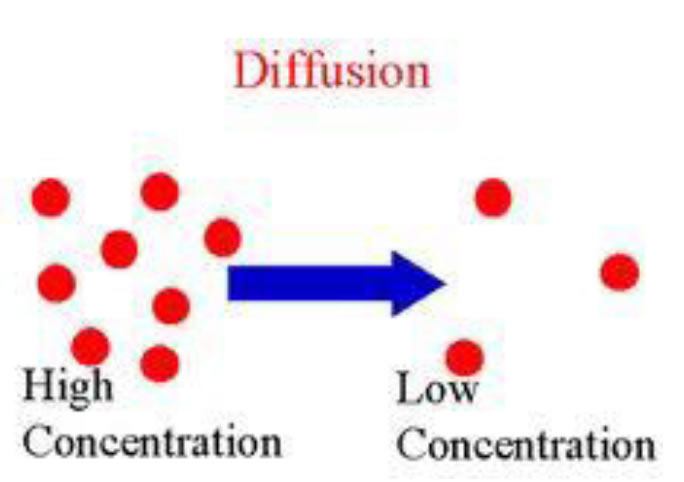
a)
Passive Transport
b)
Active Transport
81.
The movement of molecules against a concentration gradient
a)
simple diffusion
b)
facilitated diffusion
c)
active transport
d)
osmosis
82.
An animal cell placed in a hypertonic (salty) solution will
a)
Shrink
b)
Swell
c)
Stay the same
83.
Facilitated Diffusion
a)
Passive Transport
b)
Active Transport
84.

The picture is an example of...
a)
active tranport
b)
passive transport
c)
diffusion
d)
osmosis
100 %

