
 Worksheets
Evo Review Part 1_IB Bio (BioH Review, Spec, H-W, Origin)
Total questions: 82
Worksheet time: 44mins

Who was the Scientist most famous for his study of natural selection and evolution?
Theodor Schwann
Robert Hooke
Charles Darwin
Rudolf Virchow

What is the process in which populations CHANGE gradually over time?
evolution
species
variation
competition

What do you call similar structures that related species have inherited from a common ancestor?
Natural Selection
Analogous Structure
Vestigial Structure
Homologous Structure

What do we call structures that no longer perform their original function?
Natural Selection
Analogous Structure
Vestigial Structure
Homologous Structure

What do you call a characteristic that allows an organism to survive in an environment?
variation
adaptation
selection
overproduction


The formation of a new species is called
Natural selection
Struggle for existence
Speciation
Darwinism

When a population becomes divided by an event such as a new river forming, ____________ has occurred.
Differentiation
Reproductive isolation
Adaptation
Convergent evolution
Adaptive radiation
What do we call a group of individuals that can reproduce successfully in nature?
species
order
speciation
mom and dad
The large-scale events of speciation are called...
macroevolution
simplification
adaptation
microevolution

What type of selection is depicted in the picture?
stabilizing
directional
disruptive


A certain plant can grow in a range from 7 centimeters to 2 meters. The smallest plants often do not grow tall enough to get enough sunlight to survive. The tallest plants are easy targets for leaf eating insects. The leaves do not taste good to mammals however.
What graph best shows how this population is most likely going to change over time?


Long ago, a species of Finches arrived on the Galapagos Islands. Some of these birds had larger beaks that were useful for breaking tree nuts, while others had smaller beaks that were useful for getting small insects from trees. Today we have a variety of finches that we consider separate species.
What type of natural selection has occurred on the Galapagos Finches?
Directional Selection
Stabilizing Selection
Disruptive Selection
Natural Selection has not occurred on the finches
The United States is known as a melting pot because many different types of people compose society. People from all parts of the world have moved to the United States in search of religious freedom, to escape poverty or violence, or as a refugee after being displaced due to environmental factors. Which of these is a likely outcome of movement by people?
Gene flow occurs between populations.
Allele frequencies suddenly change dramatically.
Relative genotypic frequencies reach a constant state.
Intermediate phenotypes increase in the species.
What mechanism of evolution occurs when allele frequencies change over generations due to random chance?
Genetic Drift
Mutation
Natural Selection
Gene Flow
A small group of squirrels gets separates them from the rest of the population due to a large flood. These squirrels, now confined to this new island, begin to start a new population. This is an example of which of the following?
Founder effect
Bottleneck effect
Natural Selection
Gene Flow
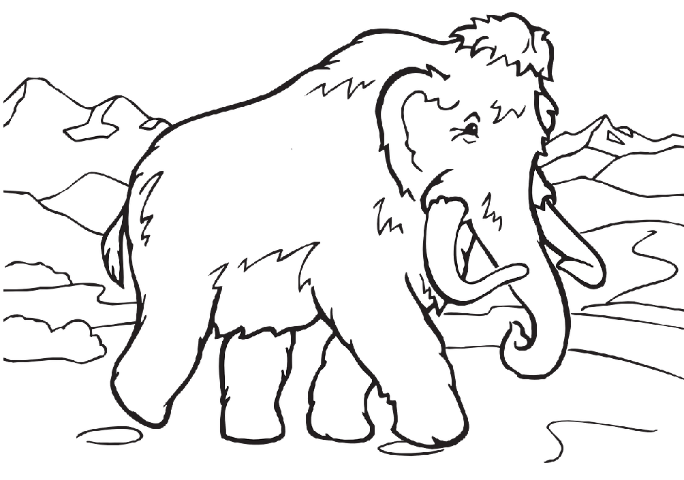
Severe population reduction reduces the gene pool
and increases the rate of genetic drift. Woolly mammoths became extinct. Elephants survived.
Gene Pool
Bottleneck Effect
Founders Effect
Gene Frequency
Fossils show us evidence of evolution because...
They show a gradual change in species over time
They show rapidly changing species
They only show evidence of genetic mutations
Fossils are not evidence
Which type of structures have DIFFERENT origin but similar function?
Analogous
Homologous
Which type of structures have SAME origin but different function?
Analogous
Homologous

The five-factors for evolution are gene flow, genetic drift, mutation, natural selection and ....
non-random mating
controlled mating
emigration
immigration
Closely related species that look very different as a result of using an existing physical structure to become better suited to their respective niches in the environment.
Adaptive Radiation
Macro-evolution
Micro-evolution
Speciation
Grass plants in a population range in height from 6 cm to 25 cm. The short plants receive little sunlight, and the tall plants are eaten by grazing animals. Which statement best describes the effect of natural selection on the grasses?
Because average height grass plants are favored, stabilizing natural selection is occurring.
Because average height grass plants are favored, disruptive natural selection is occurring.
Because tall grass plants are favored by the animals that eat grass, directional selection is occurring.
Because short and tall grass plants are favored, normal natural selection is occurring.

Which of the following statements best describes what will most likely occur to the moth populations in the image above?
The light moths will be captured by predators more easily than the dark moths, and the population of dark moths will rise.
The light moths will be captured by predators more easily than the dark moths, and the population of light moths will rise.
The dark moths will be captured by predators more easily than the light moths, and the dark moths will probably go extinct.
The light moths will change their wing color to match that of the dark moths.

Due to pollution, a pond becomes darker over time. Which trait variation became more common?
light fish
dark fish
fast fish
strong fish

Process by which unrelated organisms develop similarities due to living in similar environments
family descent
survival of the fittest
convergent evolution
divergent evolution
Who would have stated "acquired traits" such as a giraffe needing a long neck so they stretch it over time
Darwin
Lamarck
Redi
Pasteur
Miller & Urey
Which of the following are examples of sexual dimorphisms? (Select all that apply)
male lions have manes, females lions don't
soft, down feathers in chicks, where as adult birds have sturdy feathers
antlers on a male deer when a female doesn't have them
dull colored female birds and colorful plumage in male birds
insect wings lack bones, whereas bird wings have bones

Vertebrate embryos pass through similar stages of development is evidence for
use and disuse
analogous structures
common ancestry
acquired characteristics
convergent evolution
A new river forms and splits two populations, causing ______________ speciation
Sympatric
Allopatric
Extreme
Convergent
A speciation in which new species evolve from a single ancestral species while inhabiting the SAME geographic region.
Sympatric speciation
Allopatric speciation
Complex speciation
Divergent speciation
When the Grand Canyon in Arizona formed, two populations of one squirrel species were separated by the giant canyon. This is an example of _____________ speciation.
Allopatric
Sympatric
Simple
Divergent
Some female peacocks prefer males with large, colorful tales while other female peacocks prefer males with no tail at all. Females are now mating only with the tail they prefer. What type of reproductive barrier is this?
behavioral isolation
hybrid sterility
temporal isolation
mechanical isolation
In the Great Lakes region of North America, gray wolves and coyotes are similar species but do not mate because their breeding periods occur at different times of the year.
Geographic isolation
Behavioral isolation
Temporal isolation
Mechanical isolation

Sex is possible between these closely related species but the sex cells (egg and sperm) can not fertilize each other due to lack of egg penetrance, difference in hormonal levels , hostile environment for the sperm etc...
Mechanical isolation
Gametic isolation
Ecolgical isolation
Behavioral isolation
Geographical isolation

Allopatric or Sympatric speciation?
Allopatric
Sympatric

The theory that species evolve during short periods of rapid change.
punctuated equilbrium
reproductive isolation
rate of speciation
directional selection
The mule is an example of
pre-zygotic barriers
post-zygotic barriers

When Animals have reproduced offspring that are not frail and are vigous, yet their chromosomal differences are too great to produce fertile offspring, are an example of this post-zygotic barrier.
Reduced Hybrid Viability
Reduced Hybrid Fertility
Hybrid Breakdown
None of the above

Most of the time this post zygotic barrier is seen in plants and affects the offspring's offspring. In other words, the initial hybrids are perfectly strong but when the offspring try to reproduce that next generation is stunted or sterile.
Reduced hybrid fertility
Reduced hybrid viability
Hybrid breakdown
All of the above

What is NOT true about speciation
Has to involve some form isolation
Can happen slowly or in bursts
Can only happen when in Hardy-Weinberg equalibrium
can happen from allopatric and sympatric isolation

Punctuated equalibrium or gradualism?
Punctuated equalibrium
Gradualism
Which Hardy-Weinberg factor represents the frequency of heterozygous individuals in a population?
p2
2pq
q2
p2 + 2pq
The allele frequency of p=.20 What is the percentage of recessive genotype?
.80
.04
.32
.64
The allele frequency of p=.20 What is the percentage of Heterozygous Dominant genotype?
.80
.04
.32
.64
A population's recessive allele frequency 25%. What is the percentage of the Homozygous Dominant genotype?
.5625
.3750
.0625
.25
.75
64% of the population has the recessive phenotype. What is the percentage of the recessive genotype?
.04
.32
.64
.2
.8
64% of the population has the recessive phenotype. What is the allele frequency for p?
.04
.32
.64
.2
.8
In the Miller-Urey experiment, the electrical sparks mimicked...
the Sun's energy
lightning
volcanic eruptions
cosmic radiation
Which statement provides evidence for endosymbiosis?
Early prokaryotes contributed to a large increase in oxygen in the atmosphere.
Eukaryotic mitochondria and chloroplasts have their own circular DNA.
Eukaryotic mitochondria and chloroplasts have their own circular contain 80s ribosomes
Experiments by Miller and Urey produced simple organic molecules in abiotic conditions.
Pasteur carried out a series of experiments that provided strong evidence against a widely supported theory. What was this theory?
Endosymbiosis
Spontaneous generation
Conservative replication of DNA
Evolution

The diagram below shows how Louis Pasteur investigated the origin of cells. What was the purpose of stage A of the experiment?
To make the microorganisms grow back.
To make it easier to remove the neck.
To prove that cells come from pre-existing cells.
To destroy all living cells and microorganisms.
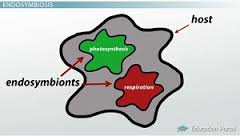
Theory that says eukaryotic cells formed from symbiosis among several different prokaryotes.
Natural Selection
Biogenesis Theory
Evolutionary Theory
Endosymbiotic Theory
Theory of Spontaneous Generation
There are three tenets of the Cell Theory. Which of the following is NOT a tenet?
Cells are the basic structure and function of life.
All living things are made of one or more cells.
The cell is the basic unit of matter.
All cells come from preexisting cells.
The first "cell" that contained non-living materials
protocell
bobocell
photocell
Enzyme like RNA
Ribosomes
Ribozyme
Ribose
Robust

What was the independent variable in Redi's experiment?
The type of meat he put in the jars
The amount of time in his experiment
The type of covering on the jars containing meat
The flies's eggs

