wayground logo

Free Printable Worksheets

Font size

S
M
L
XL
Worksheets

Matter Unit Review

Total questions: 85

Worksheet time: 3605secs

Name
Class
Date
1.
The smallest part of an element...
a)
atom
b)
molecule
c)
electron
2.
Type of matter made of two or more elements...
a)
element
b)
mixture
c)
compound
3.
Substance with NO definite volume or shape...
a)
solid
b)
liquid
c)
gas
4.
Substance with a DEFINITE volume, but NO definite shape...
a)
solid
b)
liquid
c)
gas
5.
Substance with a DEFINITE shape and DEFINITE volume...
a)
solid
b)
liquid
c)
gas
6.
Amount of space an object takes up...
a)
Mass
b)
Volume
7.
Amount of matter in a solid, liquid, or gas...
a)
mass
b)
volume
8.
Liquid form is measured with a graduated cylinder...
a)
mass
b)
volume
9.

Which property of matter determines if something sinks or floats?

a)

Magnetism

b)

Density

c)

Solubility

d)

Weight

10.

Which gas is less dense than air?

a)

Sulfur hexafluoride

b)

Helium

c)

Oxygen

d)

Carbon dioxide

11.

A property of matter that can be measured or observed using the 5 senses.

a)

states of matter

b)

physical properties of matter

12.

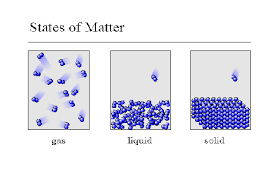
Which of the following is NOT a chemical property? 
a)
rusting 
b)
boiling 
c)
rotting 
d)
burning 
13.
Which one of these is a chemical property?
a)
melting point
b)
boiling point
c)
color
d)
flammability
14.
Which is an example of a physical property?
a)
ability to react with acid
b)
 state of matter
c)
flammability
d)
ability to react with oxygen
15.
At higher temperatures
a)
particles in an object have less energy
b)
particles in an object move faster
c)
a gas contracts
16.
Which state of matter has tightly packed molecules?
a)
solid
b)
liquid
c)
gas
17.
Particles (molecules) in a ______________________ have more energy than the other states of matter.
a)
gas
b)
solid
c)
liquid
18.
What term describes a solid changing to a gas?
a)
Deposition
b)
Sublimation
c)
Evaporation
d)
Freezing
19.
What is condensation?
a)
gas to solid
b)
gas to liquid
c)
liquid to solid 
d)
solid to liquid 
20.
A chemical change
a)
doesn't really change much.
b)
creates a new substance
c)
is a change in the state of matter
21.
A physical change is...
a)
a change that doesn't change the identity
b)
a change that makes something new.
c)
a chemical reaction
22.

Solid dry ice turning into gaseous carbon dioxide is an example of what phase change?

a)

Condensation

b)

Melting

c)

Sublimation

d)

Recombination

23.

Water appearing on the exterior of a cold drink on a hot summer day is an example of what phase change?

a)

Condensation

b)

Melting

c)

Sublimation

d)

Vaporization

24.

Through what phase change does your body cool itself? (Hint: think about what happens to your sweat)

a)

Condensation

b)

Freezing

c)

Sublimation

d)

Vaporization

25.

Atoms or molecules in this state of matter have the lowest energy.

a)

Solid

b)

Liquid

c)

Gas

d)

Plasma

26.

Atoms or molecules in this phase of matter have the highest energy.

a)

Solid

b)

Liquid

c)

Gas

d)

Plasma

27.

Heating a solid to a high temperature will usually result in this phase change.

a)

Condensation

b)

Melting

c)

Sublimation

d)

Evaporation

28.

Adding large amounts of energy to transform a gas into plasma is known as what?

a)

Condensation

b)

Ionization

c)

Sublimation

d)

Recombination

29.

In colder environments, gaseous water vapor can turn directly to solid ice on a window. What is this process called?

a)

Deposition

b)

Evaporation

c)

Freezing

d)

Vaporization

30.

What term refers to "two or more substances combined physically, but are still able to be separated?"

a)

Mixture

b)

Solution

c)

Matter

d)

Combination

31.

What term refers to a single kind of matter that is pure?

a)

Solution

b)

Mixture

c)

Substance

d)

Matter

32.

Which of the following is NOT an example of matter?

a)

Sunlight

b)

Air

c)

Tree trunk

d)

Sponge

33.

Which of the following is NOT a mixture?

a)

Salsa

b)

Guacamole

c)

Egg Salad

d)

Bleach

34.

What is the difference between a mixture and a solution?

a)

A mixture retains its properties, a solution creates new ones

b)

A mixture and solution are the same

c)

A solution cannot be separated into it's individual components

d)

A mixture is chemically bonded, a solution is not.

35.

Which of the following is NOT a solution?

a)

Lemonade

b)

Salt water

c)

Soda

d)

Lemon Juice

36.

Q6: Anything that has mass or takes up space is known as...

a)

matter

b)

objects

c)

physical properties

d)

science

37.
The amount of matter something contains is its ______________.
a)
gas
b)
solid
c)
weight
d)
mass
38.

Which statement best describes the atoms in a gas?

a)

They vibrate in place.

b)

They stay in a fixed position.

c)

They are closely packed.

d)

They move freely in all directions.

39.

Which correctly lists the types of matter, in terms of their atoms, in order from least tightly packed to most tightly packed?

a)

solid, gas, liquid

b)

solid, liquid, gas

c)

gas, solid, liquid

d)

gas, liquid, solid

40.

Mercury’s natural state is where the atoms are close to each other but are still free to pass by each other. In which state(s) could mercury naturally exist?

a)

gas

b)

liquid

c)

solid or liquid

d)

solid or gas

41.

Density involves the amount of a material in a certain volume. When a material changes phases, it changes in density in a predictable way as the amount of material stays the same but the molecules get farther apart or closer together. Water has solid and liquid states that do not follow these predictions of density in the phases of matter.

What does that mean about the densities of the phases of water?

a)

The solid state is the most dense, followed by the liquid state, then the gas state.

b)

The solid state is more dense than the liquid state.

c)

The liquid state is more dense than the solid state.

d)

The gas state is the most dense, followed by the liquid state, then the solid state.

42.

Density describes how much mass is contained in a certain volume. Knowing how far apart molecules are in each state, which best ranks solids, liquids, and gasses from least dense to most dense?

a)

Gasses are denser than liquids.

b)

Liquids are denser than solids.

c)

Gasses are less dense than solids.

d)

Solids are less dense than liquids.

43.

Gold’s natural state has a definite shape and a definite volume. What is gold’s natural state(s)?

a)

solid

b)

liquid

c)

solid or gas

d)

liquid or gas

44.

Rahul sees a flock of birds. He watches as the flying birds land in neat little rows on several power lines. Which change of state does the motion of the birds most closely model?

a)

melting

b)

vaporization

c)

deposition

d)

sublimation

45.

The diagram shows changes of state between solid, liquid, and gas. The atoms of a substance gain energy during a change of state. Before the change, the atoms are close together and cannot slide past one another. After the change, the substance can fill its container.

Which arrow represents the change of state described above?

a)

L

b)

M

c)

N

d)

O

46.

During which change of state do atoms lose energy?

a)

sublimation

b)

freezing

c)

boiling

d)

melting

47.

Which change of state is shown in the model?

a)

condensation

b)

evaporation

c)

sublimation

d)

deposition

48.

The diagram shows changes of state between solid, liquid, and gas. The atoms of a substance lose energy during a change of state. Before the change, the atoms are close together but are able to slide past one another.

Which arrow represents the change of state described above?

a)

M

b)

N

c)

P

d)

Q

49.
You can measure ______ with grams.
a)
mass
b)
volume
c)
conductivity
d)
melting point
50.
Volume is ______________.
a)
length X width
b)
height X length
c)
length X width X height
d)
width X height
51.
It occurs when a substance combine with another to form a new substance
a)
Physical Change
b)
Chemical Change 
c)
Physical Property
d)
Chemical Property
52.
It can be observed or measured without changing the composition of matter.
a)
Physical Change
b)
Chemical Change
c)
Physical Property
d)
Chemical Property
53.
Which of the following is not an example of Physical Change?
a)
Melting of an ice cream
b)
Water vapor formed as water boils
c)
Frying an egg
d)
Cutting the paper into pieces
54.
Which of the following is an example of physical change?
a)
an ice cream melts due to heat
b)
food digestion in stomach
c)
rusting of iron due to water exposure
d)
dynamite ignition
55.
Which of the following is an example of a chemical property?
a)
melting
b)
bending a paper clip
c)
rusting
d)
boiling water
56.
Texture, color, states of matter, flexibility, freezing & melting points
a)
Chemical Properties
b)
Physical Properties
c)
States of Mass
d)
Scientific matterology
57.
Max is hungry and he prepares cereal with milk. This is an example of a: 
a)
Homogeneous mixture
b)
Heterogeneous mixture
58.
a)

Element

b)

Compound

c)

Homogeneous Mixture

d)

Heterogeneous MIxture

59.

What is it?

a)

Pure Substance

b)

Mixture

60.

What is it?

a)

Pure Substance

b)

Mixture

61.

What is it?

a)

Pure Substance

b)

Mixture

62.

A group of 2 or more items, that are not chemically combined

a)

Pure Substance

b)

Mixture

63.

When there is 2 or more atoms combined together

a)

Element

b)

Compound

c)

Homogeneous Mixture

d)

Heterogeneous Mixture

64.

When there is one type of atom

a)

Element

b)

Compound

c)

Homogeneous Mixture

d)

Heterogeneous Mixture

65.
This picture represents which of the following?
a)
element
b)
compound
c)
mixture
66.
This picture represents which of the following?
a)
element
b)
compound
c)
mixture
67.
The ability of a substance to be pounded or rolled into thin sheets
a)
State
b)
Ductility
c)
Malleability
d)
Thermal Conductivity
68.
The amount of mass in a specific volume
a)
density
b)
weight
c)
matter
d)
state
69.
Physical or Chemical Property? If copper comes in contact with water, it will turn green.
a)
Physical
b)
Chemical
c)
Neither
70.
Physical or Chemical Property?  The temperature of boiling water is 100 degrees Celsius.
a)
Physical
b)
Chemical
c)
Neither
71.
Physical or Chemical Property?  The solid form of water is ice.
a)
Physical
b)
Chemical
c)
Neither
72.
Define a Chemical Property
a)
A property which depends on the objects size or matter.
b)
A property of matter not involving in its manifestation a chemical change
c)
A property or behavior of a substance which undergoes a chemical change or reaction.
d)
A property which makes the object smell or taste different.
73.
Define a Physical Property
a)
A property of matter not involving in its manifestation a chemical change
b)
A property in which stops a chemical reaction from occuring.
c)
A property or behavior of a substance which undergoes a chemical change or reaction.
d)
A property which makes the object smell or taste different.
74.
A mixture that appears to be evenly mixed throughout:
a)
an atom
b)
a compound
c)
a homogeneous mixture
d)
a heterogeneous mixture
75.
 mixture that does NOT appear to be evenly mixed throughout:
a)
an atom
b)
a compound
c)
a homogeneous mixture
d)
a heterogeneous mixture
76.
Which of these is an example of a chemical property?
a)
density
b)
melting point
c)
ductility
d)
flammability
77.

Particles vibrate in place and do not change relative positions.

a)

solid

b)

liquid

c)

gas

78.

What is the density of an object if it has a mass of 6g and a volume of 3cm3? (Hint: Density = mass/volume)

a)

6 g/cm3

b)

3 g/cm3

c)

2 g/cm3

d)

1/3 g/cm3

79.

Does 1cup or 6cups of water have a higher density?

a)

1 cup

b)

6 cups

c)

They have the same density

80.

You calculated the density of an unknown substance to be 7.8g/cm3. According to the chart, which of the substances doe you most likely have?

a)

Zinc

b)

Copper

c)

Tin

d)

Iron

81.

Which substance is the most dense in this picture?

a)

Vegetable Oil

b)

Dish Soap

c)

Honey

d)

Corn Syrup

82.
Jack has a rock. The rock has a mass of 14g and a volume of 2cm3. What is the density of the rock?
a)
7 mL
b)
7 g/cm3
c)
28 g/cm3
d)
1/7 g/cm3
83.
If an object has a density of .6 g/mL and you put it into water, will it sink or float?  
a)
sink
b)
float
84.
What units are used to measure Density?
a)
cm3/g
b)
g
c)
g/cm3
d)
cm3
85.
What is the volume of the fish?
a)

18.0 ml

b)

6.0 ml

c)

38.0 ml